Yorkshire · The moors and the coast
North York Moors National Park: where it is, what to see, and a one-day route from Sutton Bank to Whitby
The North York Moors are a high plateau of heather between the Vale of York and the North Sea. You can see the best of them in a day. Here's where to stop, and what you can skip.
- Where
- North Yorkshire, north of York, running east to the coast at Whitby
- National park since
- 28 November 1952
- Size
- 554 sq miles (1,436 sq km), 26 miles of coastline
- Known for
- Heather moorland, abbey ruins, the steam railway, the coast at Whitby
- Best viewpoint
- Sutton Bank, on the A170 above Thirsk
- Steam railway
- North Yorkshire Moors Railway, from Pickering
- Heather in flower
- Late summer
The short answer
The North York Moors National Park is in North Yorkshire, England, between the Vale of York and the North Sea coast. It became a national park on 28 November 1952, covers 554 square miles (1,436 sq km) with 26 miles of coastline, and holds one of the largest expanses of heather moorland in England. Its main towns and gateways are Helmsley, Pickering and Whitby.
The North York Moors National Park is a wide, high plateau of heather moor, cut by green valleys, running from the edge of the Vale of York to the cliffs of the North Sea. You can see it in a day: the A169 crosses it from Pickering to Whitby, and the best stops along its south-western edge are only a few miles apart. I rode exactly that kind of day on a small-group tour from York in October 2026, and our trip’s moors day is built on it. Below: where the park is, what’s worth stopping for, the steam railway, walks, the heather, the TV connections, and the route we take.
Where is the North York Moors?
North Yorkshire, in the north-east of England, with York the nearest city to the south. The park’s western edge is the steep escarpment of the Hambleton Hills, where Sutton Bank is. Its southern edge has the market towns of Helmsley and Pickering. Its eastern edge is the coast: Whitby, Robin Hood’s Bay and Scarborough.
Don’t mix it up with the Yorkshire Dales, the other big national park, which lies to the west. And don’t mix up either one with the moors around Haworth. That’s Brontë country, in West Yorkshire, and it isn’t a national park at all. (People do this constantly. If you came here looking for Wuthering Heights, you want Books by the Brontë sisters and the Wuthering Heights locations guide.)
North York Moors National Park: the key facts
| Designated | 28 November 1952 |
| Area | 554 square miles (1,436 sq km) |
| Coastline | 26 miles |
| Heather moorland | About a third of the park, one of the largest expanses in England |
| Main gateways | Helmsley, Pickering, Whitby, Sutton Bank |
| Authority | North York Moors National Park Authority |
Elizabeth Gaskell, who set her novel Sylvia’s Lovers in and around Whitby, described the land behind the town:
I have said that the country for miles all around was moorland; high above the level of the sea towered the purple crags, whose summits were crowned with greensward that stole down the sides of the scaur a little way in grassy veins.
— Elizabeth Gaskell, Sylvia’s Lovers, Chapter I (1863), Project Gutenberg
When is the heather out?
Late summer, when it flowers purple. The rest of the year the moor is brown and bronze. In October, when our trip goes, you trade the purple for autumn color in the valleys below. Honestly, it’s a fair trade.
Sutton Bank: “the finest view in England”
Sutton Bank is the escarpment on the A170 between Thirsk and Helmsley, at the park’s western edge. James Herriot, the vet and writer who practised in Thirsk, called the view from the top the finest in England. You look west across the Vale of York, and on a clear day you can pick out the towers of York Minster.
Two short walks from the top:
- The Kilburn White Horse, along the escarpment on foot. It’s cut into the hillside, 100 metres (352 ft) long, and was finished in 1857 by the local schoolmaster.
- Gormire Lake, below the escarpment. It’s the only natural lake in the national park, formed by glacial meltwater, and you can only get there on foot.
Dorothy Wordsworth came over these hills at dusk on 4 October 1802 with her brother William (who’d been married that very morning, at Brompton), and saw the view over the vale:
Far far off from us, in the western sky, we saw shapes of castles, ruins among groves, a great spreading wood, rocks, and single trees, a minster with its tower unusually distinct, minarets in another quarter, and a round Grecian Temple also
— Dorothy Wordsworth, journal, 4 October 1802, Journals of Dorothy Wordsworth, vol. 1, Project Gutenberg
Byland Abbey
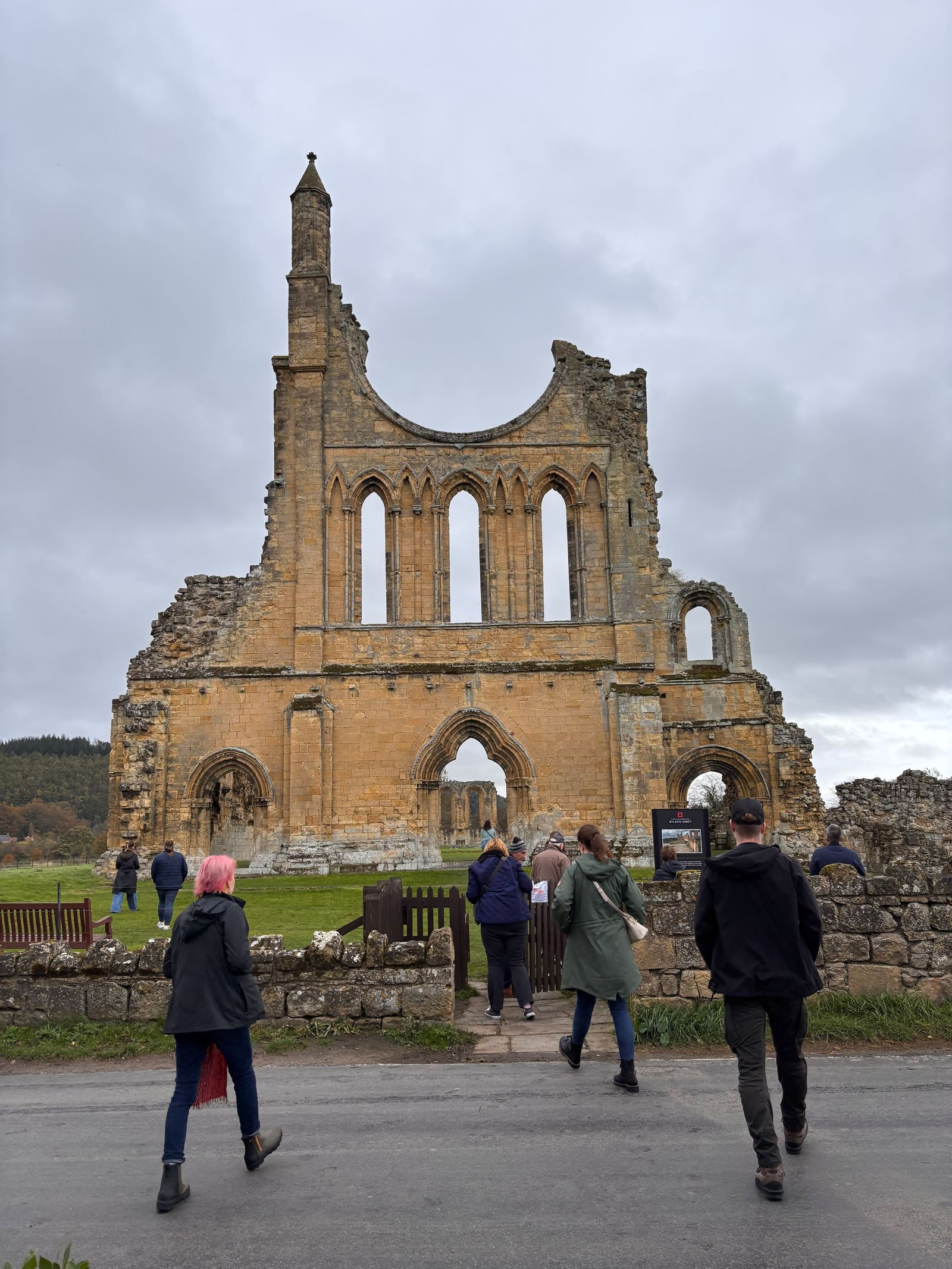
Byland is a ruined Cistercian abbey a few miles south of Sutton Bank, run by English Heritage. Same order of monks as Fountains Abbey, near Ripon. Its west front still holds the broken arc of a great round window.
The monks had a long road here. Their community started in 1134 as a daughter house of Furness Abbey, at Calder in Cumbria. A Scottish army sacked Calder in 1138. They tried Old Byland, which turned out to be too close to Rievaulx Abbey, then spent about 30 years at Stocking, near Oldstead. They began draining the marshy ground at Byland in the late 1150s and moved in by 1177. The abbey closed on 30 November 1538, when the abbot and 25 monks signed it over to the Crown. Look for the remains of the tiled floor near the east end.
The grounds are free, and it’s usually much quieter than its famous neighbor, Rievaulx. That’s exactly why we stop here.
Helmsley
Helmsley is a small market town: a square, cafés and a castle. Helmsley Castle has been a medieval fortress, an Elizabethan mansion, a Civil War stronghold under siege (Parliament’s troops besieged it for about three months in 1644), and finally a romantic ruin. Its tall east tower still stands over the town. As of November 2026 it’s open Friday to Sunday, so check the castle’s page before you plan around it.
Dorothy Wordsworth was here on the same journey:
We reached Helmsly just at dusk. We had a beautiful view of the castle from the top of the hill, and slept at a very nice inn, and were well treated; floors as smooth as ice.
— Dorothy Wordsworth, journal, 15 July 1802, Project Gutenberg
(Floors as smooth as ice. Two centuries on, that’s still a decent inn review.)
Rievaulx Abbey and its terrace
Rievaulx is the other great Cistercian ruin on the moors’ southern edge, in a wooded valley close to Helmsley, and it’s the better known of the two. Founded in 1132, it was the first Cistercian abbey in the north of England, and it was shut down on 3 December 1538, according to English Heritage. It’s the reason Byland’s monks had to move on from Old Byland.
On the hillside above is what Dorothy Wordsworth called Mr Duncombe’s terrace, a long grass walk laid out in the 1750s for Thomas Duncombe II, looking down on the abbey. It’s run by the National Trust. Dorothy walked it in July 1802:
We walked upon Mr. Duncombe’s terrace and looked down upon the Abbey. It stands in a larger valley among a brotherhood of valleys, of different length and breadth,—all woody, and running up into the hills in all directions.
— Dorothy Wordsworth, journal, 15 July 1802, Project Gutenberg
On the same visit she stopped among the ruins themselves:
I could have stayed in this solemn quiet spot till evening, without a thought of moving, but William was waiting for me, so in a quarter of an hour I went away.
— Dorothy Wordsworth, journal, 15 July 1802, Project Gutenberg
Our trip goes to Byland instead, for a quieter 15 minutes. But if you have half a day, Rievaulx is worth it.
Kirkdale: St Gregory’s Minster and its Anglo-Saxon sundial
This is the bit people miss. St Gregory’s Minster is a small church a few miles from Helmsley. Over the south door, inside the porch, is a stone sundial carved in Old English. It records that Orm, son of Gamal, bought St Gregory’s when it was broken down and fallen and had it rebuilt from the ground, in the days of King Edward and Earl Tosti (Tostig). That dates it to about 1055–1065, the years just before the Norman Conquest. The lower text even names the man who made it, Hawarth, and the priest, Brand.
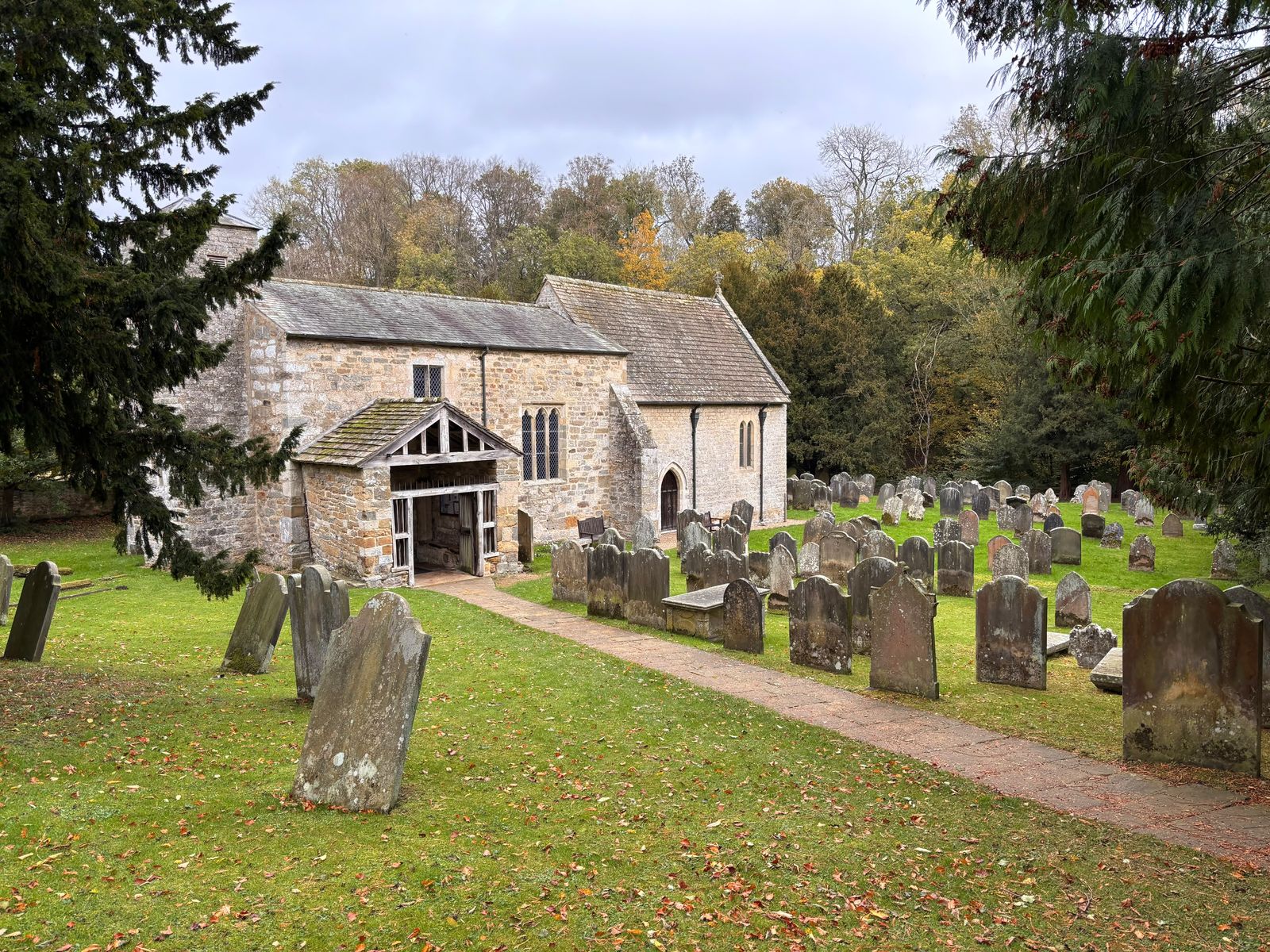
The sundial is in the porch, so you can see it even if the church is locked. Fifteen minutes is plenty.
The Hole of Horcum and the road to Whitby
From Pickering, the A169 climbs onto the open moor and runs north to Whitby. Beside the road is the Hole of Horcum, a huge bowl in the hillside, about 400 feet deep and roughly three-quarters of a mile across. A popular circular walk drops down into it and comes round by Levisham. Beyond it the road crosses miles of open heather before it falls to the coast.
For Whitby itself (the abbey, the 199 steps, and Dracula), see our guide to Whitby Abbey and Dracula.
The North Yorkshire Moors Railway from Pickering
The North Yorkshire Moors Railway is a heritage steam line from Pickering through Levisham, Newtondale Halt and Goathland to Grosmont, with some trains going on to Whitby. It opened in 1836 as the Whitby and Pickering Railway, planned by George Stephenson, closed to passengers in 1965, and was reopened by volunteers in 1973.
- Goathland station played Hogsmeade station in the first Harry Potter film. The village was Aidensfield in the ITV police drama Heartbeat.
- 2026 note: repairs to a bridge near Grosmont affected services beyond Goathland this year. The railway says daily services resume in March 2027. Check its travel updates before you plan a through trip to Whitby.
Charles Dickens remembered an earlier, odder version of this line, when carriages were hauled up the slope at Goathland against a counterweight of water:
In my time that curious railroad by the Whitby Moor was so much the more curious, that you were balanced against a counter-weight of water, and that you did it like Blondin.
— Charles Dickens, letter to Wilkie Collins, 28 August 1861, The Letters of Charles Dickens, vol. 2, Project Gutenberg
(Blondin was the tightrope walker who crossed Niagara Falls. Not the image you want on a train.)
Walks in the North York Moors
Three good choices for a first visit:
| Walk | Where | Good for |
|---|---|---|
| The escarpment to the White Horse | Sutton Bank | The big view over the Vale of York |
| Gormire Lake | Below Sutton Bank, on foot only | Woodland and the park’s only natural lake |
| Hole of Horcum circular | The A169 and Levisham | Open moor and a deep valley |
Check the route and distance on the national park’s website before you go. Wear boots, carry a map and a waterproof, and look at the forecast: the moor top is much colder and windier than the valleys, even on a nice day down in York.
All Creatures Great and Small filming locations
People come here looking for James Herriot’s world, and the connection is real, but it’s mostly just off the moors. Herriot practised as a vet in Thirsk, just west of Sutton Bank, and the World of James Herriot museum is there today. The TV series, though, were filmed in the Yorkshire Dales, to the west:
- Channel 5 series (2020 onward): mainly Grassington, which plays the town of Darrowby.
- Original BBC series (from 1978): mainly Askrigg, in Wensleydale.
So Sutton Bank, Herriot’s favorite view, is the one place on this route that ties straight back to him.
Getting to the North York Moors
- From York: the southern edge is an easy drive, and several companies run small-group day tours from York that cross the moors to Whitby with short stops on the way. That’s how I first did this route, and it’s a good way to do it if you don’t want to drive.
- By train: the North Yorkshire Moors Railway starts at Pickering, and Whitby has its own station. Neither gets you to Sutton Bank or Byland. For those you need a car or a tour.
- By car: the A170 runs along the southern edge through Helmsley and Pickering, and the A169 crosses the moor from Pickering to Whitby.
- Where to base yourself: Helmsley, Pickering and Whitby all have places to stay inside or at the edge of the park. York works well if you want the city too: see things to do in York, UK, and Castle Howard, the great house near York where Brideshead Revisited was filmed.
A one-day route: our trip’s moors day
I rode this pattern of short stops on a small-group day tour from York on 28 October 2026, and we built the trip’s Monday around it. On our October 2027 Yorkshire trip the day runs like this (times are our plan and may shift):
| Time | Stop |
|---|---|
| 9:30 | Sutton Bank: the edge of the moors and the view over the Vale of York (20 minutes) |
| 10:05 | Byland Abbey: the grounds (15 minutes) |
| 10:35 | Helmsley: coffee in the market square (30 minutes) |
| 11:15 | Kirkdale: the Anglo-Saxon sundial (15 minutes) |
| 11:30 | Over the moors on the A169, past the Hole of Horcum, to Whitby (about an hour) |
| 12:45 | Fish and chips by the harbour, then the abbey, the 199 steps and the harbour |
| 18:00 | Dinner at a riverside pub in the Esk valley, then home over the moors |
What we don’t do: we don’t ride the steam railway. It was in an earlier plan, but it pushed lunch in Whitby so late nobody would have wanted dinner. We don’t stop at Goathland, and we don’t do Rievaulx or Castle Howard on this day. Castle Howard gets its own day later in the week.
The moors' world: what else was happening
This one covers nearly a thousand years, because the moors do. Monks were building Rievaulx and Byland while the Normans were still settling in, Dorothy and William Wordsworth walked through in 1802, and in the Victorian years Gaskell, Dickens and Bram Stoker were all writing about this corner of Yorkshire.
- Medieval 1066–1485
- Tudor 1485–1603
- Stuart 1603–1714
- Georgian 1714–1837
- Victorian 1837–1901
The story Britain The wider world Other writers
- 1055 The story Between about 1055 and 1065, Orm, son of Gamal, rebuilds St Gregory's Minster at Kirkdale and records it on the sundial over the door.
- 1066 Britain The Norman Conquest. Tostig, the earl named on the Kirkdale sundial, dies at Stamford Bridge, near York, that September.
- 1132 The story Rievaulx Abbey is founded in March, the first Cistercian abbey in the north of England.
- 1138 The story A Scottish army sacks Calder in Cumbria, and the monks who will found Byland set off east.
- 1177 The story By now Byland's monks have moved into their new site below the Hambleton Hills.
- 1538 The story Byland is surrendered to the Crown on 30 November, Rievaulx on 3 December.
- 1644 The story Parliament's Sir Thomas Fairfax besieges Helmsley Castle; it surrenders on 22 November.
- 1758 The story Rievaulx Terrace is laid out above the abbey for Thomas Duncombe II.
- 1776 The wider world The American Declaration of Independence.
- 1798 Other writers Wordsworth and Coleridge publish Lyrical Ballads.
- 1802 The story Dorothy and William Wordsworth visit Rievaulx and Helmsley in July, and cross Sutton Bank on 4 October, the day William marries Mary Hutchinson at Brompton.
- 1836 The story The Whitby and Pickering Railway opens, planned by George Stephenson.
- 1857 The story The Kilburn White Horse is finished, cut by the local schoolmaster and his helpers.
- 1861 Other writers Dickens writes to Wilkie Collins about riding the old Whitby moor railway, balanced against a counterweight of water.
- 1861 The wider world The American Civil War begins.
- 1863 Other writers Elizabeth Gaskell publishes Sylvia's Lovers, set in a fictional Whitby she calls Monkshaven.
- 1865 The story A new line through Goathland replaces the rope-worked incline Dickens remembered.
- 1897 Other writers Bram Stoker publishes Dracula, with Dracula coming ashore at Whitby.
- 1940 The story Alf Wight, the future James Herriot, joins a vet practice in Thirsk, below Sutton Bank.
- 1949 Britain The National Parks and Access to the Countryside Act sets up England and Wales's national parks.
- 1952 The story The North York Moors becomes a national park on 28 November.
- 1965 The story The Beeching cuts: the last passenger train runs from Whitby to Pickering on 6 March.
- 1969 The wider world Apollo 11 lands on the Moon.
- 1970 Other writers James Herriot's first book, If Only They Could Talk, comes out.
- 1973 The story Volunteers reopen the line as the North Yorkshire Moors Railway on 1 May.
- 1992 The story ITV's Heartbeat begins on 10 April, with Goathland playing Aidensfield.
- 2001 The story Goathland station plays Hogsmeade in Harry Potter and the Philosopher's Stone.
Questions people ask
Where is the North York Moors?
The North York Moors are in North Yorkshire, in the north of England, between the Vale of York to the west and the North Sea to the east. Helmsley and Pickering are on the southern edge, and Whitby is on the coast. York is the nearest city.
What is the difference between the North York Moors and the Yorkshire Dales?
They're two separate national parks. The North York Moors are in the east, a high plateau of heather moor running to the sea at Whitby. The Yorkshire Dales are in the west: limestone valleys and stone barns. Haworth's moors, the Brontë country, belong to neither.
Is the North York Moors Railway running to Whitby?
The North Yorkshire Moors Railway runs from Pickering through Levisham and Goathland to Grosmont, and some services continue to Whitby. In 2026 repairs to a bridge at Grosmont affected services beyond Goathland, so check the railway's travel updates before you book. Daily services resume in March 2027.
Where was Harry Potter filmed in the North York Moors?
Goathland station on the North Yorkshire Moors Railway played Hogsmeade station in the first Harry Potter film. Goathland village was also Aidensfield in the ITV series Heartbeat.
When is the heather out on the North York Moors?
The heather flowers purple in late summer. About a third of the national park is heather moorland, so that's when the moors look their most dramatic.
Was All Creatures Great and Small filmed in the North York Moors?
Mostly no. The 2020 Channel 5 series is filmed mainly in Grassington, in the Yorkshire Dales, and the original BBC series used Askrigg in Wensleydale. James Herriot himself lived and worked in Thirsk, just west of the moors, and loved the view from Sutton Bank.
Can you see the North York Moors in a day from York?
Yes. A day from York can take in Sutton Bank, Byland Abbey, Helmsley and Kirkdale in the morning, then cross the moors on the A169 to Whitby for the afternoon. Small-group day tours from York follow this pattern.
In this guide
Read next
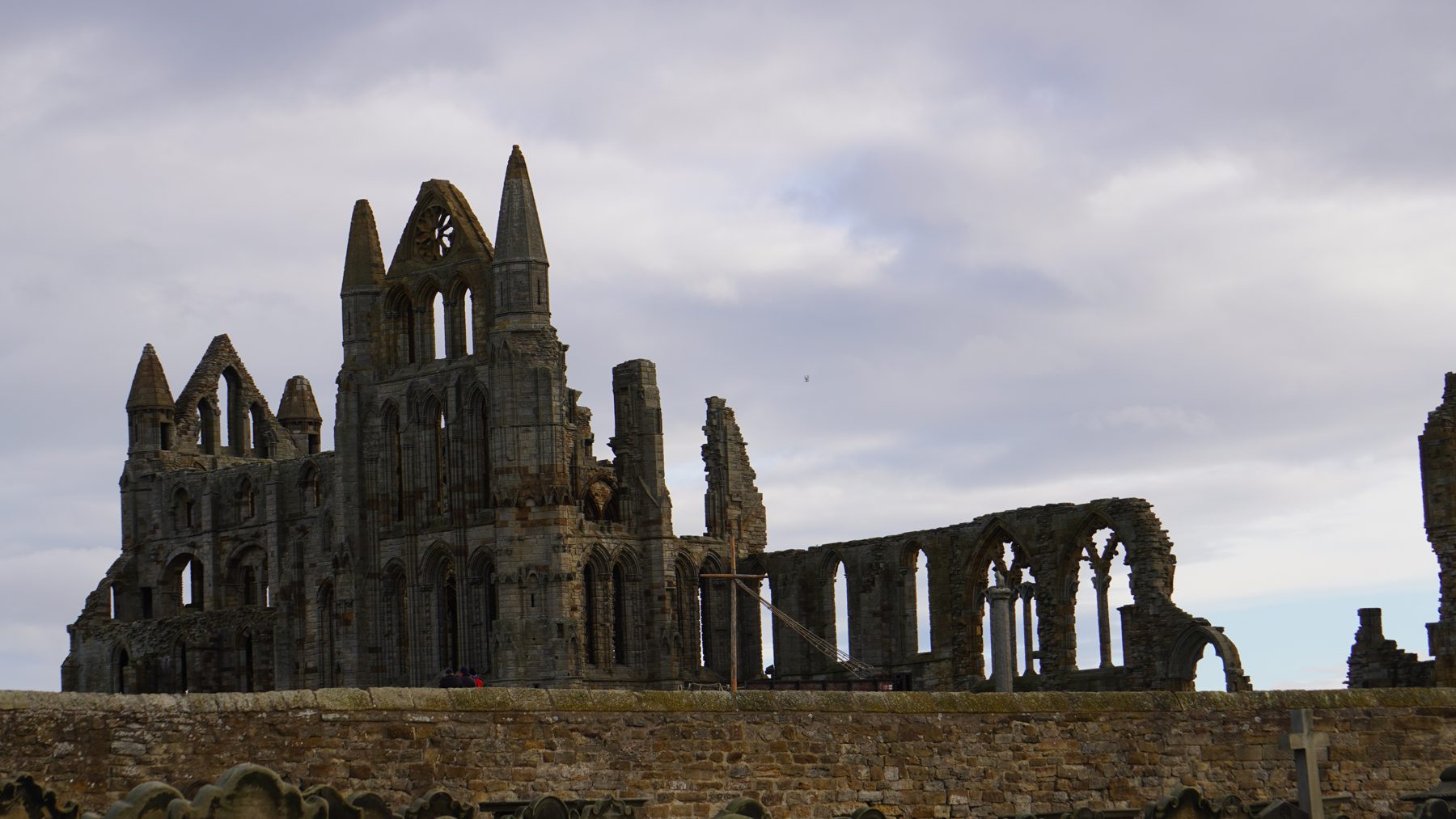 Yorkshire · The moors and the coastWhitby Abbey and DraculaA ruined abbey on a cliff, 199 steps up from the harbour, and one summer in 1890 when Bram Stoker walked into the town library and came out with the name Dracula. Here's what's real, what's in the book, and how to see both.
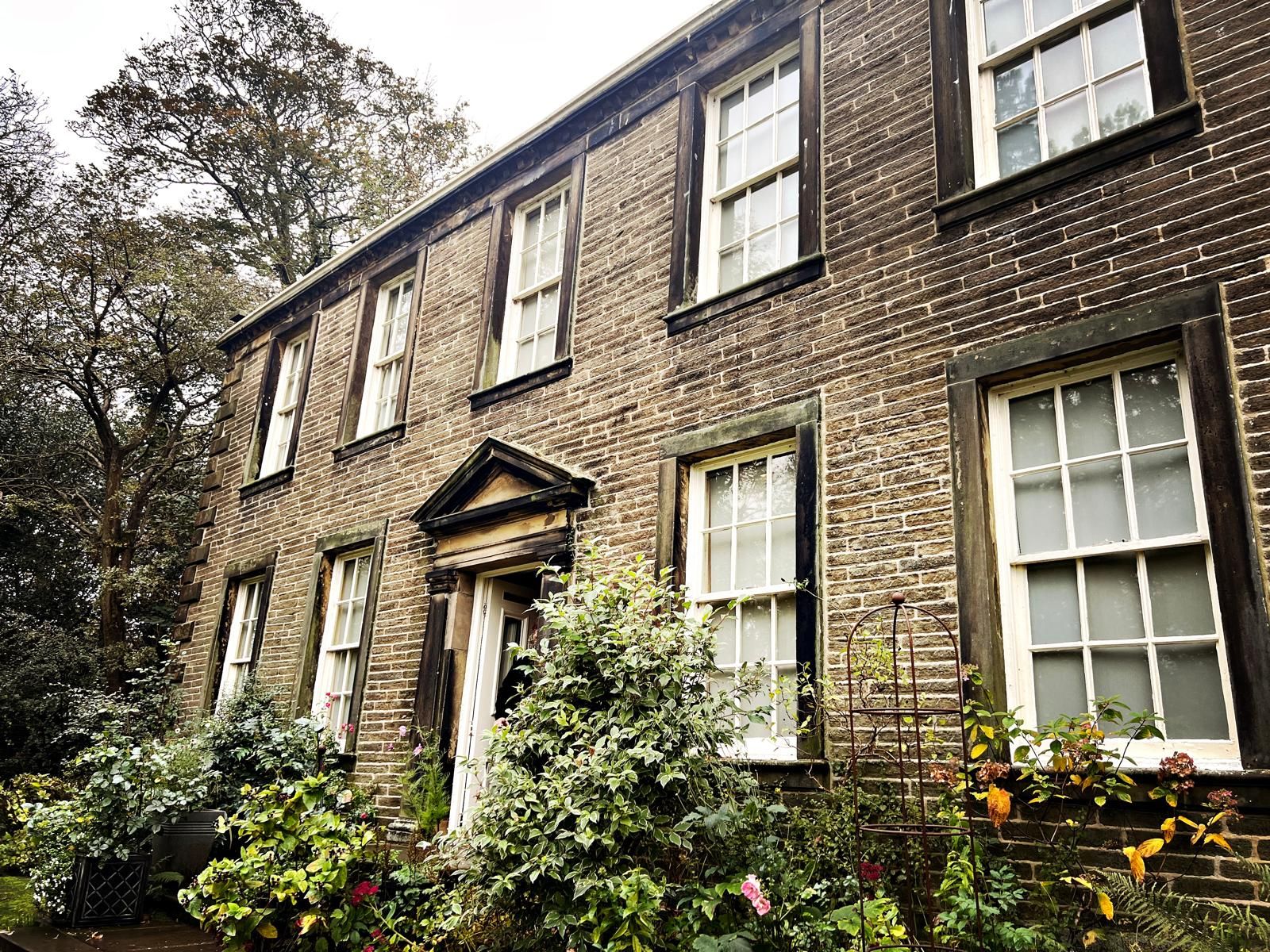 Yorkshire · The BrontësBooks by the Brontë sistersCharlotte, Emily and Anne Brontë wrote seven novels between them, all at one house in Haworth, West Yorkshire. Here's every book in order, who wrote which, and the story behind them, including what Charlotte really thought of Jane Austen.
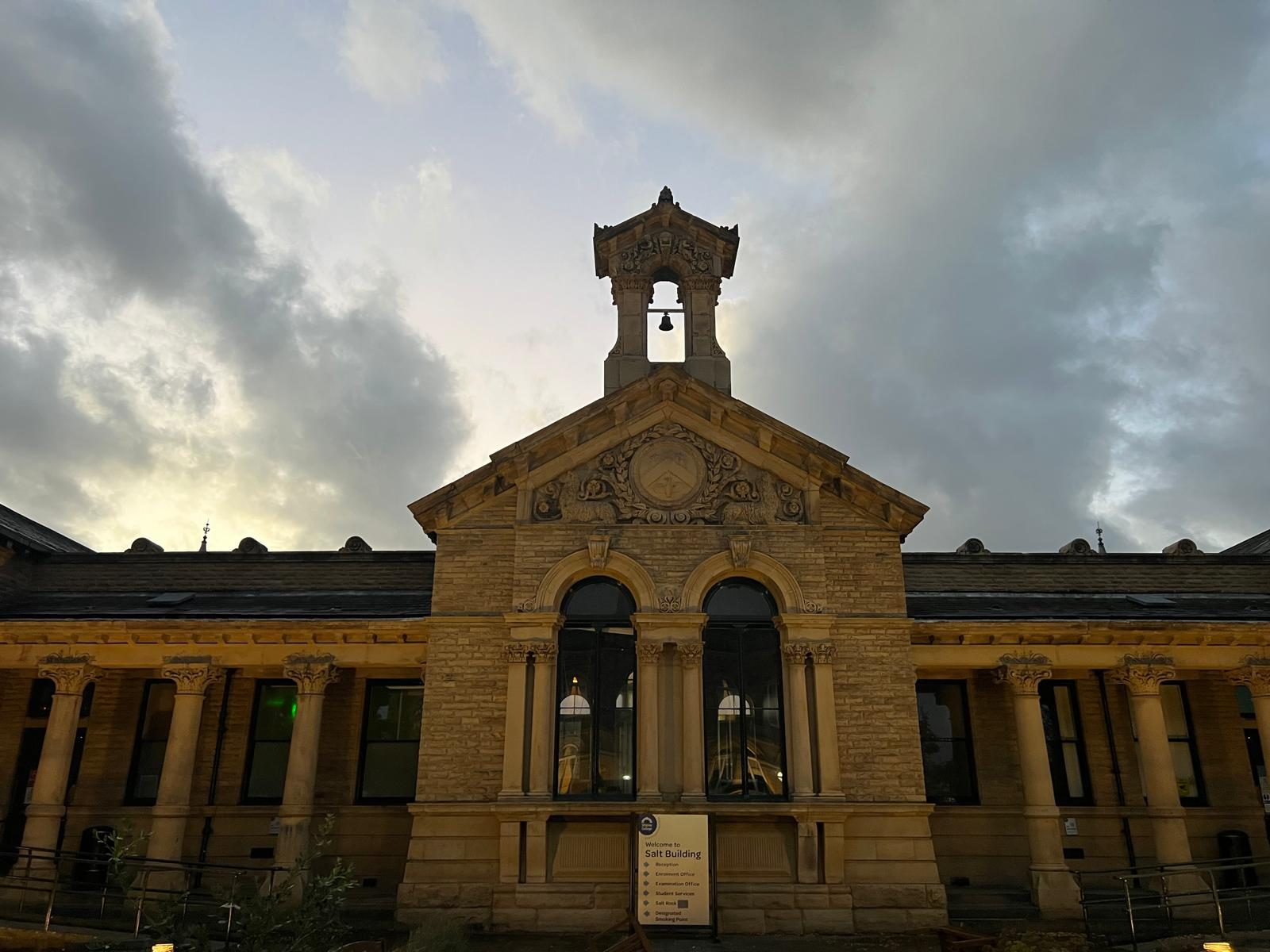 Yorkshire · Mills and moorsSaltaire, EnglandOne mill owner built a whole village for his workers. The mill is now full of David Hockney's art and one of the biggest bookshops you'll ever wander round. I nearly skipped it. Don't.
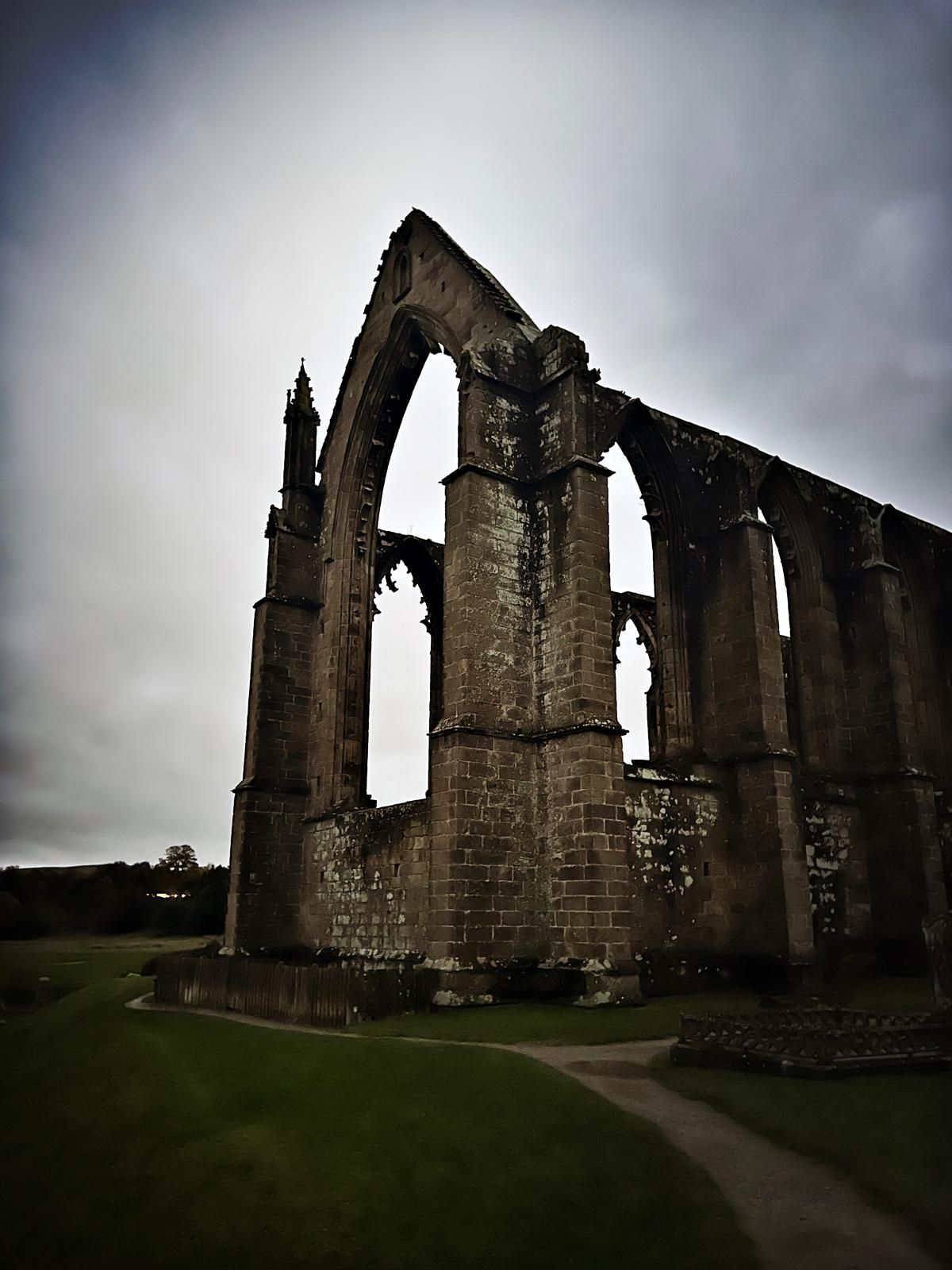 Yorkshire · The DalesBolton Abbey to SkiptonA ruined priory on the River Wharfe and one of England's most complete medieval castles, a few miles apart at the bottom edge of the Yorkshire Dales. Easy to pair, and easy to pair with Haworth too.
Sources
- North York Moors National Park Authority: facts and figures (1952, 554 sq miles, 26 miles coast)
- Wikipedia: North York Moors
- North Yorkshire Moors Railway (stations, 2027 reopening, Bridge 42)
- NYMR: Group visits (Goathland as Hogsmeade)
- Wikipedia: Goathland
- Countryfile: Sutton Bank walk (Herriot view, White Horse 1857, Gormire)
- VisitEngland: See England's finest view from Sutton Bank
- English Heritage: Byland Abbey history
- English Heritage: Helmsley Castle
- Wikipedia: Kirkdale sundial
- University of Oxford: St Gregory's Minster, Kirkdale
- North York Moors National Park: Hole of Horcum
- Cool Places: Hole of Horcum (400 ft deep)
- Yorkshire Post: All Creatures Great and Small (Channel 5) locations
- World of James Herriot: filming locations
- Project Gutenberg: Journals of Dorothy Wordsworth, vol. 1
- Project Gutenberg: Gaskell, Sylvia's Lovers
- Project Gutenberg: The Letters of Charles Dickens, vol. 2
- NYMR: Travel updates
- English Heritage: History of Rievaulx Abbey (founded March 1132; suppressed 3 December 1538)
- National Trust: History of Rievaulx Terrace (Thomas Duncombe II)
- Wikipedia: Rievaulx Terrace (1758)
- Wikipedia: Siege of Helmsley Castle (September–22 November 1644)
- Wikipedia: North Yorkshire Moors Railway (1836; last passenger train 6 March 1965; reopened 1 May 1973)
- NYMR: History of the NYMR (Goathland deviation line, 1865)
- Wikipedia: Heartbeat (first broadcast 10 April 1992)
- Wordsworth Trust: Mary Hutchinson (married William Wordsworth 4 October 1802 at Brompton)
Get the reading list first.
Trip announcements, curated reading lists, and the occasional dispatch — before anyone else.