Yorkshire · The Brontës
Wuthering Heights filming locations, and Top Withens: the places behind the book and the films
Emily Brontë set Wuthering Heights on the moors above Haworth. Most of the films went somewhere else. Here's which is which, and how to walk to the ruin everyone calls the real thing.
- The novel
- Wuthering Heights by Emily Brontë, published December 1847 under the name Ellis Bell
- Its moors
- Haworth Moor, West Yorkshire, above the Brontë Parsonage
- Top Withens
- Ruined farmhouse at about 1,377 ft (420 m) on Haworth Moor, on the Pennine Way and Brontë Way
- Walk from Haworth
- About 6–7 miles round trip via the Brontë Waterfall, 3 hours or more
- Brontë Waterfall
- On South Dean Beck, about 2–2½ miles west of Haworth, about a mile south-west of Stanbury
- 2026 film
- Yorkshire Dales (Swaledale, Arkengarthdale, Low Row) plus studio sets in Hertfordshire
- Not filmed at
- Top Withens or Haworth, for the 2026 film
The short answer
The 2026 Wuthering Heights film, directed by Emerald Fennell with Margot Robbie and Jacob Elordi, shot its moor scenes in the Yorkshire Dales, mainly Swaledale, Arkengarthdale and Low Row, with sets built in a studio in Hertfordshire. Earlier versions used California (1939), East Riddlesden Hall and Broughton Hall in West and North Yorkshire (1992), and Muker in Swaledale (2011). The real landscape of the novel is Haworth Moor, where the ruined farm of Top Withens is the place most often linked to the book.
Wuthering Heights filming locations are spread across Yorkshire, Kent and California, but the moor Emily Brontë actually wrote about is the one behind her own house in Haworth. Top Withens, a ruined farm about 5 km (3 miles) south-west of the village, is the place most people walk to. Emerald Fennell’s film, out in February 2026, sent a whole new wave of people looking for where it was made. So let’s sort it out: what the novel is about, what Top Withens really is, how to walk there (and to the Brontë Waterfall), and where each major film was shot.
Which Brontë sister wrote Wuthering Heights?
Emily Brontë. It’s her only novel, published in December 1847 under the name Ellis Bell. People mix the sisters up all the time, so for the record: Charlotte wrote Jane Eyre, Anne wrote Agnes Grey and The Tenant of Wildfell Hall, and Emily wrote this one. (She died a year after it came out, at 30, so she never knew what it would become.)
What is Wuthering Heights about?
Wuthering Heights is set on the moors of northern England between 1771 and 1802. It’s told by Mr Lockwood, who rents a house called Thrushcross Grange, and by Nelly Dean, a housekeeper who has worked for both families in the book.
Mr Earnshaw, who lives at the hilltop farm of Wuthering Heights, brings home an orphan boy he calls Heathcliff. Heathcliff and Earnshaw’s daughter Catherine grow up wild together on the moor. When Catherine marries the wealthy Edgar Linton of Thrushcross Grange instead of him, Heathcliff leaves, comes back rich, and spends the rest of his life taking revenge on the Earnshaws, the Lintons and their children. The second half follows that next generation, which is the half most films cut.
Emily explains the title in the first chapter:
Wuthering Heights is the name of Mr. Heathcliff’s dwelling. “Wuthering” being a significant provincial adjective, descriptive of the atmospheric tumult to which its station is exposed in stormy weather.
— Emily Brontë, Wuthering Heights, Chapter I (1847), Project Gutenberg
In other words: it’s windy up there. For the rest of the family’s books, see Books by the Brontë sisters.
Top Withens: is it the real Wuthering Heights?
Top Withens (also spelled Top Withins) is a ruined stone farmhouse on Haworth Moor, at about 1,377 feet (420 meters). It sits east of Withins Height, below Delf Hill, and both the Pennine Way and the Brontë Way pass it. The name comes from a dialect word for willows.
It’s famous because people have long said it was the model for the Earnshaws’ farm. That idea probably started with letters between Charlotte’s publisher, George Smith, and her friend Ellen Nussey, who were listing places that had inspired the novels. The Brontë Society put a plaque on the ruin in 1964, in answer to visitors’ questions. It says, fairly bluntly, that the buildings didn’t resemble the house in the novel even when they were whole, but that the site may have been in Emily’s mind when she wrote about the moorland setting.
So: the house isn’t Wuthering Heights. The bare hilltop with its wind-bent trees is very close to what Emily describes:
Pure, bracing ventilation they must have up there at all times, indeed: one may guess the power of the north wind, blowing over the edge, by the excessive slant of a few stunted firs at the end of the house; and by a range of gaunt thorns all stretching their limbs one way, as if craving alms of the sun.
— Emily Brontë, Wuthering Heights, Chapter I (1847), Project Gutenberg
People were still living there in the 1890s. On 18 May 1893 it was struck by lightning, which tore part of the roof off and broke about 30 windows, according to a local paper at the time.
How to walk to Top Withens from Haworth
There’s no road to Top Withens. You walk.
| Route | Distance |
|---|---|
| Haworth to the Brontë Waterfall | About 2–2½ miles one way |
| Brontë Waterfall to Top Withens | About another 1–1¼ miles, uphill |
| Full round trip from Haworth | About 6–7½ miles, 3 hours or more |
| Penistone Hill, Brontë Waterfall and Top Withens loop | About 6 miles (10 km), a good 3 hours |
Figures are from published walk guides, including the Bradford 2025 leaflet and Yorkshire Water’s Haworth Moor walk. Routes vary, so carry a map.
Is there a circular walk?
Yes, and it’s the better way to do it, because you don’t walk the same path twice. The usual loop:
- From Haworth, head west over Penistone Hill.
- Drop down to the Brontë Waterfall and the little stone bridge.
- Cross the bridge and climb the steep bank on the far side, then follow the single path up to Top Withens.
- Come back down through the village of Stanbury (there’s a pub there called, of course, the Wuthering Heights) and along the valley to Haworth.
That’s about 6 miles and a good three hours. The VisitHaworth route notes describe the same loop.
Practical points
- Boots, not sneakers. The path is stone-flagged in parts and peaty and wet in others. It gets boggy near Top Withens.
- The weather turns fast. Take a waterproof and a warm layer, even in summer.
- No facilities once you leave Haworth. Toilets are at the West Lane car park in the village.
- The signposts are in English and Japanese, because so many visitors come from Japan.
My honest take: if you’re only in Haworth for the day and want the Parsonage too, you probably can’t fit in the full walk without rushing one of them. Do the museum in the morning and save Top Withens for a day with nothing else planned.
Where is the Brontë Waterfall?
The Brontë Waterfall is on South Dean Beck (“beck” is the Yorkshire word for a stream), out on Haworth Moor about 2 to 2½ miles west of Haworth and about a mile south-west of Stanbury. It’s about 45 minutes on foot from Main Street, following the signs.
Set your expectations: it’s a small waterfall, and it’s at its best after heavy rain. The sisters walked out to it, which is the real reason to go.
Below the falls is the Brontë Bridge, a stone footbridge over the beck. The old one was swept away in a flash flood in May 1989, and in March 1990 an Army Lynx helicopter flew five gritstone slabs into the narrow valley so park rangers could rebuild the crossing. From the bridge you can turn back to Haworth or carry on uphill to Top Withens.
Other places linked to the novel
- Ponden Hall, a farmhouse near Stanbury, west of Haworth. It has traditionally been linked with Thrushcross Grange, though it’s closer in size and look to the Heights itself. The biographer Winifred Gérin thought it was the original of Anne Brontë’s Wildfell Hall.
- Ponden Kirk, a rock outcrop on the moor above Ponden, usually identified with Penistone Crags, where young Cathy longs to go:
The abrupt descent of Penistone Crags particularly attracted her notice; especially when the setting sun shone on it and the topmost heights, and the whole extent of landscape besides lay in shadow.
— Emily Brontë, Wuthering Heights, Chapter XVIII (1847), Project Gutenberg
- High Sunderland Hall, near Halifax, where Emily taught at a school for six months. It’s been suggested as a model, but it was far too grand for a farmhouse, and it’s since been demolished.
Wuthering Heights filming locations, film by film
| Year | Stars | Where it was filmed |
|---|---|---|
| 1939 | Laurence Olivier, Merle Oberon | California. Mainly Thousand Oaks, including today’s Wildwood Regional Park, where a set of the Yorkshire moors was built in the Conejo Hills, about 50 miles from Hollywood. |
| 1992 | Ralph Fiennes, Juliette Binoche | Yorkshire. East Riddlesden Hall near Keighley (the farmhouse), Broughton Hall near Skipton (Thrushcross Grange), Aysgarth Falls and the North York Moors, per IMDb. |
| 2011 | Directed by Andrea Arnold | Swaledale, North Yorkshire. Moor Close Farm at Muker (the Heights), Thwaite (Gimmerton), Cotescue Park at Coverham (Thrushcross Grange). Production office in Hawes. |
| 2016 | To Walk Invisible (about the Brontës, not the novel) | A replica of the Parsonage built on Penistone Hill, above Haworth. |
| 2026 | Margot Robbie, Jacob Elordi (dir. Emerald Fennell) | Yorkshire Dales, South and West Yorkshire, Kent, and studio sets in Hertfordshire. Details below. |
Sources disagree on a few details, like exactly where the 1939 moor set stood. We’ve listed only what more than one source, or the production’s own listing, supports.
So yes, Hollywood built Yorkshire in California. (The 1939 Heathcliff never had to get his boots wet.)
Where was Wuthering Heights 2026 filmed?
Emerald Fennell’s film, released in February 2026, used real Yorkshire landscape for its exteriors and built most of its interiors. Reported locations:
- Swaledale and Arkengarthdale, Yorkshire Dales National Park. The misty moor exteriors. Reeth was the production’s base.
- Low Row, Swaledale. Key outdoor scenes.
- Booze Moor, Arkengarthdale. The tree where Heathcliff leaves Cathy on a branch. The tree was a prop, but you can visit the spot.
- Healaugh Crag (Crag Willas), near Reeth. The rock where Cathy sits after Heathcliff leaves.
- Bouldershaw Lane, Swaledale. Cathy in her wedding dress, on the way to marry Edgar Linton.
- Old Gang Mill, near Reeth. Real ruined buildings, used for wider shots of the Wuthering Heights estate.
- Surrender Bridge, on the Coast to Coast path, and the remote moorland of Reef Moor.
- Bridestones Moor, West Yorkshire, north of Todmorden. The standing rocks Cathy retreats to.
- Needle’s Eye, Wentworth, South Yorkshire. The stone arch where young Cathy and Heathcliff shelter from the rain.
- Knole House, Sevenoaks, Kent. The opening hanging scene, and Heathcliff’s wedding to Isabella.
- Studio sets in Hertfordshire. Thrushcross Grange, including its garden, was built entirely on set, as were most interiors. Reports differ on which studio.
The Ordnance Survey’s guide points out that Top Withens wasn’t a filming location for the 2026 film. Neither was Haworth. If you’ve come for the Margot Robbie scenery, you want Swaledale, in the northern Dales, not Haworth.
Kate Bush, the Emily Stone, and the music
Kate Bush’s “Wuthering Heights” was her debut single, released on 20 January 1978. It spent four weeks at number one in the UK, and she was the first woman to top the UK chart with a song she’d written herself.
Forty years later, in 2018, Bush wrote the words for the Emily Stone, one of four Brontë Stones put up on the moors between Thornton and Haworth for the Bradford Literature Festival. The others are by Carol Ann Duffy (Charlotte), Jackie Kay (Anne) and Jeanette Winterson. A nine-mile walk from Thornton to Haworth links all four.
Visiting Brontë country: what to pair with Top Withens
- Haworth and the Brontë Parsonage Museum. Start or end the walk here. At current hours the museum is closed Mondays and Tuesdays, so check the Brontë Society’s visit page before you plan your walking day around it.
- Skipton Castle and Bolton Abbey. About half an hour north of Haworth. Broughton Hall, the 1992 Grange, is near Skipton.
- Swaledale, for the 2011 and 2026 locations, is in the northern Dales, well north of Haworth. Make it a separate day.
If you like your film locations on cliffs, our Ireland guide to the Cliffs of Insanity covers another set of real cliffs the movies made famous.
What our trip does, and doesn’t
Our October 2027 Yorkshire trip spends a morning in Haworth: the Parsonage, the church, and a short walk onto Penistone Hill behind the house, weather allowing. We chose the short walk on purpose, because not everyone wants a three-hour moor hike in October (and the bogs don’t care how much you love the book). We don’t walk to Top Withens, and we don’t go to the Swaledale film locations. If those matter to you, they’re easy to add on your own before or after the trip.
Wuthering Heights' world: what else was happening
Emily set her story between 1771 and 1802, under George III, and wrote it in the 1840s in the same house where Charlotte was writing Jane Eyre and Anne was writing Agnes Grey. The films came a century later, and most of them went somewhere other than Haworth.
- The years the novel covers 1771–1802
- Victorian (Queen Victoria) 1837–1901
The story Britain The wider world Other writers
- 1771 The story In the novel, Mr Earnshaw brings the orphan Heathcliff home from Liverpool, thirty years before Lockwood's first visit.
- 1801 The story The novel opens: Mr Lockwood, the new tenant of Thrushcross Grange, calls on his landlord, Heathcliff.
- 1801 Britain The Act of Union joins Great Britain and Ireland as the United Kingdom.
- 1801 The wider world Thomas Jefferson becomes the third US president.
- 1818 The story Emily Brontë is born at Thornton, near Bradford, on 30 July.
- 1837 Britain Victoria becomes queen at 18.
- 1847 The story Wuthering Heights is published in December by Thomas Newby, with Anne's Agnes Grey, under the name Ellis Bell.
- 1847 Other writers Charlotte's Jane Eyre comes out in October and beats both her sisters' books into print.
- 1848 The wider world Harper & Brothers publishes the first American edition in New York, in April.
- 1848 The story Emily dies at the Parsonage on 19 December, aged 30.
- 1850 The story Charlotte edits a second edition, with her own preface, and softens the servant Joseph's broad Yorkshire dialect.
- 1893 The story Lightning strikes the farm at Top Withens on 18 May, tearing off part of the roof.
- 1920 The story The first known film is shot in England, directed by A. V. Bramble.
- 1939 The story William Wyler's film, with Laurence Olivier and Merle Oberon, is made in California.
- 1939 Britain Britain declares war on Germany in September.
- 1964 The story The Brontë Society puts a plaque on the Top Withens ruin to answer visitors' questions.
- 1965 Britain The Pennine Way opens on 24 April, England's first National Trail. It passes Top Withens.
- 1970 The story Timothy Dalton plays Heathcliff in the first color film of the novel.
- 1978 Other writers Kate Bush's debut single, "Wuthering Heights", is released on 20 January and spends four weeks at UK number one.
- 1989 The story A flash flood in May sweeps away the old Brontë Bridge below the waterfall. An Army helicopter flies in new stone slabs in 1990.
- 1992 The story Ralph Fiennes and Juliette Binoche star in a version that keeps the second generation, filmed in Yorkshire.
- 2009 The story ITV's two-part drama, with Tom Hardy and Charlotte Riley.
- 2011 The story Andrea Arnold's film, shot in Swaledale.
- 2016 Other writers Sally Wainwright's BBC drama about the sisters, To Walk Invisible, builds a replica Parsonage on Penistone Hill.
- 2018 Other writers Four Brontë Stones go up between Thornton and Haworth. Kate Bush writes the words for Emily's.
- 2022 Other writers Emily, a film about Emily Brontë's life, with Emma Mackey.
- 2026 The story Emerald Fennell's film, with Margot Robbie and Jacob Elordi, is released in February.
Questions people ask
Which Brontë sister wrote Wuthering Heights?
Emily Brontë wrote Wuthering Heights. It was her only novel, published in December 1847 under the pen name Ellis Bell. Charlotte wrote Jane Eyre and Anne wrote Agnes Grey.
Where was Wuthering Heights 2026 filmed?
Emerald Fennell's 2026 film shot its outdoor scenes in the Yorkshire Dales National Park, in Swaledale, Arkengarthdale and around Low Row and Reeth, with more at Bridestones Moor near Todmorden and Wentworth in South Yorkshire. Most interiors and Thrushcross Grange were built on studio sets in Hertfordshire.
Is Top Withens the real Wuthering Heights?
Not exactly. A Brontë Society plaque at the ruin, put up in 1964, says the buildings never resembled the house in the novel, though the setting may have been in Emily's mind when she described the moors. The link probably began with lists of Brontë places compiled after the sisters' deaths.
How long is the walk from Haworth to Top Withens?
Most published routes from Haworth to Top Withens and back, via the Brontë Waterfall, are about 6 to 7.5 miles and take three hours or more. The path is exposed and boggy in places, so wear boots and take a map.
Is there a circular walk from Haworth to Top Withens?
Yes. The usual loop goes from Haworth over Penistone Hill to the Brontë Waterfall, up to Top Withens, then back down through Stanbury and along the valley to Haworth. It's about 6 miles and takes a good three hours; the Bradford 2025 walk leaflet has a map.
Where is the Brontë Waterfall?
The Brontë Waterfall is on South Dean Beck on Haworth Moor, about 2 to 2½ miles west of Haworth and about a mile south-west of Stanbury. It's a small fall with a stone footbridge, the Brontë Bridge, below it, and it's on the waymarked Brontë Way to Top Withens.
What is Wuthering Heights about?
It's the story of two families on the Yorkshire moors, the Earnshaws and the Lintons, and of Heathcliff, an orphan taken in by the Earnshaws, and his love for Catherine Earnshaw. When she marries Edgar Linton instead, Heathcliff spends the rest of his life taking revenge on both families and their children.
Was Wuthering Heights filmed in Haworth?
None of the best-known film versions used Haworth as a main location. The 1939 film was made in California, and the 1992, 2011 and 2026 films used other parts of Yorkshire. The BBC's 2016 drama about the sisters, To Walk Invisible, did film on Penistone Hill above Haworth.
What does the word wuthering mean?
Emily Brontë explains it in the first chapter: wuthering is a local word for the noise and force of the wind in a storm, which the house on the hilltop takes full in the face.
Read next
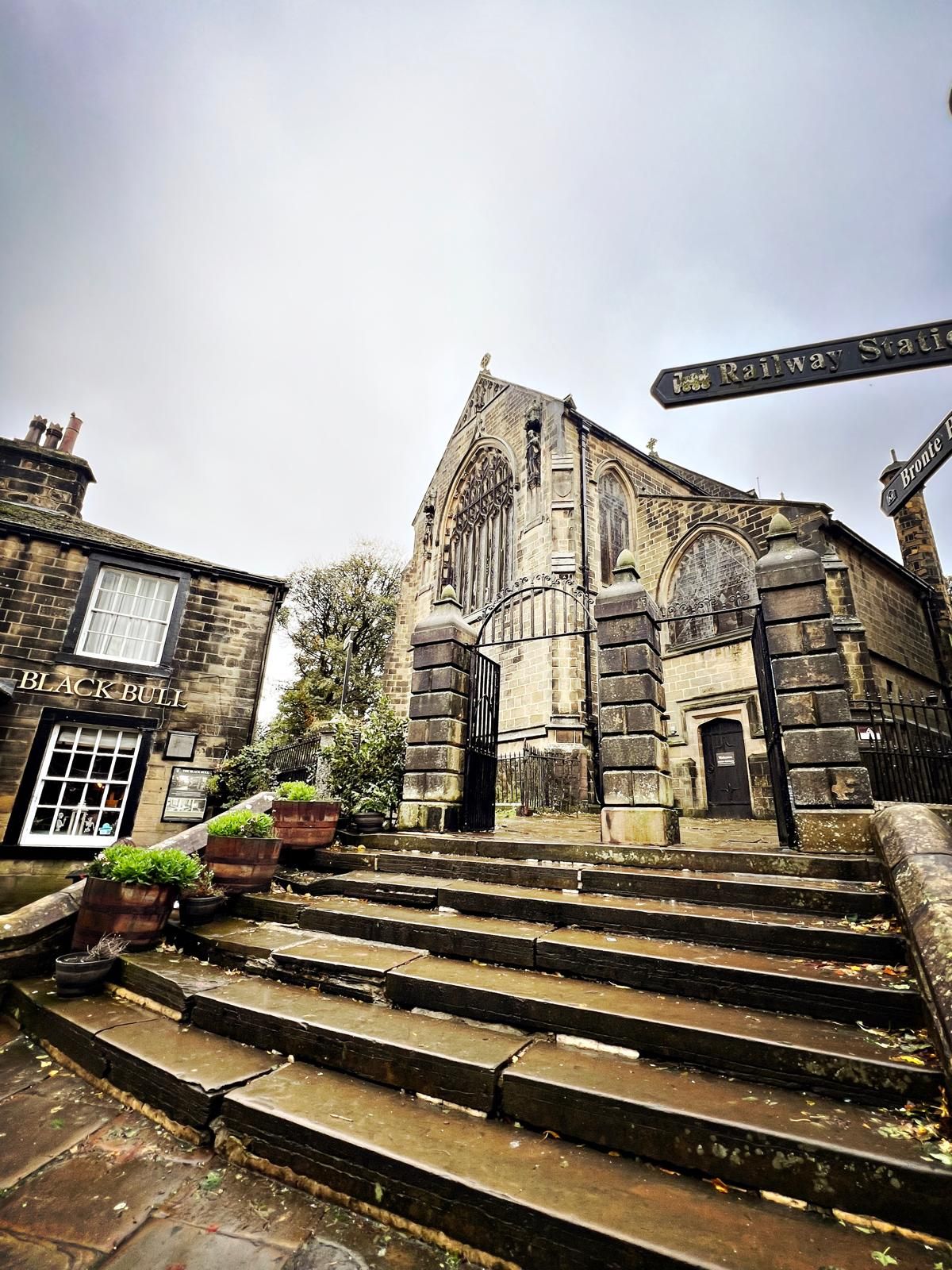 Yorkshire · The BrontësHaworth village and the Brontë Parsonage MuseumHaworth is one steep stone street on the edge of the West Yorkshire moors. At the top is the Brontë Parsonage, the house where Charlotte, Emily and Anne wrote their novels. Here's how to do it well.
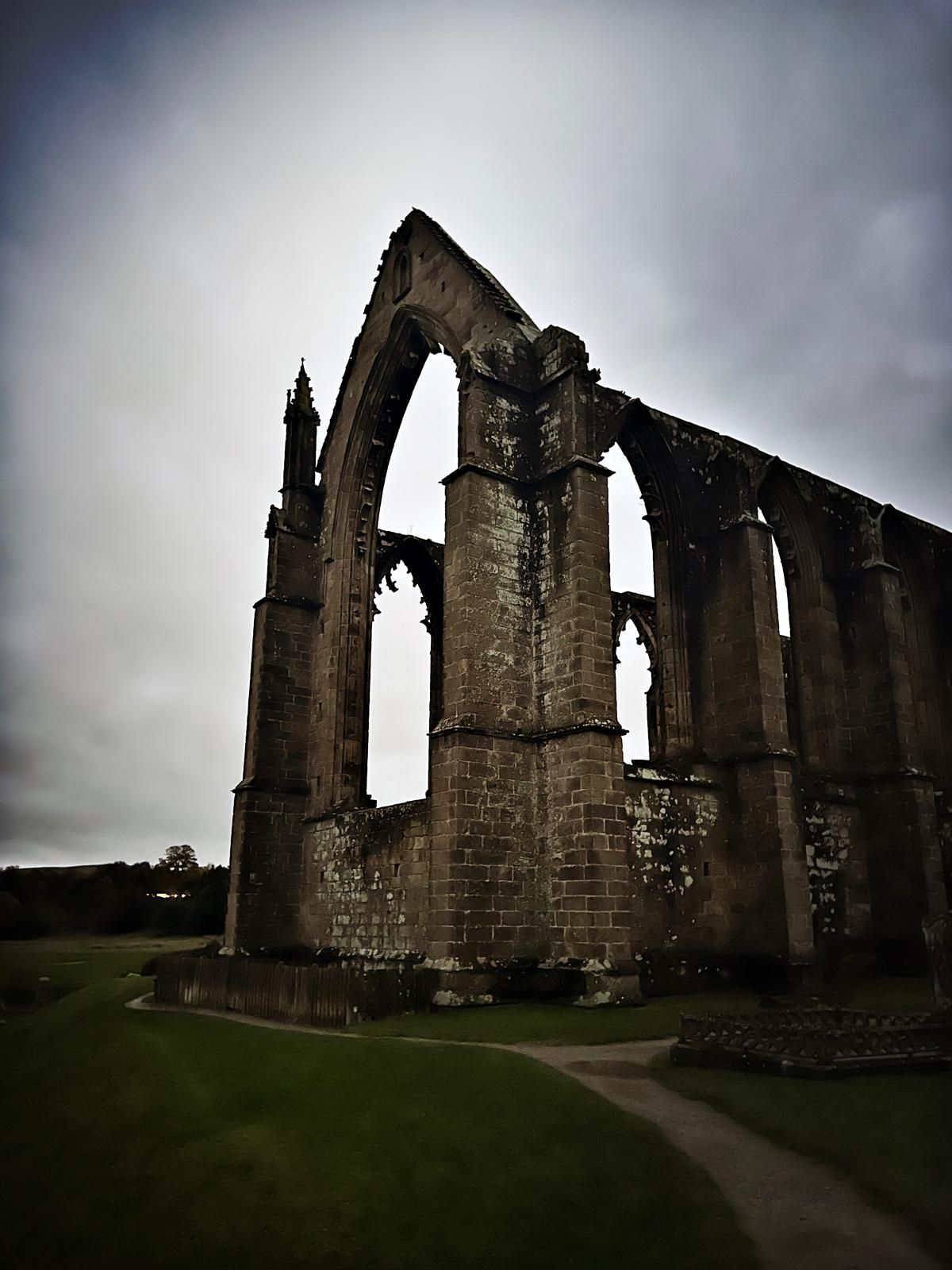 Yorkshire · The DalesBolton Abbey to SkiptonA ruined priory on the River Wharfe and one of England's most complete medieval castles, a few miles apart at the bottom edge of the Yorkshire Dales. Easy to pair, and easy to pair with Haworth too.
- Ireland · Cliffs of MoherThe Cliffs of InsanityThe Cliffs of Insanity in The Princess Bride are the Cliffs of Moher in County Clare, Ireland. Here's what was actually filmed there, and what wasn't.
Sources
- VisitEngland: Where was Wuthering Heights filmed? (2026)
- Movie-locations.com: Wuthering Heights (2026)
- Countryfile: Where was Wuthering Heights filmed?
- Ordnance Survey: Wuthering Heights (2026) filming locations
- Wikipedia: Wuthering Heights (1939 film)
- AFI Catalog: Wuthering Heights (1939)
- IMDb: Wuthering Heights (1992) filming locations
- Wikipedia: Wuthering Heights (2011 film)
- PeriodDramas.com: Wuthering Heights (2011) locations
- Wikipedia: Top Withens
- Wikipedia: Wuthering Heights (novel; publication, 1850 edition, 1771/1801 chronology, adaptations 1920–2026)
- Wikipedia: Brontë Waterfall (South Dean Beck; 1989 flood; 1990 repair)
- VisitHaworth: Brontë Waterfall and Bridge (directions, circular route via Top Withens and Stanbury)
- Bradford 2025: Penistone Hill and Top Withens walk leaflet
- Traveller: Top Withens, about 5 km south-west of Haworth
- Yorkshire Water: Haworth Moor walk
- Wikipedia: Wuthering Heights (Kate Bush song)
- It's Nice That: Brontë Stones project
- Wikipedia: To Walk Invisible
- National Trails: Pennine Way (England's first National Trail, opened 24 April 1965)
- Project Gutenberg: Emily Brontë, Wuthering Heights
Get the reading list first.
Trip announcements, curated reading lists, and the occasional dispatch — before anyone else.