Yorkshire · Mills and moors
Saltaire, England: a visitor's guide to Titus Salt's mill village and Salts Mill
One mill owner built a whole village for his workers. The mill is now full of David Hockney's art and one of the biggest bookshops you'll ever wander round. I nearly skipped it. Don't.
- Where
- Beside Shipley, north of Bradford, West Yorkshire
- Built
- 1851–1871, by Sir Titus Salt. The mill opened in 1853
- World Heritage Site
- Since December 2001
- Salts Mill
- Free entry. Open Wed–Sun; closed Mon and Tue (as of Nov 2026). Check times
- Inside the mill
- 1853 Gallery (Hockney), Salts Book & Poster Shop, Salts Diner
- Train
- Saltaire station is across the road from the mill; about 15 minutes from Leeds or Bradford
- Car
- Satnav BD17 7DR. Free visitors' car park during opening hours
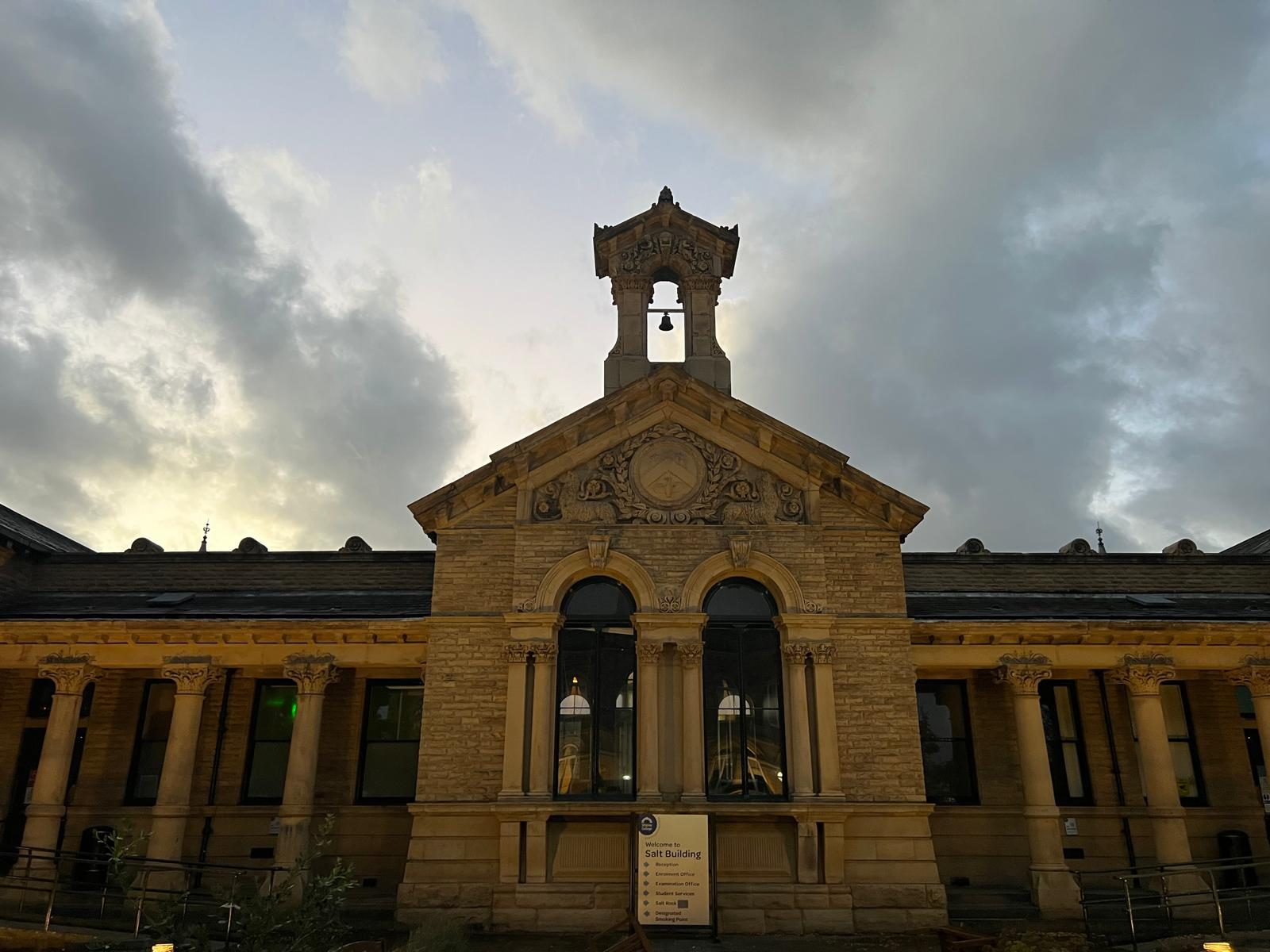
The short answer
Saltaire is a Victorian model village in West Yorkshire, England, built between 1851 and 1871 by the mill owner Sir Titus Salt for the workers at his textile mill, Salts Mill, which opened in 1853. It became a UNESCO World Heritage Site in 2001. Today Salts Mill is free to enter, with galleries of David Hockney's work, a large bookshop and a diner, open Wednesday to Sunday (as of November 2026).
Saltaire, England, is a complete Victorian village on the River Aire in West Yorkshire, built from scratch by one man for the people who worked in his mill. Sir Titus Salt laid out its streets, houses, church, school and park between 1851 and 1871, around a huge stone mill. The mill closed in 1986. Today it’s Salts Mill, a free arts centre with rooms full of paintings by David Hockney and an enormous, light-filled bookshop, and the whole village is a UNESCO World Heritage Site. Below: what to see, how long to give it, how to get there, and what we do there on our own trip.
I’ll be honest: Saltaire wasn’t on my plan. I’d read up on it, liked the idea, and written it off because I couldn’t fit everything in. Then on Sunday 25 October 2026, Storm Boelo was still blowing through, the group walk my friends Lucy and Rachel had planned was mostly called off, and Lucy announced she had an alternative plan. She didn’t tell me what it was. We drove to Saltaire. By the time we left, it was back on the itinerary. As I put it that week: you can’t just read about a place and make up your mind.
Where is Saltaire, England?
Saltaire is in the Bradford district of West Yorkshire, beside the town of Shipley, a few miles north of Bradford city centre. The River Aire and the Leeds and Liverpool Canal run along the edge of the village, right next to the mill.
It’s easy to reach:
| From | How | About |
|---|---|---|
| Leeds | Train to Saltaire station | 15 minutes |
| Bradford | Train to Saltaire station | 15 minutes |
| Car (satnav) | BD17 7DR, then the brown signs along Salts Mill Road | Free car park |
The station is directly across the road from the mill, which makes this one of the easiest car-free days in Yorkshire. Bradford’s clean air zone covers the area, but at the time of writing it doesn’t charge private cars.
Who was Titus Salt, and why did he build Saltaire?
Titus Salt was one of the big names in the Yorkshire wool trade, with mills in Bradford, where many of his workers lived in slum housing. He’d been Bradford’s mayor in 1848–49. In 1851 he started building a new mill outside the town, on the river and the canal, and a village around it to give his workers better places to live.
Salts Mill opened on 20 September 1853, Salt’s fiftieth birthday, with a banquet to match. Over the next two decades he added:
- rows of stone terraced houses
- wash-houses with tap water, and bath-houses
- almshouses and a hospital
- a school
- an institute for recreation and education (now Victoria Hall)
- a Congregational church
By the 1871 census, the village had 800 dwellings (755 houses and 45 almshouses) and 4,389 people.
Salt died in 1876 and is buried in the mausoleum attached to the church he built. The church became Saltaire United Reformed Church in 1972 and is listed Grade I, the highest grade there is.
One thing to keep in mind as you walk round: this was generous for its time, and it was also a company village. Your landlord, your employer and the man who built your church were the same person. Both things are true.
The village of Saltaire: what to see on a walk
You can walk the whole village in an hour. Look for:
- The streets of workers’ houses, neat stone terraces built for the mill’s families.
- The almshouses.
- Victoria Hall, the former Saltaire Institute, now used for meetings, events and concerts.
- Saltaire United Reformed Church, Salt’s Congregational church, with his mausoleum beside it.
- Roberts Park, north of the river. Sir James Roberts, who then owned the mill, gave it to Bradford Council in 1920 and renamed it in memory of his son.
- The canal towpath, for a flat walk along the Leeds and Liverpool Canal.
Sir James Roberts has a second connection worth knowing. He was born in the parish of Oakworth, next to Haworth, and he’s the man who bought the Brontë Parsonage in 1928 and gave it to the Brontë Society as a museum. If you’re pairing Saltaire with a day in Haworth and the Brontë Parsonage Museum, he’s the thread that ties the two together.
Salts Mill today: Hockney, books and lunch
Cloth production at the mill ended in 1986. In 1987 Jonathan Silver bought the building and turned it into a place for art, shops and food. Everything is free to enter, even the Hockney rooms.
| Inside Salts Mill | What it is | Hours (as of November 2026) |
|---|---|---|
| 1853 Gallery | A long gallery of David Hockney’s paintings, etchings and drawings, with art books and materials for sale among them | Wed–Fri 10–5, Sat–Sun 9.30–5 |
| Gallery 3 | Hockney’s 20 Flowers for 2025 And Some Bigger Pictures, its first showing outside London | Wed–Sun 10–4, until 17 January 2027 |
| Salts Book & Poster Shop | A huge, light-filled bookshop, strong on children’s books and poetry | Wed–Fri 10–5, Sat–Sun 9.30–5 |
| Salts Diner | Lunch and coffee in the middle of the mill. Booking advised: 01274 530 533 | Wed–Fri 10–4.30, Sat–Sun 9.30–4.30 |
Salts Mill is closed on Mondays and Tuesdays, and on Christmas Day, Boxing Day and New Year’s Day. It opens on most bank holiday Mondays. Times change, so check the mill’s own site before you go. (Turning up on a Tuesday is the classic mistake here.)
David Hockney was born in Bradford, a few miles down the road, and the mill holds an extraordinary collection of his work. Give the 1853 Gallery real time. It’s not a quick lap.
Saltaire UNESCO World Heritage Site
UNESCO inscribed Saltaire as a World Heritage Site in December 2001. It was recognised for its influence on town planning and as a complete example of a 19th-century model village: the mill, the houses and the public buildings together, a whole planned community rather than one grand building. It’s one of two World Heritage Sites in Yorkshire; the other is Fountains Abbey and Studley Royal.
Saltaire on film
On 24 July 1900, someone filmed workers leaving Salts Mill at the end of a shift. More film of the village, and of the Shipley Glen Tramway on the hill above it, was shot in 1914. The 1914 footage is held by the Yorkshire Film Archive. (Worth a look before you go, so you can stand on the same street afterwards.)
The women who worked in Salts Mill
This is the part of Saltaire I most want you to see. The Saltaire Collection, the village’s community archive, keeps records of individual mill workers, and many of them are women. Two from its catalogue:
- Emily Tennant, born in Baildon in 1887, started work at the mill in October 1901, aged 14. Salts (Saltaire) Ltd later gave her a long-service certificate for 50 years at the mill. (The archive gives the certificate’s date as both 1951 and 1953.) She died in 1974.
- Anne, Sabina and Polly Shuttleworth, three sisters who all worked in the mill. One is recorded as a silk spinner and bowler, and later a burler and mender.
The Saltaire Village website has a “Reel Lives” section of workers’ stories, and the mill’s own People and Process exhibition covers the work itself.
There’s also a guided village walk with a guide in costume, telling the story through the women who lived and worked here. We didn’t have time to do it on my visit, but Lucy and Rachel raved about it, and it’s on our trip. If you’re planning your own visit, ask about it ahead of time.
How long do you need in Saltaire?
| If you have | Do this |
|---|---|
| 2 hours | Salts Mill: the 1853 Gallery and the bookshop |
| Half a day | The mill, lunch in Salts Diner, and a walk round the village and Roberts Park |
| A full day | Add the canal towpath or a guided walk, or pair Saltaire with Haworth or Bolton Abbey |
One practical note: if you visit in late October, remember UK clocks go back a week before America’s. It was getting dark as we left, with the moon up over the village. Lovely for photos, less so if you’d planned the canal walk.
What to pair with Saltaire
- Haworth and the Brontës, up the valley past Keighley.
- Bolton Abbey and Skipton Castle, in the Yorkshire Dales to the north-west.
- Brimham Rocks, if you’re driving back towards Harrogate or Ripon.
- For what Haworth was really like as a mill village, and why it was so unhealthy, see Books by the Brontë sisters.
What our trip does in Saltaire
Saltaire is the Friday of our October 2027 Yorkshire trip. It’s there because the week follows the women who lived and worked in Yorkshire, and this is where we meet the women who worked in the mills. It’s also there because of that windy Sunday. The plan as it stands:
- Time in Salts Mill: the 1853 Gallery, People and Process (the mill’s own history), and the bookshop.
- Lunch together in Salts Diner.
- The guided village walk, focused on the women who worked in Salts Mill.
- A short stop at Brimham Rocks on the way back, then the evening at Fountains Abbey for Fountains by Floodlight.
Times and bookings are still being confirmed with the mill and the guide.
Saltaire's world: what else was happening
Saltaire is pure mid-Victorian. Titus Salt opened his mill the same year Charlotte Brontë published Villette, and built his village while Dickens and Elizabeth Gaskell were writing novels about mill towns and America was fighting its Civil War.
- Victorian 1837–1901
The story Britain The wider world Other writers
- 1803 The story Titus Salt is born in Morley, near Leeds, on 20 September.
- 1847 Britain The Factories Act limits women and teenagers in textile mills to ten hours a day.
- 1848 The story Salt becomes the second Mayor of Bradford.
- 1849 Other writers Charlotte Brontë publishes Shirley, set in Yorkshire's mill country.
- 1851 The story Building work on the new mill begins beside the River Aire.
- 1851 Britain The Great Exhibition opens in London's Crystal Palace.
- 1853 The story Salts Mill opens with a banquet on 20 September, Salt's 50th birthday. The village follows from the next year.
- 1853 Other writers Charlotte Brontë publishes Villette.
- 1854 Britain Britain and France enter the Crimean War against Russia.
- 1854 Other writers Dickens publishes Hard Times, set in the mill town of Coketown. Gaskell's North and South starts appearing in his magazine.
- 1857 Other writers Gaskell publishes The Life of Charlotte Brontë.
- 1859 The story Salt's Congregational church is finished, and he's elected MP for Bradford.
- 1861 The wider world The American Civil War begins.
- 1863 The wider world Lincoln's Emancipation Proclamation takes effect on 1 January.
- 1865 The wider world The Civil War ends, and Lincoln is assassinated.
- 1867 Britain The Second Reform Act gives the vote to many working men in towns.
- 1869 The story Salt is made a baronet on 30 October.
- 1870 Britain The Elementary Education Act sets up school boards to build schools wherever England and Wales lack them.
- 1871 The story Building is nearly complete. The census counts 4,389 people in the village.
- 1871 Other writers George Eliot's Middlemarch begins coming out in parts.
- 1876 The story Sir Titus Salt dies at Crow Nest, near Halifax, and is buried at his Saltaire church.
- 1900 The story On 24 July, someone films the workers leaving Salts Mill at the end of a shift.
- 1937 Other writers David Hockney is born in Bradford.
- 1986 The story Salts Mill stops making cloth in February.
- 1987 The story Jonathan Silver buys the mill and starts turning it into galleries, shops and a diner.
- 2001 The story UNESCO lists Saltaire as a World Heritage Site in December.
Questions people ask
Is Saltaire worth visiting?
Yes, especially if you like art, books or social history. It's a complete Victorian industrial village, built in one go, and the mill at its centre holds a large collection of David Hockney's work and a huge bookshop, all free to enter.
What is Saltaire famous for?
Saltaire is famous as one of the best-preserved Victorian model villages, built by Sir Titus Salt for his mill workers, and for Salts Mill, which since 1987 has been an arts centre with galleries of work by David Hockney, who was born in nearby Bradford.
When is Salts Mill open?
As of November 2026, Salts Mill is open Wednesday to Sunday and closed on Mondays and Tuesdays. The 1853 Gallery and bookshop open 10am to 5pm on weekdays and from 9.30am at weekends, and the Diner serves until 4.30pm. Check the mill's own site before you go.
How long do you need in Saltaire?
Half a day: two to three hours in Salts Mill with lunch, and an hour to walk the village streets, the church and Roberts Park. It's an easy day trip from Leeds or Bradford by train.
Why did Titus Salt build Saltaire?
Salt moved his business out of Bradford, where many workers lived in slums, and built houses, wash-houses, a school, a hospital, almshouses, an institute and a church around his new mill so his workers would have better living conditions.
Can you get to Saltaire by train?
Yes. Saltaire has its own railway station, directly across the road from Salts Mill, and trains take about 15 minutes from Leeds or Bradford.
Read next
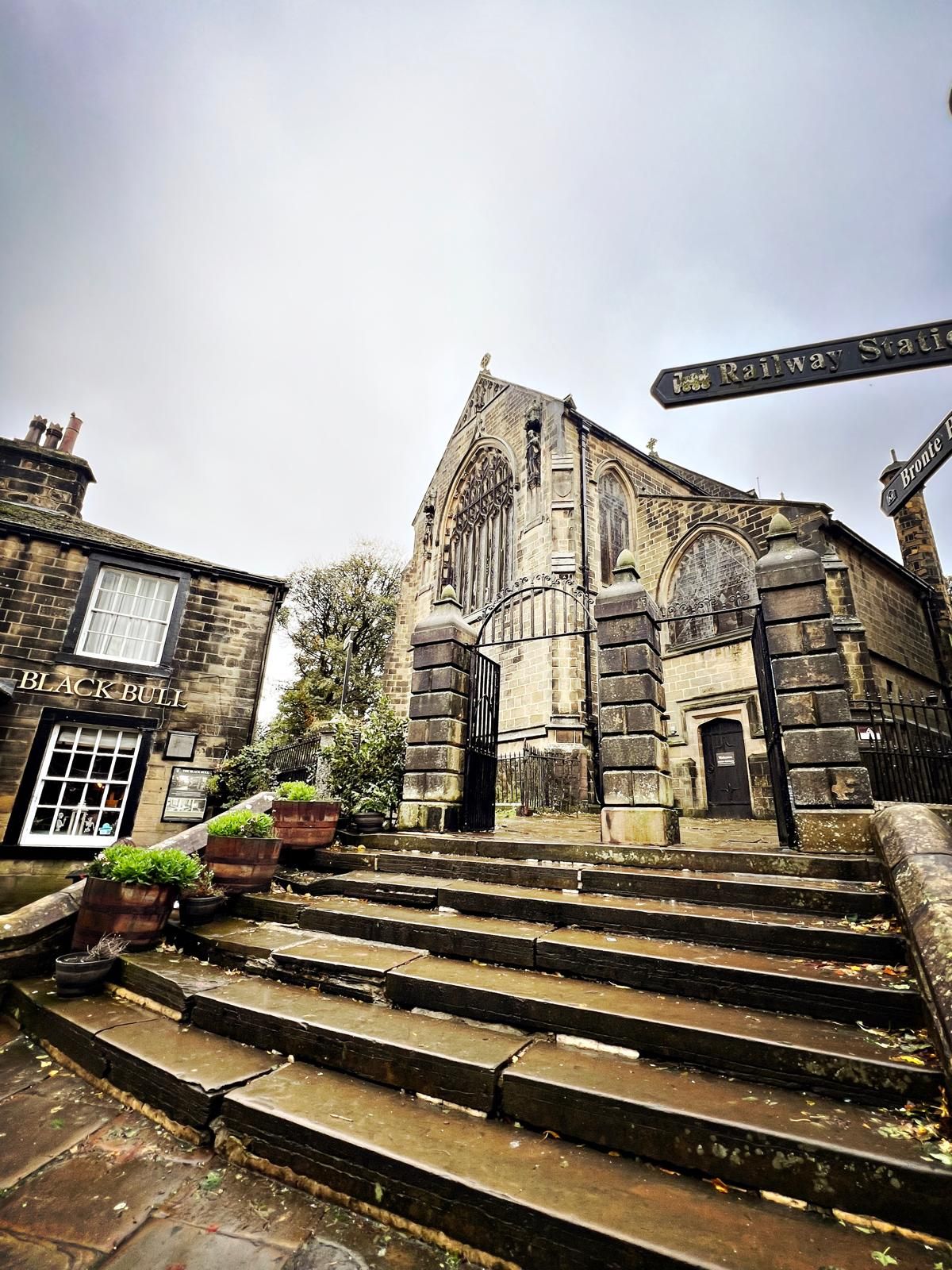 Yorkshire · The BrontësHaworth village and the Brontë Parsonage MuseumHaworth is one steep stone street on the edge of the West Yorkshire moors. At the top is the Brontë Parsonage, the house where Charlotte, Emily and Anne wrote their novels. Here's how to do it well.
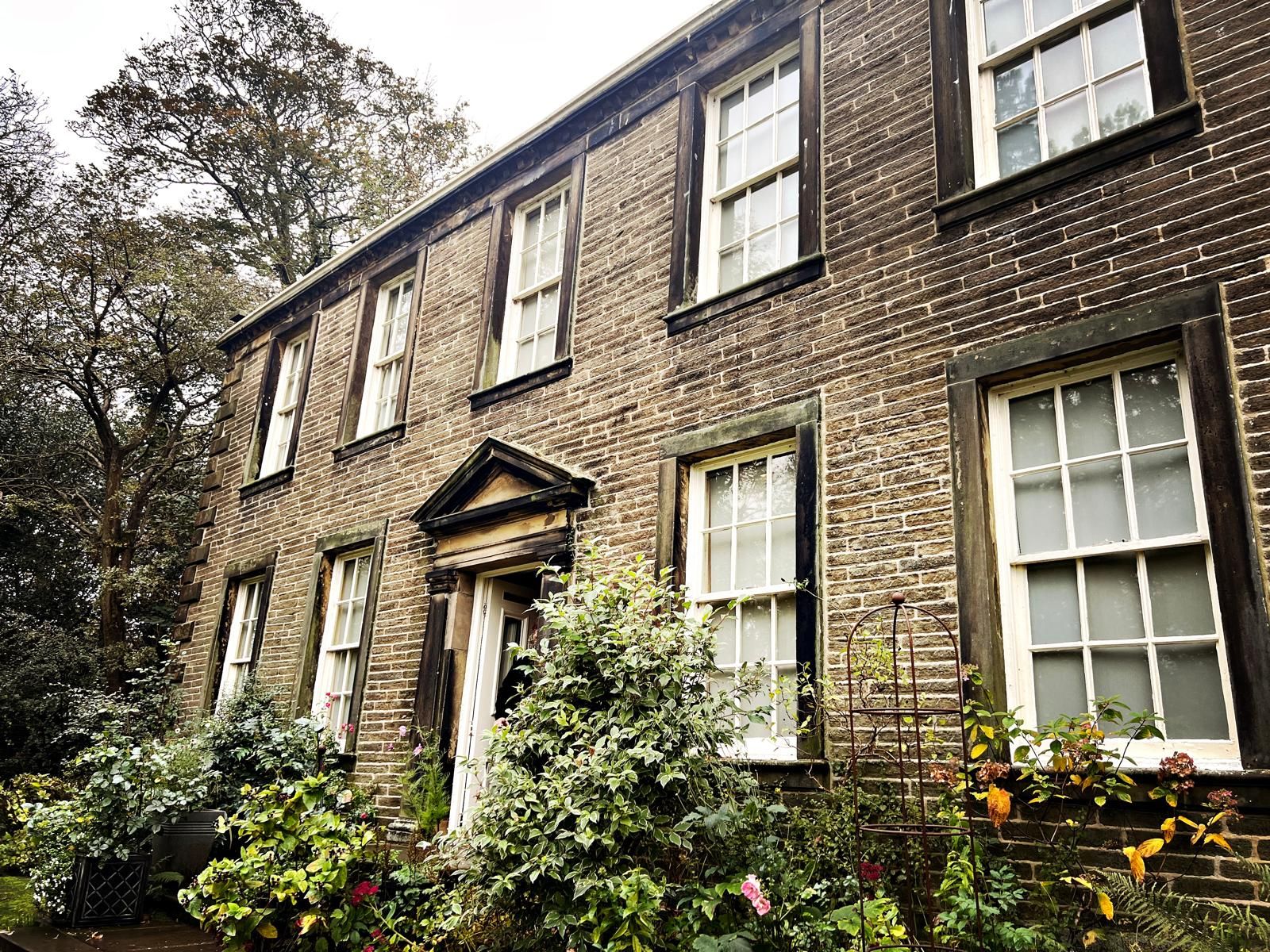 Yorkshire · The BrontësBooks by the Brontë sistersCharlotte, Emily and Anne Brontë wrote seven novels between them, all at one house in Haworth, West Yorkshire. Here's every book in order, who wrote which, and the story behind them, including what Charlotte really thought of Jane Austen.
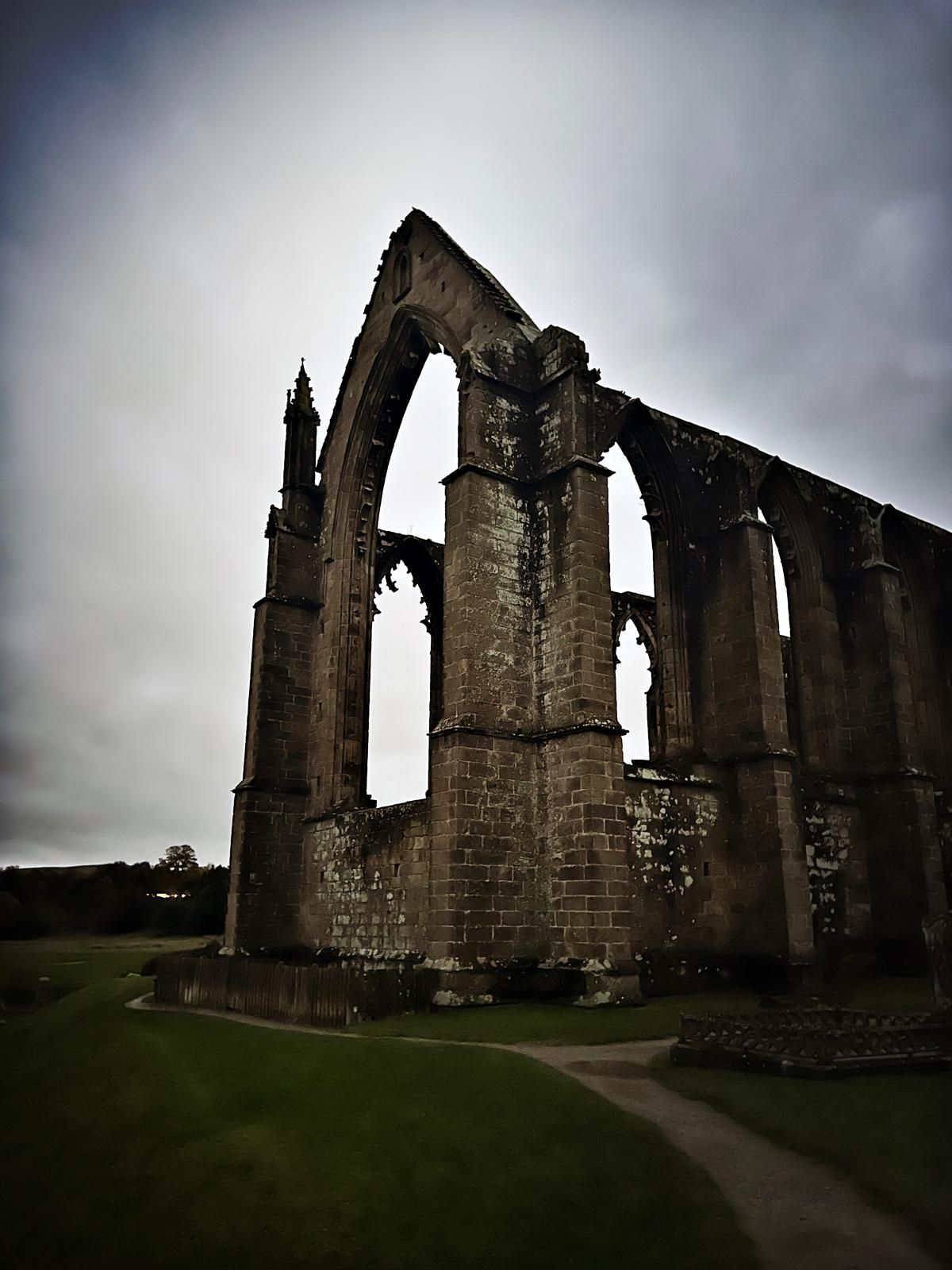 Yorkshire · The DalesBolton Abbey to SkiptonA ruined priory on the River Wharfe and one of England's most complete medieval castles, a few miles apart at the bottom edge of the Yorkshire Dales. Easy to pair, and easy to pair with Haworth too.
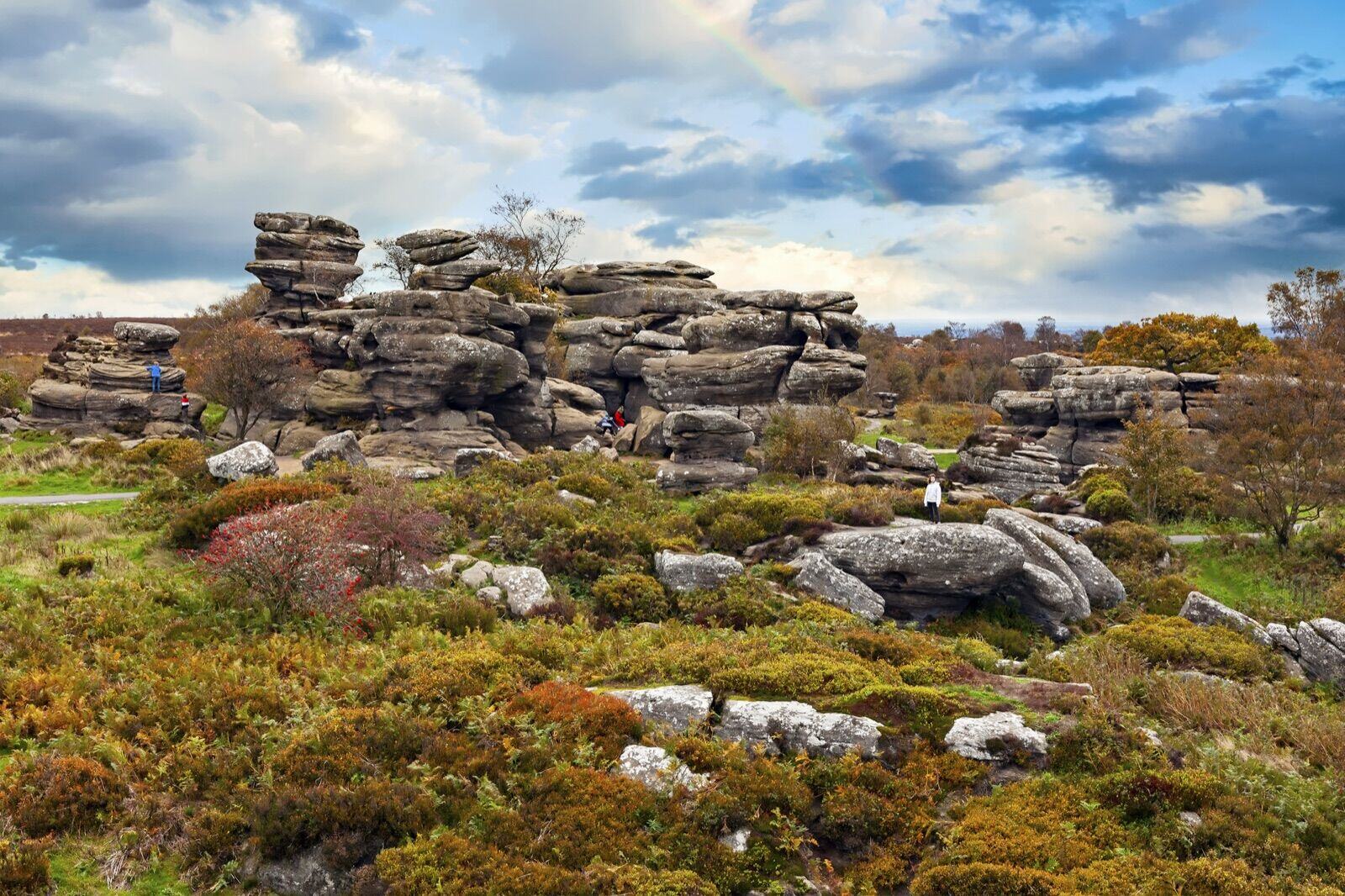 Yorkshire · NidderdaleBrimham Rocks, YorkshireHuge, oddly shaped sandstone stacks on a heather moor above Nidderdale. Free to walk among, run by the National Trust, and worth a stop even if you've only got half an hour.
Sources
- Salts Mill (opening times, galleries, history, getting there)
- UNESCO World Heritage Centre: Saltaire
- UNESCO UK: Saltaire
- Wikipedia: Saltaire (1871 census, Roberts Park, URC, 1986 closure, 1900 film)
- Wikipedia: Titus Salt (born Morley 1803; mill opened 20 Sept 1853; mayor 1848–49; MP 1859–61; baronet 30 Oct 1869; died 1876)
- Countryfile: Saltaire UNESCO World Heritage Site
- Wikipedia: Sir James Roberts, 1st Baronet
- Brontë Society: History of the museum
- Saltaire Collection: Emily Tennant
- Saltaire Collection: Long service certificate for Emily Tennant
- Saltaire Village website: Reel Lives
- Saltaire Collection: Sir James Roberts record
Get the reading list first.
Trip announcements, curated reading lists, and the occasional dispatch — before anyone else.