Yorkshire · The Brontës
Books by the Brontë sisters: all seven novels, the poems, and where they wrote them
Charlotte, Emily and Anne Brontë wrote seven novels between them, all at one house in Haworth, West Yorkshire. Here's every book in order, who wrote which, and the story behind them, including what Charlotte really thought of Jane Austen.
- The sisters
- Charlotte (1816–1855), Emily (1818–1848), Anne (1820–1849)
- Novels
- Seven: four by Charlotte, one by Emily, two by Anne
- Pen names
- Currer Bell (Charlotte), Ellis Bell (Emily), Acton Bell (Anne)
- Where they wrote
- Haworth Parsonage, now the Brontë Parsonage Museum
- Born
- Market Street, Thornton, near Bradford
- First book
- Poems by Currer, Ellis and Acton Bell (1846). It sold three copies
- Museum
- Brontë Parsonage Museum, Church Street, Haworth BD22 8DR
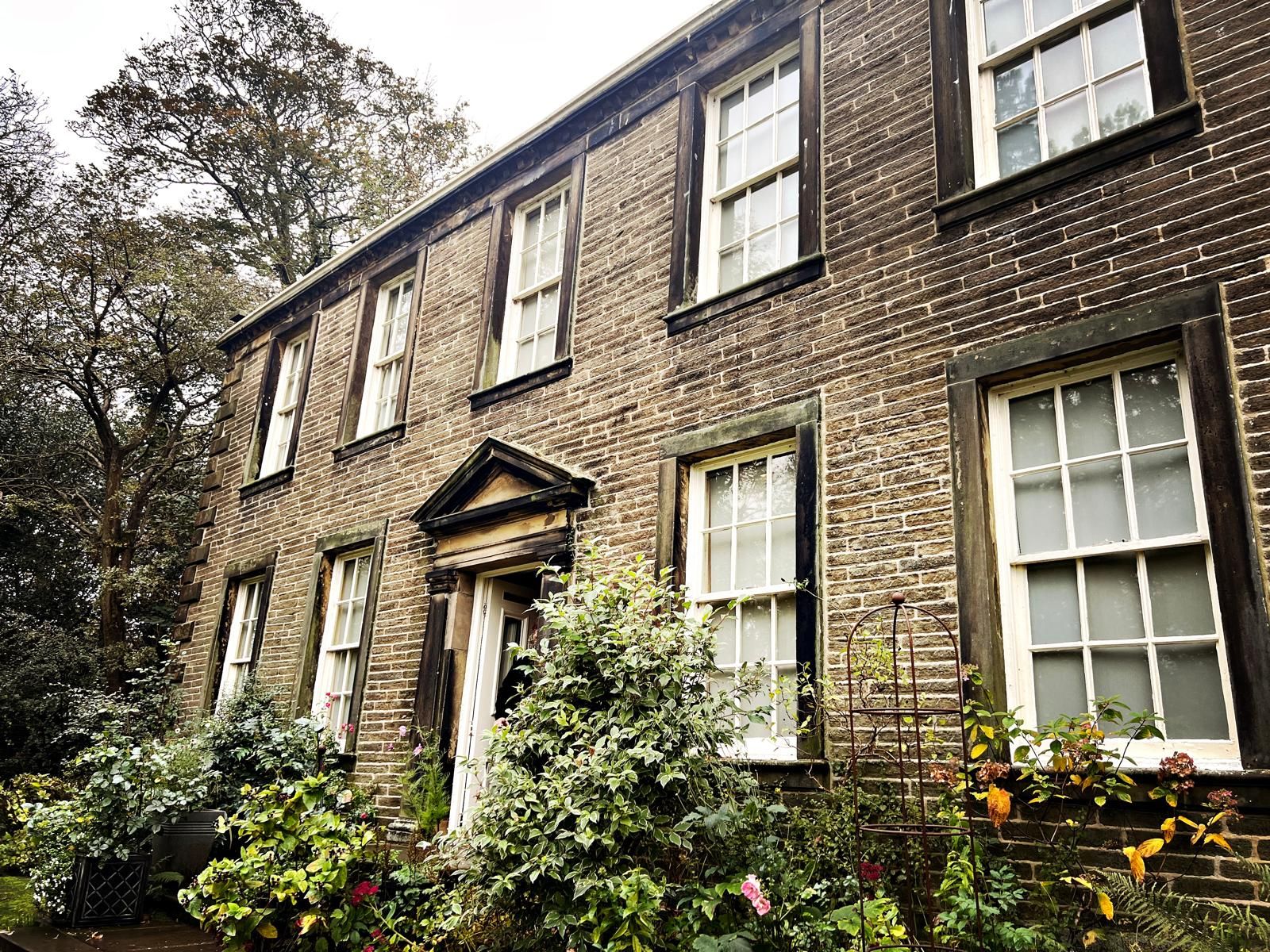
The short answer
The Brontë sisters wrote seven novels. Charlotte wrote Jane Eyre (1847), Shirley (1849), Villette (1853) and The Professor (published 1857, after her death). Emily wrote Wuthering Heights (1847). Anne wrote Agnes Grey (1847) and The Tenant of Wildfell Hall (1848). They wrote them all at the parsonage in Haworth, West Yorkshire, under the pen names Currer, Ellis and Acton Bell.
The books by the Brontë sisters come to seven novels and one book of poems, written by three sisters in a stone house at the top of a steep village in West Yorkshire. Charlotte, Emily and Anne Brontë published the poems and six of the novels between 1846 and 1853, under men’s names (well, nearly men’s names; more on that below). The seventh came out in 1857, after Charlotte died. Below: every book in order, who wrote which, who the sisters were, where they lived and where they’re buried, and what you can still see in Haworth today.
Who were the Brontë sisters?
The Brontës were the children of Patrick Brontë, a clergyman from County Down in Ireland, and Maria Branwell, from Cornwall. They had six children in six years: Maria (1814), Elizabeth (1815), Charlotte (1816), Branwell (1817), Emily (1818) and Anne (1820). Charlotte, Branwell, Emily and Anne were all born in a house on Market Street in Thornton, near Bradford.
In 1820 Patrick became the clergyman at Haworth, a mill village about eight miles west of Bradford, and the family moved into the parsonage beside the church. Their mother died there in September 1821. Her sister, Elizabeth Branwell, came up from Cornwall to help raise the children and stayed until her own death in 1842. (Cornwall to the Yorkshire moors. That’s a big move for a sister-in-law.)
The children grew up close, inventive and mostly taught at home. The Brontë Society describes how, as children, they invented imaginary worlds and wrote tiny books about them. That habit of writing together, at the same table, lasted their whole lives.
They chose pen names, Currer, Ellis and Acton Bell, so their work would be judged on its own merits and not on the fact that they were women. The initials match their own: Charlotte was Currer, Emily was Ellis, and Anne was Acton.
How many Brontë sisters were there?
Five, not three. The two eldest, Maria and Elizabeth, were sent with Charlotte and Emily to the Clergy Daughters’ School at Cowan Bridge in Lancashire in 1824. Conditions there were harsh. Maria died on 6 May 1825, aged 11, and Elizabeth on 15 June 1825, aged 10. Charlotte later used the school as Lowood in Jane Eyre, and the death of Helen Burns echoes what happened to her sisters. If that chapter ever made you cry, now you know why it’s so sharp.
So when people say “the Brontë sisters,” they mean the three who lived to write: Charlotte, Emily and Anne. Their brother Branwell painted and wrote poetry, but never published a book.
Every book by the Brontë sisters, in order
Which sister wrote which book, in one line each:
- Charlotte: Jane Eyre, Shirley, Villette and The Professor.
- Emily: Wuthering Heights, her only novel.
- Anne: Agnes Grey and The Tenant of Wildfell Hall.
Here’s the full list. The Brontë Society confirms all seven novels were written at the Parsonage in Haworth.
| Year | Book | Author | Pen name | What it’s about |
|---|---|---|---|---|
| 1846 | Poems by Currer, Ellis and Acton Bell | All three | Currer, Ellis and Acton Bell | Their poems. It sold three copies. |
| 1847 (19 Oct) | Jane Eyre | Charlotte | Currer Bell | An orphan becomes a governess at Thornfield Hall and falls in love with her employer, Mr Rochester, who is hiding a secret. |
| 1847 | Wuthering Heights | Emily | Ellis Bell | Two families on the moors, the Earnshaws and the Lintons, and the love between Cathy and Heathcliff, which wrecks both houses. |
| 1847 | Agnes Grey | Anne | Acton Bell | A clergyman’s daughter works as a governess for two cruel, spoiled families. Drawn from Anne’s own jobs. |
| 1848 (24 June) | The Tenant of Wildfell Hall | Anne | Acton Bell | A woman leaves her violent, alcoholic husband and takes their son with her, which was against the law at the time. |
| 1849 | Shirley | Charlotte | Currer Bell | Two young women in the West Riding during the Luddite riots, when mill workers smashed the new machines. |
| 1853 | Villette | Charlotte | Currer Bell | Lucy Snowe teaches at a girls’ school in a Belgian city. Based on Charlotte’s time in Brussels. |
| 1857 | The Professor | Charlotte | Currer Bell | Charlotte’s first novel, about a young man who leaves Yorkshire to teach in Belgium. Published two years after she died. |
Wuthering Heights and Agnes Grey came out together, as a three-volume set from the London publisher Thomas Cautley Newby. Jane Eyre came out first, from Smith, Elder & Co. Yes, the poems sold three copies. Everyone starts somewhere.
Charlotte Brontë’s books
Charlotte (1816–1855) was the eldest surviving sister and the one who lived longest. She wrote four novels. Jane Eyre was first published as Jane Eyre: An Autobiography, by “Currer Bell.”
In February 1842 Charlotte and Emily went to Brussels to study at a girls’ school. Charlotte went back alone in January 1843. Villette and The Professor both draw on that time.
Shirley is the most Yorkshire of her books, set during the Luddite years, and the Brontë Society notes that several characters were based on people she knew, including Emily.
If you’ve read Jane Eyre, read our guide to Jean Rhys and Wide Sargasso Sea next. It’s the 1966 novel that tells the story of Bertha, the first Mrs Rochester, from her side, starting in the Caribbean. You won’t look at the attic the same way again.
Emily Brontë’s book: Wuthering Heights
Emily (1818–1848) wrote one novel and a lot of poems. Wuthering Heights is the one book of the seven that people either love or can’t stand. It’s told by two narrators, a tenant called Mr Lockwood and a housekeeper called Nelly Dean. It covers two generations of two families: the Earnshaws, at a farmhouse on the moor called Wuthering Heights, and the Lintons, at a gentler house in the valley called Thrushcross Grange.
Reviewers in 1847 were shocked. One said readers would be “shocked, disgusted, almost sickened” by its cruelty, according to the Brontë Society. After Emily died, Charlotte edited a second edition in 1850 and wrote a preface defending her sister. In a note for a selection of Emily’s poems published the same year, she wrote:
My sister Emily loved the moors. Flowers brighter than the rose bloomed in the blackest of the heath for her; out of a sullen hollow in a livid hill-side her mind could make an Eden. She found in the bleak solitude many and dear delights; and not the least and best loved was—liberty.
— Charlotte Brontë, prefatory note to Selections from Poems by Ellis Bell (1850), Project Gutenberg
For where the novel is set, and where it’s been filmed from 1939 to 2026, see our guide to Wuthering Heights filming locations and Top Withens.
Anne Brontë’s books
Anne (1820–1849) was the youngest and is still the least read, which is a shame. She worked as a governess for years, and Agnes Grey uses that experience. The Tenant of Wildfell Hall is the bolder book. Its heroine, Helen Graham, leaves her husband, Arthur Huntingdon, and takes their child. Most critics now count it as one of the first feminist novels.
It sold well. But after Anne died, Charlotte stopped it being reprinted in England until 1854, calling its subject “unfortunately chosen.” Some scholars think she was protecting Anne’s memory. Others think it was something less kind. Sisters.
Anne’s poem “Home,” from the 1846 book of poems, is about missing the moors while she was away working:
But give me back my barren hills
Where colder breezes rise;Where scarce the scattered, stunted trees
Can yield an answering swell,
But where a wilderness of heath
Returns the sound as well.— Anne Brontë, “Home”, Poems by Currer, Ellis and Acton Bell (1846), Project Gutenberg
What order should you read the Brontës in?
This is our opinion, not a rule. If you only read one, make it Jane Eyre.
- Start with Jane Eyre. It has the strongest plot and a narrator you’ll like, and it moves fast.
- Then Wuthering Heights. It’s a harder read. The structure takes a few chapters to settle, and nobody in it is easy to like. Stick with it.
- Then The Tenant of Wildfell Hall. This is the surprise. It reads as very modern.
- Then Villette, if you want Charlotte at her most grown-up.
- Save Shirley, Agnes Grey and The Professor for later. Agnes Grey is short, if you want a quick one between the big ones.
If you’d rather read them in the order they were published, the table above is that order. Just know you’ll hit The Professor last. It was her first novel and the least polished of her four, so don’t let it be your final impression.
Elizabeth Gaskell’s The Life of Charlotte Brontë (1857) is the first biography, written two years after Charlotte died by a novelist who knew her. It’s free on Project Gutenberg, and it’s the best companion to a visit.
Did the Brontës like Jane Austen?
Charlotte didn’t, and she said so in writing. (Emily and Anne left no opinion on Austen that survives.) Austen had died in 1817, when Charlotte was a baby, so they never met. Charlotte only read Pride and Prejudice in January 1848, after Jane Eyre was out, because the critic G. H. Lewes told her he’d rather have written it (or Tom Jones) than any of Walter Scott’s Waverley novels. She went and got the book, and on 12 January 1848 she wrote back to him:
And what did I find? An accurate, daguerreotyped portrait of a commonplace face; a carefully-fenced, highly-cultivated garden, with neat borders and delicate flowers; but no glance of a bright, vivid physiognomy, no open country, no fresh air, no blue hill, no bonny beck. I should hardly like to live with her ladies and gentlemen, in their elegant but confined houses.
— Charlotte Brontë to G. H. Lewes (12 January 1848), quoted in Gaskell, The Life of Charlotte Brontë, Vol. 2, Chapter II (1857), Project Gutenberg
In the same letter she called Austen “only shrewd and observant.” Lewes pushed back, and a week later, on 18 January, she quoted his lecture back at him: he’d told her she must learn to acknowledge Austen as one of the greatest painters of human character.
So “hated” is too strong, but she clearly didn’t get the fuss. And honestly, read that letter again: “no open country, no fresh air, no blue hill.” That’s a woman who lived with the moor at her back gate. Of course drawing rooms felt small to her. Austen has a memorial in Poets’ Corner in Westminster Abbey, and so do the Brontës (see below), so they ended up in the same corner after all.
Where did the Brontë sisters live?
- Thornton, near Bradford (1815–1820). Four of the children were born on Market Street. Today one of the four Brontë Stones, carved poems put up in 2018, is set into the wall of the birthplace.
- Haworth Parsonage (1820 onward). The family home for the rest of their lives, and the house where all seven novels were written. It’s now the Brontë Parsonage Museum.
- Cowan Bridge, Lancashire (1824–1825). The school where Maria and Elizabeth fell ill.
- Roe Head. Charlotte went to school there from 1831 to June 1832.
- Brussels (1842–1843). Charlotte and Emily studied at a girls’ school. Their aunt died in October 1842; Charlotte went back alone in January 1843.
- Scarborough (1849). Anne went to the seaside hoping the air would help. She died there on 28 May 1849 and is buried in St Mary’s churchyard, Scarborough.
“Emily Brontë’s house,” which people often search for, is the Parsonage. She lived there almost all her life and died there.
What did the Brontë sisters look like?
There are fewer pictures than you’d think, and the most famous one was painted by a teenage brother who wasn’t very good yet.
- The “Pillar Portrait” (about 1834). Branwell painted his three sisters in oils when he was about 16. From left to right: Anne, Emily, Charlotte. He painted himself in the middle, then painted over himself with a pillar, and you can still make out his ghost behind it. The National Portrait Gallery in London says it’s the only surviving group portrait of the sisters. It was found folded up on top of a cupboard in Ireland in 1914, by the second wife of Charlotte’s widower, and the gallery bought it that year. Arthur Bell Nicholls had disliked it because it was so unflattering to “the girls.”
- Gaskell saw it in 1853 and wrote that it was “not much better than sign-painting” as a piece of painting, but the likenesses were, she thought, “admirable.” She noticed that Emily was taller than Charlotte, and described the faces: “Emily’s countenance struck me as full of power; Charlotte’s of solicitude; Anne’s of tenderness.”
- Charlotte was tiny. Gaskell, describing her at nearly 15, says she was “very small in figure—‘stunted’ was the word she applied to herself,” with “soft, thick, brown hair” and large reddish-brown eyes.
- Emily was the tall one. Charlotte’s school friend, visiting in 1833, remembered Emily as “a tall, long-armed girl, more fully grown than her elder sister.”
- Charlotte sat for a portrait in London in 1850, a crayon (chalk) drawing by George Richmond. Gaskell thought it an admirable likeness. Patrick thought it made her look older than she was, but agreed the expression was wonderfully lifelike.
So if the sisters in the films look like Hollywood, that’s the films. The real Charlotte would have come up to most of the actresses’ shoulders.
Where are the Brontë sisters buried?
Not together, and not in Westminster Abbey.
- Charlotte and Emily are in the family vault inside St Michael and All Angels’ Church in Haworth, next to the Parsonage. So is every other member of the family except Anne. Our Haworth guide covers the church.
- Anne is buried in St Mary’s churchyard in Scarborough, on the coast, where she died in 1849. She’s the only one of the family not in Haworth.
- Westminster Abbey has a memorial, not a grave. A stone tablet to all three sisters, given by the Brontë Society, was put up in Poets’ Corner on 9 October 1939, next to Shakespeare’s memorial. Because of the war it wasn’t formally dedicated until 19 July 1947. It reads “With courage to endure.” The cutters left the two dots off the “ë” in Brontë, and it took until 26 September 2024 to fix it, according to Westminster Abbey. Eighty-five years for two dots.
Why did the Brontë sisters die so young?
My first reaction at the Parsonage in October 2026: they died so incredibly young. The one who lived longest, Charlotte, was 38. Their mother, Maria, was 38 too when she died in 1821.
None of the six children reached 40. Maria was 11 and Elizabeth 10 when they died in 1825. Branwell died on 24 September 1848, aged 31. Emily died on 19 December 1848, aged 30. Anne died on 28 May 1849, aged 29. Branwell and Anne died of tuberculosis, and Emily’s illness is described the same way. Charlotte died on 31 March 1855, aged 38, probably from complications of early pregnancy. Their father, Patrick, outlived them all and died on 7 June 1861, aged 84.
Haworth itself was part of the problem. The village grew fast once mills opened along the river from 1790, with very little sanitation. The Brontë Society says average life expectancy in Haworth was just 24, and 41 per cent of children didn’t reach their sixth birthday. In 1850 Patrick asked for an official report into conditions there, which led to improvements in the village’s water and drains.
After her sisters died, Charlotte wrote to a friend about walking on the moors alone:
For my part, I am free to walk on the moors; but when I go out there alone, everything reminds me of the times when others were with me, and then the moors seem a wilderness, featureless, solitary, saddening. My sister Emily had a particular love for them, and there is not a knoll of heather, not a branch of fern, not a young bilberry leaf, not a fluttering lark or linnet, but reminds me of her.
— Charlotte Brontë, letter quoted in Gaskell, The Life of Charlotte Brontë, Vol. 2 (1857), Project Gutenberg
Did any of the Brontë sisters marry?
Only Charlotte. She married Arthur Bell Nicholls, her father’s curate, on 29 June 1854. She died nine months later. Emily and Anne never married.
Were the Brontës famous when they died?
Seeing how much of their stuff survives in the Parsonage, I wondered: had they really risen to that much fame by the time they died? Did they earn money? The short answer: Charlotte, yes. Emily and Anne, hardly, and not under their own names.
- Jane Eyre was a hit straight away. It came out on 19 October 1847. By July 1848, Gaskell writes, it “had had a great run in America,” and an American publisher had bid high to get the next book by “Currer Bell” early.
- Nobody knew who the Bells were. That same July, Newby told an American publisher that Jane Eyre, Wuthering Heights and The Tenant of Wildfell Hall were all by one author. So Charlotte and Anne walked to Keighley, caught the night train and turned up at Smith, Elder’s office in London to prove they were two different people. It was Anne’s first time in London. (Imagine being the clerk at the front desk that morning.)
- Emily and Anne died as Ellis and Acton Bell. Emily died in December 1848 and Anne in May 1849, a year and a half or less after their first novels came out. Wuthering Heights had baffled and shocked reviewers. It was Charlotte’s 1850 “Biographical Notice” that told readers the Bells were her sisters.
- Charlotte was famous by the end. The Brontë Society says that even before she died in 1855, a steady stream of visitors came to Haworth to catch a glimpse of her.
- Then came Gaskell’s book. The Life of Charlotte Brontë (1857) told the whole family’s story, sorrows and all, and the visitors kept coming. Patrick’s successor, the Rev John Wade, became known for turning them away from the house, and when the Brontë Society opened its first small museum in 1895, more than 10,000 people came by the following summer.
How much did the Brontës earn?
Here are the numbers that can be checked:
| Book | Publisher | Money |
|---|---|---|
| Poems (1846) | Aylott and Jones | Nothing to speak of. It sold three copies. |
| Wuthering Heights and Agnes Grey (1847) | Thomas Cautley Newby | Newby asked Emily and Anne to pay him £50 up front, according to Brontë historians. |
| Jane Eyre (1847) | Smith, Elder & Co. | A first contract of £100 for the copyright, with first refusal on her next two books at £100 each. In the end she received about £500 for it. |
| Shirley (1849) | Smith, Elder & Co. | £500. Charlotte noted it herself: “£500 the price of the copyright of ‘Shirley’ invested in the Funds Oct 1849.” |
| Villette (1853) | Smith, Elder & Co. | £500 for the copyright, according to a letter of Gaskell’s. |
For scale: £100 was at least twice what a governess or teacher earned in a year, and Branwell’s salary as a railway clerk was £75. One Brontë historian, using MeasuringWorth’s earnings measure, puts £500 in 1849 at roughly £500,000 to £730,000 today. So yes, Charlotte earned real money. When Gaskell visited in 1853 she noticed the parlour had been “refurnished within the last few years, since Miss Brontë’s success has enabled her to have a little more money to spend.”
Emily and Anne paid to be published and were dead within a year and a half. That one stings.
Why did the Brontë sisters use male pen names, and what were they?
The names were Currer Bell (Charlotte), Ellis Bell (Emily) and Acton Bell (Anne). But they didn’t quite pick men’s names. They picked names that could go either way, and Charlotte explained why in her 1850 “Biographical Notice of Ellis and Acton Bell”:
Averse to personal publicity, we veiled our own names under those of Currer, Ellis, and Acton Bell; the ambiguous choice being dictated by a sort of conscientious scruple at assuming Christian names, positively masculine, while we did not like to declare ourselves women, because—without at the time suspecting that our mode of writing and thinking was not what is called ‘feminine,’ we had a vague impression that authoresses are liable to be looked on with prejudice
— Charlotte Brontë, “Biographical Notice of Ellis and Acton Bell” (1850), quoted in Gaskell, The Life of Charlotte Brontë, Vol. 1, Chapter XIV (1857), Project Gutenberg
In plain English: they didn’t want to lie and call themselves men, but they didn’t want to be reviewed as women either, because they expected prejudice.
They had reason. In 1837, when Charlotte was 20, she sent some poems to the Poet Laureate, Robert Southey. His reply, which Gaskell printed, included this:
Literature cannot be the business of a woman’s life, and it ought not to be.
— Robert Southey to Charlotte Brontë (1837), quoted in Gaskell, The Life of Charlotte Brontë, Vol. 1, Chapter VIII (1857), Project Gutenberg
(She kept writing anyway. Good for her.)
At the Parsonage I asked whether not knowing where the sisters slept is another sign of how male-dominated everything was. Here’s where I’ve landed, keeping what’s evidence apart from what’s opinion:
- Evidence: Charlotte said in her own words that they hid being women because they expected prejudice. Southey told her outright that writing wasn’t a woman’s business. Patrick’s study and bedroom are fixed and named in the house, and Branwell has a room named for him. The sisters’ sleeping arrangements shifted and aren’t recorded.
- Interpretation: that the missing bedroom means nobody thought the women’s rooms mattered. That’s possible, but there are plainer reasons too. The house came with Patrick’s job. The sisters kept leaving for school, work and Brussels and coming back. And most of what we know comes from letters, which talk about what people did, not where they slept. There’s more on that in our Haworth and Parsonage guide.
My honest view: the pen names are the real evidence. The missing bedroom is a fair question, not proof.
The real places behind the Brontë novels
The sisters wrote about places they knew, but rarely copied one exactly. These are the links most often made, and how sure anyone can be:
| In the book | Real place | How sure |
|---|---|---|
| Lowood school, Jane Eyre | Clergy Daughters’ School, Cowan Bridge, Lancashire | Certain. Charlotte drew on her own time there, and Mr Brocklehurst is based on the man who ran it, the Rev. William Carus Wilson. |
| Thornfield Hall, Jane Eyre | North Lees Hall, near Hathersage, Derbyshire | Probable. |
| Thornfield’s attic | Norton Conyers, near Ripon, North Yorkshire | Possible. The house has a family legend of a madwoman kept in its attics. |
| Wuthering Heights | Top Withens, Haworth Moor | Disputed. A Brontë Society plaque at the ruin says the buildings never resembled the house in the novel. High Sunderland Hall, near Halifax, is another candidate. |
| Thrushcross Grange | Ponden Hall, near Stanbury | Traditional, though Ponden is closer in look to the Heights. |
| Wildfell Hall | Ponden Hall, near Stanbury | Suggested by the biographer Winifred Gérin. |
| Villette | Brussels | Certain in spirit. The Brontë Society says the novel is largely inspired by Charlotte’s own time there. |
Top Withens is the one everyone asks about. It’s a ruin on an exposed moor, about three hours there and back from Haworth. For that walk and for Ponden, see our guide to Wuthering Heights locations.
Elizabeth Gaskell and the first Brontë biography
Elizabeth Gaskell, the novelist, published The Life of Charlotte Brontë in 1857, two years after Charlotte died. She had stayed at the Parsonage and walked on the moors with Charlotte, and much of what we know about the family’s daily life comes from her book, including the letters she quoted. Read it after the novels. It’s free online.
Gaskell is also the source of one of the best-known pictures of the sisters as children, heading for the moor and not the village:
From their first going to Haworth, their walks were directed rather out towards the heathery moors, sloping upwards behind the parsonage, than towards the long descending village street.
— Elizabeth Gaskell, The Life of Charlotte Brontë, Vol. 1, Chapter III (1857), Project Gutenberg
Read her with some care, though: she was a friend writing soon after a death. And take some popular Brontë stories with a pinch of salt. The often-repeated claim that Emily died on the dining-room sofa, for example, has no evidence from the time behind it.
The Brontë Society and the Parsonage Museum
The Brontë Society was founded in 1893 to collect and look after the family’s belongings, many of which had been sold at auction after Patrick died in 1861. Its first museum opened in 1895, in a room above a bank in Haworth. In 1928 a local businessman, Sir James Roberts, bought the Parsonage from the Church and gave it to the Society, and it opened as the Brontë Parsonage Museum on 4 August 1928. The Society still runs it, along with a research library.
The Brontës on screen and in music
The novels have been filmed many times, and the sisters themselves have become characters.
- To Walk Invisible (BBC, 2016). Sally Wainwright’s drama about the sisters’ lives. The production built a replica of the Parsonage on Penistone Hill, just west of Haworth, for outdoor scenes, and filmed interiors in studios in Manchester.
- Jane Eyre. Haddon Hall in Derbyshire has played Thornfield Hall in three adaptations, including the 1994 film with Charlotte Gainsbourg and the 2006 BBC series with Ruth Wilson and Toby Stephens. It was also Thornfield in the 2011 film with Mia Wasikowska and Michael Fassbender.
- Wuthering Heights. From Laurence Olivier and Merle Oberon in 1939 (filmed in California, of all places) to Emerald Fennell’s 2026 film with Margot Robbie and Jacob Elordi (filmed in the Yorkshire Dales). Full list in our Wuthering Heights locations guide.
- Kate Bush, “Wuthering Heights” (1978). Her debut single, released on 20 January 1978. It spent four weeks at number one in the UK, and she was the first woman to top the UK chart with a song she wrote herself. She was born on 30 July 1958, the same day of the year as Emily Brontë, who was born on 30 July 1818.
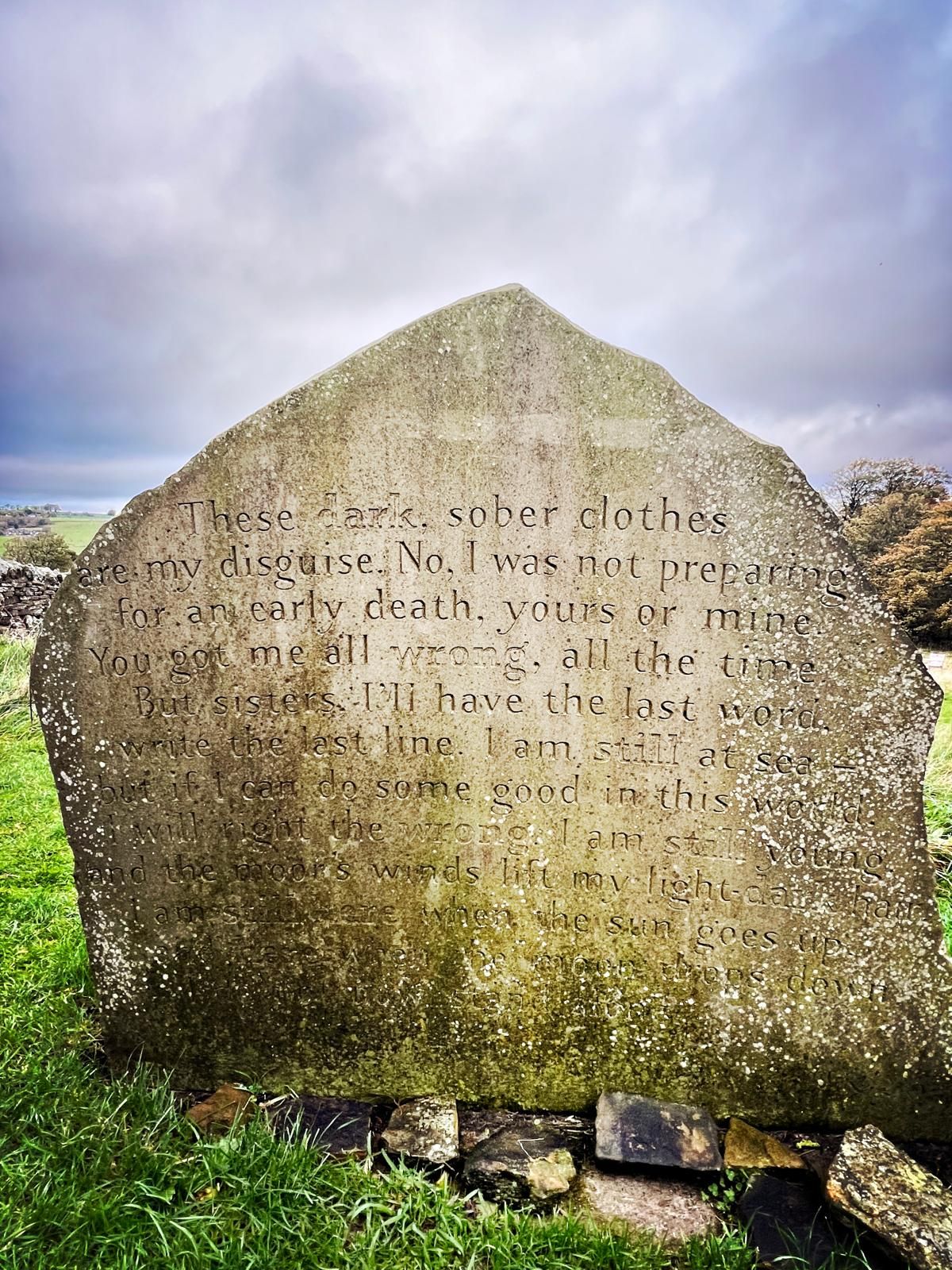
- The Brontë Stones (2018). Four carved stones between Thornton and Haworth, commissioned by the Bradford Literature Festival. Carol Ann Duffy wrote the Charlotte Stone, Kate Bush the Emily Stone, Jackie Kay the Anne Stone, and Jeanette Winterson a fourth. The Anne Stone stands in Parson’s Field, next to the Parsonage. It’s easy to walk straight past, so look for it.
Can you visit the Brontë sisters’ house?
Yes, and Haworth is the place to start. The Brontë Parsonage Museum is open Wednesday to Sunday, 10am to 5pm, with last entry at 4pm, and closed Mondays and Tuesdays (as of November 2026). Hours change by season, so check the opening days the week you go. A standard ticket is £15 for April 2026 to March 2027. There’s no timed entry. Our Haworth guide covers the museum room by room, the church, the moor walk, how to get there and when to go.
From Haworth, the moor path leads west to the Brontë Waterfall and Top Withens, the ruined farm often linked to Wuthering Heights. Skipton, with its castle, is about half an hour north, and Bolton Abbey a short drive beyond that. See Bolton Abbey to Skipton. A friend drove me round exactly that loop, Skipton Castle, Haworth and Bolton Abbey, in one day in October 2026. Long, but doable.
If you’d like to see it with a small group, our October 2027 Yorkshire trip for women spends a morning in Haworth. One of the five books the group reads beforehand is a Brontë, so you’ll have read it before you walk into the house where it was written. I was in Haworth in October 2026, during the school half-term holiday, and it was packed. So on the trip we arrive by heritage railway, go into the museum as a group, and eat lunch on the bus instead of queuing for a table.
The Brontës' world: what else was happening
Georgian or Victorian? Both. All three sisters were born under the Georgians, before Queen Victoria was born, but every one of their novels came out in Victoria's reign. They were writing at the same time as Dickens, Thackeray and Elizabeth Gaskell, while in America Poe, Hawthorne and Melville were at work.
- Regency 1811–1820
- George IV 1820–1830
- William IV 1830–1837
- Victorian 1837–1901
The story Britain The wider world Other writers
- 1811 Britain Luddite machine-breaking begins in Yorkshire's mill country, the background to Charlotte's Shirley.
- 1812 The story Patrick Brontë marries Maria Branwell.
- 1813 Other writers Jane Austen publishes Pride and Prejudice.
- 1816 The story Charlotte is born at Thornton, near Bradford.
- 1817 The story Branwell is born.
- 1817 Other writers Jane Austen dies.
- 1818 The story Emily is born.
- 1818 Other writers Mary Shelley publishes Frankenstein.
- 1820 The story Anne is born, and the family moves to the Parsonage at Haworth.
- 1820 Britain George III dies; George IV becomes king.
- 1821 The story Their mother, Maria, dies aged 38.
- 1825 The story Maria (11) and Elizabeth (10) die after their time at the Cowan Bridge school.
- 1825 Britain The Stockton and Darlington Railway opens, the world's first public steam railway.
- 1833 Britain Parliament passes the Slavery Abolition Act.
- 1837 Britain Victoria becomes queen at 18.
- 1837 Other writers Dickens's Oliver Twist begins appearing in instalments.
- 1845 The wider world The Great Famine begins in Ireland, Patrick Brontë's home country.
- 1845 Other writers Edgar Allan Poe publishes "The Raven".
- 1846 The story The sisters publish Poems by Currer, Ellis, and Acton Bell.
- 1847 The story Jane Eyre (October), then Wuthering Heights and Agnes Grey (December).
- 1847 Other writers Thackeray's Vanity Fair is coming out in monthly parts.
- 1848 The story The Tenant of Wildfell Hall. Branwell dies in September, Emily in December.
- 1848 The wider world In the US, the Seneca Falls women's rights convention, and the start of the California Gold Rush. Revolutions across Europe.
- 1848 Other writers Elizabeth Gaskell publishes Mary Barton.
- 1849 The story Anne dies in Scarborough in May. Charlotte publishes Shirley.
- 1850 Other writers Nathaniel Hawthorne publishes The Scarlet Letter; Dickens finishes David Copperfield.
- 1851 Britain The Great Exhibition opens in London's Crystal Palace.
- 1851 Other writers Herman Melville publishes Moby-Dick.
- 1852 The wider world Harriet Beecher Stowe's Uncle Tom's Cabin is published in book form.
- 1853 The story Charlotte publishes Villette.
- 1854 The story Charlotte marries Arthur Bell Nicholls.
- 1854 The wider world Britain and France enter the Crimean War against Russia.
- 1855 The story Charlotte dies on 31 March, aged 38.
- 1857 The story Gaskell publishes The Life of Charlotte Brontë; The Professor comes out.
- 1861 The story Patrick dies at 84, the last of the family.
- 1861 The wider world The American Civil War begins.
Questions people ask
Who are the Brontë sisters?
Charlotte, Emily and Anne Brontë were three sisters who grew up in the parsonage at Haworth, West Yorkshire, where their father Patrick was the clergyman. Between 1846 and 1857 their poems and seven novels came out, including Jane Eyre and Wuthering Heights.
Which Brontë sister wrote which book?
Charlotte wrote Jane Eyre, Shirley, Villette and The Professor. Emily wrote Wuthering Heights, her only novel. Anne wrote Agnes Grey and The Tenant of Wildfell Hall.
How many Brontë sisters were there?
Five: Maria, Elizabeth, Charlotte, Emily and Anne, plus a brother, Branwell. Maria and Elizabeth died as children in 1825, so the three who became writers were Charlotte, Emily and Anne.
Who was the youngest of the Brontë sisters?
Anne. She was born in Thornton on 17 January 1820, a few months before the family moved to Haworth, and she wrote Agnes Grey and The Tenant of Wildfell Hall.
Where did the Brontë sisters live?
They were born in Thornton, near Bradford, and from 1820 lived most of their lives at Haworth Parsonage, a few miles away. The house is now the Brontë Parsonage Museum, and it's the house Emily lived in when she wrote Wuthering Heights.
Where are the Brontë sisters buried?
Charlotte and Emily are in the family vault inside St Michael and All Angels' Church in Haworth, with every other member of the family except Anne. Anne is buried in St Mary's churchyard in Scarborough, where she died in 1849.
Are the Brontë sisters buried in Westminster Abbey?
No. Westminster Abbey has a memorial tablet to all three in Poets' Corner, put up in 1939 and formally dedicated in 1947, but none of them is buried there. The missing dots over the ë were only added in 2024, says Westminster Abbey.
What did the Brontë sisters look like?
The best-known picture is Branwell's 'Pillar Portrait' of about 1834, now in the National Portrait Gallery, showing Anne, Emily and Charlotte as teenagers. Gaskell says Charlotte was very small, with thick brown hair and reddish-brown eyes, and that Emily was the taller of the two.
Did the Brontë sisters like Jane Austen?
Charlotte didn't. After reading Pride and Prejudice in January 1848, she wrote to G. H. Lewes that it was 'a carefully-fenced, highly-cultivated garden' with 'no open country, no fresh air.' No opinion from Emily or Anne survives.
Did any of the Brontë sisters marry?
Only Charlotte. She married her father's curate, Arthur Bell Nicholls, on 29 June 1854 and died on 31 March 1855, aged 38. Emily and Anne never married.
Were the Brontë sisters famous when they died?
Charlotte was. Jane Eyre was a hit from 1847, and the Brontë Society says visitors were coming to Haworth to glimpse her before she died in 1855. Emily and Anne died in 1848 and 1849 still known to the public only as Ellis and Acton Bell. Charlotte's 1850 Biographical Notice told readers the Bells were her sisters.
How much money did the Brontë sisters make?
Charlotte earned about £500 each for Jane Eyre, Shirley and Villette from Smith, Elder & Co., at a time when £100 was at least twice a governess's yearly pay. Emily and Anne were asked by their publisher, Thomas Newby, to pay £50 up front, and both died within a year and a half of their first novels.
Why did the Brontë sisters use male pen names?
Charlotte said they chose the names Currer, Ellis and Acton Bell because they 'did not like to declare ourselves women,' having 'a vague impression that authoresses are liable to be looked on with prejudice.' The names were deliberately ambiguous, not clearly male. Charlotte was Currer, Emily was Ellis and Anne was Acton.
Why did the Brontë sisters die so young?
Branwell, Emily and Anne all died of tuberculosis within nine months in 1848 and 1849, and Charlotte died in 1855, probably from complications of pregnancy. Haworth was an unhealthy place: the Brontë Society says average life expectancy there was just 24.
Which Brontë book should I read first?
Start with Jane Eyre. It's the easiest to get into. Read Wuthering Heights next, and then The Tenant of Wildfell Hall, the least known of the three and the one a lot of readers wish they'd found sooner.
What order should you read the Brontë books in?
Our suggestion: Jane Eyre, then Wuthering Heights, then The Tenant of Wildfell Hall, then Villette. Save Shirley, Agnes Grey and The Professor for later. If you'd rather go by publication date, the order is Jane Eyre, Wuthering Heights and Agnes Grey (all 1847), Tenant (1848), Shirley (1849), Villette (1853), The Professor (1857).
In this guide
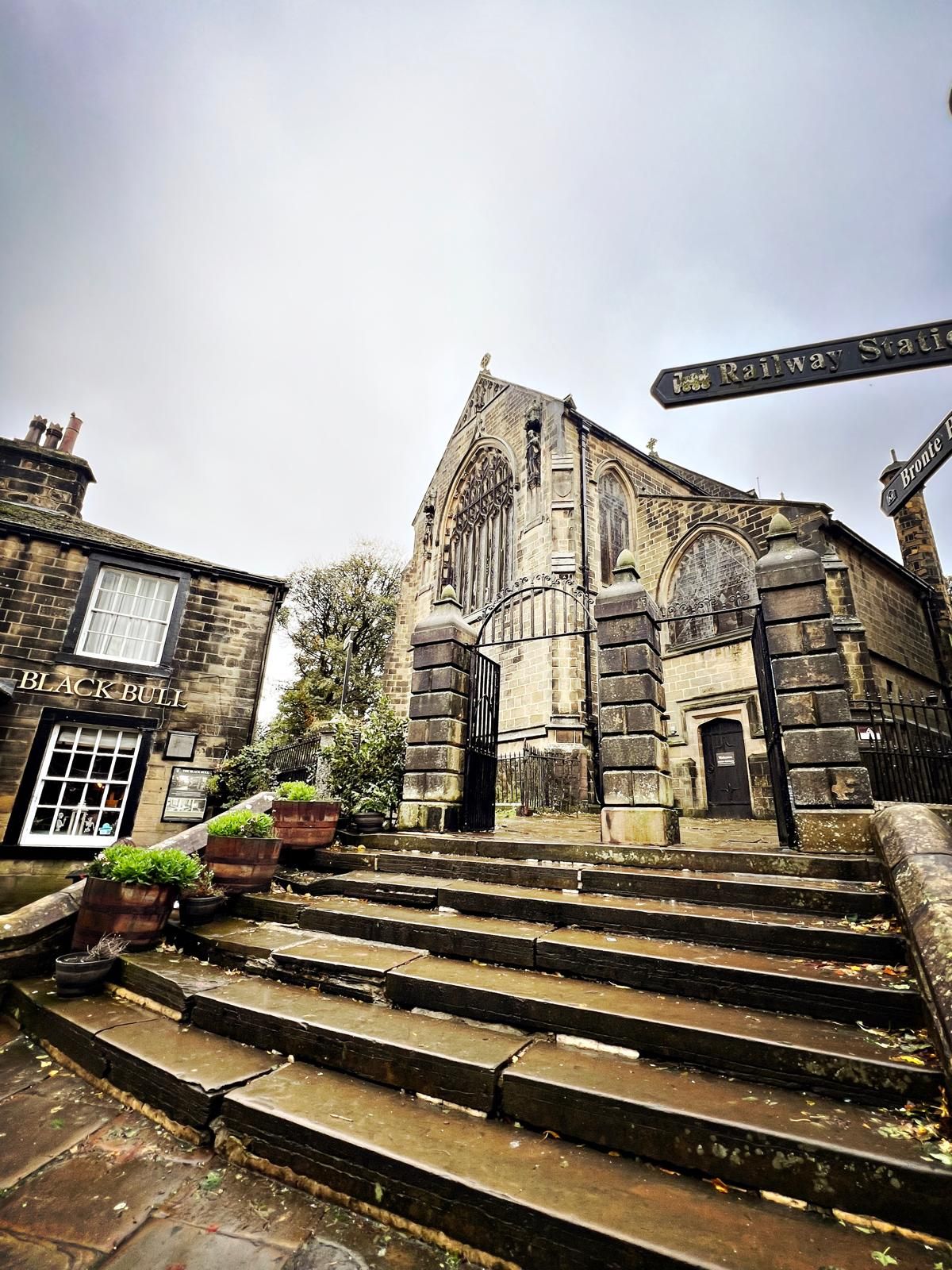 Yorkshire · The BrontësHaworth village and the Brontë Parsonage MuseumHaworth is one steep stone street on the edge of the West Yorkshire moors. At the top is the Brontë Parsonage, the house where Charlotte, Emily and Anne wrote their novels. Here's how to do it well.
- Yorkshire · The BrontësWuthering Heights filming locations, and Top WithensEmily Brontë set Wuthering Heights on the moors above Haworth. Most of the films went somewhere else. Here's which is which, and how to walk to the ruin everyone calls the real thing.
Read next
- Yorkshire · The BrontësHaworth village and the Brontë Parsonage MuseumHaworth is one steep stone street on the edge of the West Yorkshire moors. At the top is the Brontë Parsonage, the house where Charlotte, Emily and Anne wrote their novels. Here's how to do it well.
- Yorkshire · The BrontësWuthering Heights filming locations, and Top WithensEmily Brontë set Wuthering Heights on the moors above Haworth. Most of the films went somewhere else. Here's which is which, and how to walk to the ruin everyone calls the real thing.
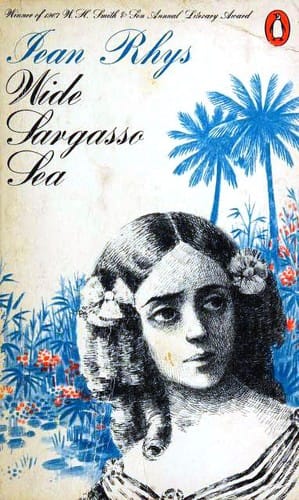 Caribbean · Dominica · BooksJean Rhys's Wide Sargasso SeaThe first Mrs Rochester's side of the story, by a novelist who grew up on Dominica. What happens, where, and why it changes how you read Jane Eyre.
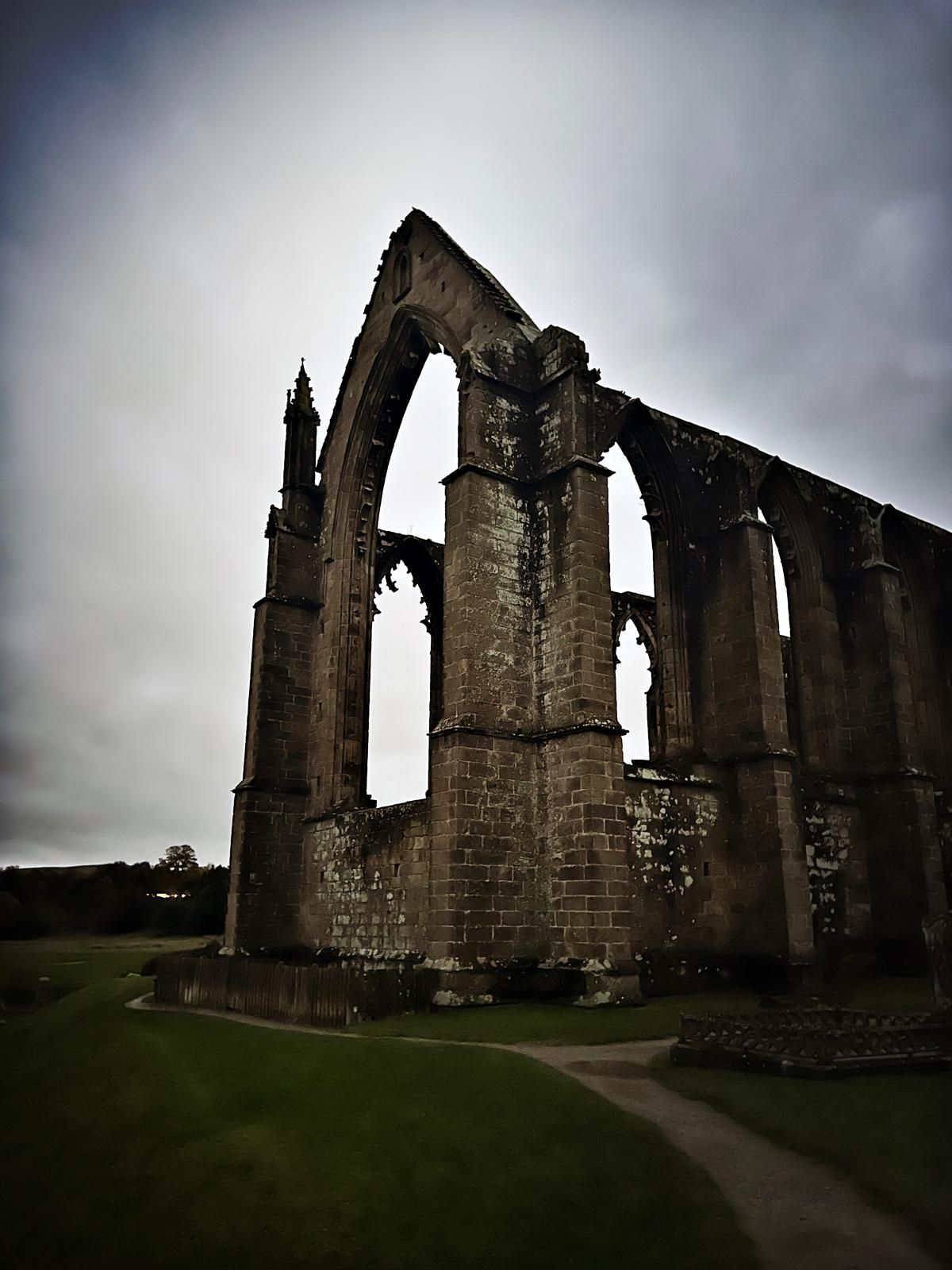 Yorkshire · The DalesBolton Abbey to SkiptonA ruined priory on the River Wharfe and one of England's most complete medieval castles, a few miles apart at the bottom edge of the Yorkshire Dales. Easy to pair, and easy to pair with Haworth too.
- Yorkshire · Anne ListerAnne ListerThe Halifax landowner who wrote five million words, a sixth of them in code, and married a woman in a York church in 1834. Here's her story, and where you can still follow it.
Sources
- Brontë Society: The lives of the Brontës
- Brontë Society: The Brontë novels
- Brontë Society: The Brontës' Haworth
- Brontë Society: Plan your visit
- Wikipedia: Brontë family (birth, death and publication dates)
- Wikipedia: Brontë Parsonage Museum (1893, 1895, 1928)
- Project Gutenberg: Gaskell, The Life of Charlotte Brontë, Vol. 1
- Wikipedia: Jane Eyre (publication 19 October 1847, Smith, Elder)
- Wikipedia: Wuthering Heights (publication 1847, Thomas Cautley Newby)
- Wikipedia: The Tenant of Wildfell Hall (24 June 1848)
- Wikipedia: To Walk Invisible (2016)
- Haddon Hall: Films and TV
- Wikipedia: Wuthering Heights (Kate Bush song)
- Wikipedia: Kate Bush (born 30 July 1958)
- Sunrise Radio: Final stone to commemorate Brontës installed
- Project Gutenberg: Poems by Currer, Ellis and Acton Bell
- Project Gutenberg: Gaskell, The Life of Charlotte Brontë, Vol. 2
- Project Gutenberg: Gaskell, Life of Charlotte Brontë, Vol. 1, plain text (Biographical Notice quoted in Ch. XIV; Southey letter in Ch. VIII; Aylott and Jones; Ch. VI Charlotte 'very small in figure'; Ch. VII Emily 'tall, long-armed' and the pillar portrait)
- Project Gutenberg: Gaskell, Life of Charlotte Brontë, Vol. 2, plain text (July 1848 London trip; 'great run in America'; Gaskell's September 1853 visit; Ch. II letters to G. H. Lewes on Austen, 12 and 18 Jan 1848; Ch. VI Richmond portrait, 1850)
- Victorian Web: The Brontë pseudonyms (Biographical Notice wording)
- Brontë Society: History of the Museum (visitors before 1855; 10,000 visitors; £3,000 purchase)
- Brontë Society: A new chapter (Parsonage gifted 4 August 1928)
- AnneBrontë.org: Charlotte Brontë's contract for Jane Eyre (£100 terms; £75 clerk's salary)
- AnneBrontë.org: A payment for 'Caroline' Brontë (£500 for Shirley and for Jane Eyre)
- AnneBrontë.org: Thomas Newby, Brontë publisher (£50 up front)
- Yorkshire Post: Charlotte Brontë made only £500 from Jane Eyre
- Brussels Brontë Group: Gaskell on Villette's £500 copyright
- The Yorkshire Journal: The Brontë museums and collections at Haworth (Wade refusing visitors)
- Westminster Abbey: Charlotte, Emily and Anne Brontë (Poets' Corner tablet, 9 Oct 1939; dedicated 19 Jul 1947; diaereses added 26 Sep 2024; burials)
- BBC News: Brontë sisters' memorial amended 85 years later (Austen also commemorated in Poets' Corner)
- National Portrait Gallery: The Brontë Sisters by Branwell Brontë, c.1834, NPG 1725 (pillar; found 1914; purchased 1914)
Get the reading list first.
Trip announcements, curated reading lists, and the occasional dispatch — before anyone else.