Yorkshire · The Dales
Bolton Abbey to Skipton: the priory, the Strid and Skipton Castle in one day
A ruined priory on the River Wharfe and one of England's most complete medieval castles, a few miles apart at the bottom edge of the Yorkshire Dales. Easy to pair, and easy to pair with Haworth too.
- Distance
- About 5–6 miles between Skipton and Bolton Abbey, off the A59
- Bolton Abbey estate
- 30,000 acres, 80+ miles of footpaths. boltonabbey.com
- Priory
- Founded 1154 for Augustinian canons; the nave is still the parish church
- The Strid
- Where the Wharfe narrows in Strid Wood. Very dangerous: stay back from the edge
- Skipton Castle
- Open daily from 10am (closed 23–25 Dec). Adult £12.80 (2026). Admission
- Bolton Abbey parking
- Main car park BD23 6EX, 9am–5pm, last entry 4pm. Fees go back into the estate
- Car-free
- Trains to Skipton or Ilkley, then bus (days vary) or taxi
The short answer
Bolton Abbey and Skipton are about five or six miles apart in North Yorkshire, a short drive off the A59, so they pair easily in one day. Bolton Abbey is a 30,000-acre estate on the River Wharfe with the ruins of a 12th-century Augustinian priory, 62 stepping stones and the Strid, a narrow and dangerous stretch of river. Skipton Castle, over 900 years old, is one of the most complete medieval castles in England and is open every day from 10am.
Bolton Abbey to Skipton is one of the easiest pairings in Yorkshire: a ruined priory beside a river, and a medieval castle in a market town, about five or six miles apart at the southern edge of the Yorkshire Dales. You can do both comfortably in a day, or, as we do on our trip, in an afternoon after Haworth. On my scouting trip in October 2026, a friend drove me to Skipton Castle, Haworth and Bolton Abbey all in one day. Long, but very doable. Below: the priory, the stepping stones, the Strid (and why you keep back from it), the poets and painters who came here, Skipton Castle and Lady Anne Clifford, and how to get between them.
Bolton Abbey to Skipton: how far, and how to get there
First, the thing that confuses everyone: Bolton Abbey isn’t a town, and strictly it isn’t an abbey either (it was a priory). It’s the name of an estate, a village, and the priory ruins at its heart, all on the River Wharfe, just off the A59 between Skipton and Harrogate.
| Getting between them | Notes |
|---|---|
| Car or taxi | About 5–6 miles, around 15 minutes. Skipton and Ilkley are the nearest main-line stations; the estate suggests a taxi from either. |
| Bus | Services run on some days only, and the days have changed recently. Check DalesBus before you rely on one. |
| Heritage railway | The Embsay and Bolton Abbey Steam Railway runs from Embsay, just outside Skipton, to Bolton Abbey station, about a mile and a half from the priory. Check its timetable for running days. |
Without a car, this is the trickiest of the Yorkshire days to piece together. If you can, get a lift or book a taxi for the hop between the two.
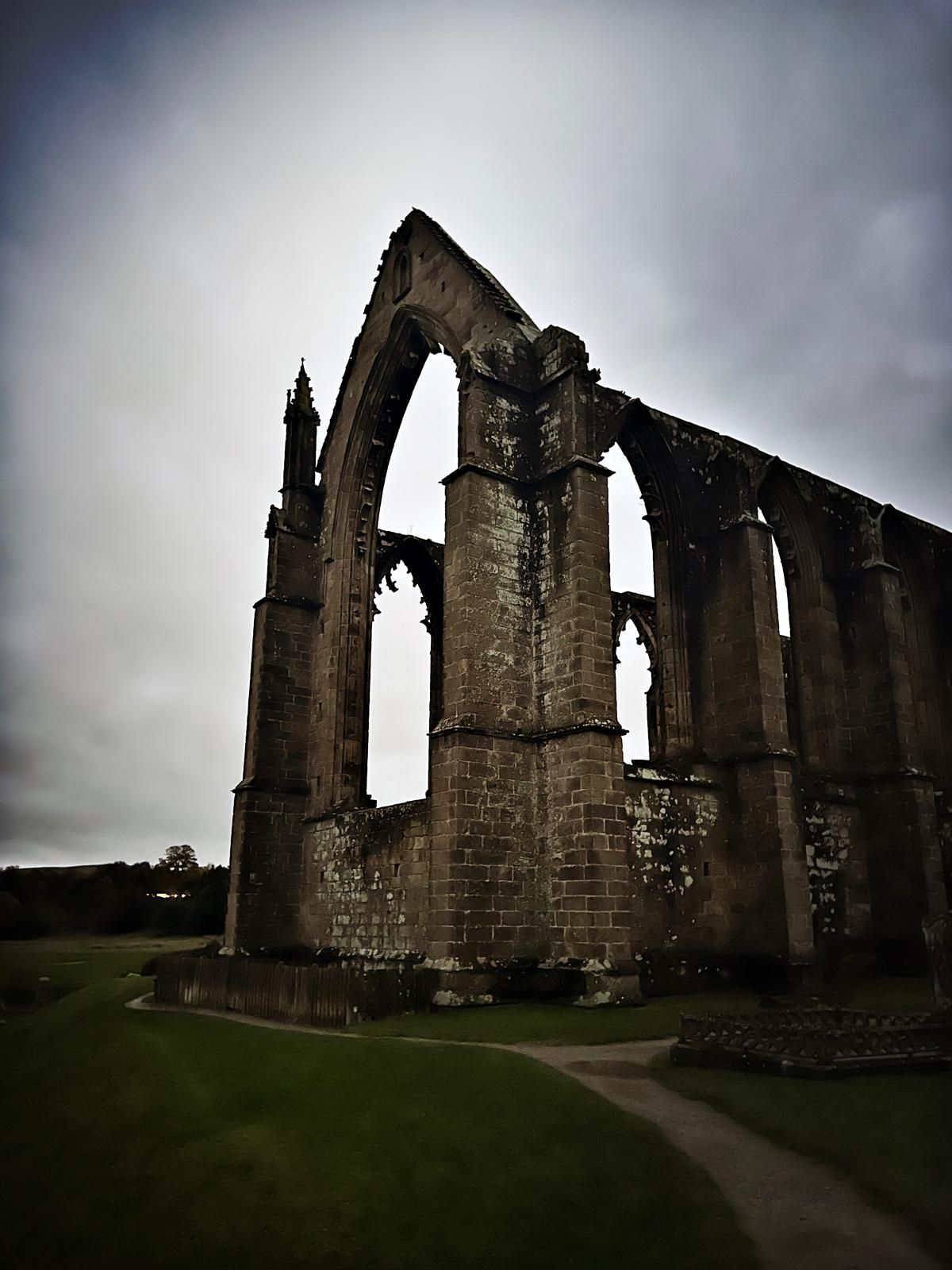
Bolton Abbey: the priory ruins
In 1154 Alice de Rumilly gave this land on a bend of the Wharfe to a community of Augustinian canons, according to the Bolton Abbey estate. (They’d started out at Embsay, a few miles west, in 1120.) They lived and worshipped here until 1539, when Henry VIII’s dissolution of the monasteries stripped the priory of its assets.
The last prior, Prior Moone, managed to save part of it. He negotiated to keep the nave as a place of worship for local people, and it’s still the parish church today. Look for the Pugin windows on the south wall, made in 1851, which show the story of Christ. The rest of the priory, including the tall east end of the church, stands roofless beside it.
In 1805 the local historian Thomas Dunham Whitaker described the setting, in words Wordsworth later quoted:
“Bolton Priory,” says Dr Whitaker in his excellent book, the History and Antiquities of the Deanry of Craven, “stands upon a beautiful curvature of the Wharf, on a level sufficiently elevated to protect it from inundations, and low enough for every purpose of picturesque effect.
— Thomas Dunham Whitaker (1805), quoted in Wordsworth’s notes to The White Doe of Rylstone (1815), Wikisource
(In other words: high enough not to flood, low enough to look good. The canons knew what they were doing.)
The stepping stones
At the priory, 62 stepping stones cross the Wharfe. Don’t try them when the river is up. Wet stones are slippery, and a dunking in October is a long, cold drive home.
The Strid at Bolton Abbey
The Strid is a short stretch of the Wharfe in Strid Wood, where the river suddenly squeezes into a narrow channel between rocks. It looks like you could step across it. Please don’t. The estate’s own words: the water is forced “through at great pressure,” and “the Strid is very dangerous and lives have been lost.” Stay on the paths and well back from the edge.
You can reach it from all three estate car parks. The green trail from the Cavendish Pavilion along the west bank is suitable for pushchairs and wheelchairs. See the estate’s Strid Wood page for routes.
Wordsworth’s poem “The Force of Prayer” ties the Strid to the founding of the priory, through the story of young Romilly, who tried to leap it:
This Striding-place is called The Strid,
A name which it took of yore:
A thousand years hath it borne that name,
And shall, a thousand more.— William Wordsworth, “The Force of Prayer, or the Founding of Bolton Priory” (1815), Wikisource
Whitaker described what it sounds like up close:
But, if here Wharf is lost to the eye, it amply repays another sense by its deep and solemn roar, like ‘the Voice of the angry Spirit of the Waters,’ heard far above and beneath, amidst the silence of the surrounding woods.
— Thomas Dunham Whitaker, quoted in Wordsworth’s notes to The White Doe of Rylstone, Wikisource
Wordsworth, Turner and Landseer at Bolton Abbey
Bolton Abbey was one of the places that made the Dales famous with painters and poets. If you’ve seen an old picture of a ruined priory on a river bend, there’s a decent chance it was this one.
| Who | When | What |
|---|---|---|
| William Wordsworth | Visited summer 1807 | The White Doe of Rylstone, a long poem set at the priory, written at the end of 1807 and published in 1815. Also “The Force of Prayer”, about the Strid. |
| J. M. W. Turner | 1809, and later | Watercolours of the priory and the Wharfe. One, painted in 1809 for his patron Walter Fawkes, is in the British Museum. Another, from about 1825, was engraved in 1827. |
| Edwin Landseer | 1834 | Bolton Abbey in the Olden Time, a scene of monastic life, painted for the Duke of Devonshire. It hangs at Chatsworth; a copy is in the Mercer Art Gallery in Harrogate. |
Wordsworth wrote, in the note at the front of the poem:
During the summer of 1807, the Author visited, for the first time, the beautiful Scenery that surrounds Bolton Priory, in Yorkshire; and the Poem of The White Doe, founded upon a Tradition connected with the place, was composed at the close of the same year.
— William Wordsworth, Advertisement to The White Doe of Rylstone (1815), Wikisource
Bolton Abbey car parks and opening times
From the Bolton Abbey estate, as of November 2026:
| Car park | Postcode | Hours |
|---|---|---|
| Bolton Abbey (for the priory) | BD23 6EX | 9am–5pm, last entry 4pm |
| Riverside | BD23 6AN | 9am–5pm, last entry 4pm |
| Strid | BD23 6AN | 10am–5pm, last entry 4pm |
| Barden Bridge | Closed until spring 2027 |
Parking is paid, and the estate says all the fees go back into the estate. Book or check prices on the estate’s parking page; you can move between car parks on the same day, subject to space. Note that 4pm last entry. It’s easy to miss if you’ve lingered at the castle.
Skipton Castle
Skipton Castle sits at the top of the market town of Skipton. It’s over 900 years old, and the castle describes itself as one of the most complete and best-preserved medieval castles in England. You can go into almost every corner, from the dungeon to the top of the Watch Tower, past the Banqueting Hall, the kitchen and the bedchamber. It’s a castle you walk through, not just around.
- About 1090: Robert de Romille builds the first castle, of timber, replaced in stone later in the 1100s.
- 1310: Edward II grants it to Robert Clifford. Skipton stays the Cliffords’ main home until 1676.
- 1643–1645: In the Civil War it holds out for the King through a siege the castle puts at three years. A recently uncovered well helps explain how the garrison survived. It surrenders on 21 December 1645, the last Royalist stronghold in the north of England to give in. Parliament then has its roofs removed.
- 1650s: Lady Anne Clifford repairs it.
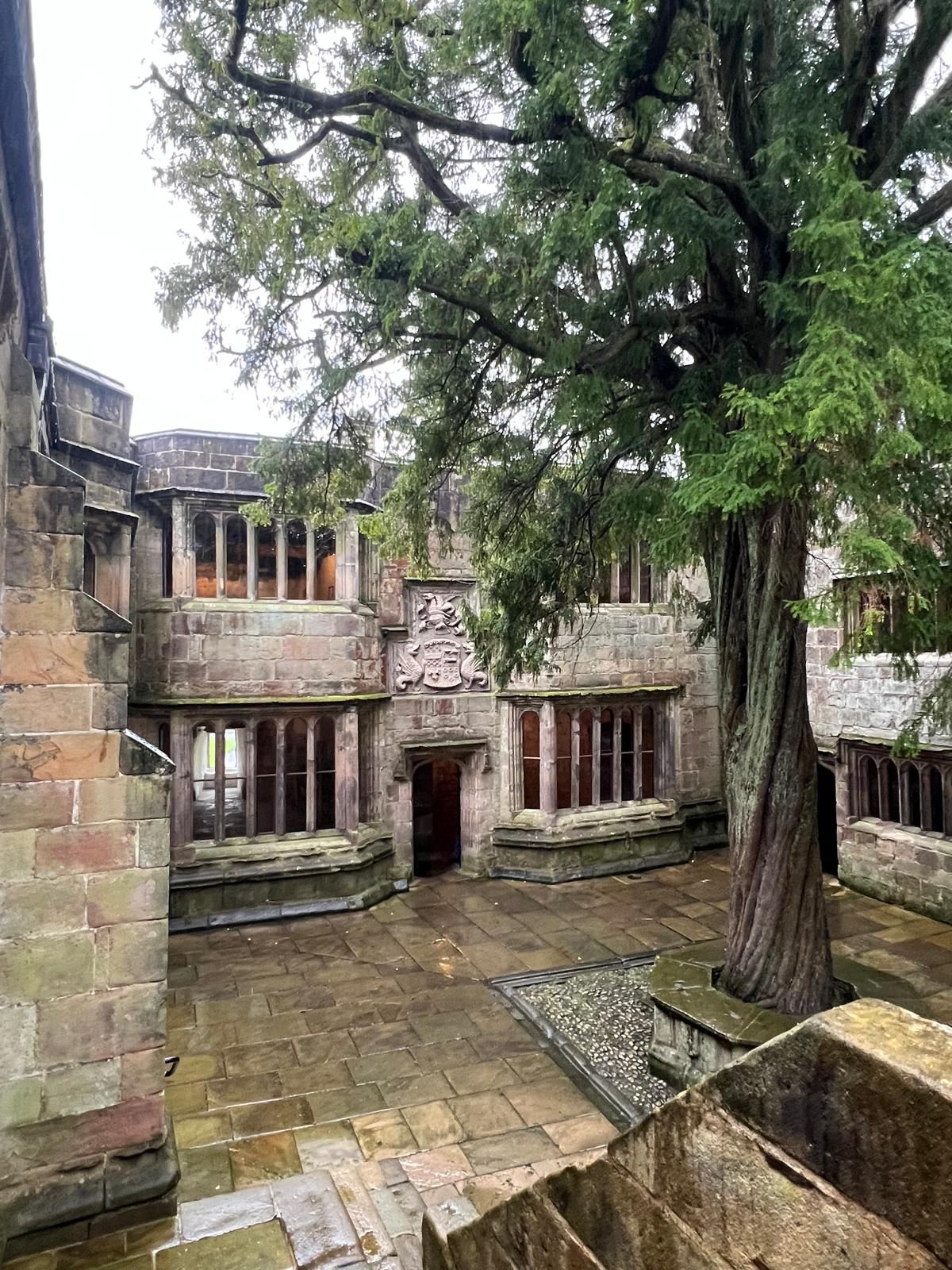
- 1659: By tradition, Lady Anne plants the yew tree in the Conduit Court, the Tudor courtyard at the centre, to mark the end of the work.
Lady Anne Clifford
Lady Anne Clifford was born in Skipton Castle in 1590, spent decades fighting to inherit her family’s lands (her father had left them to his brother), and only got them in 1649, when she was 59. Then she got to work. After the siege she ordered the castle’s repairs, and the yew in the Conduit Court is her best-known mark on it. She died in 1676, the last of the Cliffords to own Skipton.
On our trip she’s one of the women whose stories run through the week: the Brontës in the morning, Lady Anne in the afternoon. Two very different ways of refusing to be told no.
Skipton Castle tickets and opening times
From the castle’s admission page, for 2026:
| Ticket | Price |
|---|---|
| Adult | £12.80 |
| Over 65 | £11.80 |
| Child (5–17) | £8.60 |
| Under 5 | Free |
| Family (2 adults, up to 3 children) | £41.80 |
| Pre-booked adult groups of 15+ | £11.80 each, guide included |
The castle is open every day from 10am, except 23 to 25 December. Booking online guarantees a time slot and is cheaper, so do that. There’s a tea room, a shop and a picnic area.
What to pair with Bolton Abbey and Skipton
- Haworth and the Brontë Parsonage, about half an hour south of Skipton. That’s the day I did.
- Saltaire, near Bradford, for Salts Mill and the Hockney gallery.
- Broughton Hall, near Skipton, which played Thrushcross Grange in the 1992 Wuthering Heights. See Wuthering Heights filming locations.
What our trip does at Skipton and Bolton Abbey
I did Skipton Castle, Haworth and Bolton Abbey in one day when I scouted in October 2026, so I know the day works (and I know it’s a full one). On the Wednesday of our October 2027 Yorkshire trip, after a morning in Haworth and a packed lunch on the bus:
| Time | Stop |
|---|---|
| 14:00–15:30 | Skipton Castle: Lady Anne Clifford’s story and the yew in the Conduit Court |
| 15:45–16:30 | Bolton Abbey: the priory ruins on the Wharfe and the stepping stones |
| 16:30 | Back to our base for the evening |
We don’t walk to the Strid on the trip. There isn’t time after a full morning in Haworth, and I’d rather you saw two places properly than three in a rush. If you have a spare day before or after, it’s worth coming back for. For the Brontës themselves, start with Books by the Brontë sisters.
Skipton and Bolton's world: what else was happening
This is a long one: from the Normans to the Victorians. The castle and the priory were both founded within a lifetime of 1066, and Lady Anne Clifford, who rebuilt Skipton, was a teenager when Shakespeare was writing his big tragedies. Then the poets and painters found Bolton Abbey.
- Norman 1066–1154
- Plantagenet 1154–1485
- Tudor 1485–1603
- Stuart 1603–1714
- Georgian 1714–1837
The story Britain The wider world Other writers
- 1066 Britain The Norman Conquest.
- 1086 Britain William the Conqueror's Domesday Book survey.
- 1090 The story Robert de Romille, a Norman baron, builds the first castle at Skipton, in timber.
- 1120 The story Augustinian canons found a priory at Embsay, five miles west of Bolton.
- 1154 The story The canons move to Bolton, on land given by Alice de Rumilly, and start building.
- 1215 Britain King John agrees to Magna Carta.
- 1310 The story Edward II grants Skipton Castle to Robert Clifford.
- 1314 Britain Robert Clifford is killed at the Battle of Bannockburn.
- 1492 The wider world Columbus reaches the Americas.
- 1520 The story Prior Moone, the last prior, starts building the priory's west tower.
- 1536 Britain Henry VIII begins dissolving England's monasteries.
- 1539 The story Bolton Priory is dissolved. The nave is kept as the parish church.
- 1590 The story Lady Anne Clifford is born in Skipton Castle on 30 January.
- 1607 The wider world English settlers found Jamestown, Virginia.
- 1616 Other writers William Shakespeare dies.
- 1620 The wider world The Mayflower reaches Plymouth, Massachusetts.
- 1642 Britain The English Civil War begins.
- 1645 The story After a three-year siege, Skipton surrenders on 21 December, the last Royalist stronghold in the north. Its roofs are removed.
- 1649 Britain Charles I is executed.
- 1649 The story Lady Anne finally takes possession of the Clifford estates, and comes north.
- 1659 The story By tradition, Lady Anne plants the yew in the Conduit Court to mark the castle's repair.
- 1660 Britain The monarchy is restored under Charles II.
- 1667 Other writers John Milton publishes Paradise Lost.
- 1676 The story Lady Anne Clifford dies on 22 March, aged 86.
- 1807 Other writers William Wordsworth sees Bolton Priory for the first time, in summer.
- 1809 Other writers J. M. W. Turner paints Bolton Abbey for his patron Walter Fawkes.
- 1815 Other writers Wordsworth publishes The White Doe of Rylstone, set at the priory.
- 1815 The wider world Napoleon is defeated at Waterloo.
- 1834 Other writers Edwin Landseer paints Bolton Abbey in the Olden Time for the Duke of Devonshire.
Questions people ask
How far is Bolton Abbey from Skipton?
About five or six miles. Bolton Abbey is just off the A59 between Skipton and Harrogate, so it takes around 15 minutes by car. Buses run on some days only, so check the DalesBus timetable or take a taxi from Skipton or Ilkley station.
Is the Strid at Bolton Abbey dangerous?
Yes. The Bolton Abbey estate says the Strid is very dangerous and lives have been lost there. The River Wharfe is forced through a narrow channel at great pressure, so keep back from the edge and follow the signs.
How many stepping stones are there at Bolton Abbey?
There are 62 stepping stones across the River Wharfe at the priory, according to the Bolton Abbey estate. Don't try them when the river is high.
How long do you need at Skipton Castle?
Allow about an hour and a half to see the castle properly, including the Conduit Court and its yew tree, the towers and the gatehouse. It opens daily from 10am; check the castle's admission page for prices.
Can you walk from Bolton Abbey to the Strid?
Yes. The Strid is in Strid Wood, reachable from all three estate car parks. The green trail from the Cavendish Pavilion to the Strid on the west bank is suitable for pushchairs and wheelchairs.
Is there a steam railway at Bolton Abbey?
Yes, the Embsay and Bolton Abbey Steam Railway runs from Embsay, just outside Skipton, to Bolton Abbey station, which is about a mile and a half from the priory. Check its own timetable for running days.
Who owns Bolton Abbey?
The estate is part of the Devonshire Group, and the Dukes of Devonshire have a long link with it: Landseer painted Bolton Abbey in the Olden Time (1834) at the Duke's request, and the original hangs at Chatsworth.
Read next
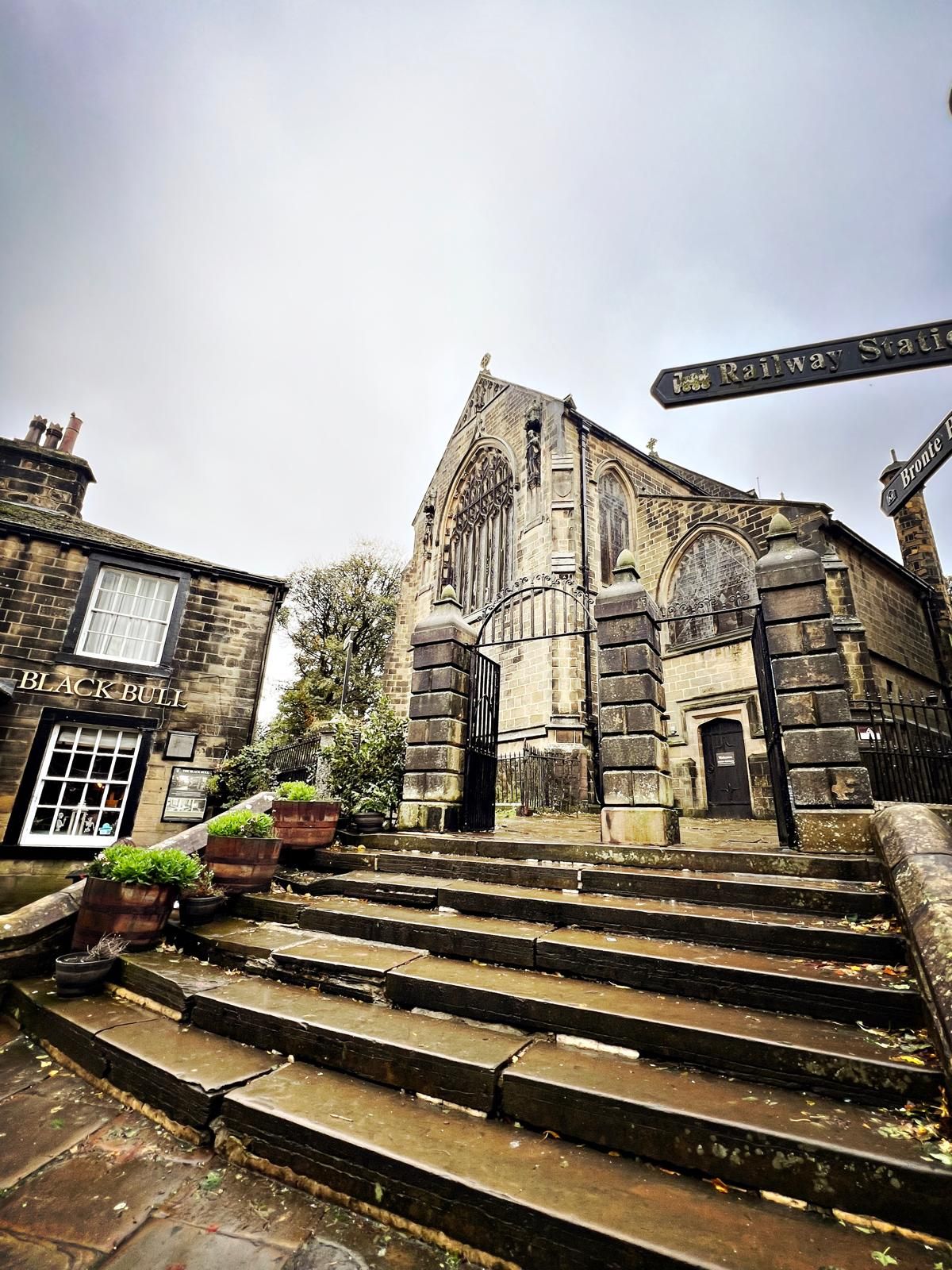 Yorkshire · The BrontësHaworth village and the Brontë Parsonage MuseumHaworth is one steep stone street on the edge of the West Yorkshire moors. At the top is the Brontë Parsonage, the house where Charlotte, Emily and Anne wrote their novels. Here's how to do it well.
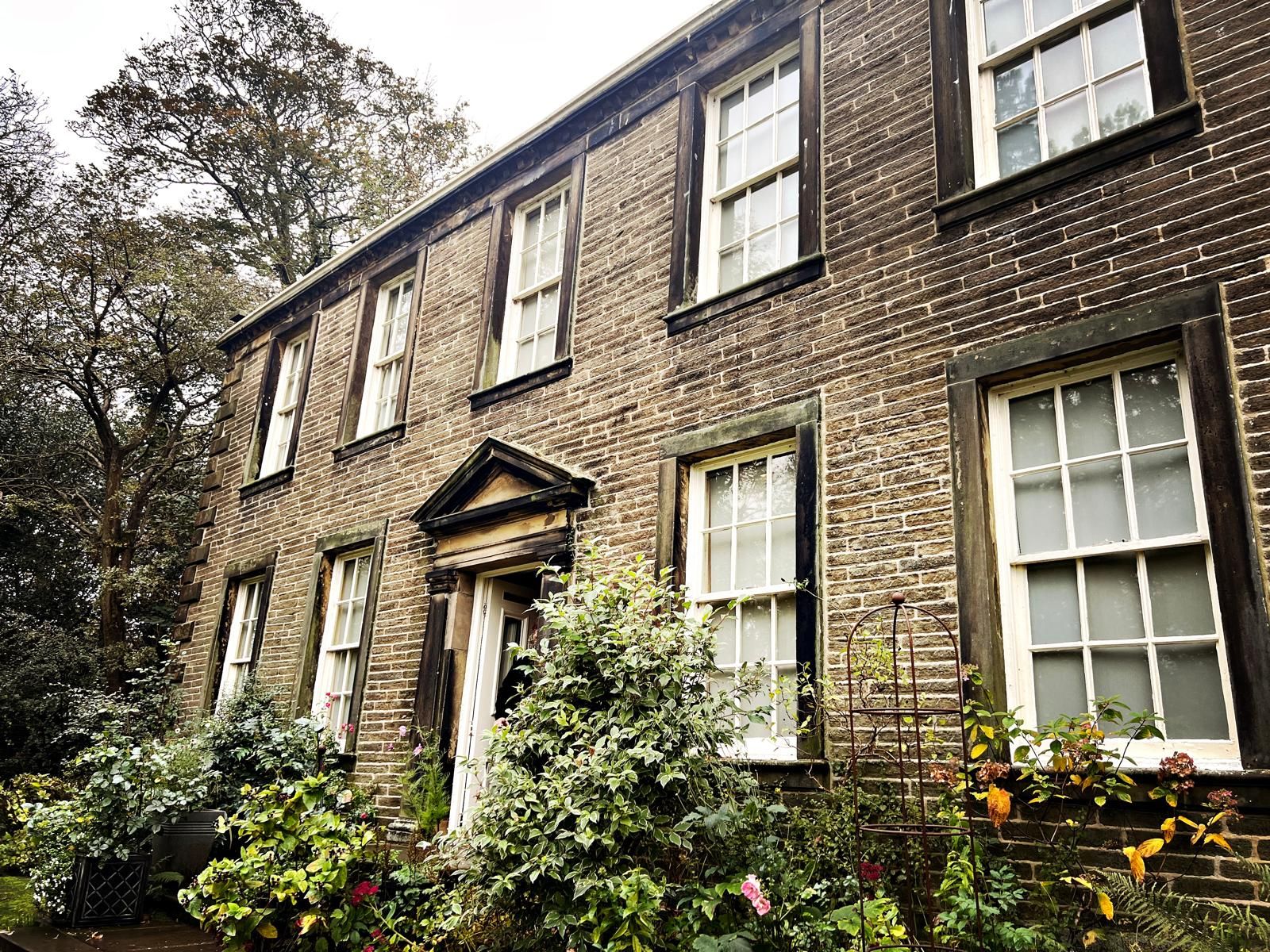 Yorkshire · The BrontësBooks by the Brontë sistersCharlotte, Emily and Anne Brontë wrote seven novels between them, all at one house in Haworth, West Yorkshire. Here's every book in order, who wrote which, and the story behind them, including what Charlotte really thought of Jane Austen.
 Yorkshire · Mills and moorsSaltaire, EnglandOne mill owner built a whole village for his workers. The mill is now full of David Hockney's art and one of the biggest bookshops you'll ever wander round. I nearly skipped it. Don't.
- Yorkshire · The BrontësWuthering Heights filming locations, and Top WithensEmily Brontë set Wuthering Heights on the moors above Haworth. Most of the films went somewhere else. Here's which is which, and how to walk to the ruin everyone calls the real thing.
Sources
- Bolton Abbey estate (30,000 acres, car park hours)
- Bolton Abbey: Priory Church and ruins
- Bolton Abbey: What to see (62 stepping stones)
- Bolton Abbey: Strid Wood and the Strid
- Bolton Abbey: Parking
- Bolton Abbey: Getting here
- DalesBus: Wharfedale services
- Cool Places: Embsay & Bolton Abbey Steam Railway
- Skipton Castle (history, siege 1643–45)
- Skipton Castle: Admission (2026 prices, daily from 10am)
- Wikipedia: Skipton Castle (Clifford 1310, surrender Dec 1645, yew 1659)
- Tate: Turner, Bolton Abbey watercolours
- British Museum: Turner, Bolton Abbey (1809)
- Wikipedia: Bolton Abbey in the Olden Time (Landseer, 1834)
- Wikisource: Wordsworth, The White Doe of Rylstone
- Wikisource: Wordsworth, The Force of Prayer
- Embsay & Bolton Abbey Steam Railway: Timetable
- Wikipedia: Bolton Priory (Embsay 1120, move 1154, west tower 1520, dissolved 1539)
- Wikipedia: Lady Anne Clifford (born Skipton Castle 30 Jan 1590; estates 1643/1649; died 22 Mar 1676)
Get the reading list first.
Trip announcements, curated reading lists, and the occasional dispatch — before anyone else.