Yorkshire · The moors and the coast
Whitby Abbey and Dracula: the abbey, the 199 steps, and the places Bram Stoker wrote into the book
A ruined abbey on a cliff, 199 steps up from the harbour, and one summer in 1890 when Bram Stoker walked into the town library and came out with the name Dracula. Here's what's real, what's in the book, and how to see both.
- Where
- East Cliff, Whitby, North Yorkshire. Abbey Lane, YO22 4JT
- Run by
- English Heritage. Members free
- Open
- Daily 10am–6pm, 1 Apr–31 Oct; Wed–Sun 10am–4pm, 1 Nov–31 Mar
- Tickets
- Book online by midnight the day before to save up to 15%; 20% off on the day if you arrive by bus, train or bike
- Founded
- About 657, by St Hild (Hilda)
- Dracula
- Published 1897. Stoker stayed in Whitby in summer 1890
- On foot
- 199 steps from Church Street in the old town up to St Mary's and the abbey
The short answer
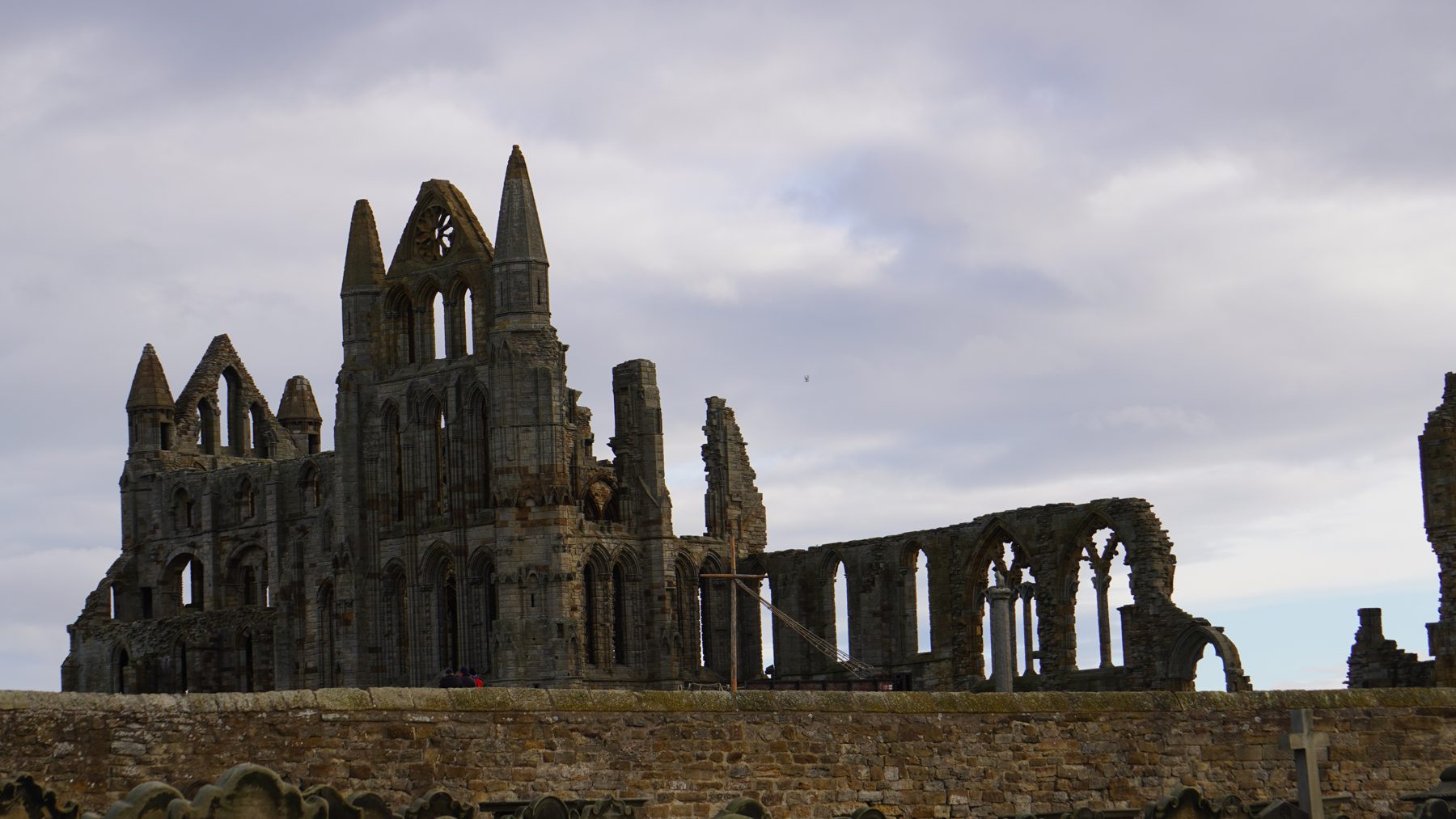
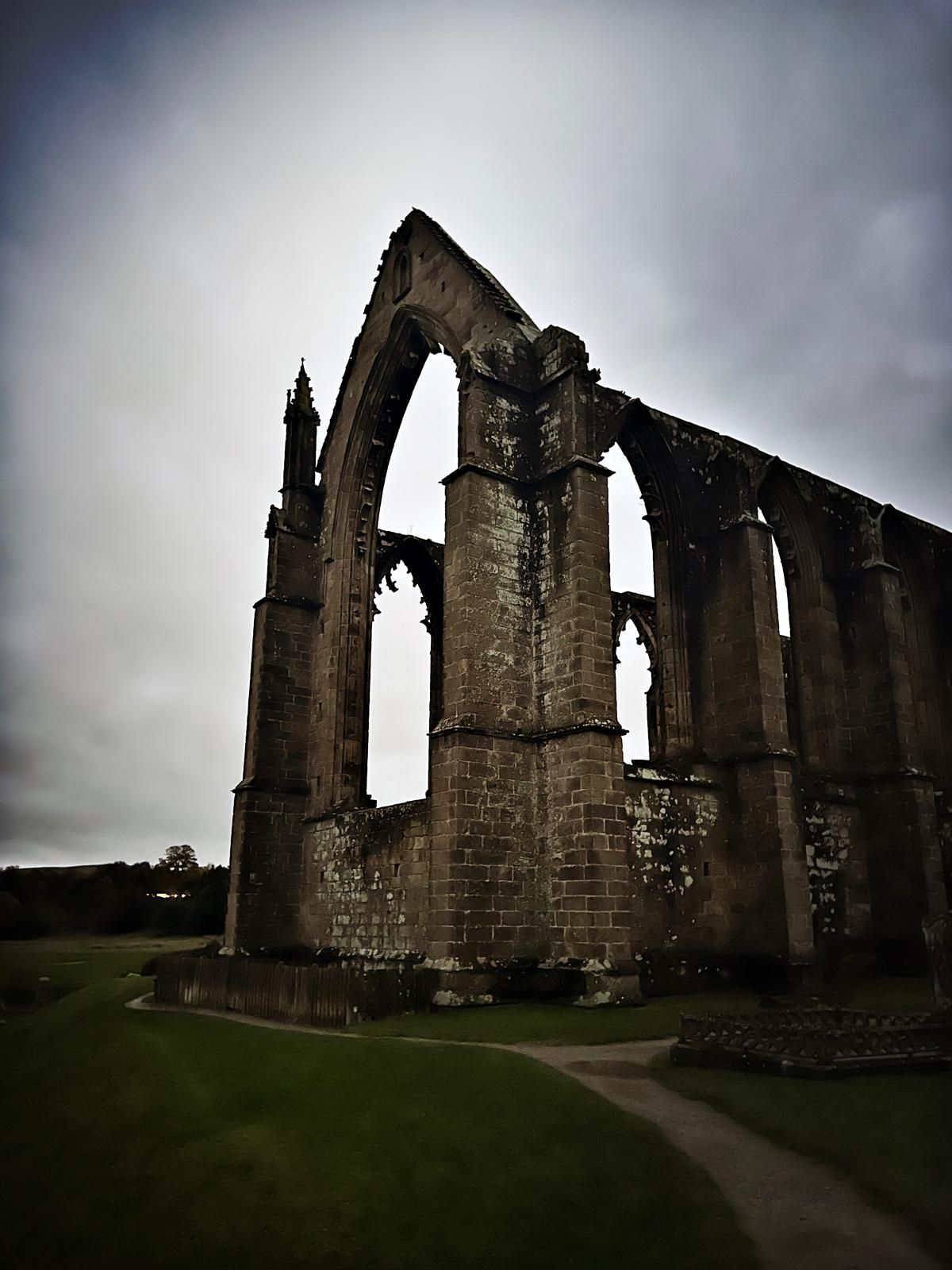
Whitby Abbey is a ruined Gothic church on the East Cliff above Whitby, North Yorkshire, on the site of a monastery founded in about 657 by St Hild. It is linked to Dracula because Bram Stoker stayed in Whitby in 1890, found the name Dracula in a book in the town's library, and set Count Dracula's arrival in England here, with the abbey, St Mary's churchyard and the 199 steps all in the novel. The site is run by English Heritage; as of November 2026 it opens Wednesday to Sunday, 10am to 4pm.
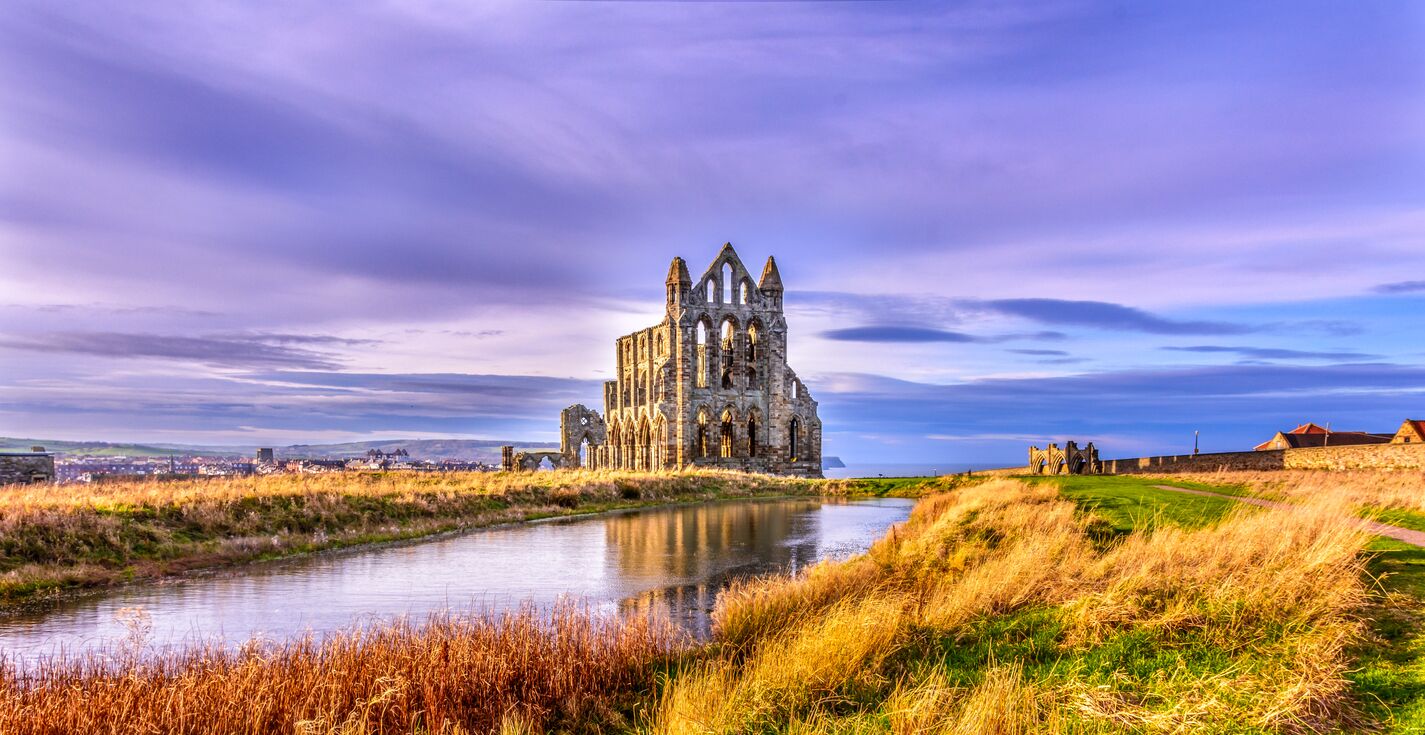
Whitby Abbey stands on the East Cliff above the harbour town of Whitby, on the North Yorkshire coast, and it’s the reason Whitby and Dracula go together. Bram Stoker spent the summer of 1890 here, looked up at the same ruin, climbed the same 199 steps, and wrote all of it into his novel. Dracula came out seven years later, and the town has never let go of it. I went to Whitby in October 2026, on a small-group day tour from York, to plan our own trip. Below: the abbey’s long history, how to visit, every real Whitby place in the book, and how to get here without a car.
Whitby Abbey: nearly 1,400 years in brief
The headland has held three things in turn: an Anglo-Saxon monastery, a medieval abbey, and a 17th-century mansion. The key dates, from English Heritage:
| Date | What happened |
|---|---|
| About 657 | St Hild (614–680) founds a monastery here, at a place then called Streaneshalch. |
| 664 | The Synod of Whitby meets at the monastery to settle disputes between the Celtic and Roman church traditions. |
| 600s | Caedmon, a cowherd at the monastery, becomes the first named poet in the English language. |
| 800s | The monastery is abandoned, probably after Viking raids and Danish settlement. |
| About 1078 | A monk called Reinfrid founds a new monastic community. |
| About 1225–50 | The great Gothic church is begun. The east end, the part that still stands tallest, is among the first parts built. |
| 1539 | The abbey is suppressed under Henry VIII, and most of its buildings demolished. |
| 1500s–1600s | The Cholmley family buy the site and build a house beside the ruin. |
| 1897 | Dracula gives Whitby its most famous story. |
| 1914 | The German fleet shells Whitby, and shells hit the abbey’s west front. |
So the ruin you see isn’t Hild’s abbey. Hers was Anglo-Saxon and long gone; the Gothic church went up about 500 years later on the same spot.
Bede, writing in the early 700s, described Hild’s monastery as the place chosen for the synod:
it was agreed, that a synod should be held in the monastery of Streaneshaich, which signifies the Bay of the Lighthouse, where the Abbess Hilda, a woman devoted to God, then presided; and that there this controversy should be decided.
— Bede, Ecclesiastical History of the English Nation, Book III, Ch. XXV, trans. L. C. Jane (1903), Fordham Medieval Sourcebook
Bede says even kings and princes came to Hild for advice. (A woman running one of the most important religious houses in England, in the 600s. Worth a minute of your time at the top of the steps.) He also tells the story of Caedmon, the cowherd who was too shy to sing at feasts until he dreamed a song:
THERE was in this abbess’s monastery a certain brother, particularly remarkable for the grace of God, who was wont to make pious and religious verses, so that whatever was interpreted to him out of Scripture, he soon after put the same into poetical expressions of much sweetness and humility, in English, which was his native language.
— Bede, Ecclesiastical History, Book IV, Ch. XXIV, Fordham Medieval Sourcebook
John Wesley, the founder of Methodism, walked round the ruin on 24 June 1761 and called it “one of the finest, if not the finest, ruin in the kingdom.” High praise from a man who’d seen a lot of ruins on horseback.
Whitby Abbey tickets and opening times
From English Heritage, as of November 2026:
- Open: every day, 10am to 6pm, from 1 April to 31 October; Wednesday to Sunday, 10am to 4pm, from 1 November to 31 March. Check English Heritage’s page for closures before you go.
- Tickets: Standard, Saver and Super Saver tickets are sold online. Book by midnight the day before to save up to 15%. Tickets are valid all day.
- Members: English Heritage members get in free.
- Car-free discount: 20% off tickets bought on the day if you show a bus or train ticket, or arrive by bike. Keep that ticket.
- Address: Abbey Lane, Whitby YO22 4JT. Phone 01947 603568.
- Inside: a large museum with listening posts, peep-holes and animations.
Whitby and Dracula: what Stoker found here
Bram Stoker was born in Dublin in 1847 and worked in London as business manager to the actor Henry Irving. In late July 1890, on Irving’s suggestion, he came to Whitby on holiday and took rooms at Mrs Veazey’s guesthouse at 6 Royal Crescent, on the West Cliff. He had a week alone before his wife and son joined him.
Three things happened that summer, according to English Heritage:
- The name. On 8 August 1890 Stoker went into the public library on the quay and found William Wilkinson’s 1820 book about Wallachia and Moldavia. It mentions the 15th-century prince Vlad Tepes, called Dracula, with a footnote that “Dracula in the Wallachian language means Devil.” Stoker wrote the name down.
- The shipwreck. About five years before, a Russian ship, the Dmitry, from Narva, had run aground on Tate Hill Sands below the East Cliff. In the novel it becomes the Demeter, from Varna, which drifts into Whitby in a storm with a dead captain lashed to the wheel and Dracula aboard.
- The graves. In St Mary’s churchyard Stoker copied names from the headstones. One was Swales, which he gave to the old man who becomes Dracula’s first victim in Whitby. Some of the stones stand over empty graves, for sailors lost at sea.
Dracula began as a play called The Undead, which Irving turned down. The novel came out in 1897. (Imagine being the actor who passed on Dracula.)
Is Whitby actually in Dracula?
Yes, by name, and in detail. People search this a lot, so to be clear: Whitby isn’t a character, it’s the town where the Count comes ashore in England. Mina Murray arrives on 24 July to stay with her friend Lucy, and her journal opens Chapter VI with “Whitby” as the dateline. The Whitby part of the book runs from about Chapter VI to Chapter VIII, out of 27: Mina’s first look at the town, the storm and the shipwreck, the dog, the churchyard, and Lucy’s sleepwalking. Then everyone heads south and the story moves to London.
Here’s how Stoker describes it, in Mina’s words:
This is a lovely place. The little river, the Esk, runs through a deep valley, which broadens out as it comes near the harbour. A great viaduct runs across, with high piers, through which the view seems somehow further away than it really is.
— Bram Stoker, Dracula, Chapter VI (1897), Project Gutenberg
The viaduct is still there: it’s the Larpool Viaduct, which carried the old Scarborough line over the Esk. And the red roofs she describes next, “piled up one over the other anyhow,” are the old town you look down on from the top of the 199 steps.
The Dracula places in Whitby
You can walk all of these in an afternoon. Wear shoes with grip; the steps and cobbles get slick.
| Place | In the novel | Where |
|---|---|---|
| 6 Royal Crescent | Where Stoker stayed in 1890. Mina and Lucy stay in a house on “the Crescent” in the book. | West Cliff |
| Tate Hill Pier and Sands | The Demeter runs aground here and an immense dog springs from the deck. | Below the East Cliff |
| The 199 steps | Mina describes them, and later toils up them at night looking for Lucy. | Church Street to St Mary’s |
| St Mary’s churchyard | The girls’ “favourite seat”, where Mina finds the sleep-walking Lucy. | Top of the steps, East Cliff |
| Whitby Abbey | The ruin over the town, in Mina’s first letter from Whitby. | East Cliff |
| The harbour and piers | The storm, the bells, the fishing boats racing home. | Town centre |
Mina Murray’s journal, a few lines further into her first day in Whitby, turns to the abbey:
Right over the town is the ruin of Whitby Abbey, which was sacked by the Danes, and which is the scene of part of “Marmion,” where the girl was built up in the wall. It is a most noble ruin, of immense size, and full of beautiful and romantic bits; there is a legend that a white lady is seen in one of the windows.
— Bram Stoker, Dracula, Chapter VI (1897), Project Gutenberg
And the steps:
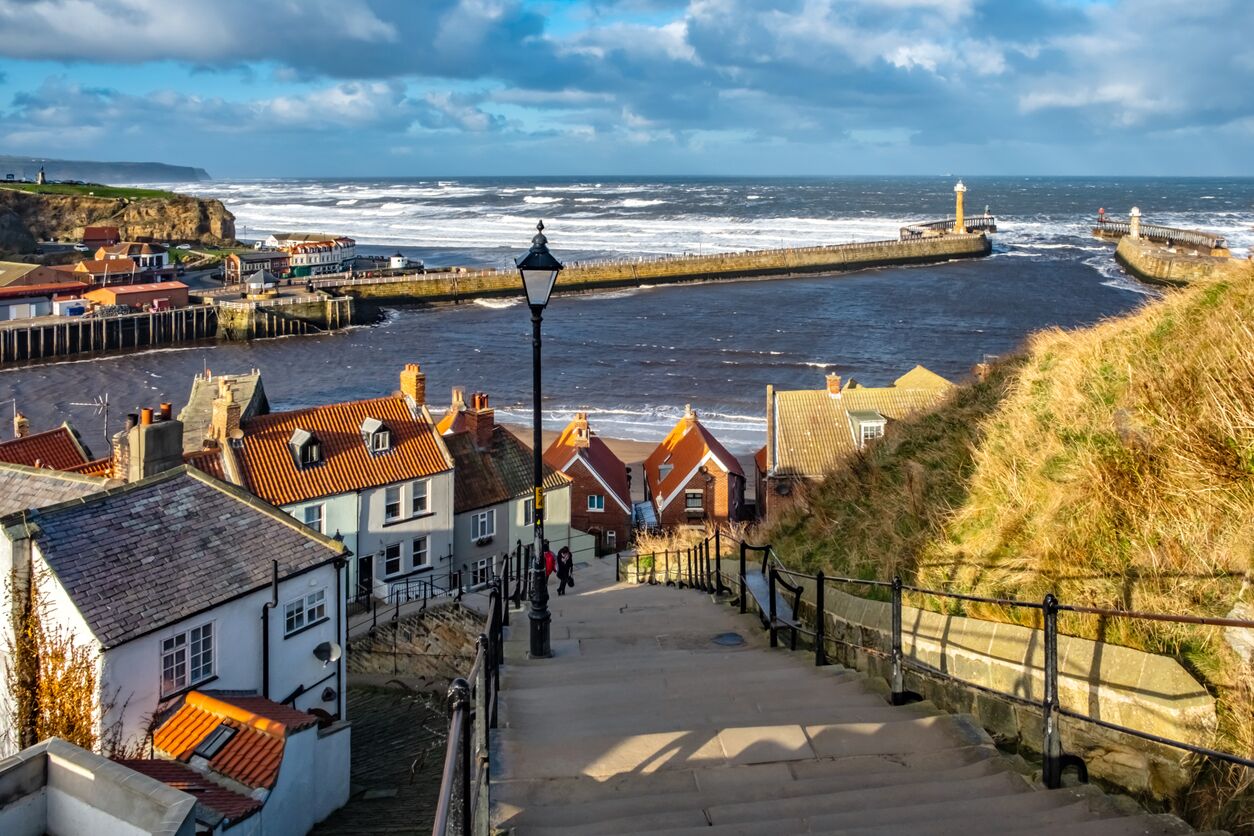
The steps are a great feature on the place. They lead from the town up to the church, there are hundreds of them—I do not know how many—and they wind up in a delicate curve; the slope is so gentle that a horse could easily walk up and down them.
— Bram Stoker, Dracula, Chapter VI (1897), Project Gutenberg
(A horse, maybe. Your calves may disagree.)
The wreck, as reported in the newspaper cutting Mina pastes into her journal:
The schooner paused not, but rushing across the harbour, pitched herself on that accumulation of sand and gravel washed by many tides and many storms into the south-east corner of the pier jutting under the East Cliff, known locally as Tate Hill Pier.
— Bram Stoker, Dracula, Chapter VII (1897), Project Gutenberg
The best Dracula things to do in Whitby
If you only have a day, here’s what I’d do, in order:
- Start on the West Cliff. See 6 Royal Crescent (from the outside; it’s not a museum) and the view across the harbour to the abbey, which is the view Stoker had.
- Cross the bridge to the old town and walk down to Tate Hill Pier, where the Demeter comes ashore.
- Climb the 199 steps to St Mary’s churchyard. Find the bench, look at the headstones, hold on to your hat.
- Go into Whitby Abbey. The museum covers Stoker’s summer as well as Hild’s.
- Stay for an evening walk. The Dracula and ghost walks below start at 7pm.
The Dracula Experience, on Marine Parade near the harbour, is a walk-through show with actors and effects. Listings say it opens daily in summer and at weekends in winter; check before you go. It’s a show, not a historic site. If you’re there for the book, the real places above are the better use of your time.
Is there a Dracula trail or ghost walk in Whitby?
Yes. The best-known is Dr Crank of Whitby Walks, a local story-walker. As of November 2026, his site lists:
- The Ghost Walk: 75 minutes, round the back streets of the West Cliff. Dates are in his diary; November 2026 has it on most Fridays, Saturdays and some Sundays.
- In Search of Dracula: a separate walk on set dates (September in 2026), or as a private walk if your date isn’t listed.
- Both start at 7pm from the Whale Bone Arch, opposite the Royal Hotel on the West Cliff (YO21 3HA). No booking, just turn up. Cash only, for now.
Check his diary the week you go. Dates change every month.
There’s no official signed “Dracula trail.” The places in the table above, walked in the order in the list, are the trail.
Is there a Dracula grave at Whitby Abbey?
No. People search for one, but Dracula is fiction and there’s no grave. In the novel he lands in Whitby and moves on to London; he doesn’t die here. What’s real is St Mary’s churchyard, between the top of the 199 steps and the abbey. Its weathered headstones, some for sailors whose bodies were never found, are the ones Stoker walked among. The churchyard is on a cliff edge and very exposed, so hold on to hats.
The 199 steps and St Mary’s Church
The 199 steps, also called the Church Stairs, climb from Church Street in the old town on the east side of the harbour to St Mary’s Church. The abbey is a few minutes’ walk further on. Take your time on the way up, and turn round halfway: that’s the photo.
Whitby or Transylvania: which is the “real” Dracula place?
Honestly? Whitby. Here’s why.
In the novel, Castle Dracula is in Transylvania, in the Carpathians, and Jonathan Harker’s chapters at the start of the book are set there. Whitby is where Dracula lands in England. But there’s no evidence Stoker ever went to Transylvania. He built it from books. Whitby he actually walked: the steps, the churchyard, the library where he found the name.
What about Bran Castle in Romania? It’s marketed as “Dracula’s Castle,” but it isn’t in the novel, there’s no evidence Stoker knew about it, and its link to Vlad the Impaler is slim, according to its own Wikipedia entry. Vlad ruled Wallachia, the next region over. Go if you’re in Romania. Just know what you’re looking at.
Whitby Goth Weekend and the Dracula crowds
Whitby Goth Weekend began in 1994 as a meeting of about forty pen-pals and has run twice a year since 1997, in spring and autumn. As of November 2026, the official site lists the 2026 dates as 1–3 May and 30 October–1 November. The 2027 dates weren’t up yet, so check the site before you book anything.
It’s a big, friendly crowd and the town fills up. If you want to go, book your room early. If you’d rather have the steps to yourself, pick a different weekend. October half-term (the English school holiday) is busy too.
Captain Cook and the rest of Whitby
Whitby was a busy port long before Stoker. James Cook was apprenticed to a Whitby shipowner as a young man and made his first voyage in a Whitby-built ship, the Freelove. Later he chose Whitby-built ships for his voyages of discovery. The house on Grape Lane where he lodged is now the Captain Cook Memorial Museum. Whitby was also a whaling port (hence the whalebone arch on the West Cliff), and it’s known for jet, a black stone found on this coast and sold in the town’s shops. The Victorians wore it for mourning, which fits.
Getting to Whitby from London, York or the US
Whitby is on the coast at the north-eastern edge of the North York Moors National Park. It’s a long way from anywhere, and that’s half its charm. Plan on it taking most of a day, and stay at least a night.
| From | How | Notes |
|---|---|---|
| London | Train from King’s Cross to York, then York to Middlesbrough, then the Esk Valley line to Whitby | The Esk Valley line takes about 1½ hours from Middlesbrough and runs only about five trains a day (four on Sundays). Check the timetable. |
| York | Coastliner 840 bus over the moors via Pickering | Only a few buses a day go all the way to Whitby. Check the Transdev timetable. |
| Pickering | North Yorkshire Moors Railway heritage train | Runs to Whitby on some days. Check its travel updates; a bridge repair affected services in 2026. |
| By car | The A169 across the moors from Pickering | The most scenic way in. Parking in town fills up in summer. |
| The US | Fly to London or Manchester, then the train | There are no direct flights from the US to anywhere near Whitby. Most people fly into London or Manchester and take the train north, with a night in York on the way. |
My tip: don’t try to do London to Whitby and back in a day. You’ll spend more time on trains than on the steps.
What our trip does in Whitby
I did Whitby on a small-group day tour from York in October 2026, crossing the moors with short stops on the way, and our trip follows the same pattern. (We cut the steam train from the plan, too. It put fish and chips at 2pm and left nobody hungry for dinner.) On the Monday of our October 2027 Yorkshire trip:
- We arrive over the moors by minibus at about 12:30, after morning stops at Sutton Bank, Byland Abbey, Helmsley and Kirkdale.
- Fish and chips by the harbour.
- About three and a half hours on foot: Whitby Abbey and St Hild’s story, the 199 steps, St Mary’s churchyard and the Dracula places, and the harbour.
- Dinner on the way home in the Esk valley.
We don’t take the steam train, and we don’t go to Robin Hood’s Bay. Stoker was Irish, and if Dracula sends you looking for older stories, our guide to fairies in Irish folklore covers the country he grew up in. For the moors you cross to get here, see our North York Moors guide. And for the Brontës on the other side of Yorkshire, start with Books by the Brontë sisters.
Dracula's world: what else was happening
Bram Stoker was a late Victorian. He found the name Dracula in Whitby in 1890, the same years that gave us Sherlock Holmes, Dorian Gray and Jack the Ripper, and Dracula came out in the year of Queen Victoria's Diamond Jubilee.
- Victorian (Queen Victoria) 1837–1901
- Edwardian (Edward VII) 1901–1910
The story Britain The wider world Other writers
- 657 The story Hild founds the monastery on Whitby's East Cliff.
- 664 Britain The Synod of Whitby settles how the English church dates Easter.
- 1539 Britain Henry VIII's Dissolution closes the later Benedictine abbey; it falls to ruin.
- 1847 The story Bram Stoker is born in Dublin.
- 1847 Other writers Jane Eyre and Wuthering Heights are published.
- 1886 Other writers Robert Louis Stevenson publishes Strange Case of Dr Jekyll and Mr Hyde.
- 1887 Other writers Arthur Conan Doyle's first Sherlock Holmes story, A Study in Scarlet.
- 1888 Britain The Whitechapel murders (Jack the Ripper) in London.
- 1890 The story Stoker holidays in Whitby and finds the name "Dracula" in a book in the town library.
- 1890 Other writers Oscar Wilde's The Picture of Dorian Gray appears in a magazine.
- 1890 The wider world In the US, the massacre at Wounded Knee, South Dakota.
- 1891 Other writers Thomas Hardy publishes Tess of the d'Urbervilles.
- 1892 The wider world Ellis Island opens in New York Harbor.
- 1896 The wider world The Klondike gold rush begins in Canada's Yukon.
- 1897 The story Dracula is published in London, on 26 May.
- 1897 Britain Queen Victoria's Diamond Jubilee: 60 years on the throne.
- 1898 Other writers H. G. Wells publishes The War of the Worlds as a book.
- 1898 The wider world The Spanish–American War.
- 1912 The story Bram Stoker dies in London, the week after the Titanic sinks.
- 1914 Britain German warships shell Whitby in December; the abbey is hit.
Questions people ask
Why is Whitby linked to Dracula?
Bram Stoker spent the summer of 1890 in Whitby, staying at 6 Royal Crescent. On 8 August 1890 he found the name Dracula in an 1820 book in the town's library, and he used Whitby's harbour, the 199 steps, St Mary's churchyard and the abbey as settings for the chapters where Dracula comes ashore in England.
Is Whitby actually in Dracula?
Yes, by name. Mina Murray's journal opens Chapter VI with "Whitby" and a description of the Esk, the harbour, the red roofs of the old town and the abbey ruin. The Whitby chapters run from about Chapter VI to Chapter VIII: the shipwreck, the dog, the churchyard and Lucy's sleepwalking.
Is there a Dracula grave in Whitby?
No. Dracula is fiction, and he doesn't die in Whitby anyway; he moves on to London. What's real is St Mary's churchyard on the East Cliff, where Stoker copied names off the headstones, including Swales, which he gave to Dracula's first Whitby victim.
Is there a Dracula walk or ghost walk in Whitby?
Yes. Dr Crank of Whitby Walks runs a 75-minute ghost walk and a separate In Search of Dracula walk, both from the Whale Bone Arch on the West Cliff at 7pm. As of November 2026 there's no need to book, it's cash only, and the Dracula walk runs on set dates (September in 2026) or privately.
When is Whitby Goth Weekend?
Twice a year, in spring and autumn. As of November 2026 the official site lists 1–3 May and 30 October–1 November 2026; the 2027 dates weren't posted yet. Book a room early if you're going, and avoid those weekends if you're not.
How do you get to Whitby from London?
By train, go from London King's Cross to York, then on to Middlesbrough and take the Esk Valley line, about 1½ hours and only a handful of trains a day. Or take the Coastliner 840 bus from York across the moors, which only reaches Whitby a few times a day. Either way it's most of a day, so stay at least one night.
Whitby or Transylvania: which is the real Dracula place?
In the novel, Dracula's castle is in Transylvania and Whitby is where he lands in England. But Stoker never went to Transylvania, as far as anyone knows, while he did spend the summer of 1890 in Whitby and wrote real streets, steps and graves into the book. Bran Castle in Romania is marketed as Dracula's Castle, but it isn't in the novel.
How many steps are there up to Whitby Abbey?
There are 199 steps, often called the Church Stairs, from Church Street in the old town up to St Mary's Church. The abbey is a short walk beyond the church.
Do you need to book Whitby Abbey tickets?
You don't have to, but booking online by midnight the day before saves up to 15%, according to English Heritage. Tickets are valid all day, and English Heritage members get in free.
What happened at the Synod of Whitby?
In 664 church leaders met at St Hild's monastery in Whitby to settle a dispute between the Celtic and Roman Christian traditions, including how to date Easter. English Heritage calls it the most important event in the monastery's history.
Who was Caedmon?
Caedmon was a cowherd at St Hild's monastery in Whitby in the 600s who, according to Bede, began to compose religious songs in English after a dream. He's the first named poet in the English language.
Is Whitby Abbey open in October?
Yes. From 1 April to 31 October it's open every day, 10am to 6pm. From 1 November to 31 March it's open Wednesday to Sunday, 10am to 4pm. Check English Heritage's page before you go, in case of closures.
Read next
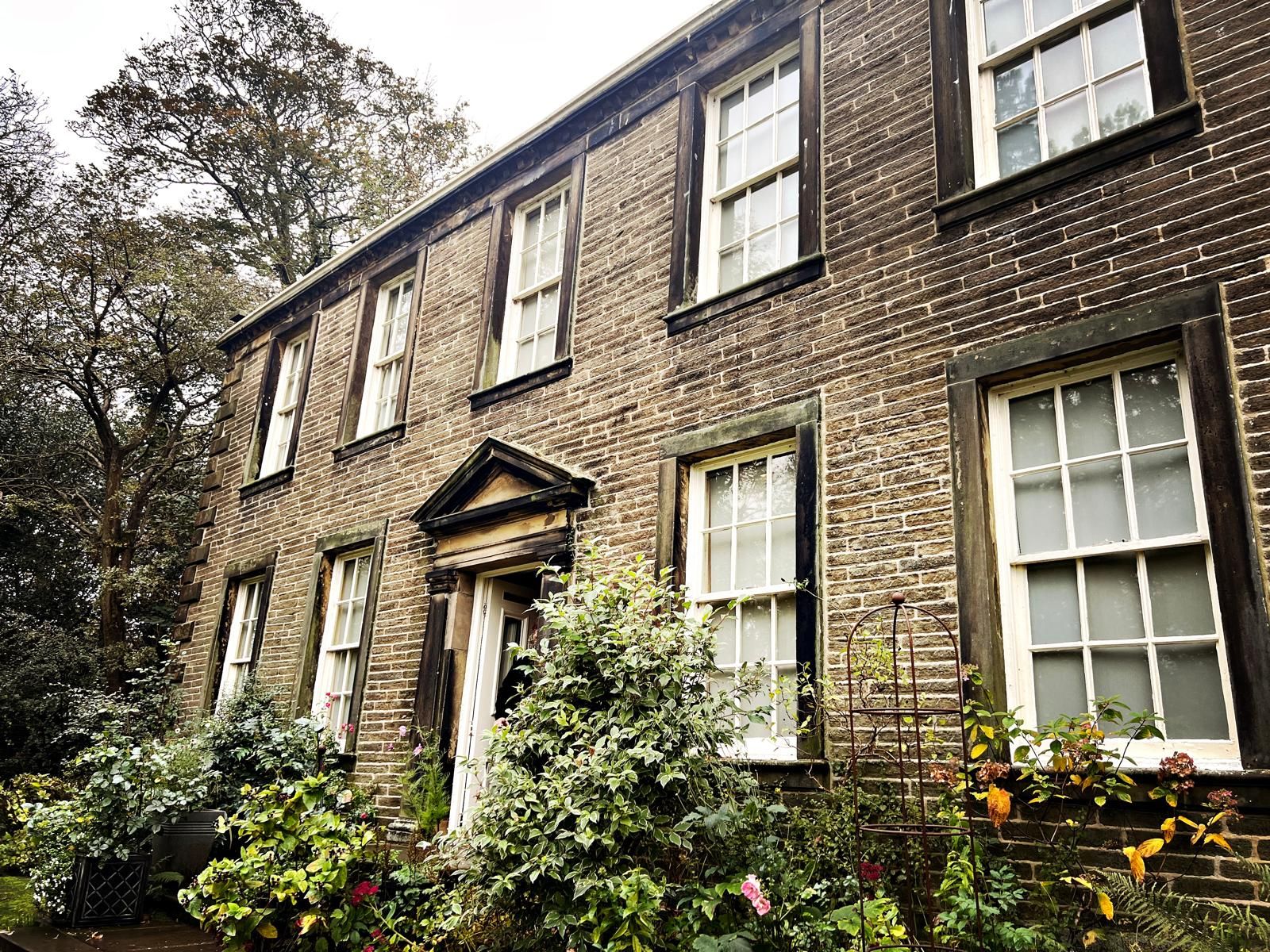 Yorkshire · The BrontësBooks by the Brontë sistersCharlotte, Emily and Anne Brontë wrote seven novels between them, all at one house in Haworth, West Yorkshire. Here's every book in order, who wrote which, and the story behind them, including what Charlotte really thought of Jane Austen.
- Ireland · Irish FolkloreFairies in Irish folkloreWho the "good people" are, why farmers plough around fairy forts, and what happened when a road met a fairy bush in Clare.
 Yorkshire · The DalesBolton Abbey to SkiptonA ruined priory on the River Wharfe and one of England's most complete medieval castles, a few miles apart at the bottom edge of the Yorkshire Dales. Easy to pair, and easy to pair with Haworth too.
Sources
- English Heritage: Whitby Abbey (hours, address, offers)
- English Heritage: Whitby Abbey prices and opening times
- English Heritage: History of Whitby Abbey
- English Heritage: Whitby and Dracula
- Wikipedia: Bram Stoker (born Dublin 1847)
- Wikipedia: Whitby Goth Weekend
- Cool Places: The Dracula Experience, Whitby
- Project Gutenberg: Bram Stoker, Dracula
- Fordham Medieval Sourcebook: Bede, Ecclesiastical History, Book III
- Fordham Medieval Sourcebook: Bede, Ecclesiastical History, Book IV
- Internet Archive: The Journal of the Rev. John Wesley, vol. 3
- Project Gutenberg: Kitson, The Life of Captain James Cook
- Whitby Goth Weekend (official site, dates)
- NYMR: Travel updates
- Whitby Walks (Dr Crank): Diary, ghost walk and In Search of Dracula walk
- Esk Valley Railway: Timetable (Middlesbrough–Whitby)
- Wikipedia: Esk Valley line (five trains a day to Whitby, four on Sundays)
- Transdev: Coastliner 840 timetable (Leeds–York–Pickering–Whitby)
- Wikipedia: Bran Castle (not in the novel; no evidence Stoker visited Transylvania)
Get the reading list first.
Trip announcements, curated reading lists, and the occasional dispatch — before anyone else.