
Yorkshire · Arts and crafts
Arts and crafts of Yorkshire: bobbin lace, Whitby jet, the Mouseman, Chippendale, knitters and sculptors
Yorkshire makes things. Jet from the cliffs at Whitby, mice carved into church pews, furniture for the grandest houses in England, sweaters knitted for fishermen, and lace made on a pillow with a hundred bobbins. Here's the story of each, where to see it, and the woman who taught me lace.
- Whitby jet
- Fossilized wood, carved in Whitby since the Bronze Age; at its peak in the early 1870s, about 1,500 people worked in the trade
- The Mouseman
- Robert Thompson's workshop in Kilburn, still carving a mouse on everything
- Chippendale
- Baptized in Otley in 1718; his biggest commission is at Harewood House
- Sculpture
- The Hepworth Wakefield and Yorkshire Sculpture Park
- Bobbin lace
- Made on a pillow with pairs of bobbins and pins; still taught by lace groups across the county
- On our trip
- Whitby on Monday, Saltaire on Friday
The short answer
Yorkshire's best-known crafts are Whitby jet jewelry, made famous by Queen Victoria's mourning after 1861; the oak furniture of Robert Thompson, the Mouseman of Kilburn, who carved a mouse on every piece; Thomas Chippendale's furniture, made by a joiner's son from Otley; hand knitting in the Dales and the patterned fishermen's ganseys of the coast; and bobbin lace. In art, Yorkshire gave the world Barbara Hepworth, Henry Moore and David Hockney, all three born in the old West Riding.
Yorkshire makes things. It always has. Jet from the cliffs at Whitby, mice carved into church pews, furniture for the grandest houses in England, sweaters knitted for fishermen, wool for half the world. And lace, made on a pillow with dozens of bobbins, which is the one I know from the inside, because I was taught it in Yorkshire by a remarkable woman.
This guide covers the crafts and the artists, the stories behind them, and where you can see them, or try them, today. I’ll start with the lace, and with her.
Bobbin lace, and Miss Griffin
The woman who taught me
When I was an American living just outside Harrogate, Miss Marjorie Griffin was my next-door neighbor for three years. Everyone called her “Aunty,” and she taught me bobbin lace.
She taught me a lot more than lace. Every afternoon after school she fed the children “tea,” which in Yorkshire means the early evening meal, not just a cup. She loaned me her car on more than one occasion, which was brave of her, because it was a right-hand-drive car and I was an American used to driving on the other side of the road. She fed me so many cups of tea I lost count. She taught me to make Yorkshire pudding, and so many other Yorkshire dishes (they’re in my Yorkshire food guide, with recipes). And she shared so much love, in general.
Before all that, she had a whole career. She was born in February 1914. She trained as a nurse at the Miller General Hospital in Greenwich in the 1930s, spent the Second World War nursing in South Africa, came home and trained as an eye nurse, and became a Queen’s nurse, the district nurses who went into people’s homes. She ended her career as the District Nursing Manager for Harrogate and the district around it. Her obituary lists what she loved besides nursing: needlework, lacemaking, gardening, birdwatching, bridge and Scrabble.
The last time I saw her was when I traveled from America back to Yorkshire for her 100th birthday. The Queen sent her a card, as the monarch does for every hundredth birthday. She died in August 2018, at 104. Her obituary ends with four words I can’t improve on: “a long life, well lived.”
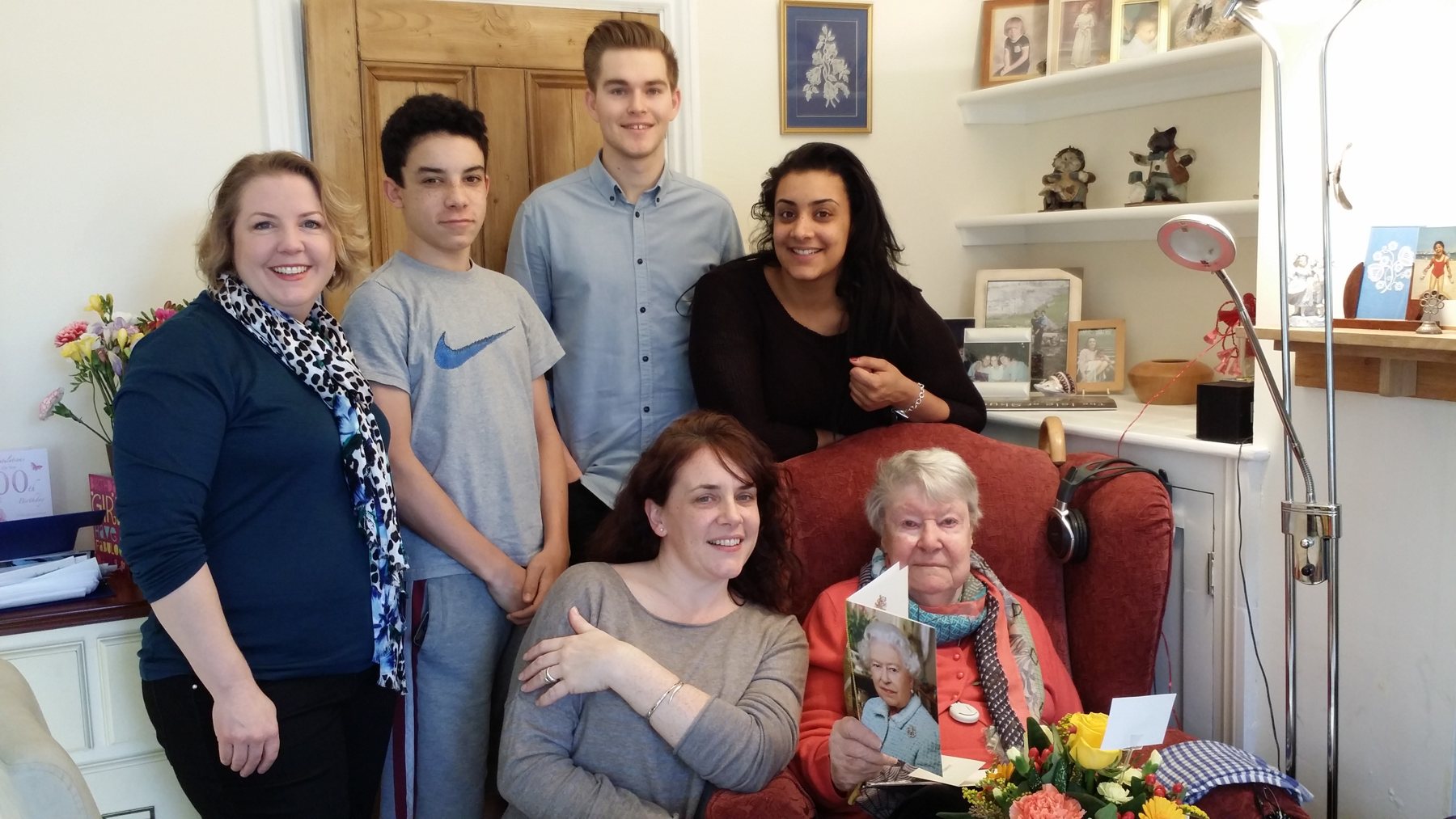 Aunty on her 100th birthday, holding her card from the Queen, with dear friends around her. I’m on the left.
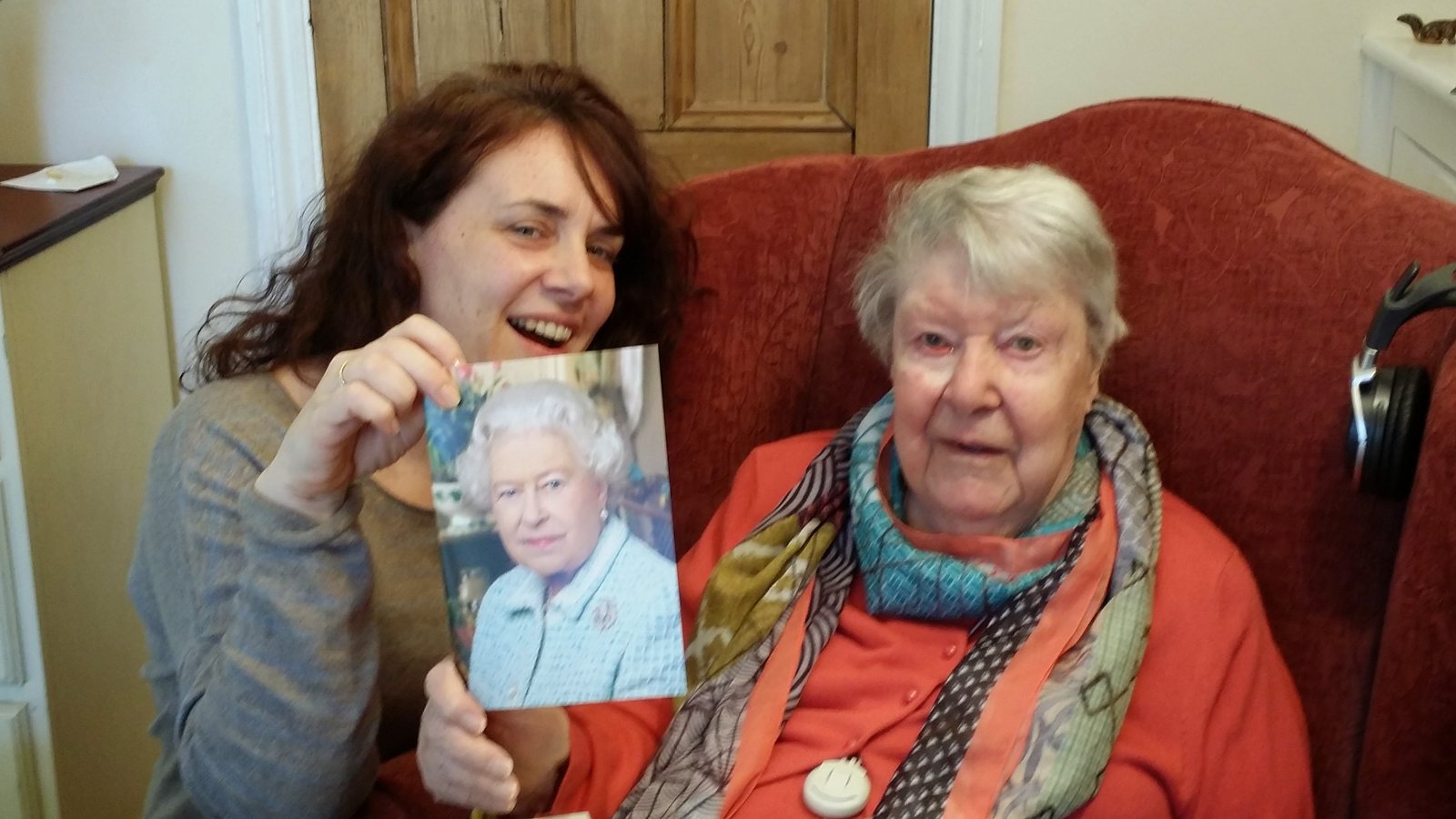 Aunty with her niece, my dear friend Lucy, showing off the card from the Queen.
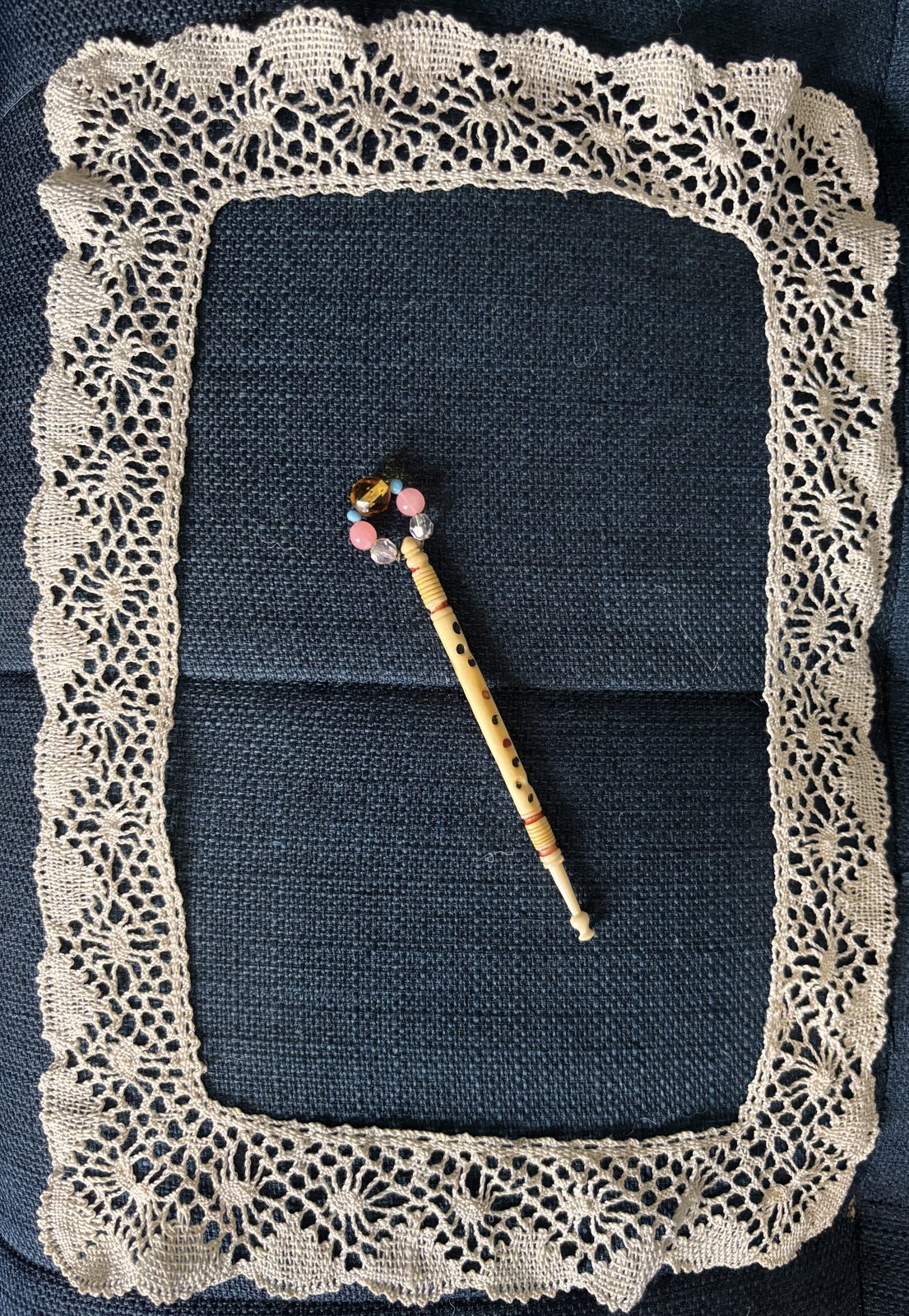
The lace at the top of this page is Aunty’s. She made it, and the bobbin lying in the middle of it is one of hers, which she gave me. Look at the ring of beads at its end: that’s a spangle, and I’ll explain it below.
What bobbin lace actually is
Bobbin lace (also called pillow lace or bone lace) is lace made by hand on a firm, round or bolster-shaped pillow. On the pillow you pin a pricking: a piece of card with the pattern marked out in tiny holes. The thread is wound on bobbins, slim spindles of wood or bone, and they’re used in pairs. You might have six pairs on the pillow for a simple edging, and many more for a wide piece.
Here’s the part that surprises everyone: there are only two moves. You cross one pair over the next, and you twist the threads within a pair. That’s it. Every stitch in every piece of bobbin lace, from a beginner’s bookmark to the Honiton lace on Queen Victoria’s wedding dress, is made of crosses and twists, with a pin put in a hole to hold each stitch while you work the next. Cross, twist, pin. Cross, twist, pin. The rattle of the bobbins as you move them is a sound you never forget.
Beginners usually start with torchon, a lace of straight lines, diamonds and fans that is easy to read on the pricking. The famous English laces are named for places: Honiton in Devon, and Bedfordshire and Buckinghamshire point lace from the East Midlands, where whole villages once made lace for a living.
English bobbins
English lacemakers did something nobody else did. In Belgium and France, the great lace centres, lacemakers used plain, identical bobbins. English bobbins were all different. They were carved, inlaid and painted, often with names, dates or messages, and in the East Midlands they were hung with a ring of glass beads, called a spangle, to give them weight and keep them from rolling. A lacemaker’s bobbins were a family record: gifts from sweethearts, bobbins for births and weddings. Old ones are collected now, and every one tells a story.
Lace and Yorkshire
To be honest about it: Yorkshire was never one of England’s great lacemaking centres. The cottage lace industry was in the south and the Midlands. But lace came north in other ways. Protestant refugees from the Low Countries, many of them lacemakers, came to England from the 1560s, and some historians think some settled around Ripon, a cloth town with trading links to Flanders. And in the 20th century, as lace stopped being a trade and became a craft, lace groups and teachers like Miss Griffin kept it alive all over the county.
Where to see it or try it
The best way in is a local lace group or class; most welcome beginners, and someone will lend you a pillow and bobbins. The Lace Guild, the national society for lacemakers, lists groups and teachers across the country. Lace days and fairs, where makers sell bobbins, threads and prickings, run all year.
Whitby jet: the Victorians’ black jewel
What it is
Jet is fossilized wood, from trees that grew about 180 million years ago, squeezed and hardened in the rock of the cliffs around Whitby. It’s black, light enough to wear in large pieces, warm to the touch, and it takes a high polish. People have carved it here since the Bronze Age.
Why it boomed
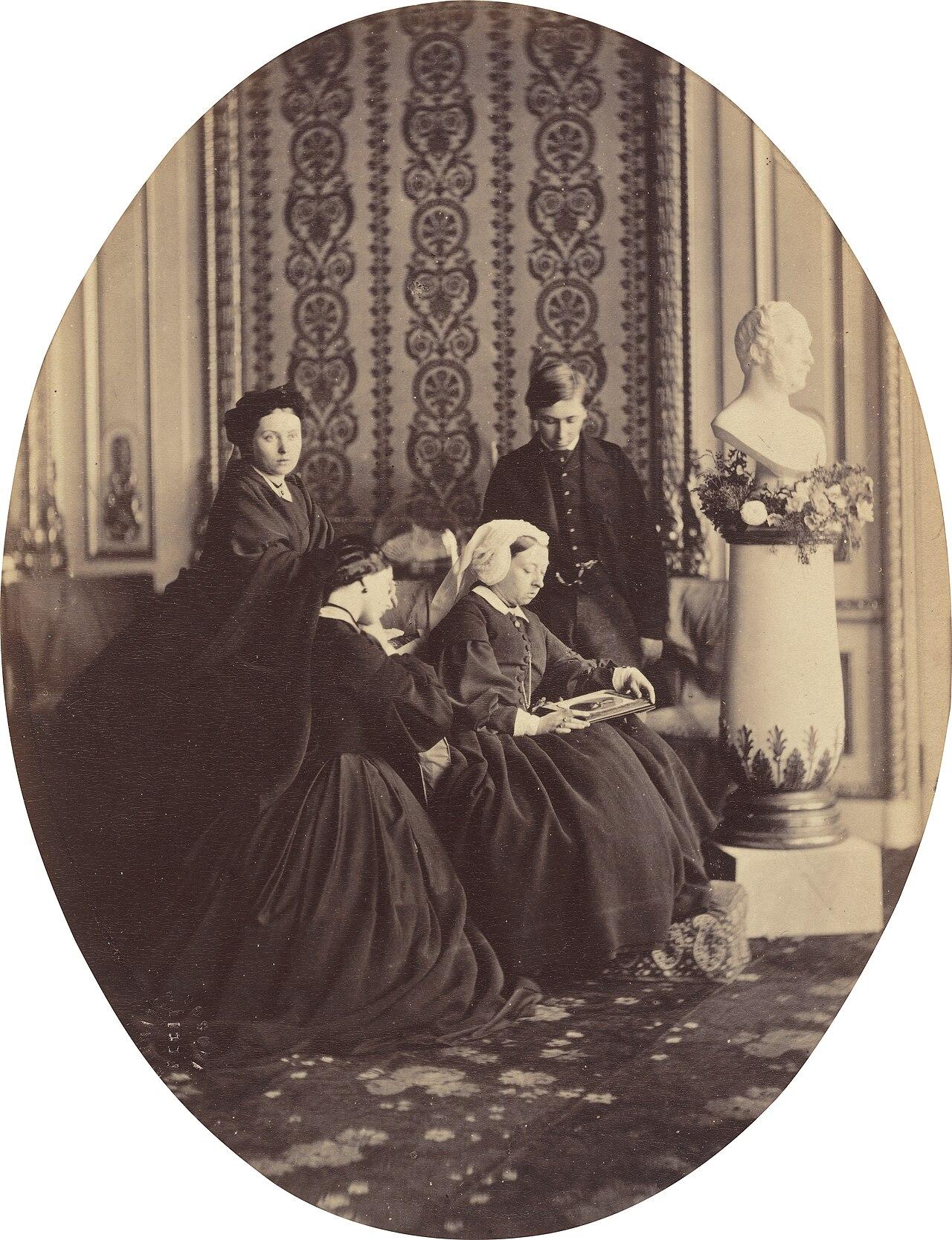

Whitby jet had a moment at the Great Exhibition of 1851. Then in December 1861 Prince Albert died, and Queen Victoria went into mourning for the rest of her life. Jet, black and dignified, was the jewelry you could wear in mourning, and the whole country followed the Queen’s lead. By the early 1870s, about 1,500 people worked in Whitby’s jet trade.
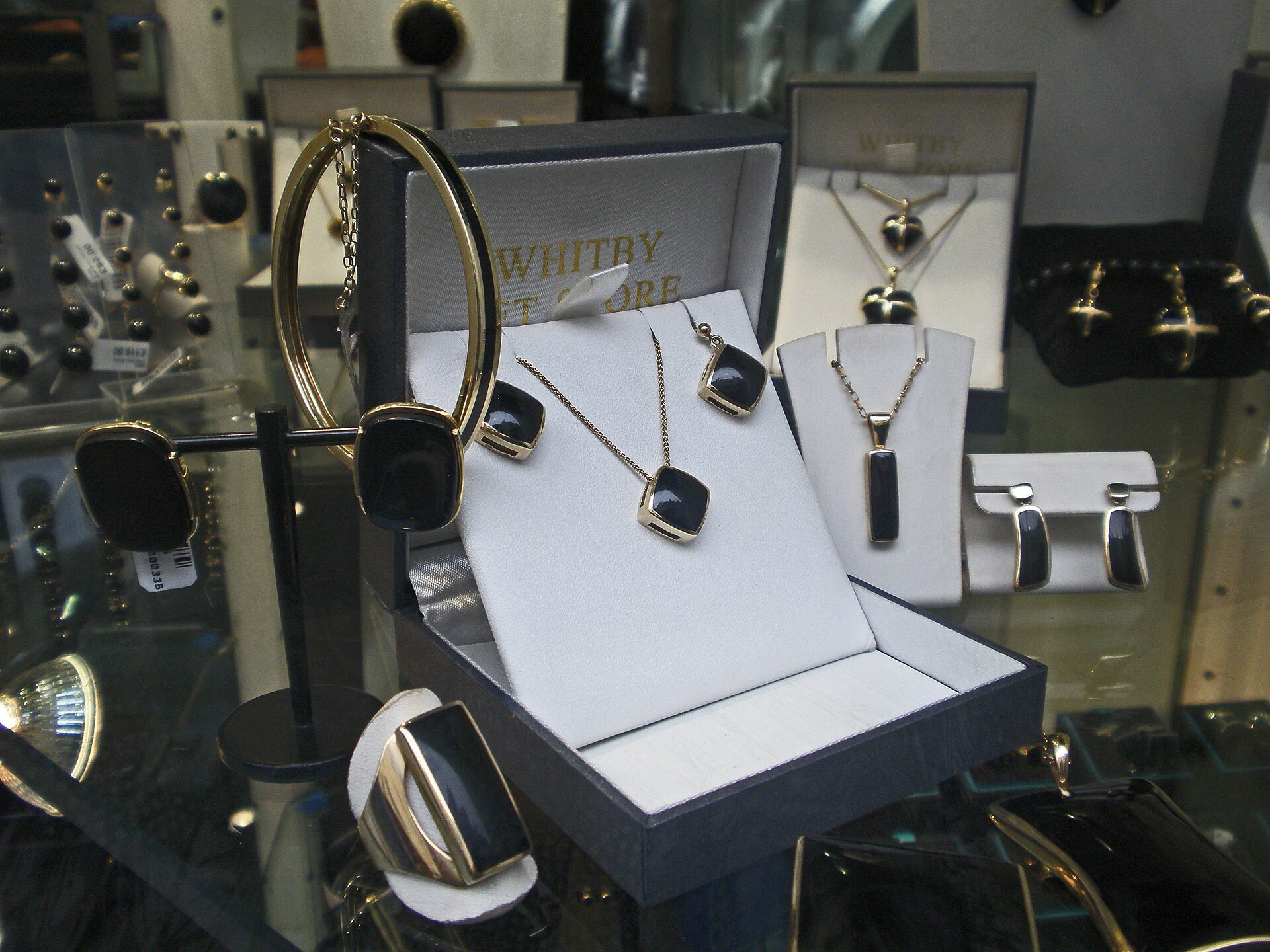 Whitby jet in a shop window today. Photo: Amanda Slater, CC BY-SA 2.0, via Wikimedia Commons.

It didn’t last. Fashions changed, cheaper imported jet and glass imitations (“French jet”) flooded in, and by the 1920s most of the workshops had closed.
Where to see it
Whitby still has jet workshops and shops, many on Church Street and around the bottom of the 199 steps. Whitby Museum in Pannett Park has a fine collection of Victorian jet. If you’re reading Dracula before you go, it’s the right town for a bit of black jewelry.
The Mouseman of Kilburn
In the village of Kilburn, under the White Horse, Robert Thompson made oak furniture. By his own account, in 1919 he was carving a cornice with another carver, who remarked that the two of them were as poor as church mice. Thompson carved a mouse on the spot. It became his signature: from then on, every piece from his workshop has a little carved mouse somewhere on it. He registered it as a trademark in 1931.
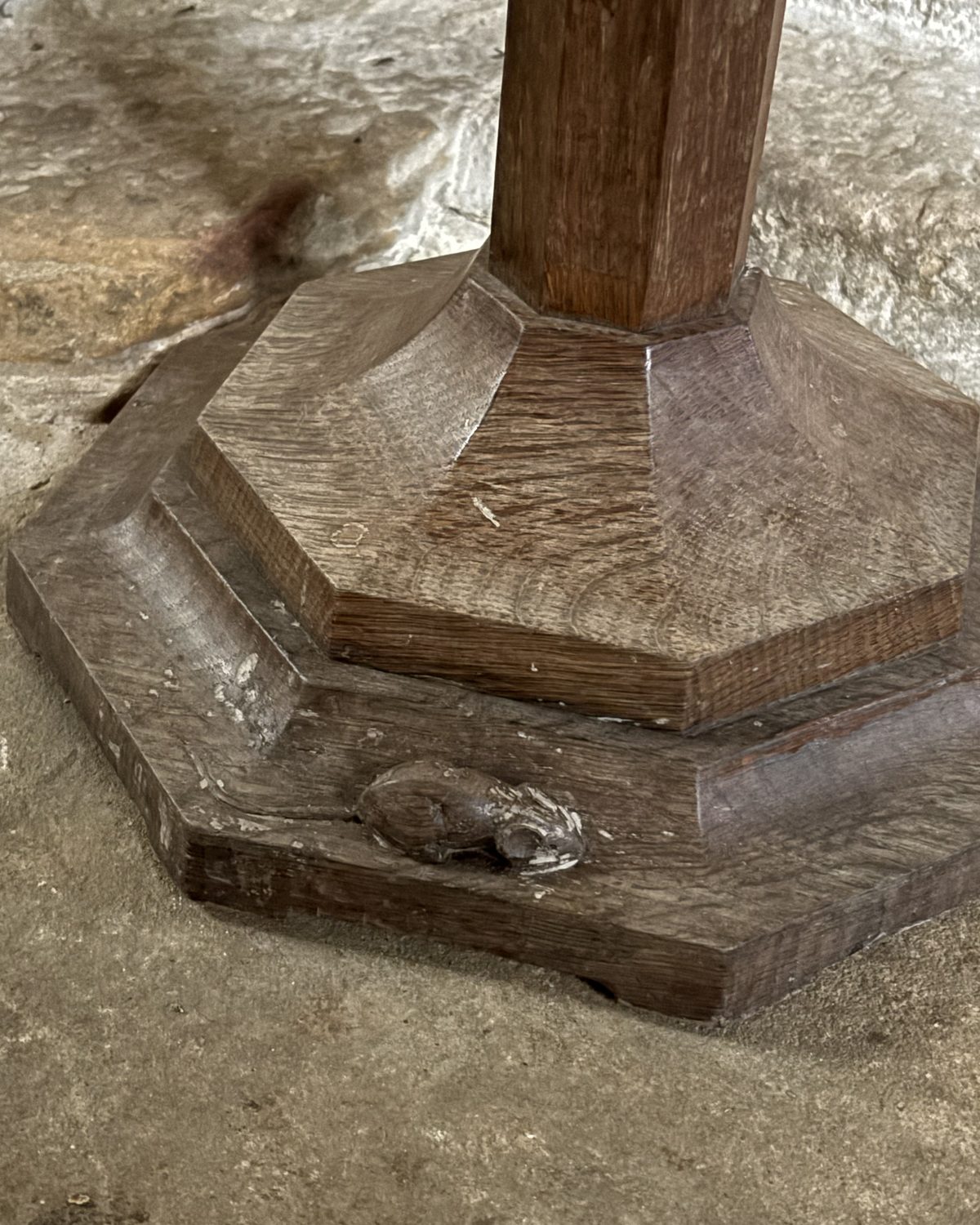 A Mouseman mouse I found at Kirkdale. Photo: Twice Told Stories.
Thompson died in 1955, but the workshop is still in Kilburn, still run by his family, and still carves a mouse on everything. You’ll find his mice in churches and cathedrals all over Yorkshire, including York Minster, Ripon Cathedral, Ampleforth Abbey and the tiny church at Kirkdale. Hunting for them is the best church game there is. The whole story, and where to find the mice, is in my Mouseman guide.
Thomas Chippendale, the joiner’s son from Otley
The most famous name in English furniture was a Yorkshireman. Thomas Chippendale was baptized in Otley, a market town in Wharfedale, on 5 June 1718, the son of a local joiner. He probably trained in York and was in London by 1748. In 1754 he published The Gentleman and Cabinet-Maker’s Director, a book of his designs, and it made him famous. “Chippendale” became a style.
His biggest commission was back in Yorkshire: Harewood House, between Leeds and Harrogate, which still has a wealth of his furniture. Nostell, near Wakefield, and Newby Hall, near Ripon, have his work too.
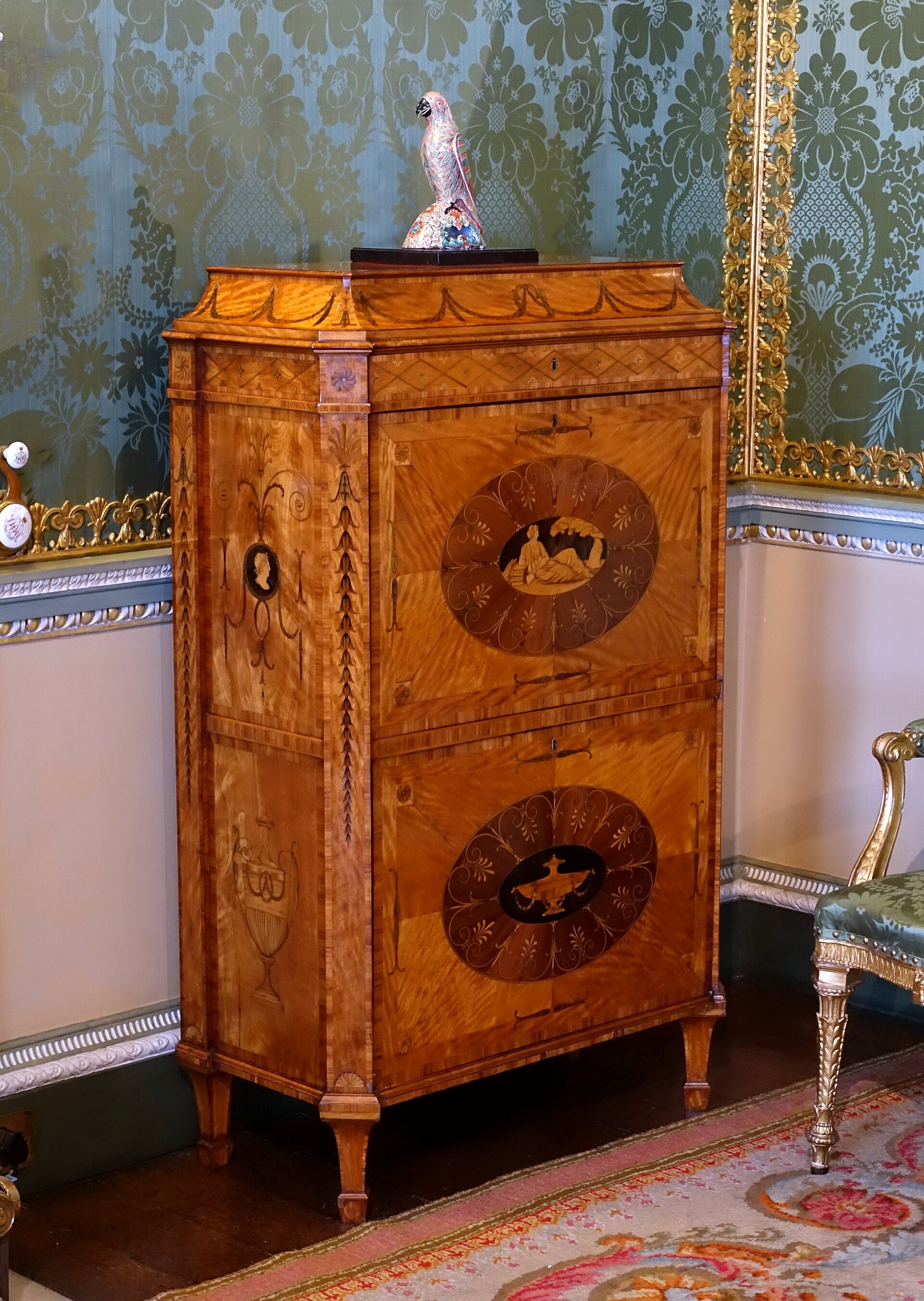 A Chippendale secretaire from the 1770s in the State Bedroom at Harewood House. Photo: Daderot, public domain, via Wikimedia Commons. In Otley, a bronze statue of him in his working clothes, holding a piece of wood, stands by the old grammar school.

Wool: from the Dales to the mills
The terrible knitters of Dent
Before the mills, wool was knitted by hand, everywhere, all the time. In the Dales, whole families knitted stockings, gloves and caps for sale to earn extra money. They knitted walking to the fields, they knitted by the fire, and they were famously fast. In 1834 the poet Robert Southey wrote about the “terrible knitters e’ Dent.” In the local dialect, “terrible” meant tremendous: it was a compliment.
They used knitting sticks, a carved wooden holder tucked into the belt to take the weight of one needle, so they could knit faster. Many in the Dales are shaped like a goose wing. Like lace bobbins, knitting sticks were often carved as love tokens.
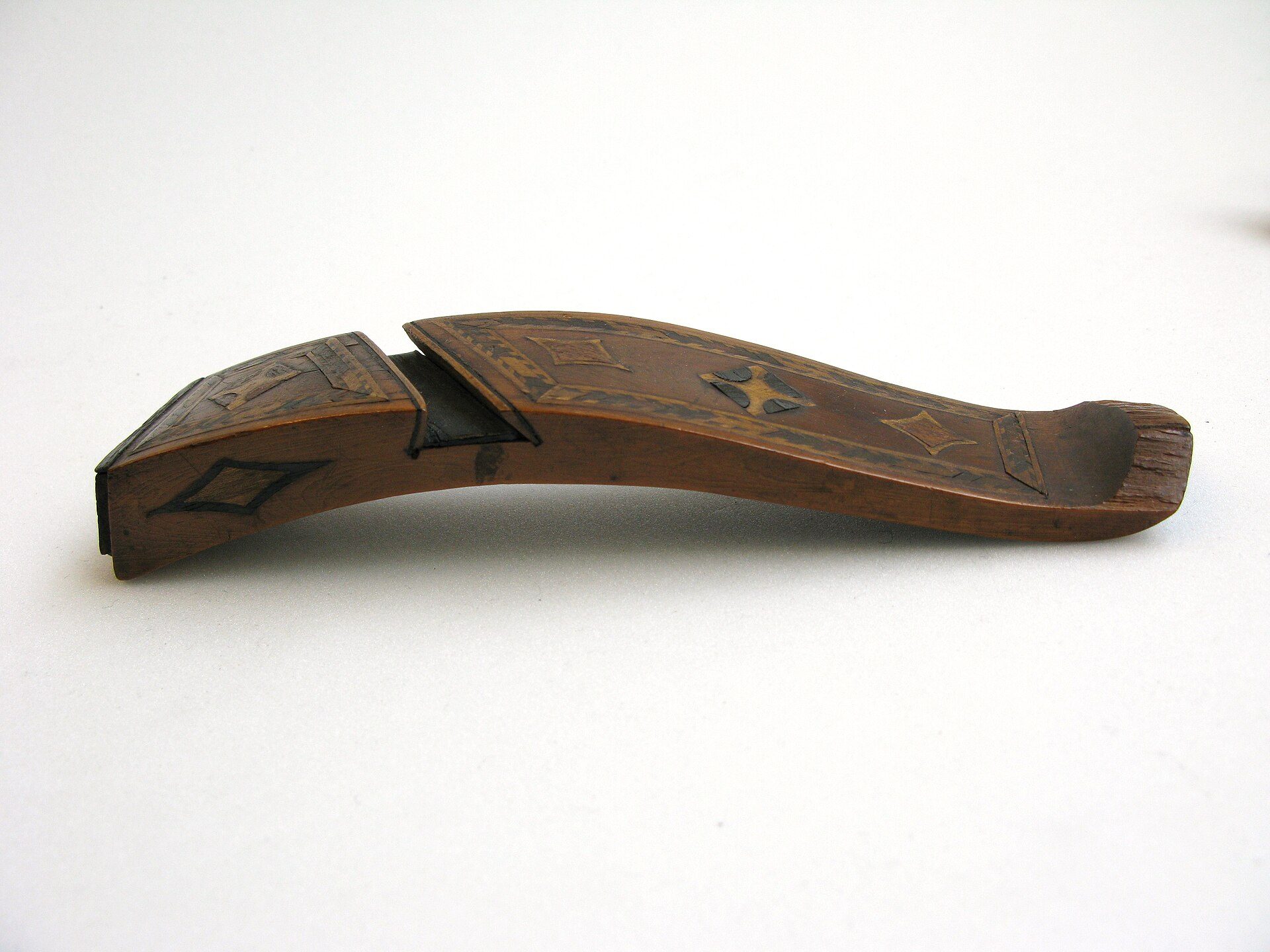 A carved knitting sheath in the curved goose-wing shape. Photo: Auckland Museum, CC BY 4.0, via Wikimedia Commons.

The mills
Then the mills came, and the West Riding became the wool capital of the world. The best place to feel that story is Saltaire, the model village Titus Salt built around his mill in the 1850s. Salts Mill is now galleries, a bookshop and a diner, and it has rooms full of David Hockney’s work. See my Saltaire guide, including the women who worked in the mill.
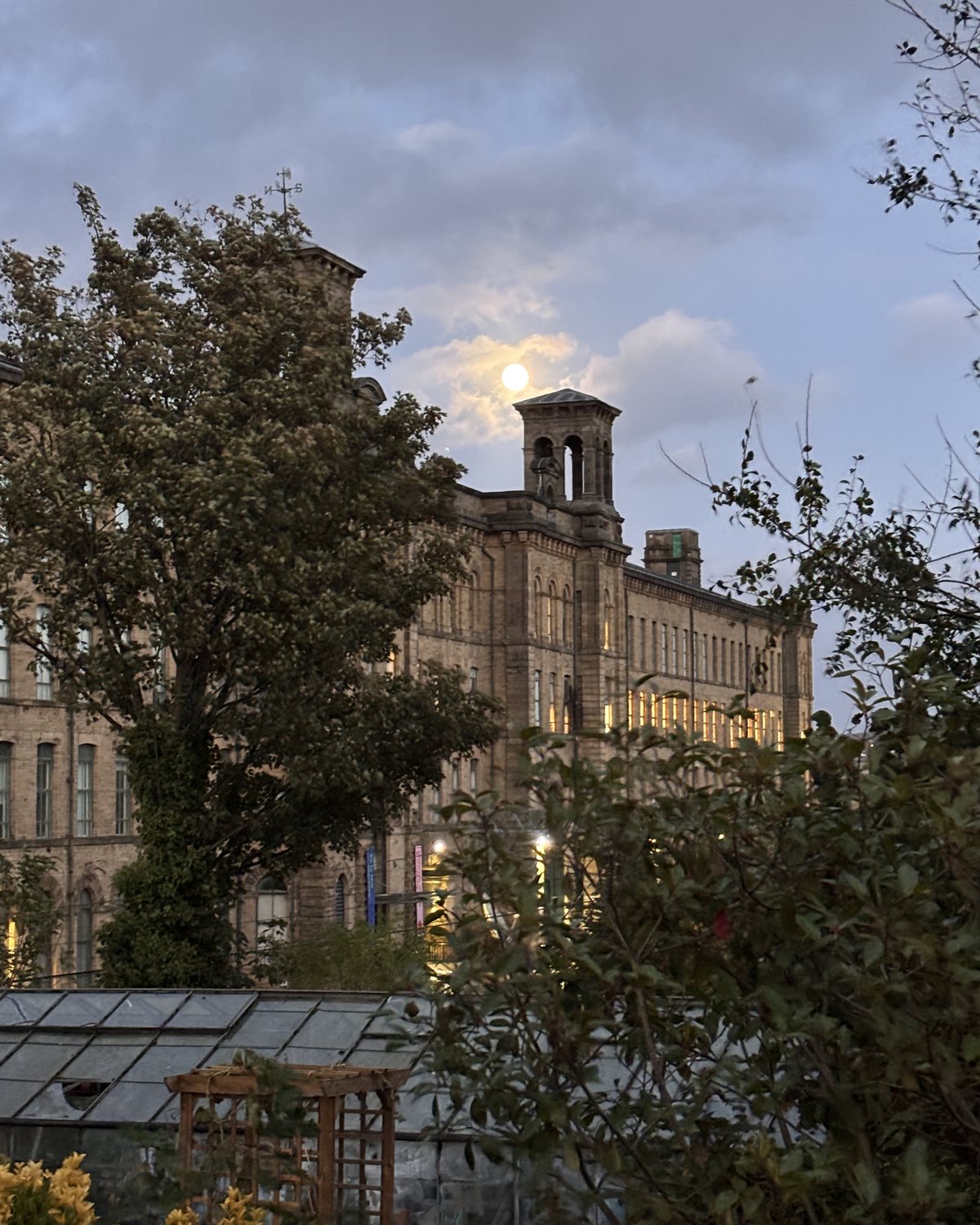 Salts Mill at dusk. Photo: Twice Told Stories.
Ganseys: the fishermen’s sweaters
On the coast, the wool went into ganseys, the close-knitted wool sweaters fishermen wore at sea. They were hand-knitted by mothers, wives and sweethearts, usually in navy or cream, so tightly they kept out the wind and spray.
Each fishing village had its own patterns, knitted into the yoke: Filey, Whitby, Staithes, Flamborough. Some patterns have names and stories. A Filey zigzag is called “marriage lines,” for the ups and downs of married life. A Whitby pattern is said to show ships’ flags and, in bands of thick lines, the 199 steps up to the abbey. Families had their own variations, and it’s often said (though Whitby knitters argue about it) that the pattern could identify a drowned man washed ashore. The patterns were rarely written down, and they survive largely because a few collectors, like Gladys Thompson, went round the villages in the mid-20th century writing them down from the knitters.
Needlework: samplers and the Brontës
Every girl once learned to sew by stitching a sampler: alphabets, numbers and Bible verses in cross-stitch on linen. The Brontë girls were no exception. At the Brontë Parsonage in Haworth, the collection includes a sampler Charlotte stitched in 1828, when she was about twelve: alphabets and verses worked in the house where she later wrote Jane Eyre. When I think of Miss Griffin’s needlework, I think of that sampler: the same patience, a hundred years apart.
The artists: Hepworth, Moore and Hockney
Yorkshire’s makers aren’t only craftspeople. Three of the great British artists of the 20th century were born in the old West Riding.
- Barbara Hepworth was born in Wakefield in 1903. Henry Moore was born in Castleford, ten miles away, in 1898. They studied together at Leeds School of Art and went on to change sculpture. The Hepworth Wakefield, a gallery by the river in her hometown, opened in 2011. Yorkshire Sculpture Park, at Bretton Hall near Wakefield, opened in 1977 and has one of the largest open-air displays of Moore’s bronzes in Europe.
- David Hockney was born in Bradford in 1937. Salts Mill in Saltaire shows hundreds of his works for free. My Hockney guide has the rest.
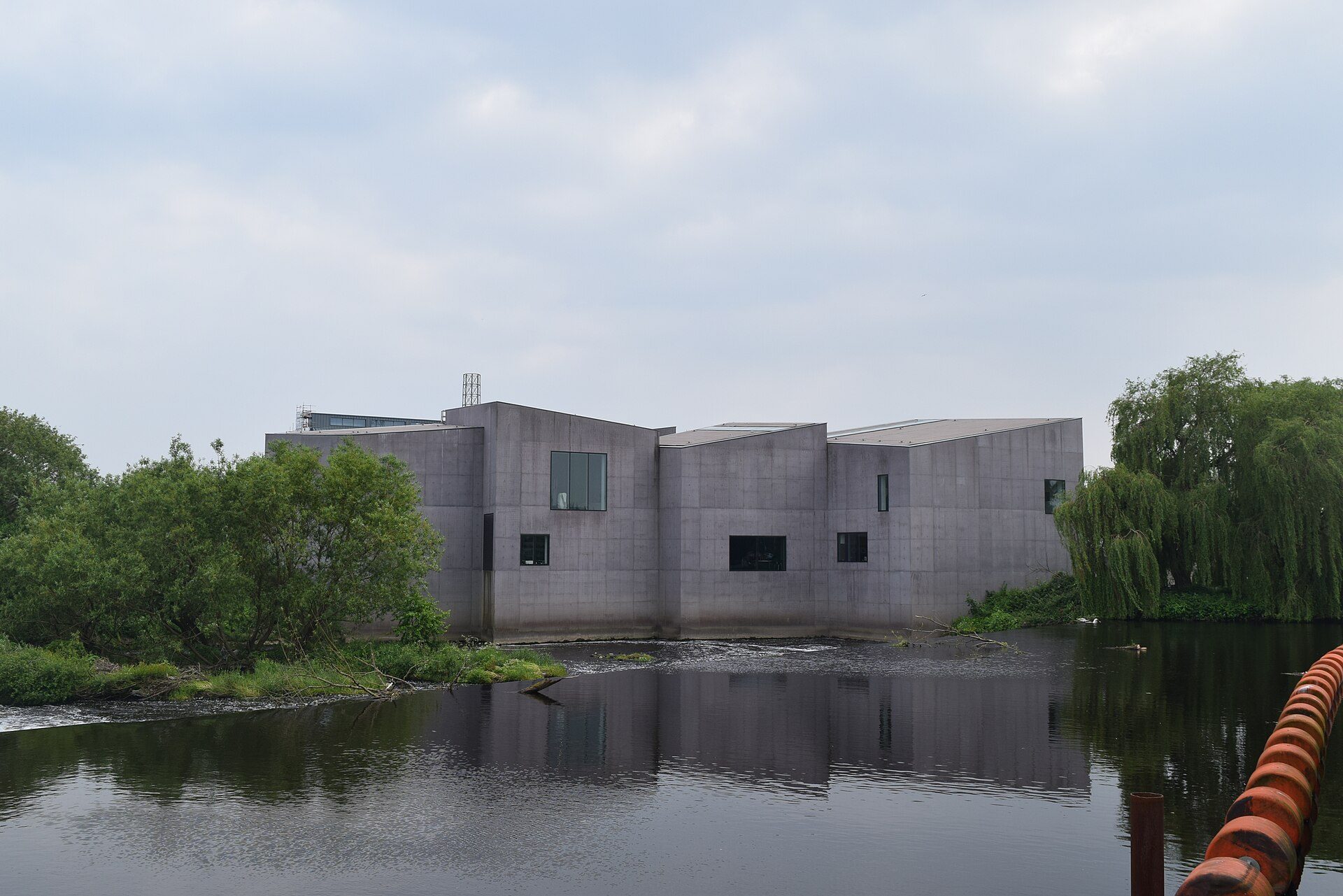 The Hepworth Wakefield, on the River Calder in Barbara Hepworth’s hometown. Photo: Mtaylor848, CC0, via Wikimedia Commons.

Where to see Yorkshire’s crafts
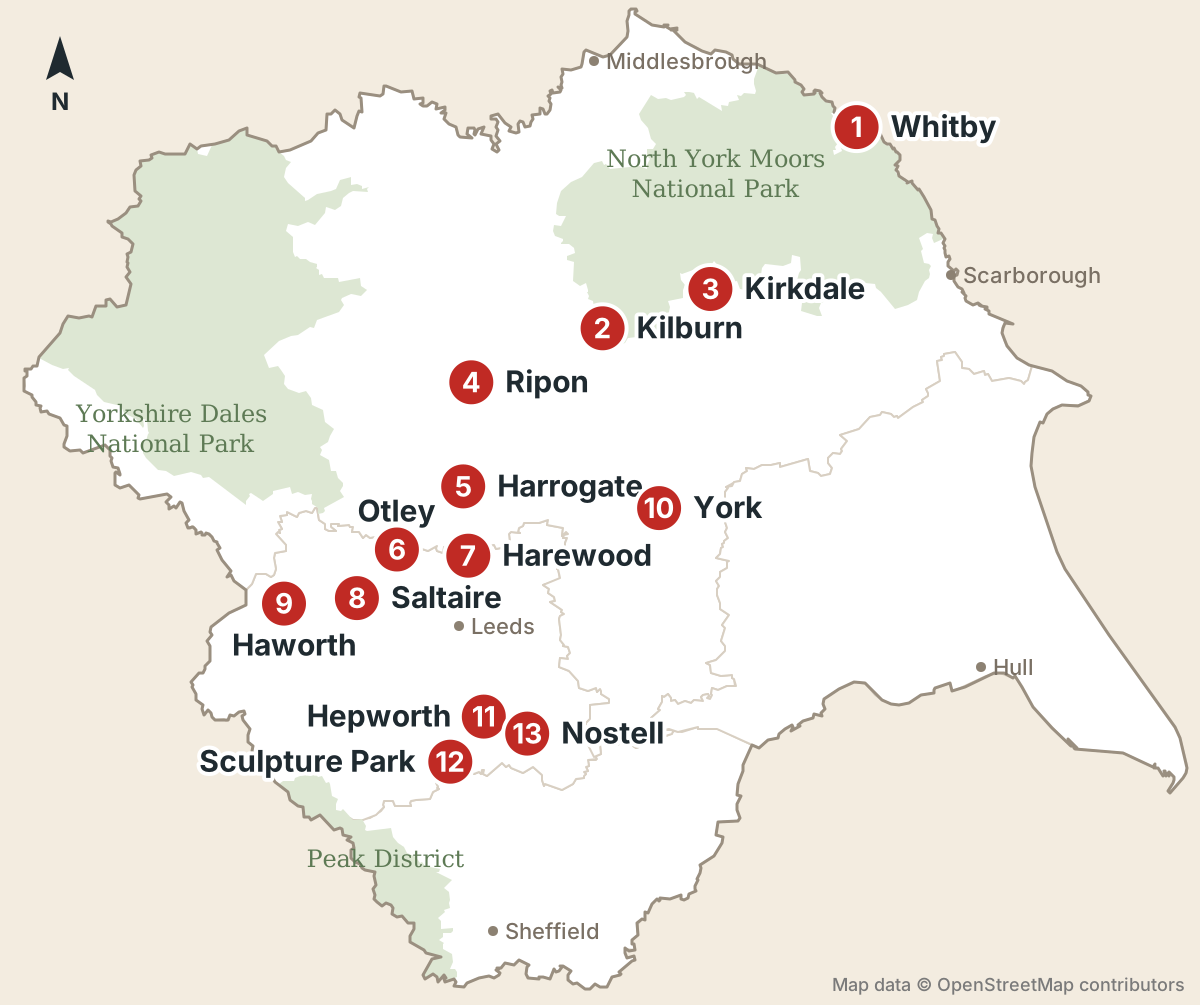
- Whitby: jet
- Kilburn: the Mouseman workshop
- Kirkdale: a Mouseman mouse
- Ripon: Mouseman work in the cathedral
- Harrogate: where I learned lace
- Otley: Chippendale
- Harewood House: Chippendale
- Saltaire: wool and Hockney
- Haworth: the Brontës
- York: Mouseman work in the Minster
- The Hepworth Wakefield
- Yorkshire Sculpture Park
- Nostell: Chippendale
| Craft | Where | On our trip? |
|---|---|---|
| Whitby jet | Whitby Museum; shops on Church Street, Whitby | Yes, Monday afternoon in Whitby |
| The Mouseman | Kilburn workshop; mice in churches across the county | The mouse at Kirkdale, Monday morning |
| Chippendale | Harewood House; Nostell; Newby Hall | No |
| Wool and Hockney | Salts Mill, Saltaire | Yes, Friday morning |
| Brontë sampler | Brontë Parsonage Museum, Haworth (ask if it’s on display) | Yes, Wednesday |
| Sculpture | The Hepworth Wakefield; Yorkshire Sculpture Park | No |
| Bobbin lace | Local lace groups and lace days | No, but ask me |
Check each place’s own website for opening times before you go.
On our trip
On our October 2027 Yorkshire trip, the crafts turn up all week: the Mouseman’s mouse at Kirkdale and the jet shops in Whitby on Monday, Harrogate, where I learned lace, on Tuesday, the Brontë Parsonage in Haworth on Wednesday, and Salts Mill on Friday. If you’d like to try bobbin lace, tell me. It’s easier than it looks, and it was taught to me with great patience.
It’s called Twice Told Stories because you learn the stories before you go, and you come home with your own.
Yorkshire making things: what else was happening
Yorkshire's crafts run from Bronze Age jet beads to a sculpture park. The big century is the 1800s: jet, wool and needlework all boomed while the Brontës were writing forty miles away.
- Georgian 1714–1837
- Victorian 1837–1901
- Early 20th century 1901–1952
The story Britain The wider world Other writers
- 1718 The story Thomas Chippendale, a joiner's son, is baptized in Otley on 5 June.
- 1718 The wider world The French found New Orleans.
- 1754 The story Chippendale publishes The Gentleman and Cabinet-Maker's Director, the pattern book that makes his name.
- 1754 The wider world The French and Indian War begins in North America.
- 1828 The story Charlotte Brontë, about twelve, stitches a sampler, now in the Parsonage collection in Haworth.
- 1828 The wider world Andrew Jackson is elected president.
- 1834 Other writers Robert Southey publishes the tale of 'the terrible knitters e' Dent.'
- 1834 Britain The law abolishing slavery across most of the British Empire takes effect.
- 1847 Other writers Jane Eyre and Wuthering Heights are published, forty miles from Saltaire.
- 1851 Britain The Great Exhibition in London. Whitby jet is on show.
- 1851 Other writers Herman Melville publishes Moby-Dick.
- 1853 The story Salts Mill opens at Saltaire.
- 1861 The story Prince Albert dies. Queen Victoria's mourning makes Whitby jet the fashion.
- 1861 The wider world The American Civil War begins, eight months before Albert dies.
- 1873 The story About 1,500 people work in Whitby's jet trade, its peak.
- 1898 The story Henry Moore is born in Castleford.
- 1898 The wider world The Spanish–American War.
- 1903 The story Barbara Hepworth is born in Wakefield.
- 1903 The wider world The Wright brothers fly at Kitty Hawk.
- 1914 The story Marjorie Griffin, later a district nurse in Harrogate and my lace teacher, is born on 7 February.
- 1914 Britain Six months after Aunty is born, Britain goes to war.
- 1919 The story Robert Thompson carves his first mouse in Kilburn.
- 1919 The wider world Congress passes the 19th Amendment, votes for women.
- 1937 The story David Hockney is born in Bradford.
- 1937 Other writers Tolkien publishes The Hobbit.
- 1977 The story Yorkshire Sculpture Park opens at Bretton Hall, near Wakefield.
- 1977 The wider world Star Wars opens.
- 2011 The story The Hepworth Wakefield opens on 21 May.
- 2011 Britain Prince William marries Catherine Middleton.
- 2018 The story Marjorie Griffin, 'Aunty', dies on 8 August, aged 104.
Questions people ask
What crafts is Yorkshire known for?
Whitby jet jewelry, the Mouseman's oak furniture with its carved mice, Thomas Chippendale's furniture, wool and textiles (Saltaire and the West Riding mills), hand knitting in the Dales, fishermen's ganseys from Whitby, Staithes and Filey, and needlework including samplers and lace.
What is Whitby jet?
A black gemstone made of fossilized wood, found in the cliffs around Whitby. It's light, takes a high polish and can be carved. After Prince Albert died in 1861, Queen Victoria wore it in mourning, and it became the jewelry of Victorian mourning. By the early 1870s about 1,500 people worked in Whitby's jet trade.
What is bobbin lace?
Lace made by hand on a firm pillow. The pattern, called a pricking, is a card with holes punched along the design. Threads are wound on pairs of wooden or bone bobbins, and the lacemaker crosses and twists the pairs around pins stuck through the holes. Every stitch in bobbin lace is made from those two moves.
Where can I see Thomas Chippendale furniture in Yorkshire?
Harewood House, between Leeds and Harrogate, has the largest collection; it was his biggest commission. Nostell, near Wakefield, and Newby Hall, near Ripon, also have his work. His statue stands in Otley, where he was baptized in 1718.
Were Henry Moore and Barbara Hepworth from Yorkshire?
Yes. Barbara Hepworth was born in Wakefield in 1903 and Henry Moore in Castleford in 1898; they studied together at Leeds School of Art. The Hepworth Wakefield opened in 2011, and Yorkshire Sculpture Park, near Wakefield, has one of the largest open-air displays of Moore's bronzes in Europe.
Read next
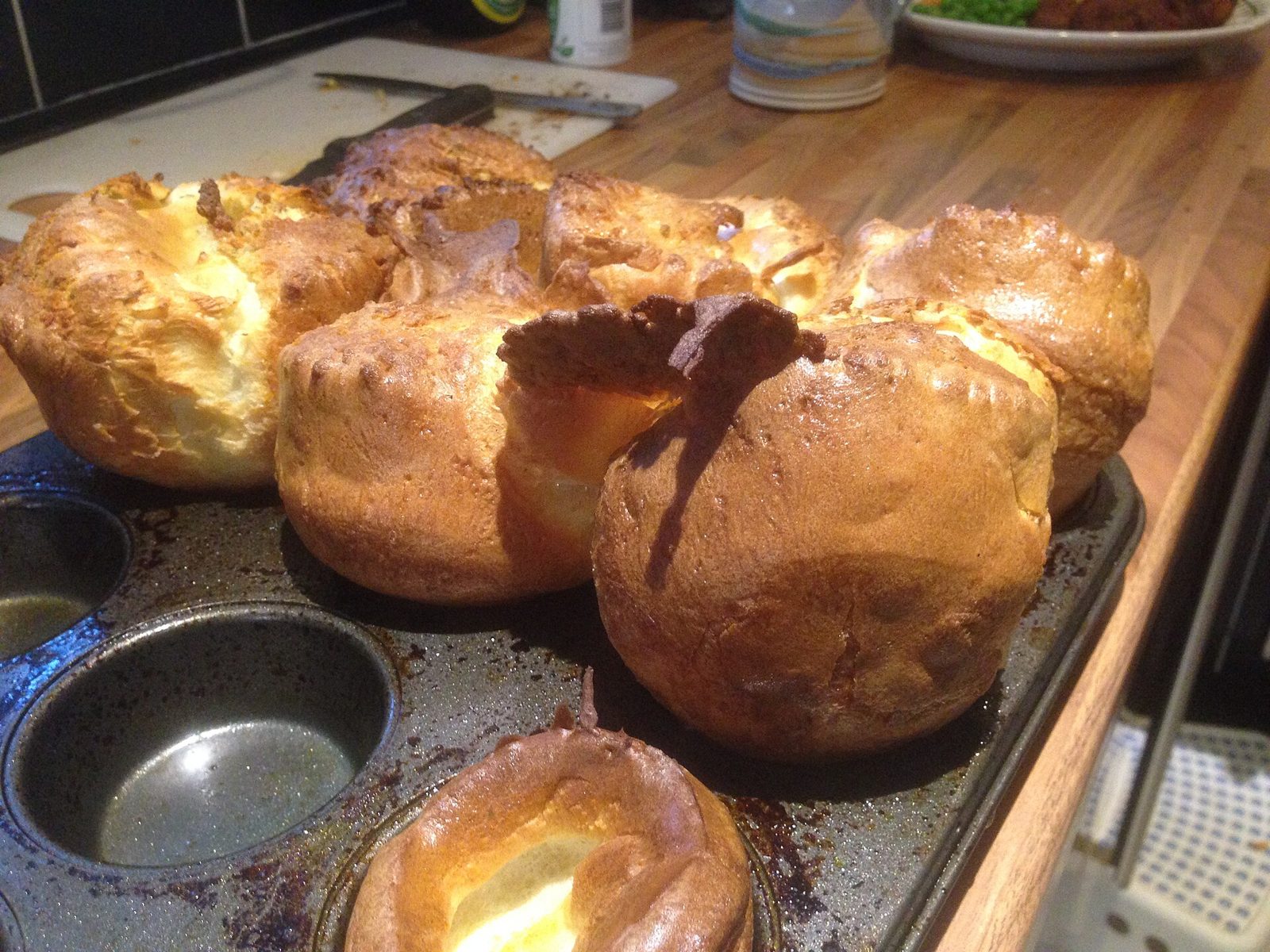 Yorkshire · FoodYorkshire food and British puddingsThe food I learned to cook when I lived in Yorkshire, what it all means if you're American, where to eat it, and recipes so you can make it at home before you go.
- Yorkshire · The MousemanThe Mouseman of KilburnLook closely at the oak in a Yorkshire church and you may find a small mouse carved into it. Here's who put it there, why, and where to go looking.
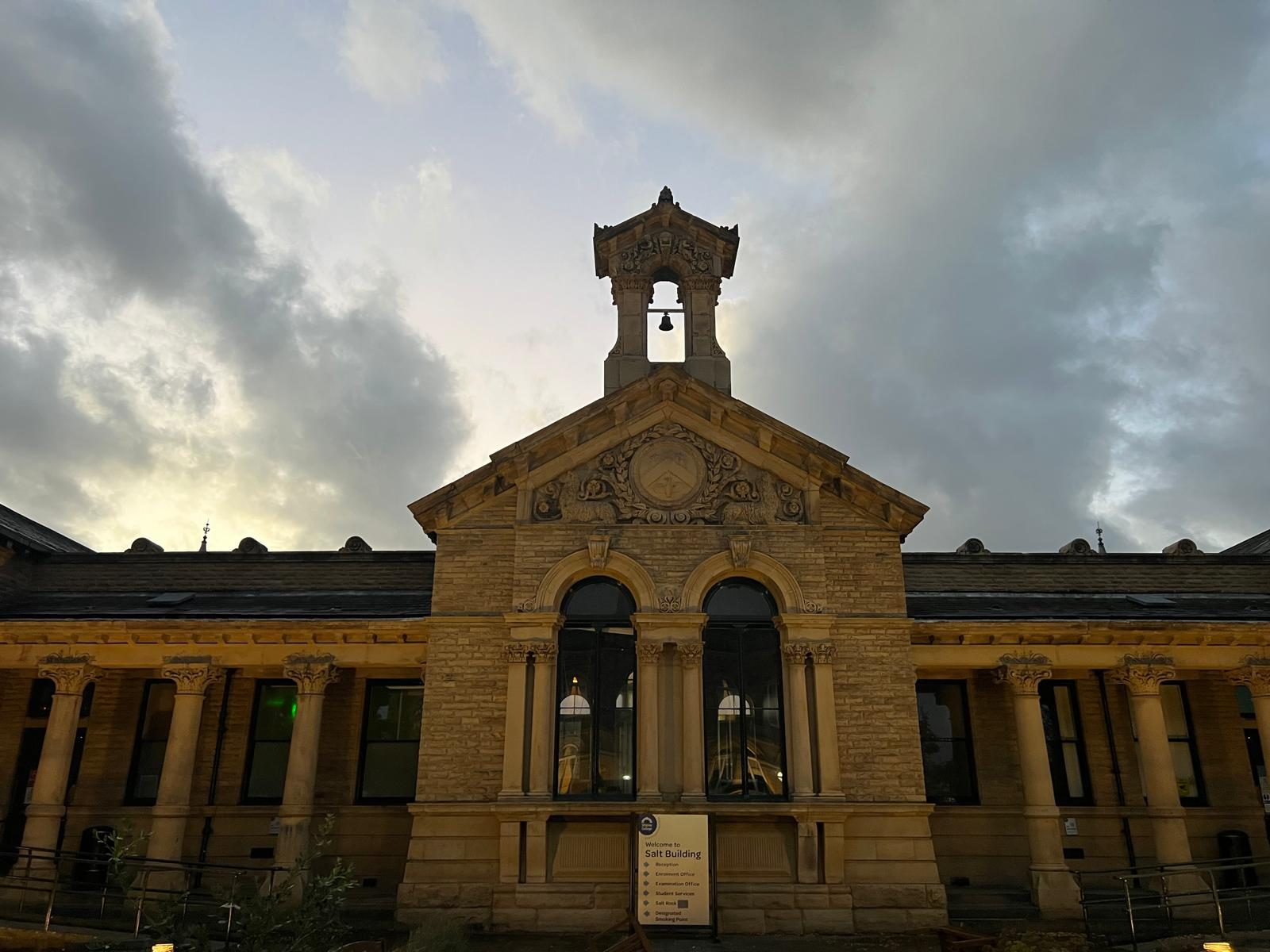 Yorkshire · Mills and moorsSaltaire, EnglandOne mill owner built a whole village for his workers. The mill is now full of David Hockney's art and one of the biggest bookshops you'll ever wander round. I nearly skipped it. Don't.
- Yorkshire · David HockneyDavid Hockney's YorkshireHe was born in Bradford, got famous in California, and came home to paint the hills of East Yorkshire. Here's where to see his work and the places behind it.
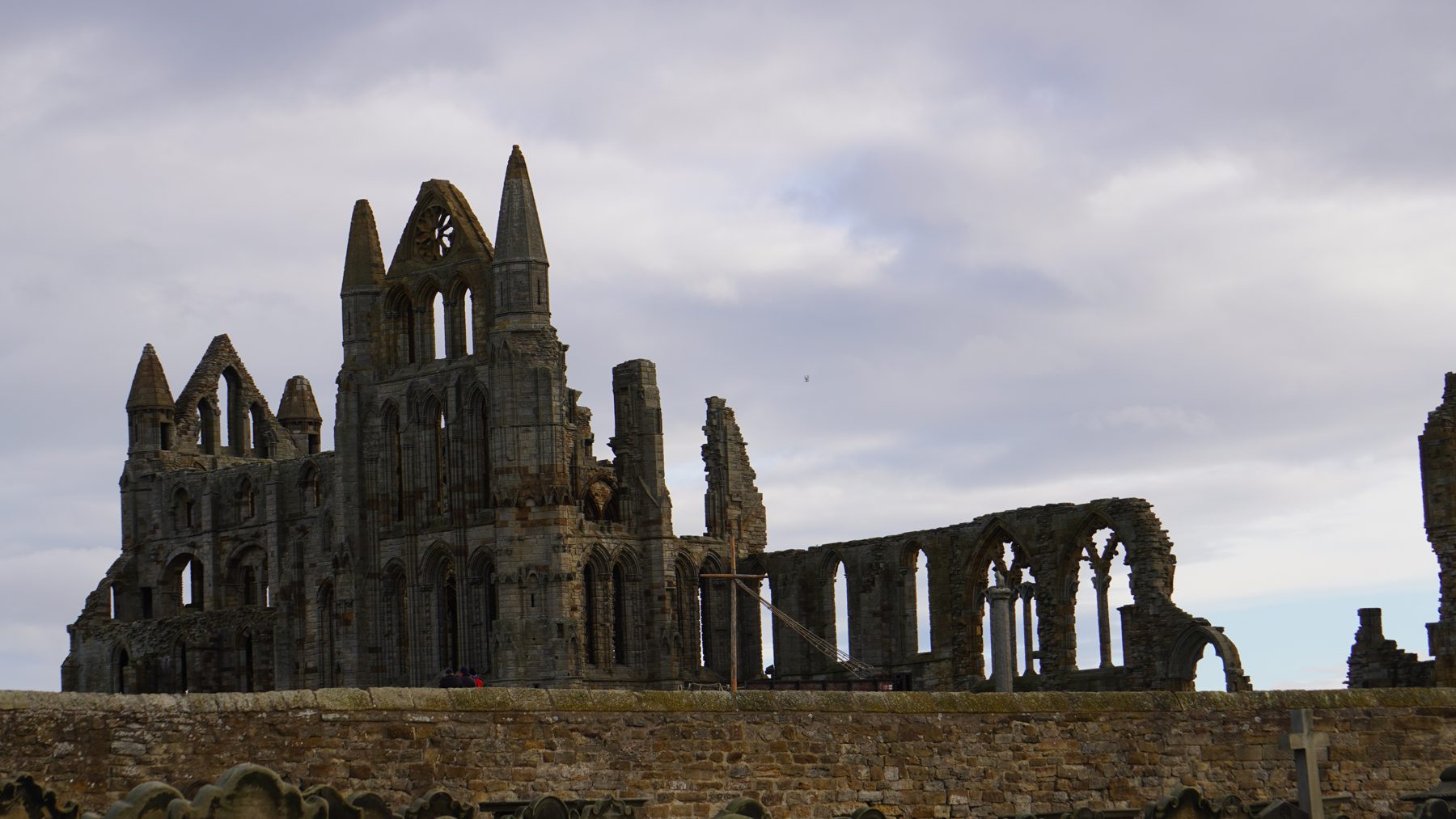 Yorkshire · The moors and the coastWhitby Abbey and DraculaA ruined abbey on a cliff, 199 steps up from the harbour, and one summer in 1890 when Bram Stoker walked into the town library and came out with the name Dracula. Here's what's real, what's in the book, and how to see both.
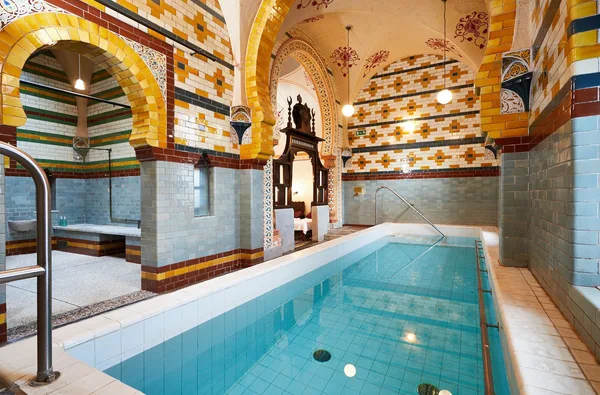 Yorkshire · HarrogateHarrogate, EnglandWhat to do in the North Yorkshire spa town, from someone who lived just outside it for three years and went back to scout it in 2026.
Sources
- Funeral Guide: obituary of Marjorie Lillian Ethel Griffin (1914–2018)
- Wikipedia: Bobbin lace
- Pocklington Post: Weaving their spell (lace refugees and the Ripon area)
- Whitby Museum: the jet collection
- Country Life: What is Whitby jet?
- Yorkshire Coast Fossils: About Whitby jet (about 1,500 workers in 1873)
- Wikipedia: Thomas Chippendale
- Yorkshire Post: 300th anniversary of Thomas Chippendale (Otley, Harewood)
- Yorkshire Post: the Yorkshire Dales glove makers and their knitting
- Dales Discoveries: the terrible knitters of Dent (Southey, 1834)
- Farfield Mill: knitting sticks in the Dales
- Country Life: why the gansey jumper is still a compelling yarn (Staithes pattern)
- BBC Countryfile: fisherman's jumpers of the British Isles
- Wikipedia: The Hepworth Wakefield (opened 21 May 2011)
- Wikipedia: Yorkshire Sculpture Park (West Bretton, 1977)
- Wikipedia: Henry Moore (born Castleford, 1898)
- Wikipedia: Barbara Hepworth (born Wakefield, 1903)
- Brontë Parsonage Museum (Charlotte Brontë's sampler, 1828)
Get the next Behind the Story guide.
New guides to the real places behind the books and films, by email. Free. Unsubscribe in one click.