
Yorkshire · Kirkdale
St Gregory's Minster, Kirkdale: the Anglo-Saxon sundial, the tomb covers and the hyena cave
A small church at the end of a lane near Helmsley, with a message carved over the door a few years before the Norman Conquest. It takes fifteen minutes, and it's easy to drive past.
- Where
- Kirkdale, off the A170, 4 miles east of Helmsley. Sat nav YO62 7TZ
- Open
- Daily, 9.30am to 6pm or dusk if earlier. Free
- The sundial
- About 1055–1065, in the porch over the south door
- Oldest things inside
- Two carved tomb covers, late 700s to early 800s
- Rebuilt by
- Orm, son of Gamal, in about 1060
- Time needed
- 15 to 30 minutes
- Listed
- Grade I
The short answer
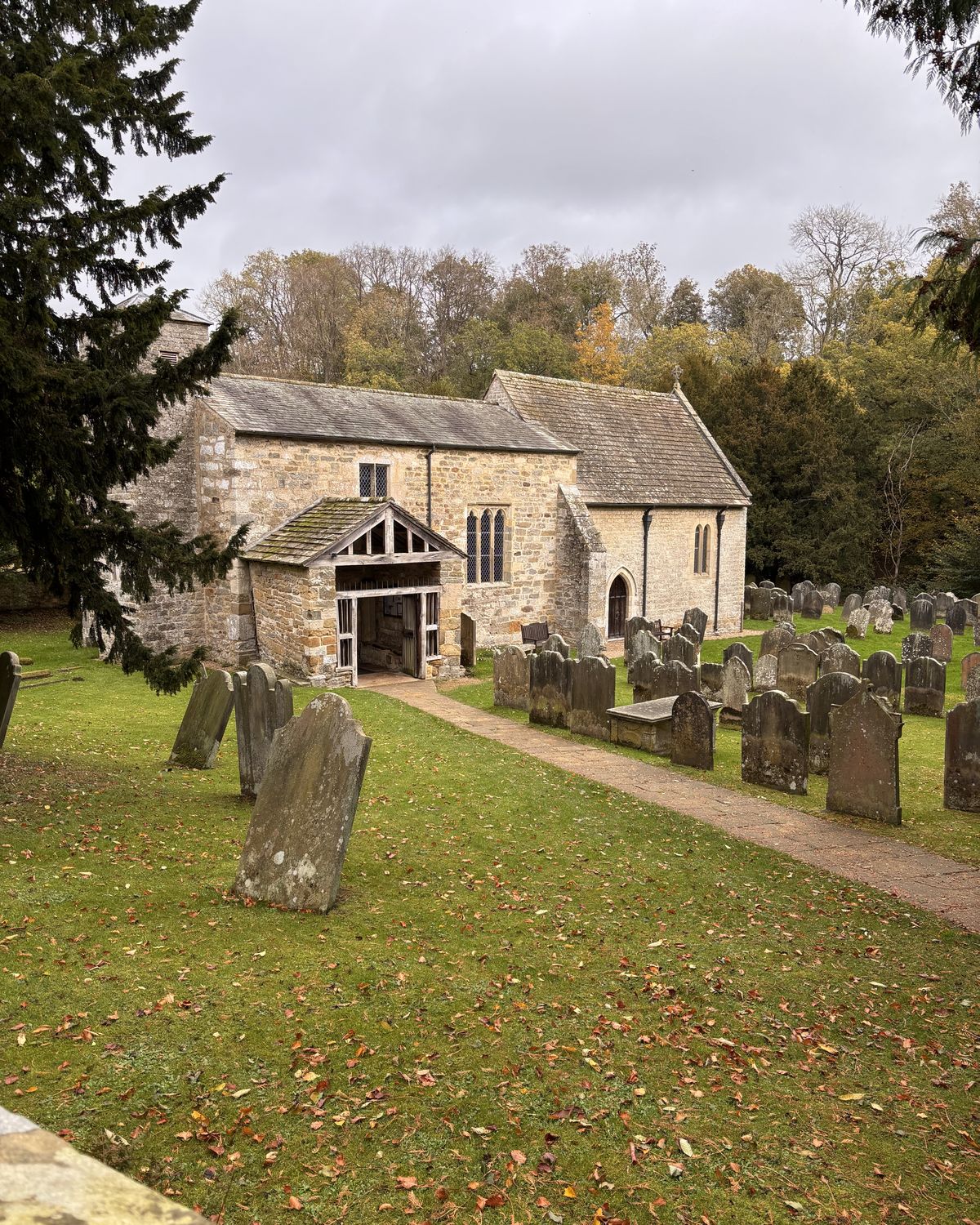
St Gregory's Minster is a small Anglo-Saxon church in Kirkdale, North Yorkshire, about four miles east of Helmsley. Over its south door is a sundial carved in about 1060, with an inscription in Old English saying that Orm, son of Gamal, bought the ruined church and rebuilt it. Inside are two carved tomb covers from around the year 800. The church is open every day from 9.30am to 6pm, or dusk if that's earlier, and it's free.
St Gregory’s Minster is a small stone church at the end of a lane in Kirkdale, a wooded valley a few miles from Helmsley. It looks like a hundred other country churches until you stand in the porch and look up. Over the door is a sundial with a message carved round it, in English, a few years before the Norman Conquest.
I stopped here on 28 October 2026, on a day tour across the moors to Whitby.
The sundial
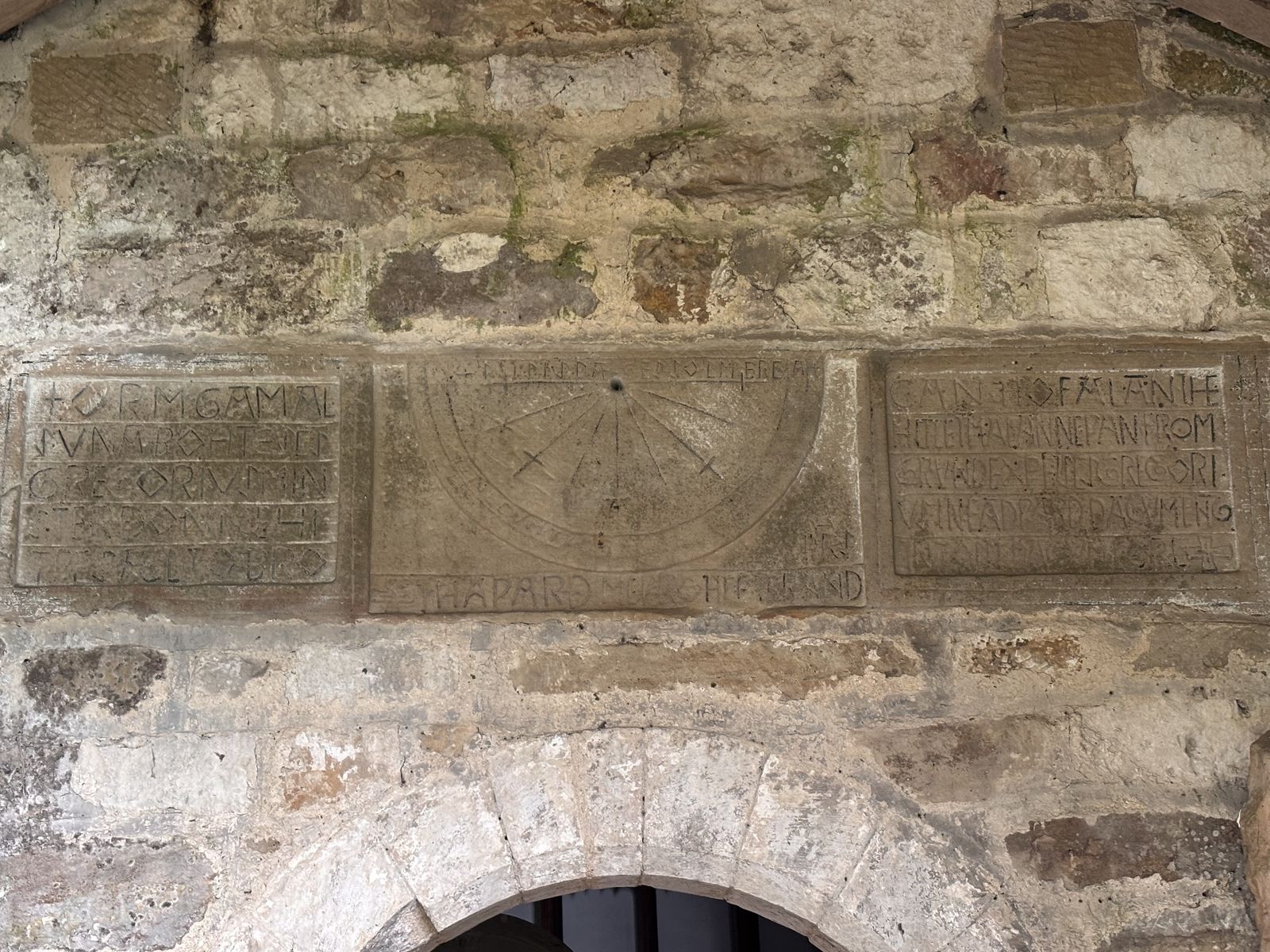
The sundial is a long stone slab set into the wall above the south door, inside the porch. The dial is in the middle. On either side is a panel of lettering, and you can still read the first words on the left without any help: ORM GAMAL SUNA. Orm, Gamal’s son.
In modern English it says that Orm, Gamal’s son, bought St Gregory’s Minster “when it was all broken down and fallen,” and had it made new from the ground, “in Edward’s days, the king, and in Tosti’s days, the Earl.” (That’s Historic England’s translation.)
A line under the dial adds who did the work: Hawarth made it, and Brand was the priest.
Edward is Edward the Confessor. Tosti is Tostig, Earl of Northumbria, the brother of the man who became King Harold. Tostig only held that title from 1055 to 1065, so the sundial dates itself to those ten years. In September 1066 Tostig was killed at Stamford Bridge, near York. Three days later the Normans landed in Sussex.
So this is a building notice from the last few years of Anglo-Saxon England, written in the language people actually spoke, by a local landowner who wanted it known that he had paid. It has been over that door ever since.
How old is the church?
Older than Orm. He says so himself: the minster was “broken down and fallen” when he bought it.
The church’s own history puts the first Christian use of this spot in the 600s or 700s. A minster then was a small community of monks (the word comes from the Latin monasterium), and this one stood where two old roads crossed, north to south and east to west, to look after travelers. It may have begun as an offshoot of the monastery at Lastingham, a few miles away, which was founded in 659.
Orm rebuilt it in about 1060, probably on the old foundations. Later centuries added to it:
- 1100s: a new south doorway, the one you walk through.
- 1200s: the north aisle.
- 1400s: a taller chancel arch and new windows.
- 1827: the small bell tower, after the church had come close to collapse.
- 1881: the chancel, completely rebuilt.
- 1907–1909: a restoration by the architect Temple Moore, which took out the box pews and the gallery.
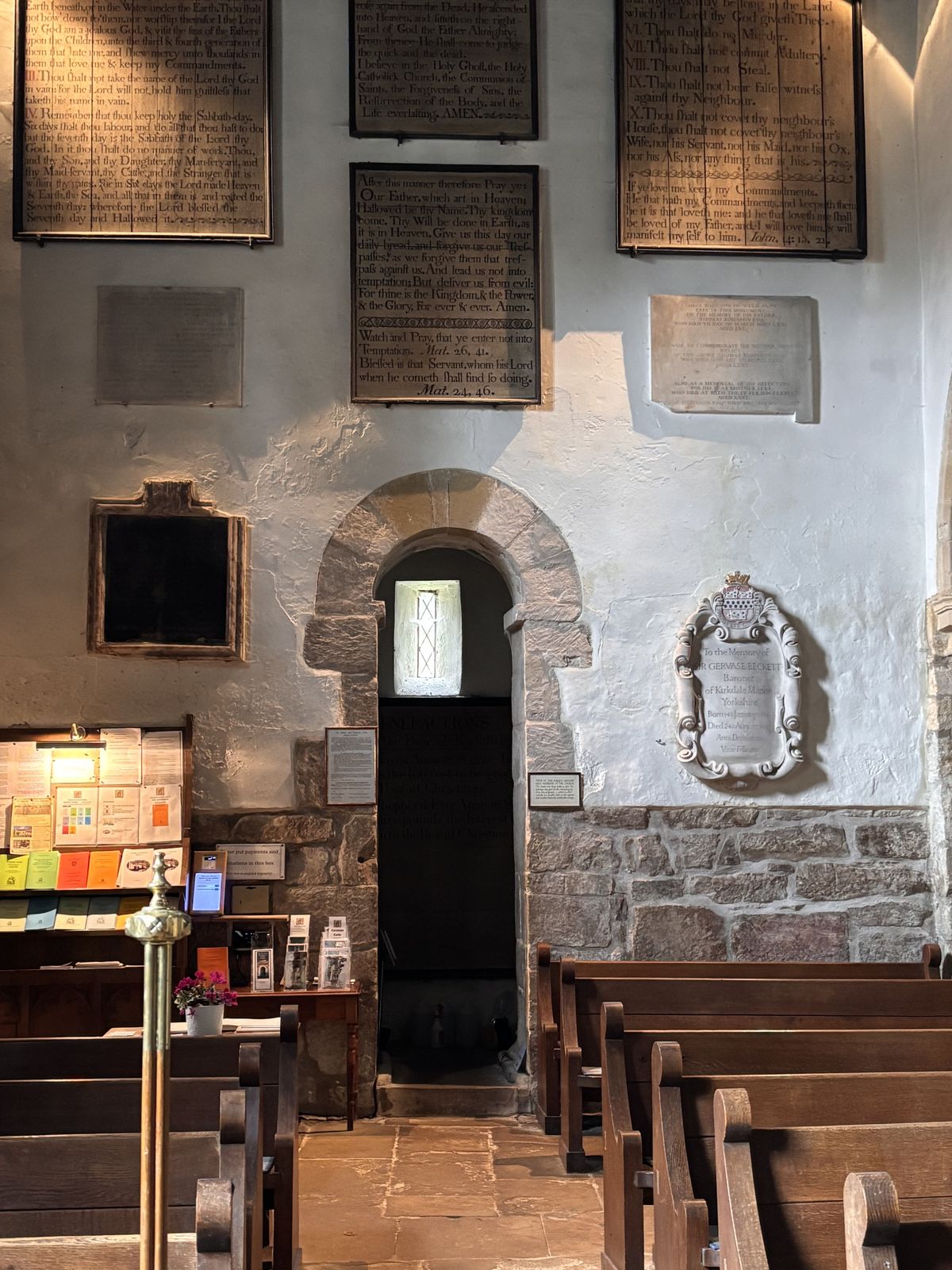
There’s an Oxford connection, too. In 1622 Sir Henry Danvers gave the University of Oxford the land for a physic garden, and he assigned Kirkdale’s church income to pay for it. That garden is now the Oxford Botanic Garden. When the church nearly fell down in 1827, the university helped pay for the repairs.
The tomb covers
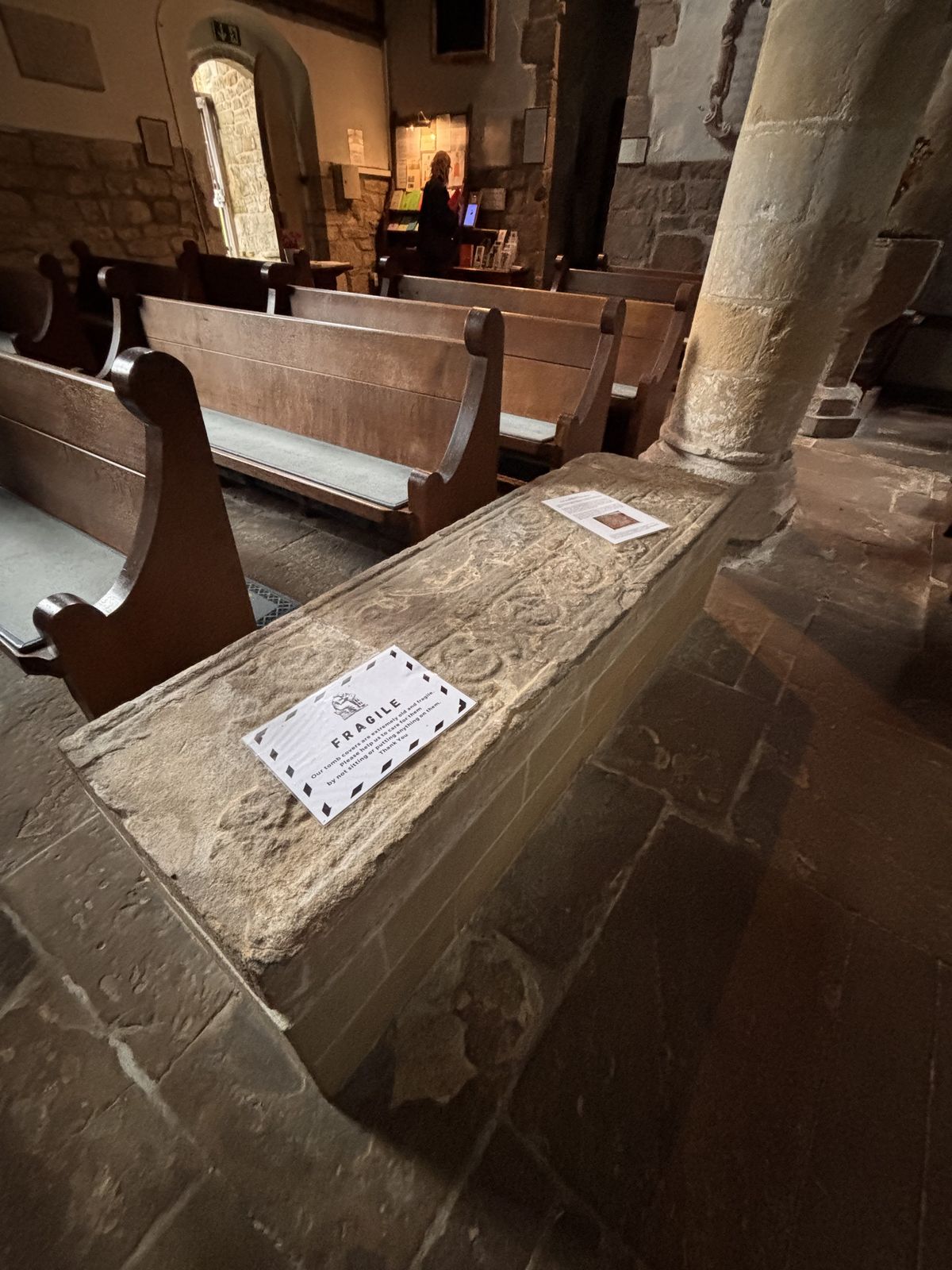
In the north aisle are two long carved stone slabs. They’re older than the sundial by about 250 years.
According to the information sheet in the church, they date from the late 700s to the early 800s and are of national significance. They’re sandstone, thought to have come from near Lythe, on the coast. One is carved with a cross. The other has scrollwork, with what looks like an embroidered cloth draped over its sides. Whoever was buried under them was rich and important, and possibly royal.
They used to be outside, at the west wall. Temple Moore brought them indoors in 1907–1909. In late 2023 they were cleaned and conserved, and when the conservators lifted one they found a copy of Lloyd’s Weekly News dated 5 April 1908 tucked into the hollow plinth. They put a new time capsule in before sealing it up again.
The hyena cave
Kirkdale has a second claim to fame, and it has nothing to do with the church.
In the summer of 1821, quarrymen working near here broke into a cave full of old bones. They used them to fill potholes in the road. Then an amateur naturalist noticed that these were not cow bones.
They were hyena, elephant, hippopotamus, rhinoceros and lion. In Yorkshire.
William Buckland, an Oxford geologist, came to study the cave that December. He expected to find that the bones had been washed in by Noah’s flood. What he found were gnawed bones and fossilized hyena droppings, and he concluded that hyenas had lived in the cave and dragged their prey inside. The Royal Society gave him its Copley Medal in 1822, and his method became a model for working out the earth’s past from the evidence left behind. The bones are about 120,000 years old.
The cave is in the face of an old quarry near the church. It’s a protected site, and I haven’t found any information about visiting it, so treat it as a story to tell in the churchyard, not a stop.
The mouse
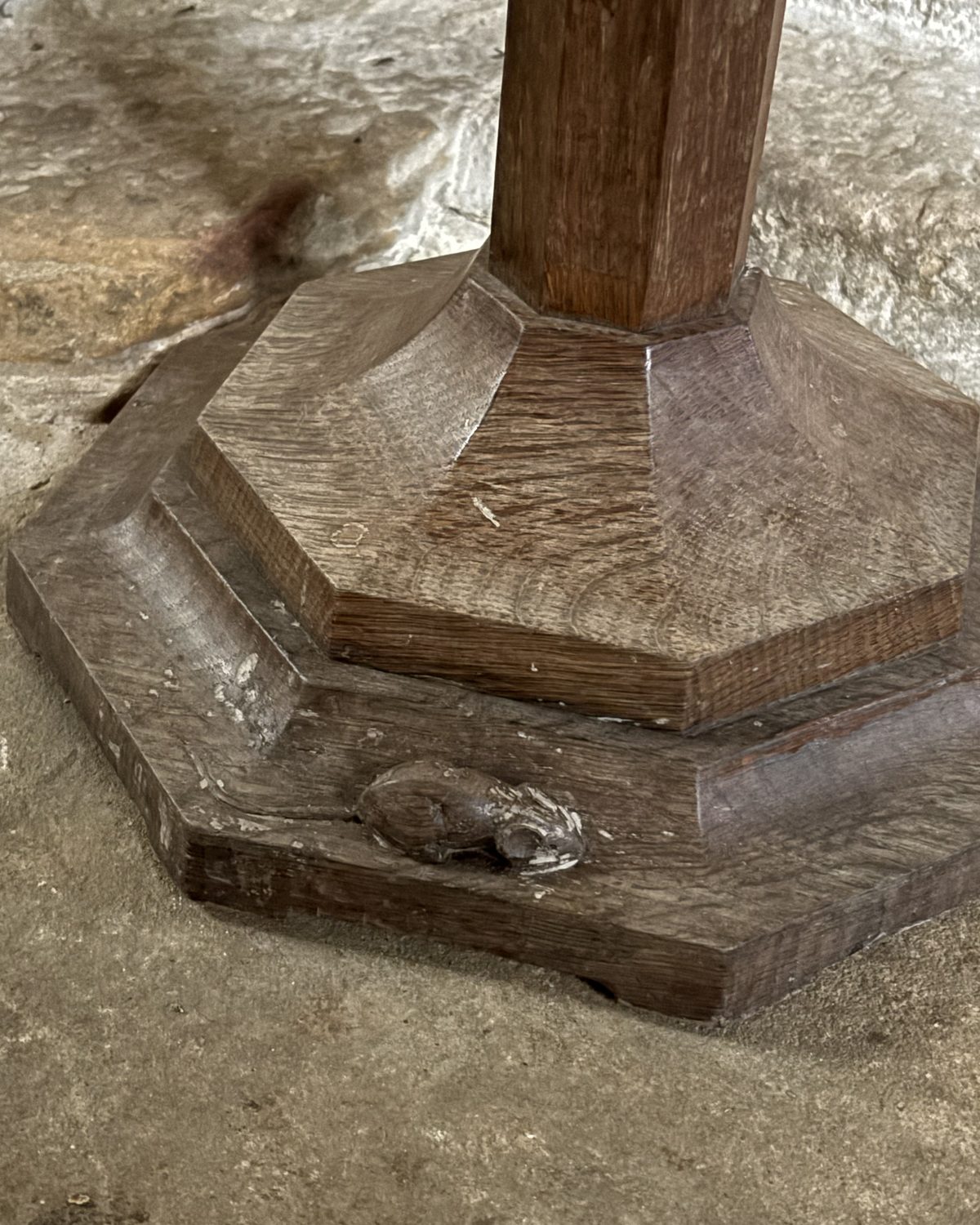
Before you leave, look down. On the foot of an oak flower stand near one of the pillars is a small carved mouse.
My tour guide told me it came from the workshop of Robert Thompson, the Mouseman of Kilburn, whose carved mice are in churches all over Yorkshire. I haven’t found that written down anywhere, and the church’s own website doesn’t mention it. But the mouse is Thompson’s trademark, and Kilburn isn’t far. The whole story is in our guide to the Mouseman of Kilburn.
Visiting St Gregory’s Minster
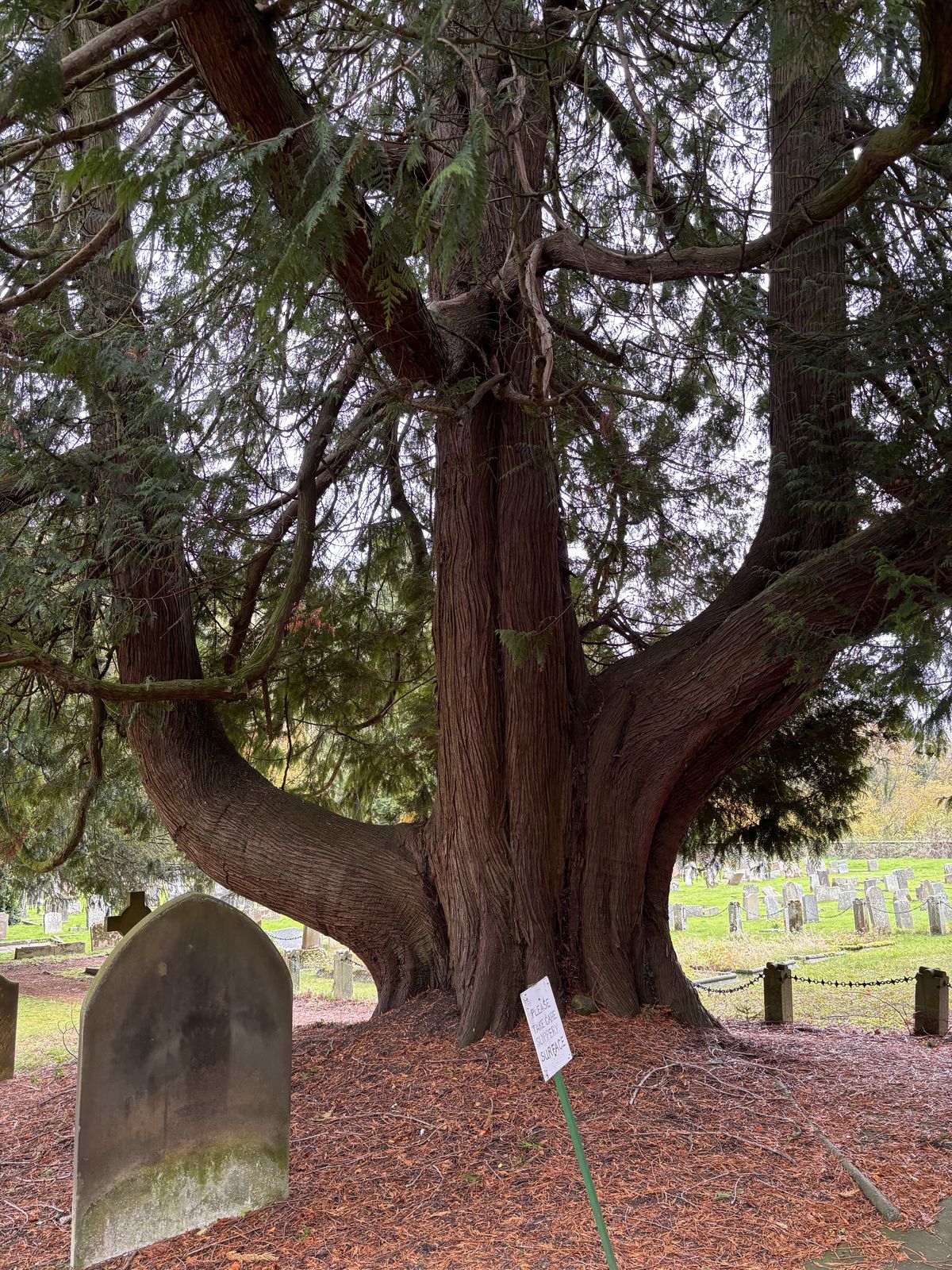
- Where: Kirkdale, North Yorkshire. From the A170, four miles east of Helmsley, turn off where you see the sign for St Gregory’s Minster, and follow the signs for about half a mile. Sat nav: YO62 7TZ.
- Open: every day, 9.30am to 6pm, or dusk if that’s earlier.
- Cost: free.
- Parking: a car park beside the church.
- Access: the stone path up to the door is fairly steep, so take care when it’s wet. There’s a movable ramp for wheelchairs.
- Tours: guided tours can be arranged in advance through the church’s website.
- Services: it’s a working parish church. Check the website for service times before you plan around them.
- How long: fifteen minutes for the sundial and a quick look inside. Half an hour if you read everything.
It pairs naturally with Helmsley, Rievaulx and Byland, all a short drive west. Our guide to the North York Moors puts them together into a day.
Kirkdale on our trip
On the Monday of our October 2027 Yorkshire trip we stop at Byland Abbey, have coffee in Helmsley, and then come here before crossing the moors to Whitby. I’ll read you the sundial, show you the tomb covers, and point out the mouse.
Kirkdale's world: what else was happening
The sundial over the door dates itself. It says the church was rebuilt in the days of King Edward and Earl Tosti, which puts it between 1055 and 1065. Within a year or two both men were dead and England had a Norman king.
- Anglo-Saxon 600–1066
- Middle Ages 1066–1485
- Tudor and Stuart 1485–1714
- Georgian 1714–1837
- Victorian and Edwardian 1837–1910
The story Britain The wider world Other writers
- 659 Britain A monastery is founded at Lastingham, a few miles away. Kirkdale may have started as an offshoot of it.
- 664 Britain The Synod of Whitby settles how the English church dates Easter.
- 800 The story Around now, two carved stone tomb covers are made for burials at Kirkdale.
- 1060 The story About now, Orm, son of Gamal, buys the ruined minster, rebuilds it, and records the fact on a sundial.
- 1066 Britain Earl Tostig, named on the sundial, dies at Stamford Bridge in September. The Normans land three days later.
- 1132 Britain Rievaulx Abbey is founded, a few miles to the west.
- 1150 The story From the 1150s the church belongs to the canons of Newburgh Priory, until Henry VIII closes the monasteries.
- 1215 Britain King John seals Magna Carta.
- 1492 The wider world Columbus reaches the Caribbean.
- 1622 The story Sir Henry Danvers gives Oxford the land for a physic garden and funds it from Kirkdale's church income. It's now the Oxford Botanic Garden.
- 1776 The wider world The American Declaration of Independence.
- 1821 The story Quarrymen break into a cave near the church that turns out to be full of hyena, elephant and hippopotamus bones.
- 1822 Other writers William Buckland wins the Royal Society's Copley Medal for his paper on Kirkdale Cave.
- 1827 The story The church comes close to collapse. It's repaired, with help from Oxford, and gets its small bell tower.
- 1847 Other writers Jane Eyre and Wuthering Heights are published.
- 1881 The story The chancel is completely rebuilt.
- 1907 The story Temple Moore begins a two-year restoration. The box pews and gallery go, and the two tomb covers are brought inside.
- 2023 The story The tomb covers are conserved. A newspaper from 1908 is found inside one plinth, and a new time capsule is sealed in.
Questions people ask
Where is St Gregory's Minster?
In Kirkdale, North Yorkshire, down a minor road off the A170, four miles east of Helmsley and a mile and a half west of Kirkbymoorside. Follow the signs for about half a mile. The sat nav postcode is YO62 7TZ, and there's a car park beside the church.
What does the Kirkdale sundial say?
In Old English, it says that Orm, son of Gamal, bought St Gregory's Minster when it was all broken down and fallen, and had it made new from the ground, in the days of King Edward and Earl Tosti. A line below names Hawarth, who made it, and Brand, the priest.
How old is the Kirkdale sundial?
It was carved between about 1055 and 1065. The inscription names Edward the Confessor as king and Tostig as earl, and Tostig only held Northumbria in those years.
Is St Gregory's Minster open to visitors?
Yes. The church is open every day from 9.30am to 6pm, or until dusk if that comes first, and entry is free. The sundial is in the porch, so you can see it even if the church door is locked.
Why is it called a minster?
Minster comes from the Latin monasterium. In the 600s or 700s a small community of monks was set up here, where two old roads crossed, to look after travelers. The name stuck long after the monks had gone.
What is Kirkdale Cave?
A cave in an old quarry near the church, found in 1821. It held the bones of hyenas, elephants, hippos, rhinos and lions, about 120,000 years old. William Buckland worked out that hyenas had lived in the cave and dragged their prey inside, and his study became a model for reconstructing the earth's past.
Is there a Mouseman mouse at Kirkdale?
There's a carved mouse on the foot of an oak flower stand inside the church. My tour guide told me it came from Robert Thompson's workshop in Kilburn; I haven't found that written down. See our guide to the Mouseman of Kilburn.
Read next
- Yorkshire · The MousemanThe Mouseman of KilburnLook closely at the oak in a Yorkshire church and you may find a small mouse carved into it. Here's who put it there, why, and where to go looking.
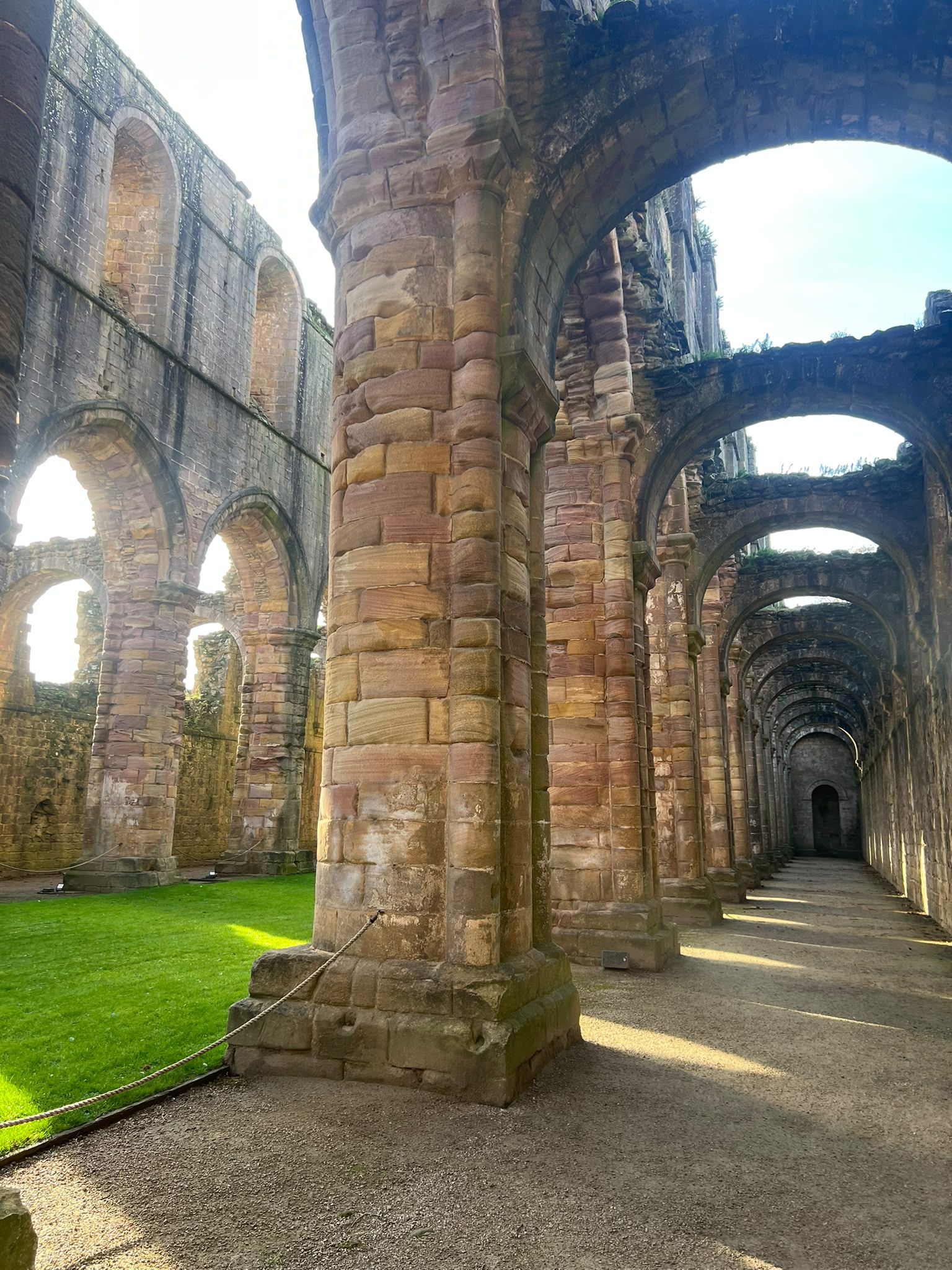 Yorkshire · The abbeysThe abbeys of YorkshireYorkshire is full of great abbey ruins. Here's every abbey you can visit, what each one is like, what it costs, and which to choose if you only have time for two or three.
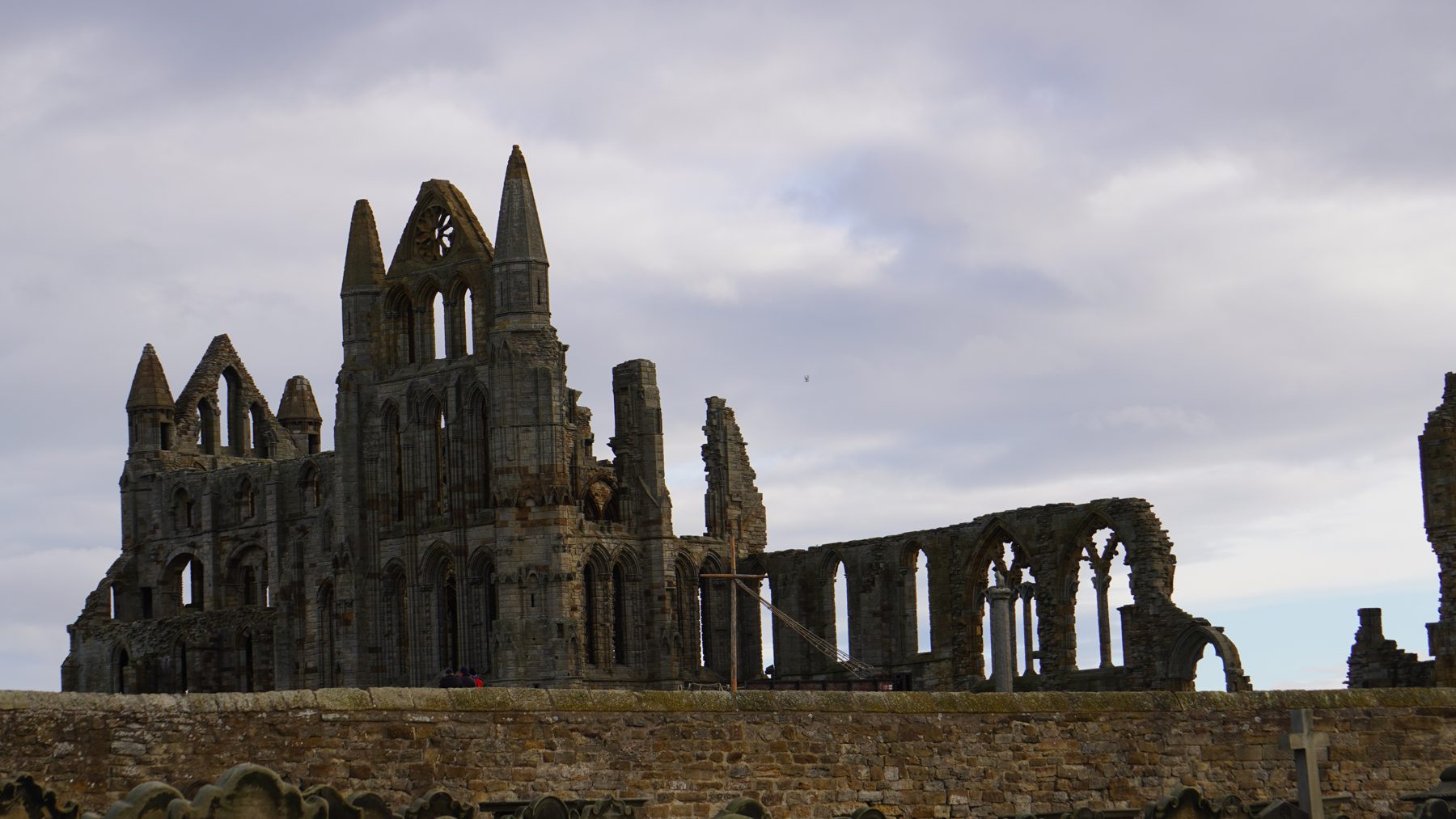 Yorkshire · The moors and the coastWhitby Abbey and DraculaA ruined abbey on a cliff, 199 steps up from the harbour, and one summer in 1890 when Bram Stoker walked into the town library and came out with the name Dracula. Here's what's real, what's in the book, and how to see both.
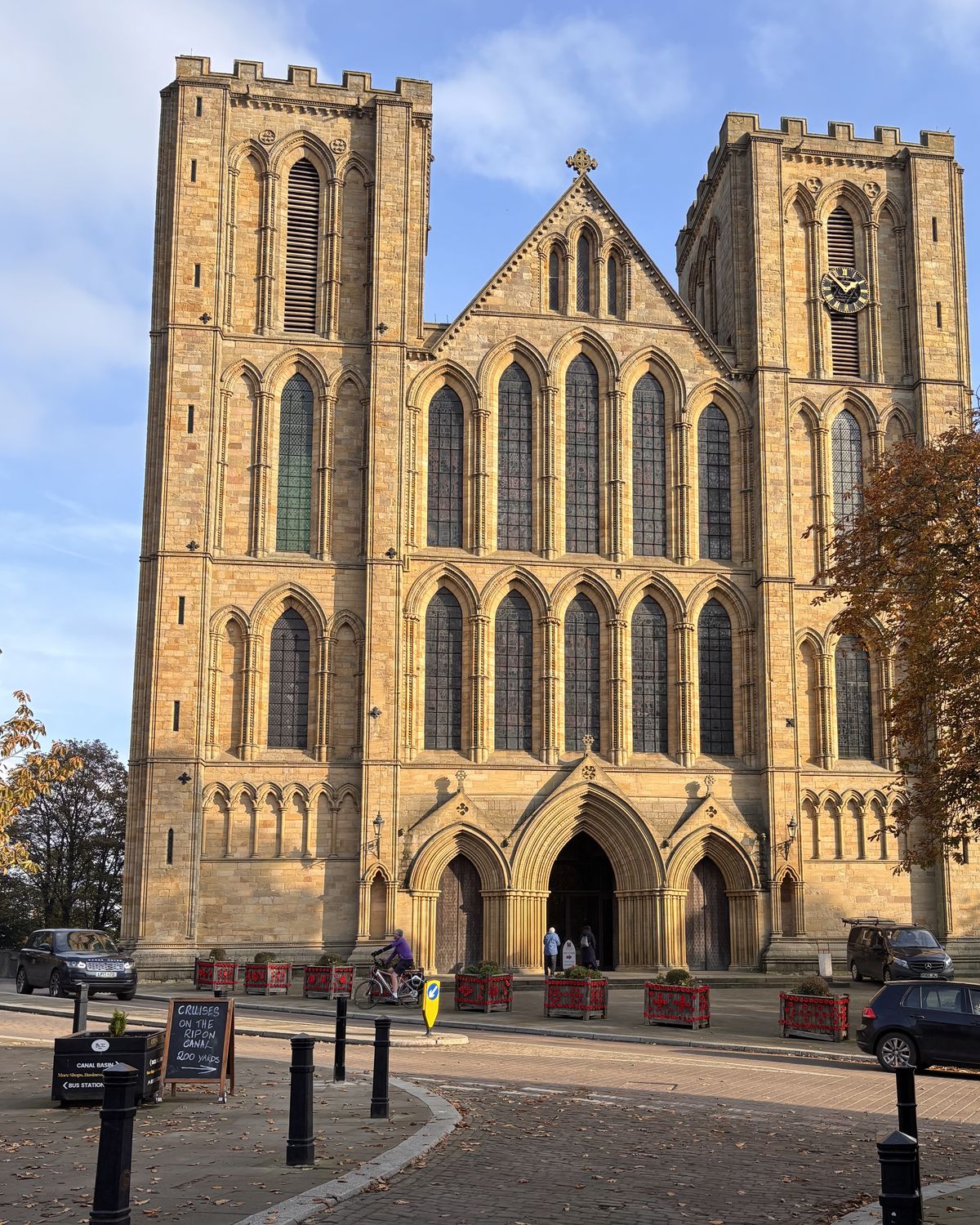 Yorkshire · RiponRipon CathedralA small city's cathedral with a crypt from the year 672 under the floor, medieval carvings that may have given Lewis Carroll his White Rabbit, and a 17th-century dean's house across the road that you can sleep in.
Sources
- Kirkdale churches: Visiting St Gregory's Minster (opening hours, directions, postcode, car park, access, tours)
- Kirkdale churches: A brief history of St Gregory's Minster (minster, Lastingham, tomb covers, Orm, building phases, bells, 1827, 1881, Newburgh Priory, Danvers and Oxford, 1907–1909)
- Information sheet in the church, 'Conservation of the Tomb Covers in the North Aisle' (dates, stone, carving, Skillington Workshop, the 1908 newspaper, the 2023 time capsule), photographed October 2026
- Wikipedia: St Gregory's Minster, Kirkdale (Grade I, c. 1060, sundial c. 1055–1065, Historic England's translation, Tostig)
- Wikipedia: Kirkdale sundial
- University of Oxford: St Gregory's Minster, Kirkdale
- Wikipedia: Kirkdale Cave (1821, the bones in the potholes, Buckland, the species, Copley Medal 1822, dating)
Get the next Behind the Story guide.
New guides to the real places behind the books and films, by email. Free. Unsubscribe in one click.