Yorkshire · David Hockney
David Hockney's Yorkshire: Bradford, Salts Mill and the Wolds
He was born in Bradford, got famous in California, and came home to paint the hills of East Yorkshire. Here's where to see his work and the places behind it.
- Born
- 9 July 1937, Bradford, West Yorkshire
- Died
- 11 June 2026, London, aged 88
- Best place to see his work
- Salts Mill, Saltaire: the 1853 Gallery and Gallery 3
- Cost
- Free at Salts Mill and at Cartwright Hall
- Salts Mill open
- Wednesday to Sunday; closed Monday and Tuesday
- Also in Bradford
- The David Hockney Gallery at Cartwright Hall, Lister Park
- The landscapes
- The Yorkshire Wolds: Garrowby Hill, Warter, Woldgate
- Time needed at Salts Mill
- At least an hour for the Hockney rooms
The short answer
David Hockney (1937–2026) was born in Bradford, West Yorkshire, and Yorkshire has the best places to see his work. Salts Mill in Saltaire shows hundreds of his paintings, prints and drawings for free in the 1853 Gallery. Cartwright Hall in Bradford has a free gallery about his early life. The landscapes he painted in his sixties and seventies are in the Yorkshire Wolds, between York and the coast at Bridlington.
David Hockney is the most famous artist Yorkshire has produced. He was born in Bradford in 1937, made his name painting swimming pools in California, and came back in his sixties to paint the trees and lanes of East Yorkshire. He died in London in June 2026, aged 88. This guide covers who he was, the three parts of Yorkshire that mattered to him, and where you can see his work, most of it for free.
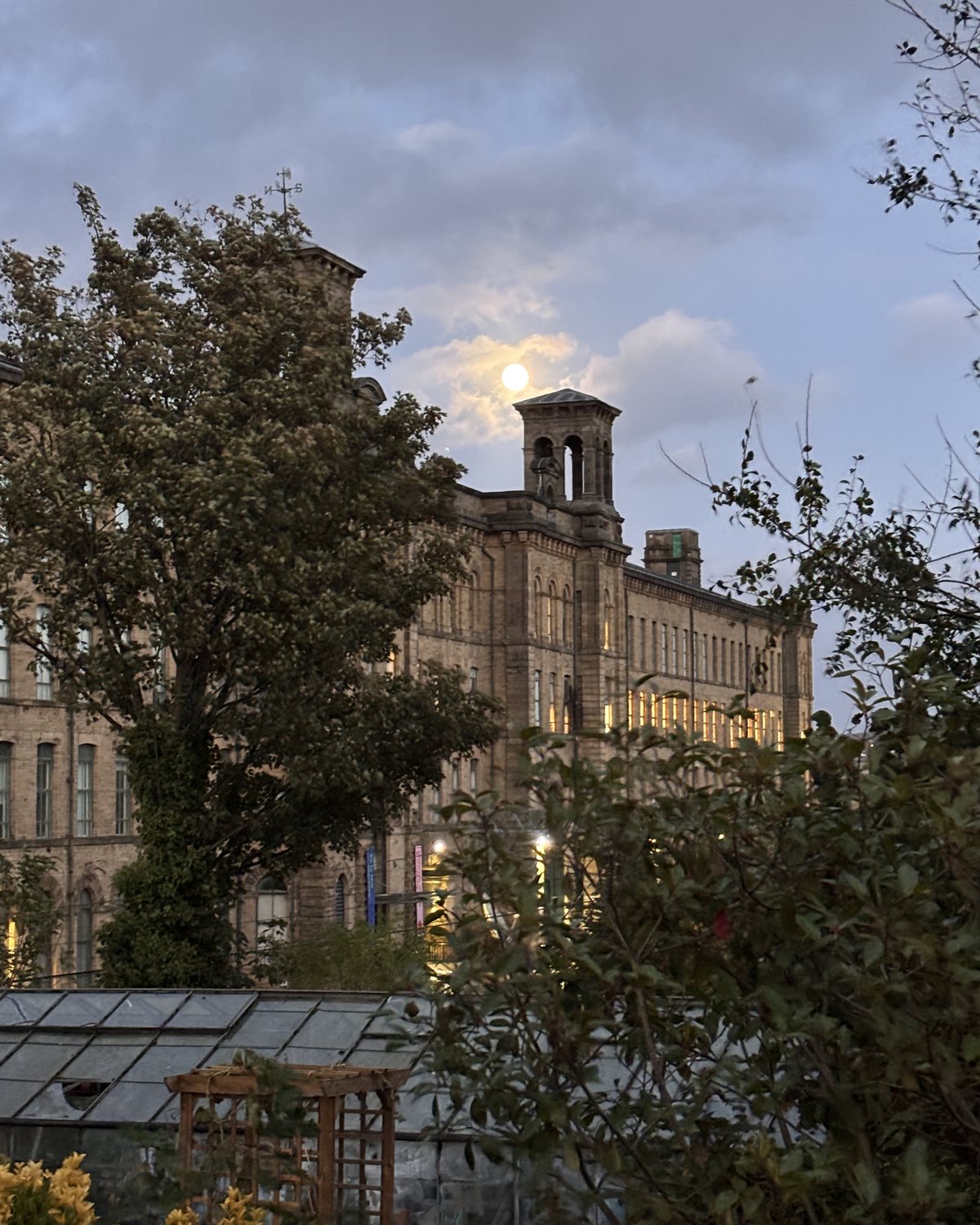
I walked through the Hockney rooms at Salts Mill in Saltaire in October 2026, on a day I hadn’t planned to be there at all. There are so many of his works at Salts Mill. It’s an extraordinary collection, in great museum rooms, and seeing it is a big part of what put Saltaire back on our trip.
The rest of the reason: it’s very different from everything else we’re doing that week, my friends raved about the guided tour of the village, and it’s another era. We read about Victorian mills, and we may pass others as we drive around, but we won’t see one anywhere near as clearly as this.
Who was David Hockney?
David Hockney was an English painter, printmaker and stage designer. For about sixty years he was one of the best-known artists in the world, and one of the easiest to like: his pictures are bright, clear and usually of something you can recognize, such as a swimming pool, a friend in a chair, or a road through a wood.
The short version of his life:
| When | Where | What he’s known for |
|---|---|---|
| 1937–1959 | Bradford | Childhood, Bradford Grammar School, Bradford College of Art |
| 1959–1962 | London | The Royal College of Art |
| 1964 onward | Los Angeles | The swimming pool paintings, including A Bigger Splash (1967) |
| 1990s–2015 | East Yorkshire | The Yorkshire Wolds landscapes |
| 2019–2023 | Normandy, France | Spring in his garden, drawn on an iPad |
| 2023–2026 | London | His last years |
He never stopped trying new tools. He made pictures with Polaroid cameras, photocopiers, fax machines and then, from 2010, an iPad. He was 72 when the iPad came out.
He was also honored about as highly as a British artist can be. He was made a Companion of Honour in 1997 and appointed to the Order of Merit in 2012. In 2018 his painting Portrait of an Artist (Pool with Two Figures) sold at auction for $90 million, which was then the most ever paid for a work by a living artist.
Bradford: where he started
Hockney was born in Bradford on 9 July 1937, the fourth of five children. He won a place at Bradford Grammar School and went on to Bradford College of Art in 1953.
His father, Kenneth, was a conscientious objector in the Second World War. When David’s turn came for military service in the late 1950s, he refused too, and worked for two years as a hospital orderly. Then he went to the Royal College of Art in London, and in 1964 he moved to Los Angeles.
Bradford is the same city the Brontë sisters came from. They were born in Thornton, on its western edge, before the family moved to Haworth.
Where to see this part of his life: Cartwright Hall Art Gallery, in Lister Park about a mile and a half from the center of Bradford, has a David Hockney Gallery about his early life and career. Entry is free. In November 2026 its hours were Tuesday to Friday 10am to 4pm and Saturday and Sunday 11am to 4pm, closed Mondays. Check Bradford Museums’ own page before you go.
Salts Mill: the best place to see his work
If you only go to one place, go to Salts Mill.
Salts Mill is a huge Victorian cloth mill in Saltaire, a few miles north of Bradford. It stopped making cloth in 1986. The next year a Bradford businessman named Jonathan Silver bought it, and the first thing he did was open a gallery of David Hockney’s pictures.
The two had known each other for years. Silver met Hockney when he was a 13-year-old at Bradford Grammar School, working on the school magazine. Hockney was a former pupil who was starting to get famous, and Silver talked him into designing the cover. They met again years later in Los Angeles. When Silver told him about the mill, Hockney sent pictures.
The gallery opened with 56 works. Silver’s family, who still run the mill, say there are now more than 400, the largest holding of Hockney’s work anywhere.
Jonathan Silver was diagnosed with cancer in 1995. Hockney flew to Yorkshire when he heard, and painted him a picture of sunflowers as a get-well present. Silver died in 1997. He was 47.
What you’ll find there now:
| Room | What’s in it | Open (November 2026) |
|---|---|---|
| 1853 Gallery | A long ground-floor room of Hockney’s paintings, etchings and drawings, with art books and materials for sale among them | Wed–Fri 10–5, Sat–Sun 9:30–5 |
| Gallery 3 | 20 Flowers for 2025 And Some Bigger Pictures, flower paintings made on an iPad | Wed–Sun 10–4, until 17 January 2027 |
Everything is free. The mill is closed on Mondays and Tuesdays. Check Salts Mill’s own site for the hours on the day you’re going.
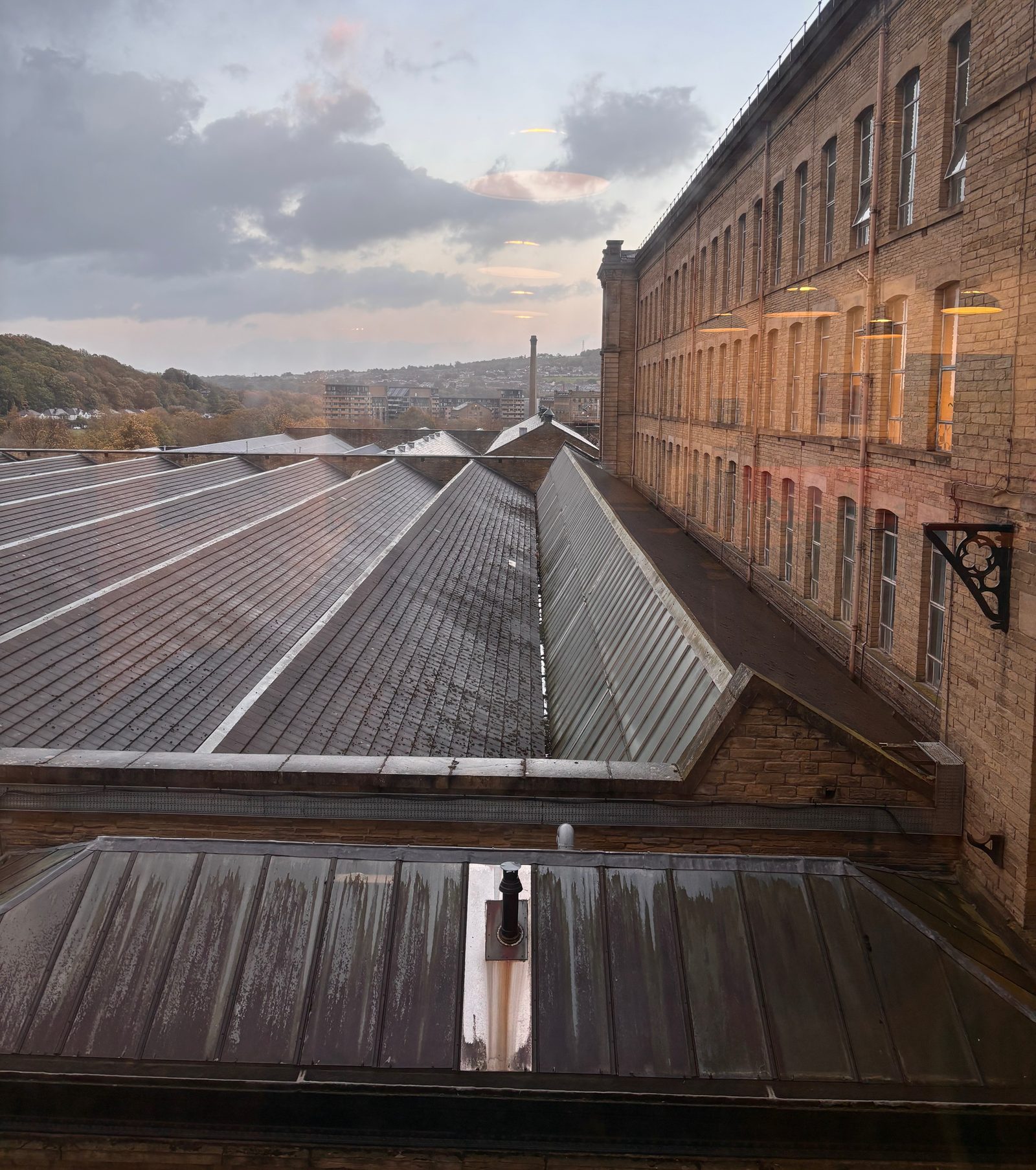
The 1853 Gallery doesn’t feel like a museum. The pictures hang in a long mill room with iron columns, alongside big pottery vases and shelves of art books. Nobody hurries you. Give it a proper hour.
For the rest of the village, the mill’s bookshop and where to eat, see my guide to Saltaire.
The Yorkshire Wolds: where he painted
The Wolds are low chalk hills in East Yorkshire, between York and the sea. They’re farmland: big fields, hedges, small woods and very few visitors.
In the 1990s Hockney started coming back from California every few months to see his mother, who had moved to Bridlington on the coast. He painted the countryside he drove through. After she died in 1999 he kept coming, and in 2004 he made Bridlington his home. He lived and worked in what had been a small hotel, and for about ten years he painted the same lanes and trees over and over, in every season. Much of the time he was outdoors, in front of the thing he was painting.
The pictures to know:
| Picture | Year | Where |
|---|---|---|
| Garrowby Hill | 1998 | The A166 east of York, where the road drops off the Wolds |
| Bigger Trees Near Warter | 2007 | A wood near the village of Warter, west of Driffield |
| The Arrival of Spring in Woldgate, East Yorkshire | 2011 | Woldgate, an old Roman road running west from Bridlington |
Bigger Trees Near Warter is his largest painting. It’s made of 50 canvases joined together and measures about 15 feet high by 40 feet wide. He gave it to the Tate in 2008.
In 2012 the Royal Academy in London filled its main galleries with these Yorkshire pictures in an exhibition called A Bigger Picture. He sold the Bridlington house in 2015.
The Wolds are well east of the places on most Yorkshire trips, including ours. If you have a car and a spare day from York, the drive out over Garrowby Hill toward Bridlington takes you through the country he painted.
Hockney and books
He’s on this site because of the pictures, but Hockney was a reader, and some of his best prints come straight from books:
- A Rake’s Progress (1961–63). Etchings that retell William Hogarth’s 18th-century story of a young man ruined by the city, moved to New York.
- Fourteen poems by C.P. Cavafy (1966). Etchings to go with the Greek poet’s love poems.
- Six Fairy Tales from the Brothers Grimm (1969). Strange, funny etchings for stories including Rapunzel and Rumpelstiltskin.
- The Blue Guitar (1976–77). Twenty etchings that began with a Wallace Stevens poem, which itself began with a Picasso painting.
Cartwright Hall in Bradford holds all four sets.
He also wrote. Secret Knowledge (2001) argues that painters as far back as the 1400s used lenses and mirrors to help them draw. A History of Pictures (2016) and Spring Cannot Be Cancelled (2021) are both long conversations with the art critic Martin Gayford, and both are easy to read even if you’ve never studied art.
Where to see David Hockney’s work in Yorkshire
| Place | What you’ll see | Cost |
|---|---|---|
| Salts Mill, Saltaire | The biggest collection: paintings, prints, drawings and iPad work | Free |
| Cartwright Hall, Bradford | His early life and the four print series from books | Free |
| The Yorkshire Wolds | The landscapes themselves: Garrowby Hill, Warter, Woldgate | Free |
Other galleries in Yorkshire borrow and show his work from time to time, so it’s worth checking what’s on at York Art Gallery before you travel.
What our trip does
Salts Mill is the Friday morning of our October 2027 Yorkshire trip. We have time in the 1853 Gallery and the mill’s bookshop, lunch together in the diner, and then a guided walk through the village about the women who worked in the mill. The full plan for the day is in my guide to Saltaire.
David Hockney's life, and what else was happening
Hockney was born two years before the Second World War and was still drawing on an iPad in his late eighties. Here's his life next to the books and events of the same years.
- George VI 1936–1952
- Elizabeth II 1952–2022
- Charles III 2022–2026
The story Britain The wider world Other writers
- 1937 The story David Hockney is born in Bradford on 9 July, the fourth of five children.
- 1937 Other writers J.R.R. Tolkien publishes The Hobbit.
- 1939 Britain The Second World War begins. Hockney's father is a conscientious objector.
- 1953 The story He starts at Bradford College of Art.
- 1959 The story He goes to the Royal College of Art in London, after two years as a hospital orderly in place of military service.
- 1963 Other writers Sylvia Plath dies in London and is buried at Heptonstall in West Yorkshire.
- 1964 The story He moves to Los Angeles.
- 1964 The wider world The Beatles land in New York. Hockney moves to Los Angeles the same year.
- 1967 The story He paints A Bigger Splash, the most famous of his swimming pools.
- 1969 The story He publishes his etchings for six fairy tales by the Brothers Grimm.
- 1969 The wider world Apollo 11 lands on the Moon.
- 1986 Britain Salts Mill in Saltaire stops making cloth.
- 1987 The story Jonathan Silver buys Salts Mill and opens the 1853 Gallery with Hockney's pictures.
- 1995 Other writers Kate Atkinson publishes Behind the Scenes at the Museum, set in York.
- 1997 The story Jonathan Silver dies, aged 47. Hockney is made a Companion of Honour.
- 1998 The story He paints Garrowby Hill, a road dropping off the Yorkshire Wolds toward York.
- 2001 Britain Saltaire becomes a UNESCO World Heritage Site.
- 2004 The story He sets up home in Bridlington, on the East Yorkshire coast, and starts painting the Wolds outdoors.
- 2007 The story Bigger Trees Near Warter, on 50 canvases, goes on show at the Royal Academy.
- 2010 The wider world Apple releases the iPad. Hockney is drawing on one within months.
- 2012 The story A Bigger Picture, his Yorkshire landscapes, opens at the Royal Academy. He's appointed to the Order of Merit.
- 2015 The story He sells the Bridlington house.
- 2018 The story Portrait of an Artist (Pool with Two Figures) sells for $90 million, then a record for a living artist.
- 2020 The wider world The Covid lockdowns. Hockney spends the spring drawing his garden in Normandy on an iPad.
- 2025 The story A very large exhibition of his work runs in Paris from April to August.
- 2026 The story David Hockney dies at home in London on 11 June, aged 88.
Questions people ask
Where is David Hockney from?
Bradford, in West Yorkshire. He was born there on 9 July 1937, the fourth of five children, and went to Bradford Grammar School and then Bradford College of Art before the Royal College of Art in London. He moved to Los Angeles in 1964.
Where can I see David Hockney's work in Yorkshire?
The biggest collection is at Salts Mill in Saltaire, a few miles from Bradford, where the 1853 Gallery and Gallery 3 are free to enter. Cartwright Hall in Bradford's Lister Park has a free David Hockney Gallery about his early life, including four of his print series based on books and poems. York Art Gallery and other Yorkshire galleries show his work from time to time.
Is the Hockney gallery at Salts Mill free?
Yes. Entry to Salts Mill and all its galleries is free, and so is parking. The mill is open Wednesday to Sunday and closed on Mondays and Tuesdays. Check the Salts Mill website for the hours on the day you're going.
Is David Hockney still alive?
No. David Hockney died at his home in London on 11 June 2026, aged 88. His death was announced the next day. He was working almost to the end: a large exhibition of his work ran in Paris through the summer of 2025.
Why is there so much Hockney at Salts Mill?
Because of a friendship. Jonathan Silver, who bought the empty mill in 1987, had met Hockney as a 13-year-old schoolboy at Bradford Grammar, when he talked him into designing the cover of the school magazine. When Silver opened the mill as a gallery, Hockney sent pictures. The collection began with 56 works and the Silver family, who still run the mill, say it's now the largest holding of Hockney's work anywhere.
Where did David Hockney paint in Yorkshire?
In the Yorkshire Wolds, the chalk hills of East Yorkshire between York and the coast. Garrowby Hill is on the A166 east of York. Bigger Trees Near Warter was painted outdoors near the village of Warter. The Arrival of Spring pictures were made along Woldgate, an old Roman road running west from Bridlington, where Hockney lived and worked for about ten years.
Did David Hockney illustrate books?
Yes. Four of his best-known sets of prints come from books and poems: A Rake's Progress (after Hogarth, 1961–63), illustrations for fourteen poems by C.P. Cavafy (1966), Six Fairy Tales from the Brothers Grimm (1969), and The Blue Guitar (1976–77), which came from a Wallace Stevens poem. Cartwright Hall in Bradford holds all four.
Read next
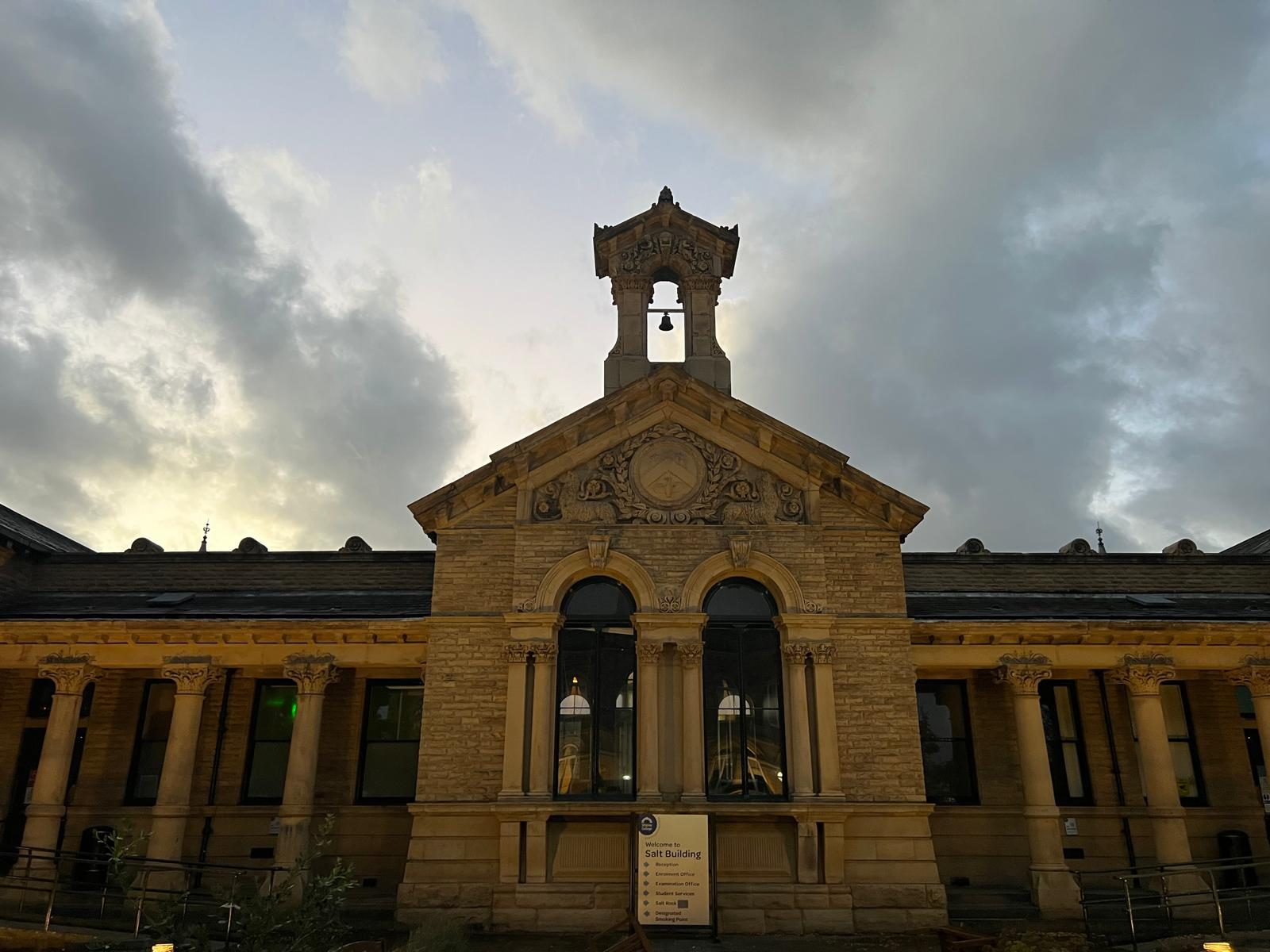 Yorkshire · Mills and moorsSaltaire, EnglandOne mill owner built a whole village for his workers. The mill is now full of David Hockney's art and one of the biggest bookshops you'll ever wander round. I nearly skipped it. Don't.
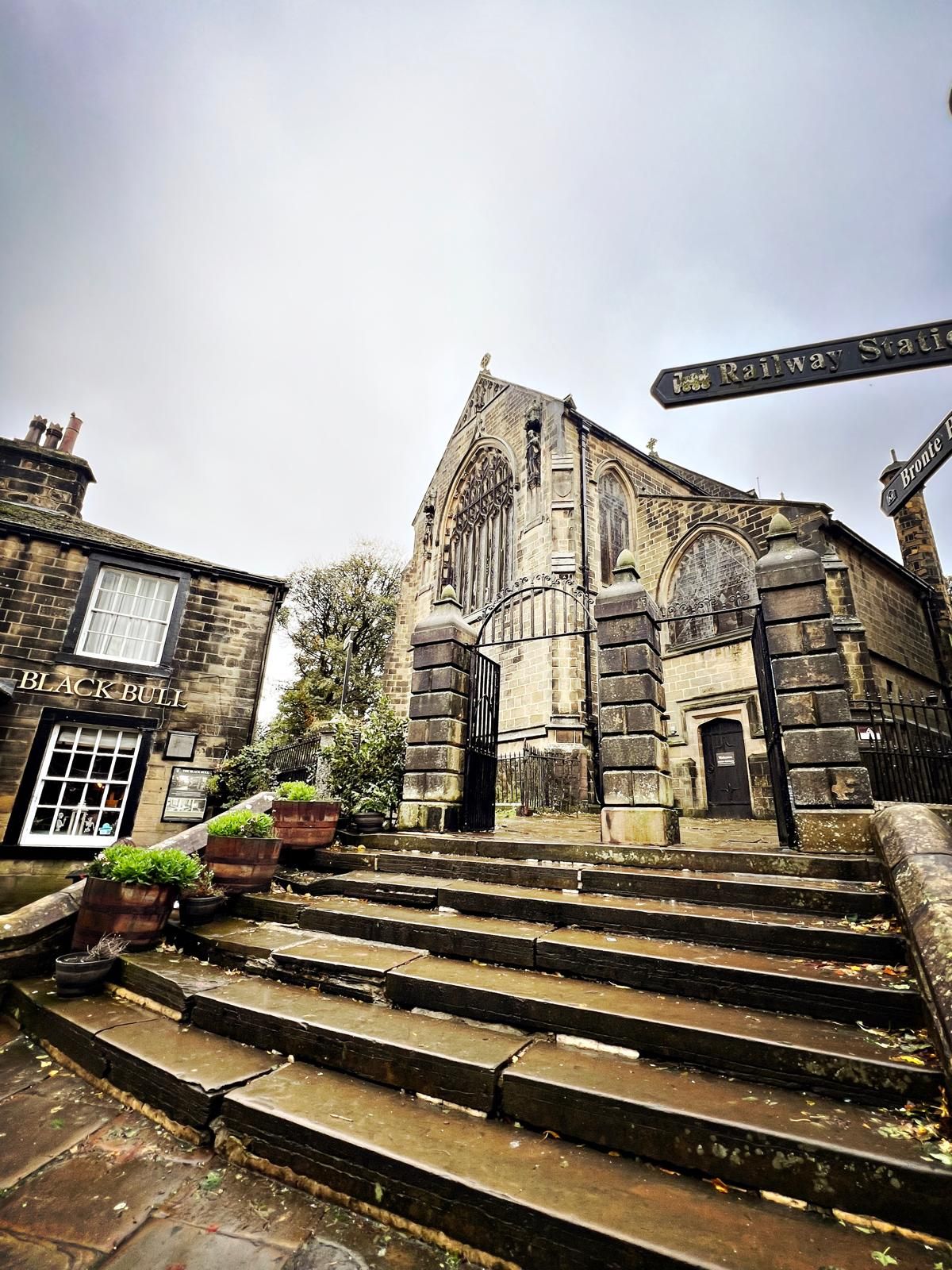 Yorkshire · The BrontësHaworth village and the Brontë Parsonage MuseumHaworth is one steep stone street on the edge of the West Yorkshire moors. At the top is the Brontë Parsonage, the house where Charlotte, Emily and Anne wrote their novels. Here's how to do it well.
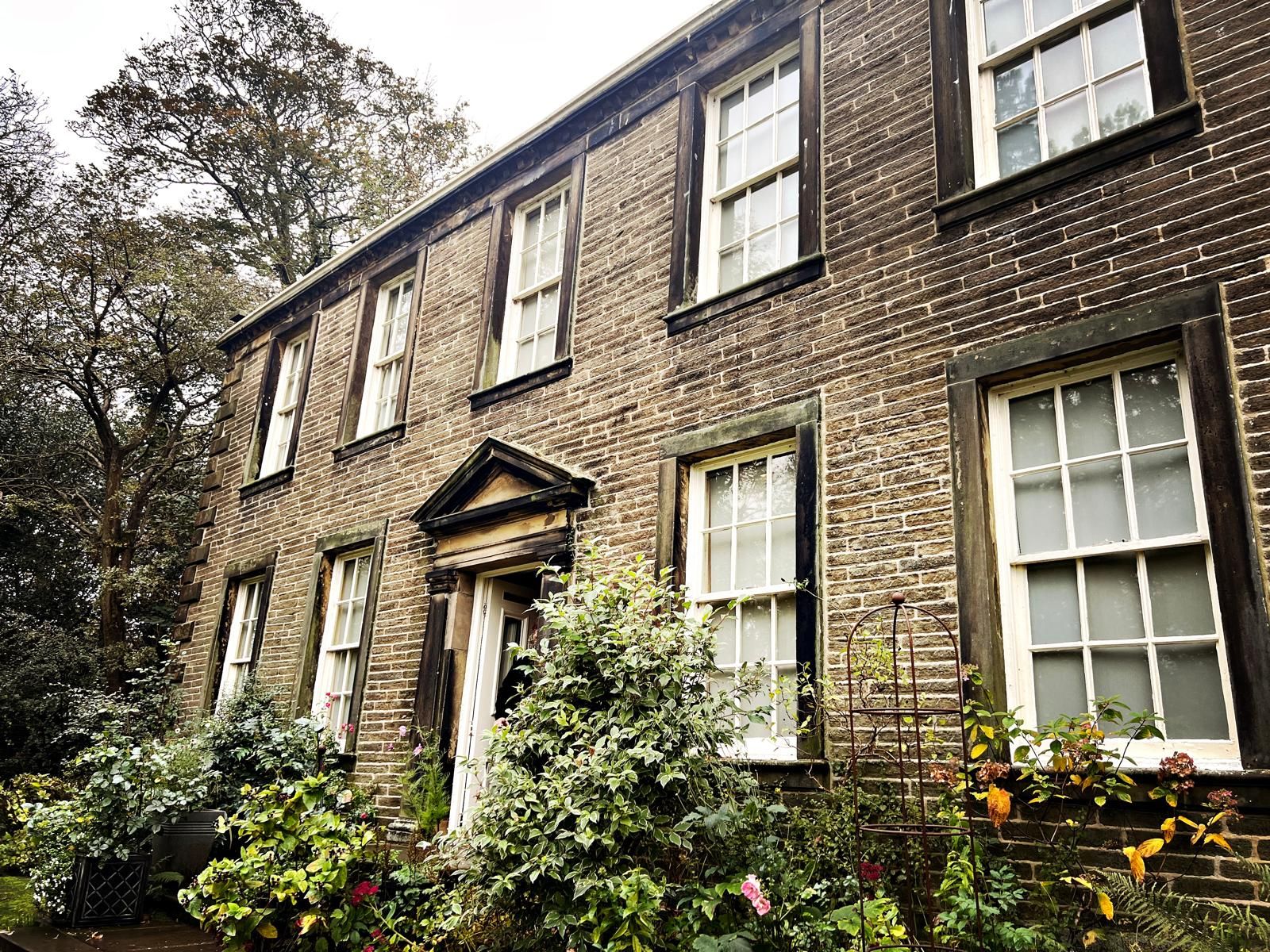 Yorkshire · The BrontësBooks by the Brontë sistersCharlotte, Emily and Anne Brontë wrote seven novels between them, all at one house in Haworth, West Yorkshire. Here's every book in order, who wrote which, and the story behind them, including what Charlotte really thought of Jane Austen.
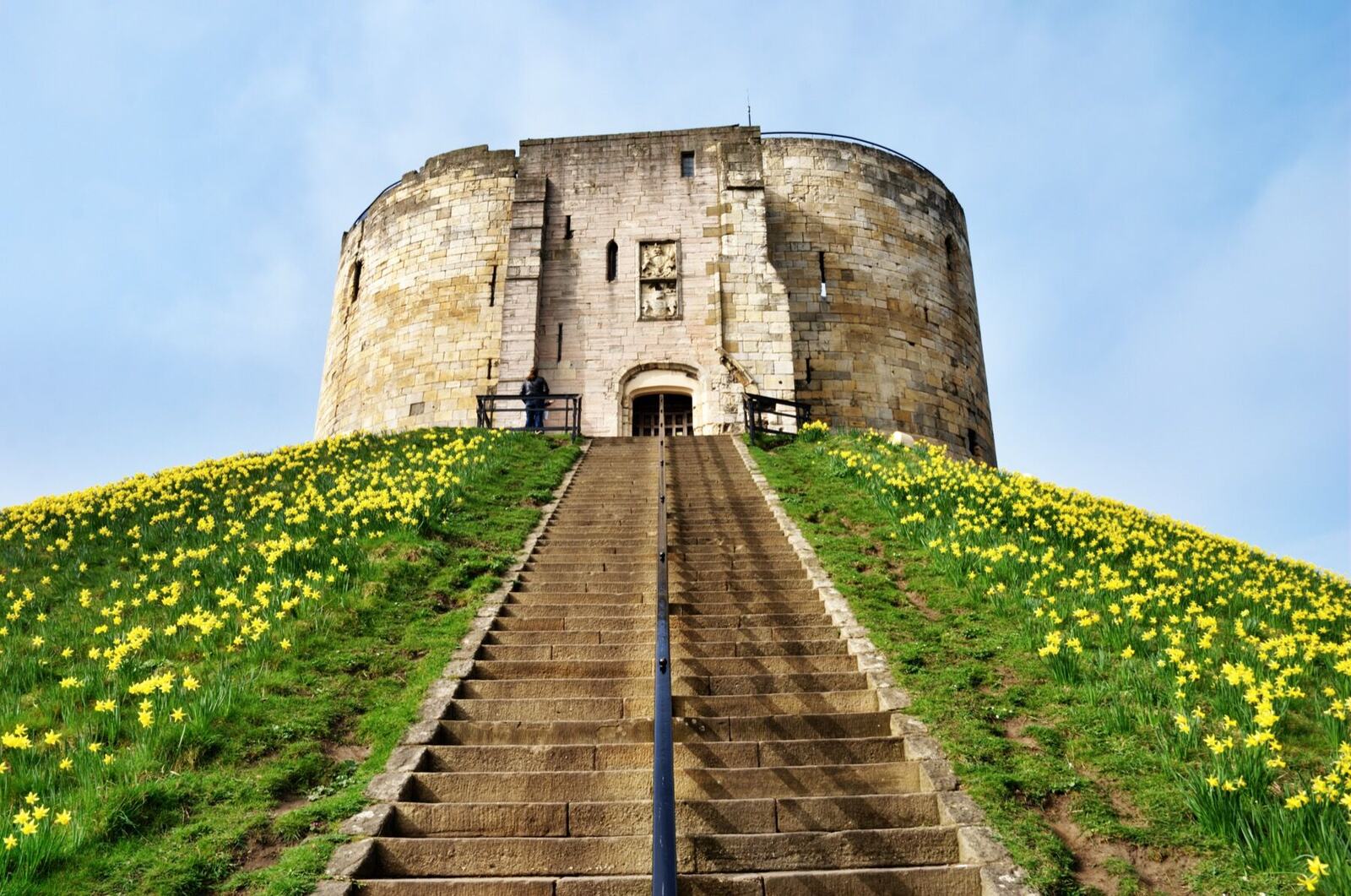 Yorkshire · YorkThings to do in York, UKWhat's worth your time in York, England, how long each place takes, and the people and books tied to the city. All of it on foot.
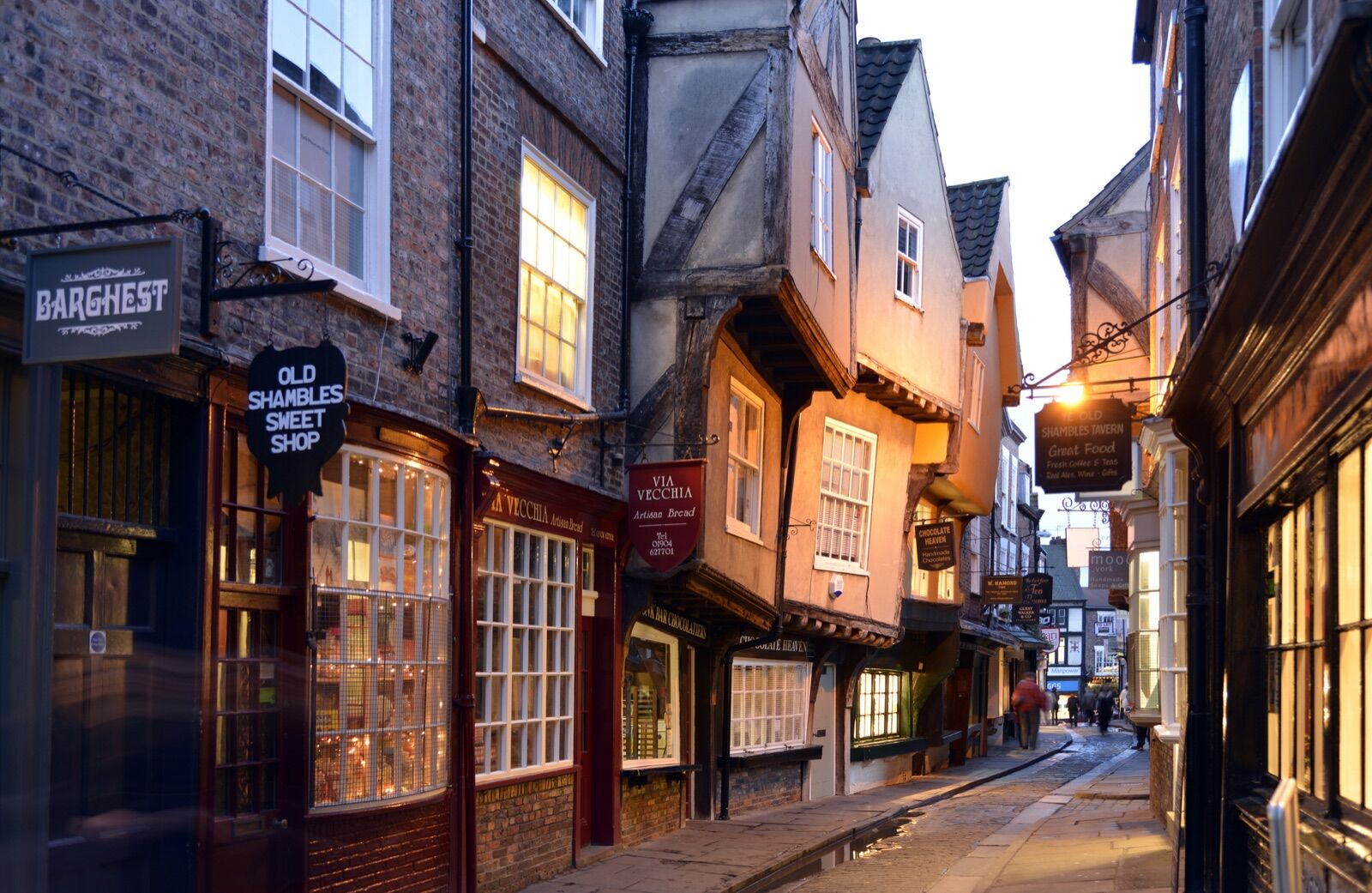 Yorkshire · York · BooksBehind the Scenes at the MuseumWho's who in Ruby Lennox's family, generation by generation, how the chapters and footnotes fit together, and the York streets you can still walk. Spoilers are tucked away until you click.
Sources
- Wikipedia: David Hockney (birth, schools, Royal College of Art, Los Angeles, print series, honours, Bridlington, Normandy, death)
- Artnet News: David Hockney obituary (died 11 June 2026)
- The National: David Hockney, artist who drew light into British art, has died (12 June 2026)
- Salts Mill: galleries, opening days, free entry (checked November 2026)
- The Jewish Chronicle: how Jonathan Silver came to fill a mill with David Hockneys (school magazine, 1987, 56 works, Sunflowers, Zoe Silver)
- Wikipedia: Jonathan Silver (1853 Gallery opened 1987; died 1997)
- Bradford Museums: Cartwright Hall Art Gallery (David Hockney Gallery, hours, free entry)
- Wikipedia: Bigger Trees Near Warter (50 canvases, 2007, given to Tate in 2008)
- Royal Academy: David Hockney RA, A Bigger Picture (2012; Woldgate, the Bridlington house)
- York Art Gallery: Bigger Trees Near Warter (Hockney's visits to Bridlington in the 1990s; his own home there from 2004)
- UNESCO: Saltaire World Heritage Site (inscribed 2001)
Get the next Behind the Story guide.
New guides to the real places behind the books and films, by email. Free. Unsubscribe in one click.