Yorkshire · The abbeys
The abbeys of Yorkshire: every one you can visit, and how to choose
Yorkshire is full of great abbey ruins. Here's every abbey you can visit, what each one is like, what it costs, and which to choose if you only have time for two or three.
- The big three
- Fountains, Rievaulx and Whitby
- Free to enter
- Byland, Easby, Kirkham, Roche, Selby, St Mary's (York)
- Pay what you choose
- Jervaulx (honesty box), Kirkstall (suggested £5)
- Ticketed
- Fountains (National Trust); Rievaulx, Whitby, Mount Grace (English Heritage)
- Still a working church
- Selby Abbey; the nave of Bolton Priory
- When they closed
- 1536 to 1540, in Henry VIII's Dissolution
- Winter
- Several open only on some days from November. Check before you drive
The short answer
The abbeys in Yorkshire you can visit are Fountains, Rievaulx, Byland, Whitby, Kirkstall, Jervaulx, Easby, Roche, Selby and St Mary's in York, plus the priories at Bolton Abbey, Kirkham, Mount Grace and Guisborough. Most were founded in the 1100s and closed by Henry VIII between 1536 and 1540. If you only see one, see Fountains Abbey near Ripon; add Rievaulx for the setting and Whitby for the view over the sea.
Yorkshire is full of great abbey ruins, and you could spend a week doing nothing else. Most people have a day or two. So this guide lists every abbey in Yorkshire you can actually visit, says plainly what each one is like, and tells you which I’d pick.
I lived near Harrogate for three years when I was younger, and I went back in October 2026 to plan our Yorkshire trip. On that visit I went to Fountains, Byland, Whitby and Bolton Abbey. The others here are researched from the people who run them, and every opening time was checked in November 2026.
Yorkshire’s abbeys at a glance
| Abbey | Nearest town | Founded | Closed | Run by | Entry |
|---|---|---|---|---|---|
| Fountains | Ripon | 1132 | 1539 | National Trust | Ticket |
| Rievaulx | Helmsley | 1132 | 1538 | English Heritage | Ticket |
| Byland | Coxwold | 1177 (this site) | 1538 | English Heritage | Free |
| Whitby | Whitby | About 657 | 1539 | English Heritage | Ticket |
| Kirkstall | Leeds | About 1152 | 1539 | Leeds City Council | Donation, £5 suggested |
| Jervaulx | East Witton, Wensleydale | 1156 (this site) | 1537 | Private owners | Honesty box |
| Easby | Richmond | 1152 | Late 1530s | English Heritage | Free |
| Roche | Maltby | 1147 | 1538 | English Heritage | Free (closed until spring 2027) |
| Selby | Selby | 1069 | 1539 | Church of England | Free |
| St Mary’s | York | 1088 | 1539 | York Museum Gardens | Free |
Four more are priories, not abbeys, but you’ll want them on the same list: Bolton Abbey, Kirkham, Mount Grace and Guisborough. They’re further down.
Which abbey should you visit?
If you only have time for one, go to Fountains. It’s the most complete, there’s a whole Georgian water garden attached, and you can fill a day there.
If you have time for two, add Rievaulx. The two were founded in the same year by the same order of monks, and they feel completely different. Fountains is wide and grand. Rievaulx is tucked into a narrow wooded valley.
If you have three, add Whitby, because nothing else on this list stands on a cliff above the North Sea.
After that it depends on what you like:
- You want it quiet. Byland or Jervaulx. Both are easy to have almost to yourself.
- You don’t want to pay. Byland, Easby and Kirkham are free and open in daylight hours.
- You don’t have a car. St Mary’s is in the middle of York. Selby Abbey is in the middle of Selby. Kirkstall is on a bus route from Leeds.
- You want a roof. Selby. It’s the only one here that’s still a complete church.
- You like a river walk. Easby, from Richmond, or Bolton Abbey along the Wharfe.
Why Yorkshire has so many abbeys
A short version, because it explains what you’re looking at.
After the Norman Conquest, the new landowners in the north gave land to monasteries. Monks prayed for the souls of the people who paid for them, so founding an abbey was a serious investment in your own afterlife. In the 1100s a strict new order arrived from France, the Cistercians, who wanted to live far from towns and work the land themselves. Yorkshire had plenty of empty valleys. Rievaulx, Fountains, Byland, Kirkstall, Jervaulx and Roche are all Cistercian, and all were founded within about 25 years of each other.
They grew rich. By 1535 Fountains was the richest Cistercian monastery in England.
Then, between 1536 and 1540, Henry VIII closed every monastery in the country and took their land. The lead came off the roofs, and the stone was carted away for other buildings. The north rose against it in 1536, in the Pilgrimage of Grace, and lost. What you visit today is what was left after the looting, in places too remote for anyone to finish the job.
Fountains Abbey, near Ripon
Fountains is the one to see if you see nothing else. It was founded in 1132 by thirteen monks who had walked out of St Mary’s Abbey in York because life there wasn’t strict enough for them. (More on St Mary’s below. I love that the two ends of that argument are both still standing.)
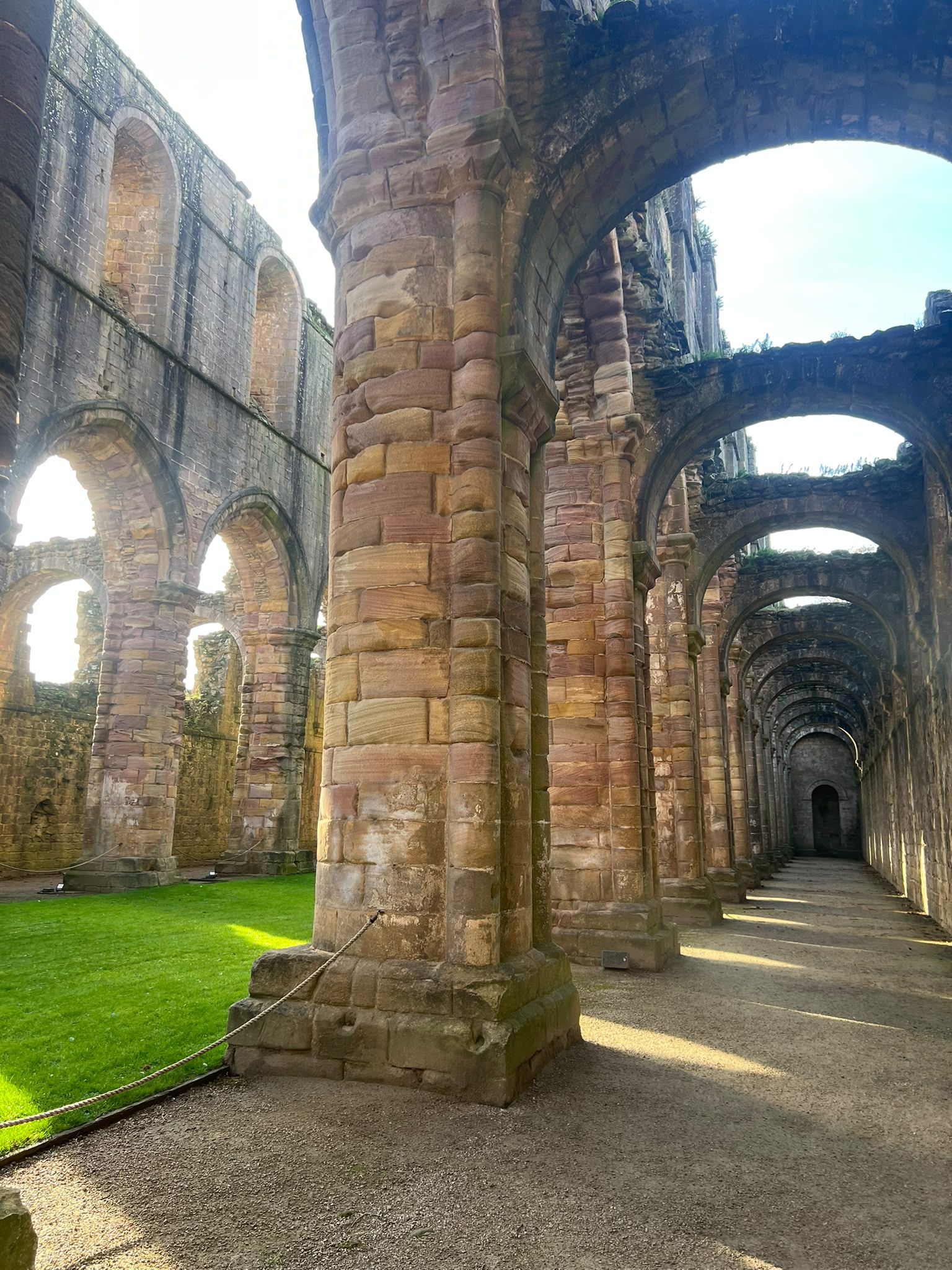
What’s left is enormous: a roofless church, a 160-foot tower, and a long vaulted cellar called the cellarium that you can walk the length of. Beside it is Studley Royal, a water garden begun in 1718, and the two together have been a UNESCO World Heritage Site since 1986. Allow three hours at the very least.
On selected evenings in October the National Trust lights up the ruins after dark, with live music in the cellarium. It’s called Fountains by Floodlight, and it sells out, so book early.
I’ve written a full guide: Fountains Abbey, the ruins, Studley Royal and Fountains by Floodlight.
- Where: Fountains, Ripon HG4 3DY. 12 miles north of Harrogate.
- Run by: the National Trust. Ticketed; members free.
Rievaulx Abbey, near Helmsley
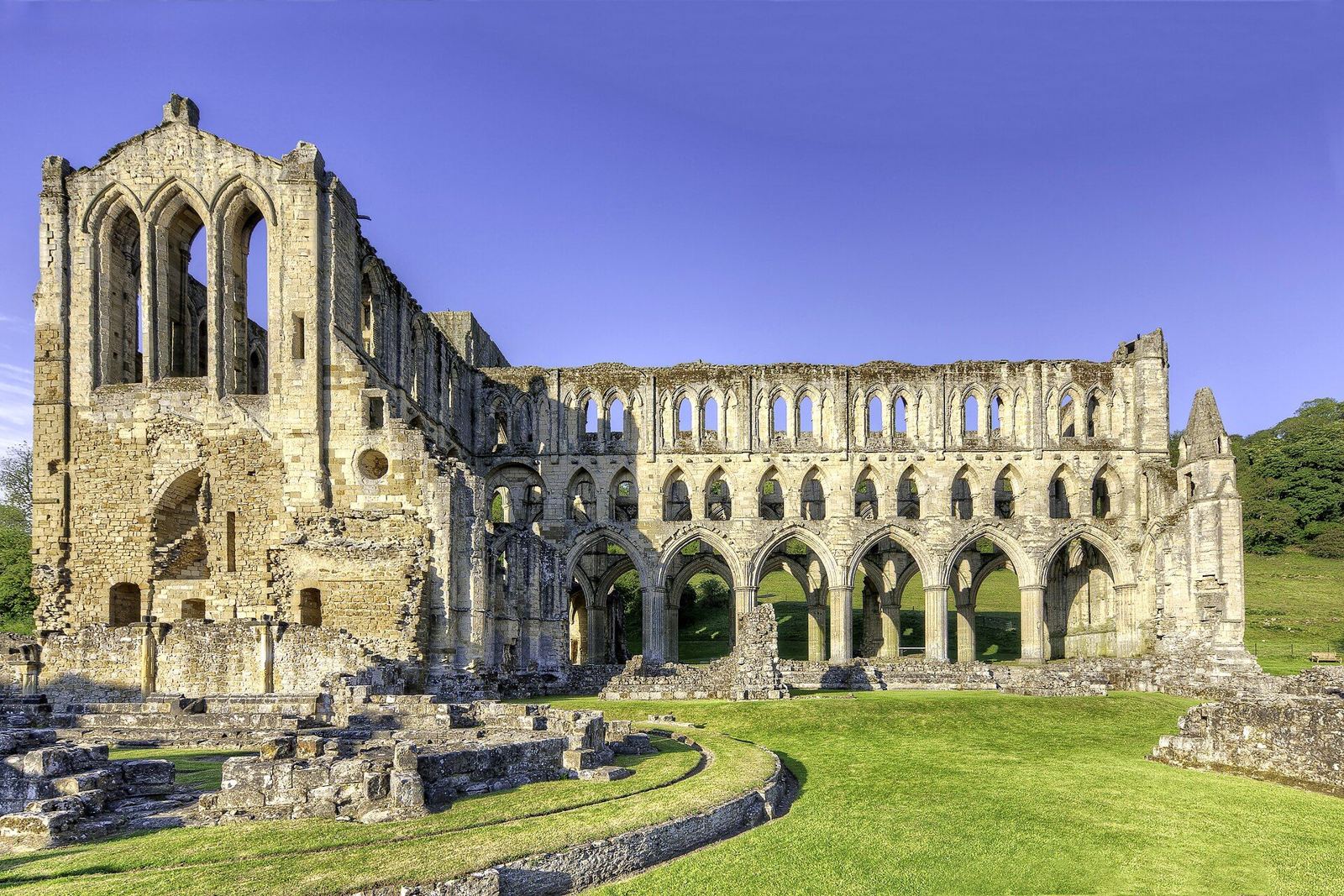
Photo: Antony McCallum (WyrdLight), CC BY-SA 3.0

Rievaulx (say it “REE-voh”) was founded in March 1132, on land given by Walter Espec, the lord of nearby Helmsley. English Heritage calls it the first Cistercian abbey in the north of England, which makes it the older sibling of Fountains by a few months.
Its best-known abbot was Aelred, who arrived in 1134, was elected abbot in 1147 and died here in 1167. He wrote a book called Spiritual Friendship, and under him the place was huge: 140 monks and about 500 lay brothers. When it was shut down on 3 December 1538 there were 23 monks left. The new owner, the Earl of Rutland, pulled down the buildings and ran an ironworks in the ruins.
What I’d go for is the setting. The abbey sits in a narrow valley with woods on both sides, and the church still stands three storeys high. Dorothy Wordsworth stopped here on 15 July 1802:
I could have stayed in this solemn quiet spot till evening, without a thought of moving, but William was waiting for me, so in a quarter of an hour I went away.
— Dorothy Wordsworth, journal, 15 July 1802, Project Gutenberg
(Fifteen minutes. Don’t do what William made her do. Give it two hours.)
There’s a museum on site with objects the monks used, and a café. Above the abbey is Rievaulx Terrace, a long grass walk laid out in the 1750s so that guests could look down on the ruin. It’s a separate National Trust site.
- Where: Rievaulx, near Helmsley, YO62 5LB. Helmsley Castle is about two and a half miles away.
- Run by: English Heritage. Ticketed; it’s cheaper if you book before the day. As of November 2026 it’s open Wednesday to Sunday, 10am to 4pm.
- More: our guide to the North York Moors covers Rievaulx, Byland and Helmsley together.
Byland Abbey, near Coxwold
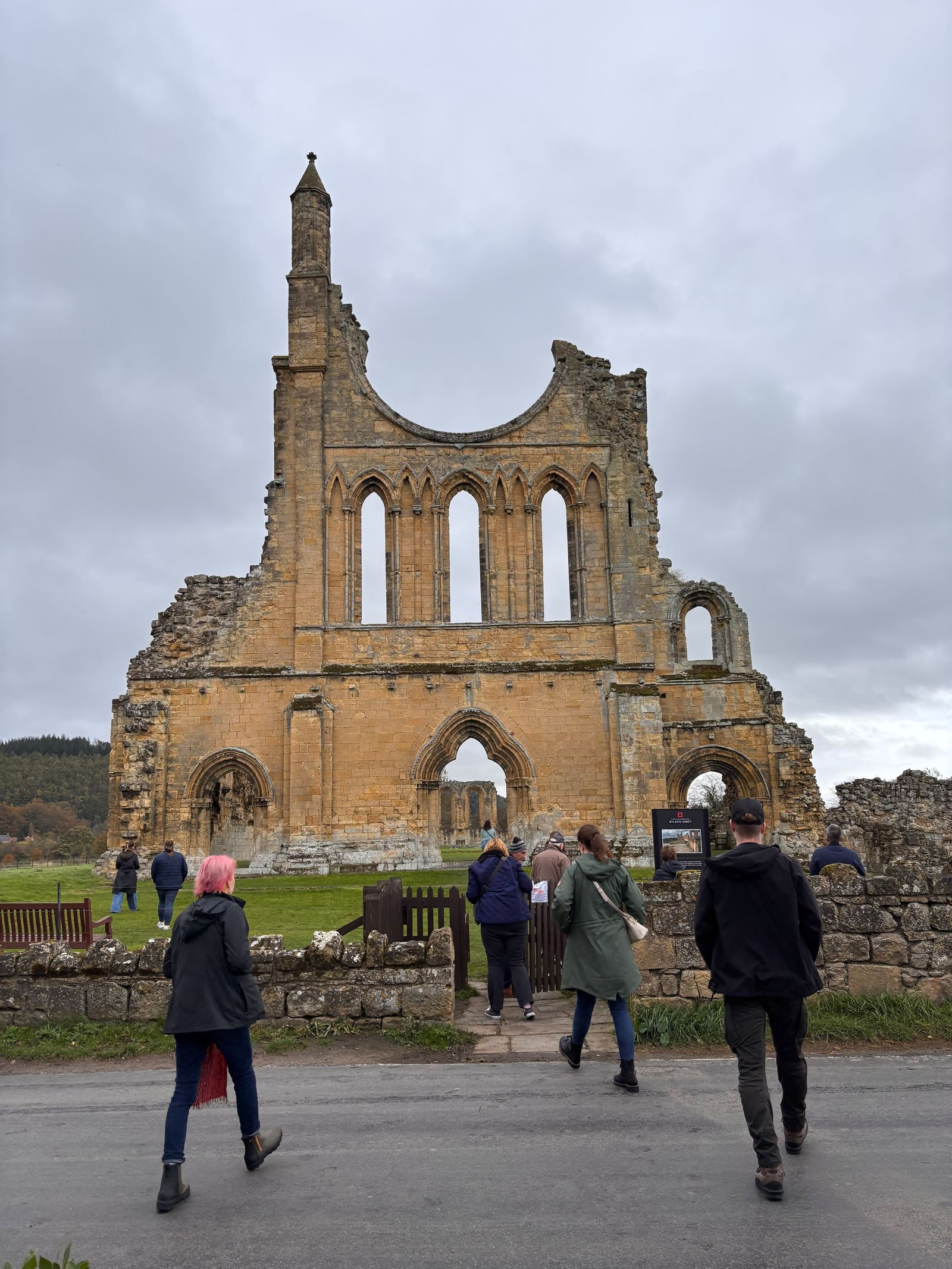
Byland is 15 minutes’ drive from Helmsley and is usually much quieter than Rievaulx. That’s the reason to go. I stopped here in October 2026, and it’s on our trip.
Its monks took 43 years to find a home. They started in Cumbria in 1134, were driven out by a Scottish army, tried a site that turned out to be too close to Rievaulx, moved again, and finally settled here by 1177. The west front still holds the lower half of an enormous round window. English Heritage says the design inspired the rose window at York Minster.
Look down as well as up. Byland has some of its medieval floor tiles still in place. One warning: the tiles are covered over in winter to protect them, usually from autumn to spring, so if they’re what you’re coming for, come in summer.
- Where: Byland, Coxwold, YO61 4BD.
- Run by: English Heritage. Free. The grounds are open in daylight hours all year. The small museum opens Friday to Monday, noon to 4pm, from April to the end of October, and there are free tours at 2pm on Saturdays and Sundays.
Whitby Abbey, on the coast
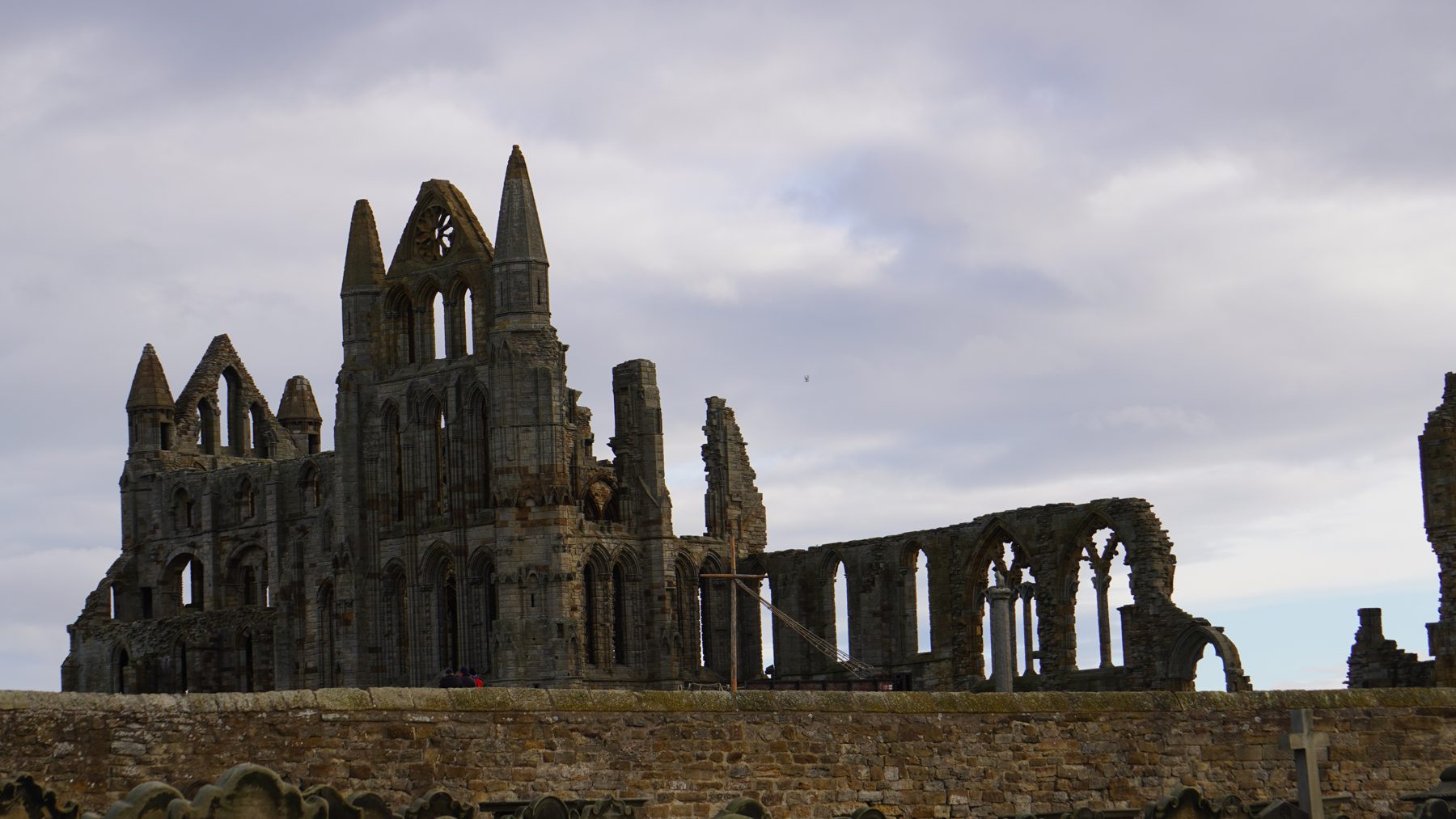
Whitby is the oldest of them all and the one with the best story. St Hild founded a monastery on this cliff in about 657. In 664 the leaders of the English church met here to decide how to date Easter. And a cowherd at the monastery called Caedmon became the first poet in the English language whose name we know.
The ruin you see is later: the church of the abbey that was refounded after the Norman Conquest and closed in 1539. It lost more in December 1914, when German warships shelled the town.
Then there’s Dracula. Bram Stoker stayed in Whitby in 1890, and when he wrote the novel he brought the Count ashore here, below the abbey. You climb 199 steps from the harbor to reach it.
Full guide: Whitby Abbey and Dracula.
- Where: Abbey Lane, Whitby, YO22 4JT.
- Run by: English Heritage. Ticketed. As of November 2026 it’s open Wednesday to Sunday, 10am to 4pm.
Kirkstall Abbey, Leeds
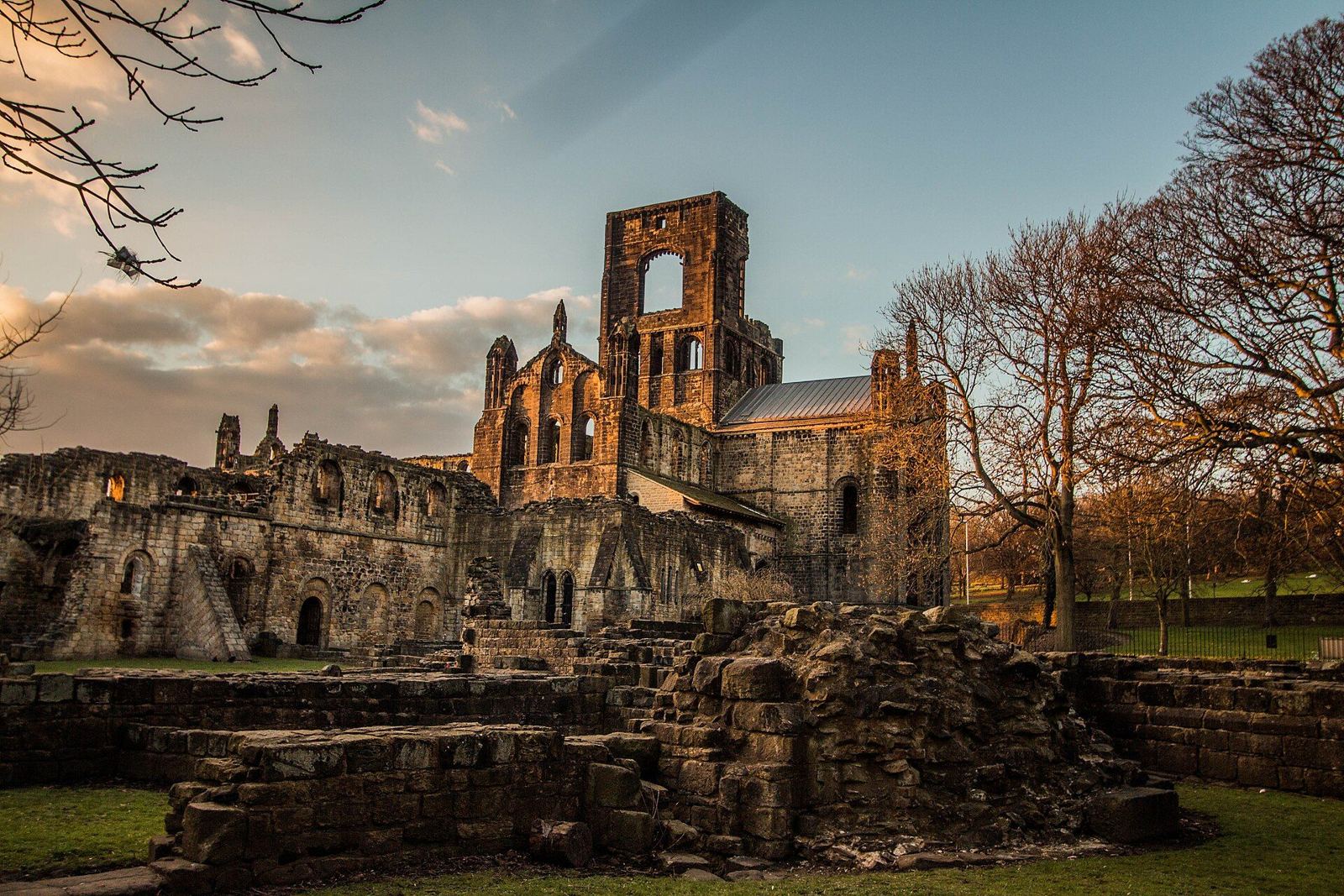
Photo: Minda, CC BY-SA 3.0

Kirkstall is the city abbey. It stands in a public park beside the River Aire, north-west of the center of Leeds, with buses going past the gate.
Monks from Fountains settled here in about 1152, on land Henry de Lacy helped them get, and most of the building was finished within 30 years. It surrendered to the king’s men on 22 November 1539. In 1889 Colonel John North bought it and gave it to the city, and it opened to the public in 1895.
Turner painted it. So did Thomas Girtin and John Sell Cotman. Across the road, the abbey’s old gatehouse is now the Abbey House Museum.
- Where: Abbey Road, Kirkstall, Leeds LS5 3EH. Buses 33, 34 and 757 from Leeds stop outside. Kirkstall Forge and Headingley stations are each a mile away.
- Run by: Leeds Museums and Galleries. You give what you can; the suggested donation is £5. Closed Mondays. Tuesday to Sunday, 10am to 4pm from October to March and 10am to 4.30pm from April to September.
Jervaulx Abbey, Wensleydale
Jervaulx is the least formal abbey on this list. It’s privately owned. The Burdon family bought it in 1971 and still look after it. There’s no ticket desk: you put a contribution in an honesty box and wander.
The monks started out in 1145 at Fors, higher up the dale, and moved down here in 1156. Wensleydale cheese began with them, and it was originally made with ewes’ milk. The last abbot, Adam Sedbergh, joined the Pilgrimage of Grace and was hanged at Tyburn in June 1537. The abbey was forfeited to the king that year.
If the name sounds familiar, you may have met it in Walter Scott’s Ivanhoe (1819), where Prior Aymer comes from “Jorvaulx”.
- Where: Jervaulx, Ripon HG4 4PH. 14 miles north-west of Ripon.
- Run by: the owners. Honesty box. Open dawn till dusk, but it sometimes closes for weddings, and the dates are listed on the abbey’s website. The tearoom has closed for good, so bring a flask.
Easby Abbey, Richmond
Easby is on the bank of the River Swale, just outside Richmond. It was founded in 1152 by Roald, the constable of Richmond Castle, for Premonstratensian canons. They wore white and were known as the White Canons. They were priests who lived together under a rule, not monks shut away from the world.
The dining hall (the refectory), the gatehouse and the canons’ dormitory are all still standing. Don’t miss the little parish church of St Agatha, inside the abbey grounds and still in use. It has wall paintings from the 1200s.
The best way to arrive is on foot. A riverside path runs from Richmond Castle to the abbey, about a mile and a half, and takes around 35 minutes.
- Where: Easby, Richmond, DL10 7EU.
- Run by: English Heritage. Free. Open daily, 10am to 4pm in winter and 10am to 6pm from the end of March to October.
Roche Abbey, South Yorkshire
Roche is in a quiet valley near Maltby, a long way south of the others. It was founded in 1147 by Cistercian monks from Northumberland and closed on 23 June 1538.
Two things make it different. The first is the best eyewitness account we have of an abbey being stripped. A local priest, Michael Sherbrook, wrote down what his uncle had seen here: neighbors pulling the place apart, with the church “the first thing that was spoiled”. The second is that in the 1700s the landscape designer Capability Brown tidied the ruins into a view for the Earl of Scarbrough’s park, burying some of it under turf. The walls of the two transepts still stand to their full height, and English Heritage says the site has one of the most complete ground plans of any Cistercian monastery in England.
- Where: Maltby, Rotherham, S66 8NW.
- Run by: English Heritage. Free. Closed until spring 2027, so check before you go.
Selby Abbey
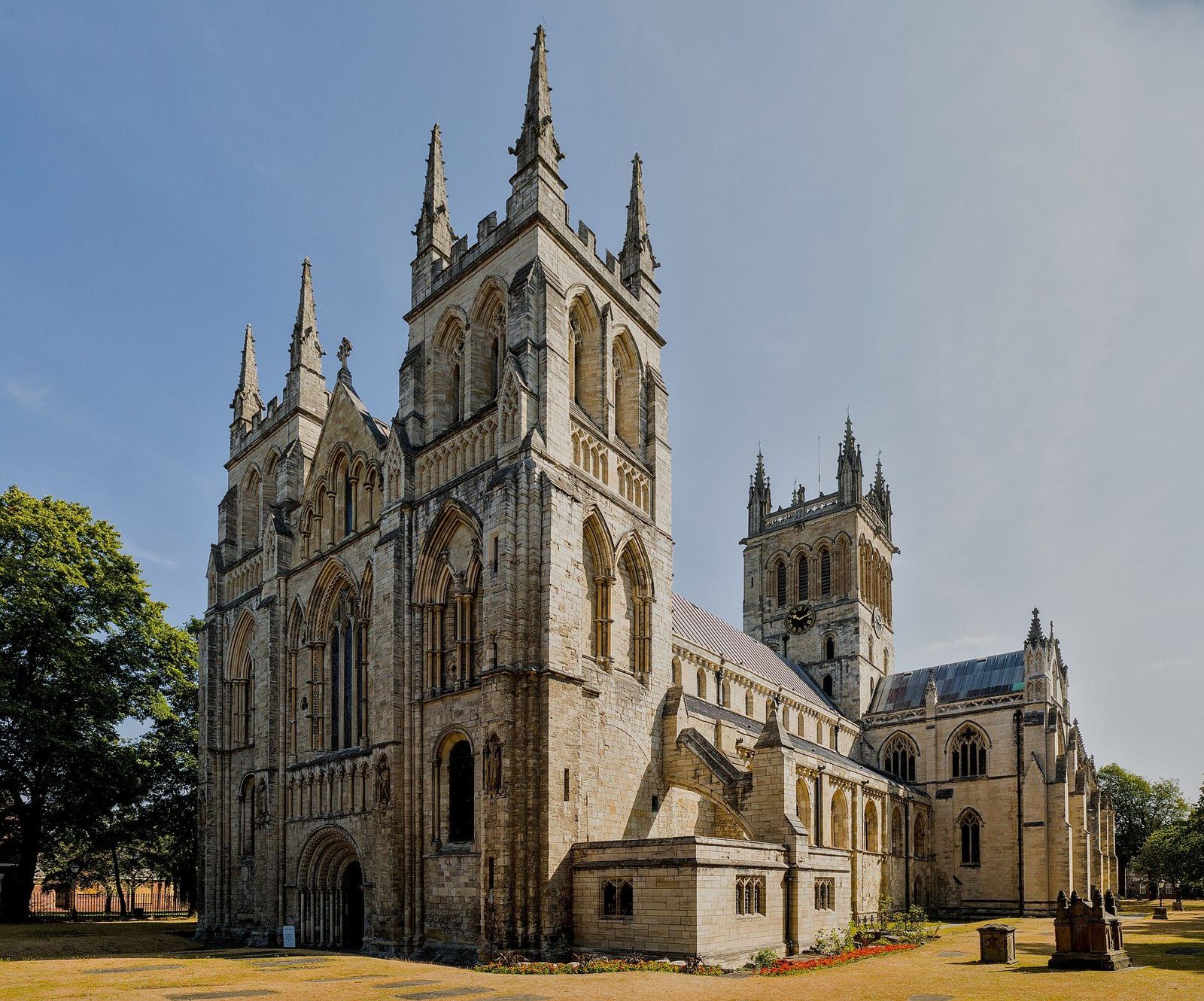
Photo: Benjamin Smith, CC BY-SA 4.0

Selby isn’t a ruin. It’s a full-size abbey church with its roof on, in the middle of a market town, and after a day of broken arches it’s a useful reminder of what the others looked like.
Benedict of Auxerre founded it in 1069, three years after the Conquest. It surrendered on 6 December 1539, stood unused for a while, and became the town’s parish church in 1618. It has had some bad luck since: the central tower fell down in 1690, and a fire in October 1906 destroyed the choir roof. It reopened in 1909.
Americans should look for the Washington Window. It shows the coat of arms of George Washington’s ancestors, with stars and stripes, long before there was a United States to put them on a flag.
- Where: in the center of Selby, south of York.
- Run by: the Church of England parish. Free; donations welcome. Open to visitors 10am to 4pm daily. It’s a working church, so services come first.
St Mary’s Abbey, York
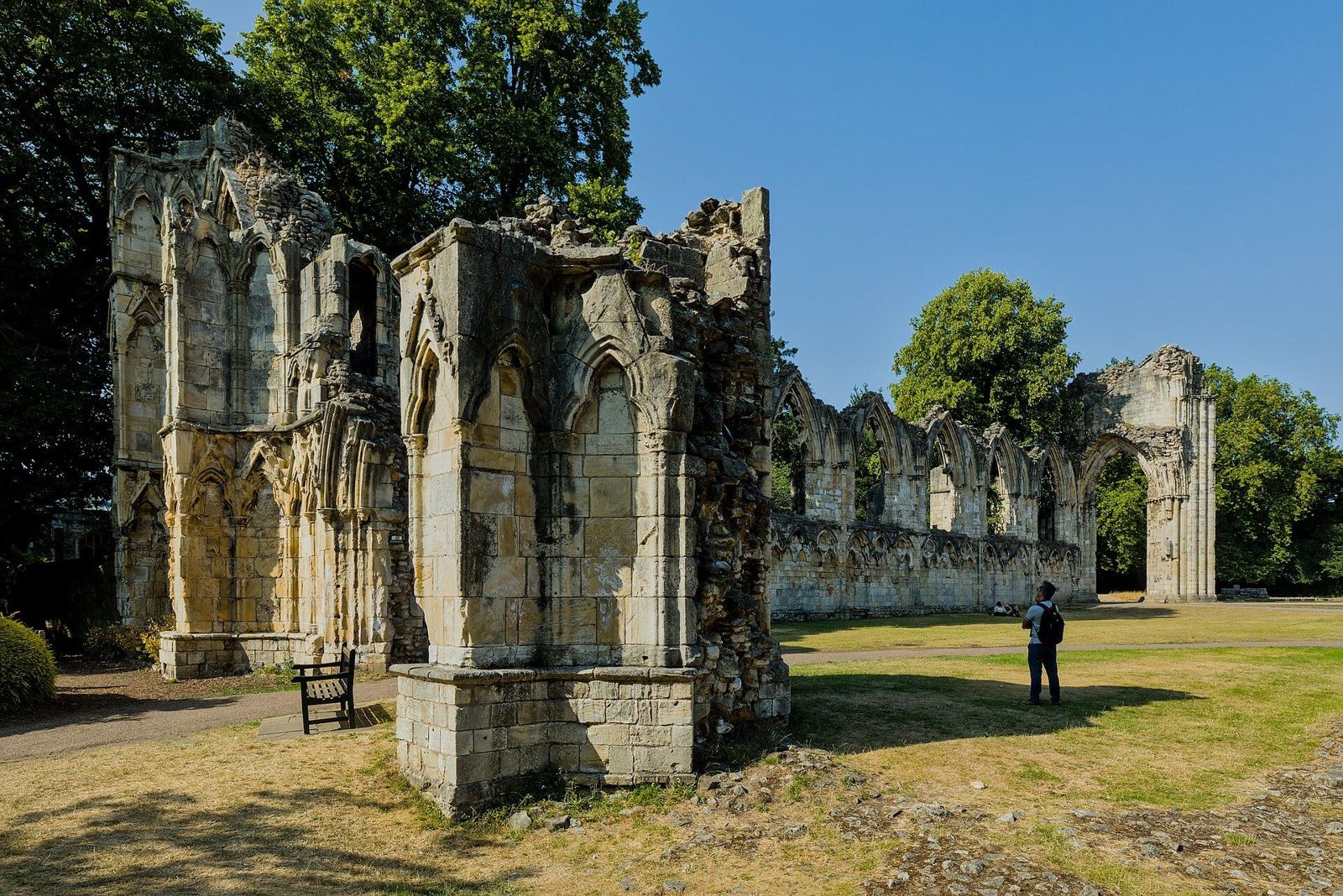
Photo: Benjamin Smith, CC BY-SA 4.0

This is the easiest abbey in Yorkshire to visit, because you’ll probably walk past it anyway. The ruins of St Mary’s are in the Museum Gardens, in the middle of the city.
It was founded in 1088 and became one of the richest and most powerful Benedictine monasteries in England. Too comfortable, some of its monks thought. In 1132 a group of them left after a dispute over how strictly they should live, and founded Fountains. St Mary’s surrendered on 26 November 1539, with 50 monks.
One long wall of the church is still standing, with its row of pointed arches. The abbey’s outer walls, built in the 1260s, are described by the Museum Gardens as the most complete set of abbey walls in the country. And the abbot’s house survived by becoming something else: it’s now King’s Manor.
- Where: Museum Gardens, York. Free. The gardens list their hours as 9am to 6pm, but check the page for changes.
- More: our guide to York.
The priories people call abbeys
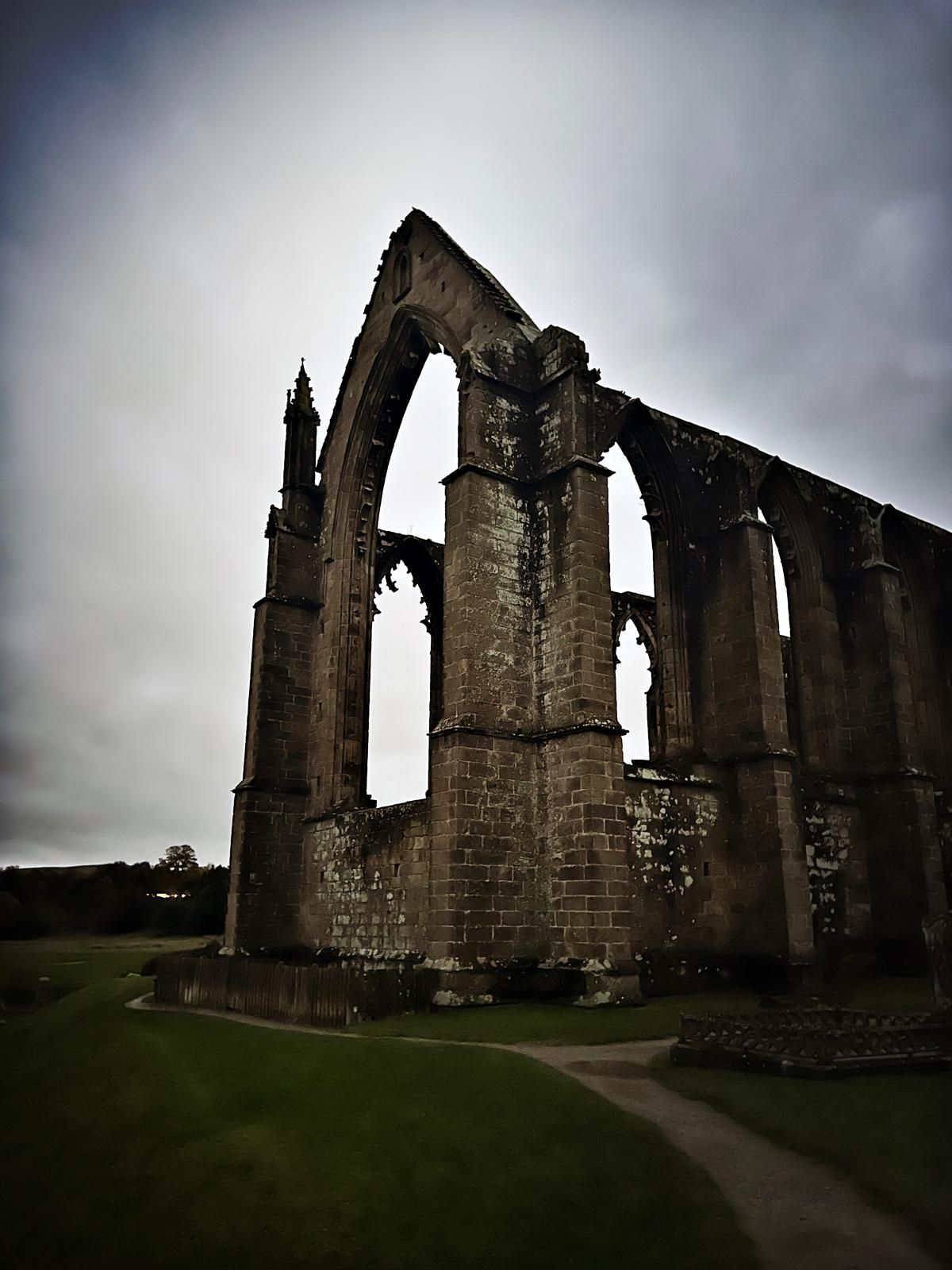
Bolton Abbey, Wharfedale. The village and the estate are called Bolton Abbey, but the church was Bolton Priory, founded here in 1154 for Augustinian canons. The east end is a ruin and the nave is still the parish church, so it’s half and half. It’s the prettiest setting on this page: a bend in the River Wharfe, 62 stepping stones, and woods upstream. Wordsworth set a poem here and Turner painted it. You pay to park on the estate. I was there in October 2026, and it’s on our trip.
Kirkham Priory, near Malton. An Augustinian priory on the River Derwent, founded in the 1120s by Walter Espec, who went on to give the land for Rievaulx. Go for the gatehouse, which is covered in carved shields and has St George and the dragon on one side and David and Goliath on the other. In the Second World War troops trained here for D-Day, and Winston Churchill and King George VI came in secret to watch. English Heritage; free; open in daylight hours. Whitwell on the Hill, YO60 7JS. It’s a short drive from Castle Howard.
Mount Grace Priory, near Northallerton. Founded in 1398 for Carthusians, who didn’t live like other monks. Each had his own small house and garden around a big cloister and spent most of his life alone in it. There were 17 of these cells for the monks and 6 more for lay brothers, and Mount Grace is the best preserved of the nine Carthusian houses that existed in England. There’s also a 17th-century manor house, later done up in Arts and Crafts style, with terraced gardens. Owned by the National Trust and run by English Heritage; ticketed. As of November 2026 it’s open Saturdays and Sundays only, 10am to 4pm. Staddlebridge, DL6 3JG.
Guisborough Priory. Founded in 1119 by Robert de Brus, an ancestor of Robert the Bruce. One thing survives, and it’s worth the stop: the east end of the church, a single gable with a great empty window, standing on its own. The ruins are open between March and November.
Monk Bretton Priory, Barnsley. Founded in 1154 and closed on 30 November 1538. It’s in the care of English Heritage, in the village of Lundwood.
Abbeys where monks and nuns still live
Not every abbey in Yorkshire is a ruin.
Ampleforth Abbey is a working Benedictine monastery near Helmsley. The monks came here in 1802. Their abbey church was designed by Giles Gilbert Scott and built in two stages, in the 1920s and again from 1958 to 1961. In 2024 there were 41 monks.
Stanbrook Abbey, at Wass, close to Byland, is a community of Benedictine nuns. It was founded at Cambrai, in France, in 1625.
Both are places where people live and pray, so check what’s open to visitors before you turn up.
The ones where almost nothing is left
For completeness, and so you don’t drive an hour to look at a field:
- Meaux Abbey, near Beverley. Founded in 1151. Only earthworks are visible; the stone went to build defenses for Hull. Its monks left a detailed chronicle, which is why historians know it well and visitors don’t.
- Coverham Abbey, in Coverdale. Private, and usually not open. You can see some of it from the churchyard of Holy Trinity, Coverham.
- Beauchief Abbey, Sheffield. The west tower survives, attached to a small chapel that’s still used as a church.
And two that used to be in Yorkshire, before the county boundaries moved:
- Sawley Abbey, founded in 1147, is now in Lancashire.
- Egglestone Abbey, a mile and a half south-east of Barnard Castle, is now in County Durham. It’s free.
How to group them into days
These are the pairings that make sense on the map. A car is the only practical way to do most of them.
| Base | One day | What you get |
|---|---|---|
| Ripon or Harrogate | Fountains, then Jervaulx | The grandest ruin and the wildest one |
| Helmsley | Rievaulx and Byland | Two Cistercian abbeys 15 minutes apart, one busy, one quiet |
| York, no car | St Mary’s, then the train to Selby | A ruin and a complete abbey church |
| York, with a car | Kirkham Priory and Castle Howard | A gatehouse and a great house, close together |
| Richmond | Easby on foot along the river | An abbey you walk to |
| Whitby | Whitby Abbey and the town | A full day on its own |
Tips for visiting Yorkshire’s abbeys
- Check the days, not only the hours. As of November 2026, Rievaulx and Whitby are closed on Mondays and Tuesdays, Mount Grace opens at weekends only, and Roche is shut until spring 2027.
- Join if you’re doing three or more. English Heritage runs Rievaulx, Whitby and Mount Grace, and the National Trust runs Fountains. If you’re paying for several, a membership or visitor pass can cost less than the tickets. Do the math before you go.
- Go early or late. Ruins look best in low light.
- Wear proper shoes. It’s grass, gravel and uneven stone everywhere. It will be wet.
- Don’t count on a café at the small ones. Jervaulx’s tearoom has closed, and the free sites are mostly unstaffed. Bring something with you.
The abbeys on our trip
Our October 2027 Yorkshire trip is based in Ripon, across the road from Ripon Cathedral, which puts Fountains fifteen minutes from the door. We go there twice: on the Sunday morning in daylight, and again on the Friday evening for Fountains by Floodlight. On the Monday we stop at Byland on the way across the moors, and spend the afternoon in Whitby, abbey included. On the Wednesday we call at Bolton Abbey on the way home from Haworth and Skipton Castle. And the day in York leaves you free to walk through the Museum Gardens and see where the monks of Fountains started out.
Buy each book from Bookshop.org, which supports independent bookshops and pays us a small commission, or from Amazon. As an Amazon Associate I earn from qualifying purchases. About our affiliate links.
Yorkshire's abbeys: what else was happening
Almost all of these abbeys were founded within about a hundred years of the Norman Conquest, and almost all of them closed in the same four years, 1536 to 1540. The ruins then sat for two and a half centuries until painters and poets started coming to look at them.
- Anglo-Saxon 600–1066
- Middle Ages 1066–1485
- Tudor 1485–1603
- Georgian 1714–1837
- Victorian 1837–1901
The story Britain The wider world Other writers
- 657 The story Hild founds a monastery on the cliff at Whitby.
- 664 Britain The Synod of Whitby settles how the English church dates Easter.
- 1066 Britain The Norman Conquest.
- 1069 The story Benedict of Auxerre founds Selby Abbey.
- 1088 The story St Mary's Abbey is founded in York. It becomes the richest Benedictine house in the north.
- 1132 The story Rievaulx is founded in March, the first Cistercian abbey in the north. Later that year thirteen monks walk out of St Mary's in York and start Fountains.
- 1147 The story Aelred becomes abbot of Rievaulx. Roche Abbey is founded.
- 1152 The story Monks from Fountains settle at Kirkstall; canons settle at Easby, near Richmond.
- 1156 The story The monks of Fors move down the valley to Jervaulx.
- 1170 Britain Thomas Becket is murdered in Canterbury Cathedral.
- 1177 The story After three moves, the monks of Byland have settled into their abbey.
- 1215 Britain King John seals Magna Carta.
- 1348 Britain The Black Death reaches England.
- 1398 The story Mount Grace Priory is founded for Carthusian monks, who live alone in separate cells.
- 1476 Other writers William Caxton sets up England's first printing press, at Westminster.
- 1492 The wider world Columbus reaches the Caribbean.
- 1536 Britain Henry VIII closes the smaller monasteries. The north rises against it in the Pilgrimage of Grace.
- 1537 The story Adam Sedbergh, the last abbot of Jervaulx, is hanged at Tyburn for his part in the rising.
- 1538 The story Roche closes on 23 June, Byland on 30 November, Rievaulx on 3 December.
- 1539 The story Fountains, Kirkstall, St Mary's and Selby all surrender in November and December.
- 1618 The story Selby Abbey becomes the town's parish church, which is why it still has a roof.
- 1758 The story Rievaulx Terrace is laid out so that guests can look down on the ruin.
- 1776 The wider world The American Declaration of Independence.
- 1802 Other writers Dorothy Wordsworth stops at Rievaulx on 15 July and writes about it in her journal.
- 1809 Other writers J. M. W. Turner paints Bolton Abbey.
- 1815 Other writers Wordsworth publishes The White Doe of Rylstone, set at Bolton Priory.
- 1819 Other writers Walter Scott's Ivanhoe gives Prior Aymer an address: Jorvaulx.
- 1889 The story Colonel John North buys Kirkstall Abbey and gives it to the city of Leeds.
- 1897 Other writers Bram Stoker publishes Dracula (or Amazon), with Whitby Abbey on the cliff above the action.
- 1906 The story Fire destroys the choir roof of Selby Abbey. It reopens in 1909.
- 1914 Britain German warships shell Whitby in December; the abbey is hit.
- 1986 The story Fountains Abbey and Studley Royal become a UNESCO World Heritage Site.
Questions people ask
How many abbeys are there in Yorkshire?
It depends on what you count. This guide covers ten abbeys you can visit, four priories that most visitors think of as abbeys (Bolton Abbey, Kirkham, Mount Grace and Guisborough), two living monasteries, and a handful where almost nothing is left. Many more religious houses once stood in the county and have vanished.
Which is the best abbey to visit in Yorkshire?
Fountains Abbey, near Ripon. It's the most complete of the ruins, it comes with the Studley Royal water garden, and together they're a UNESCO World Heritage Site. Rievaulx has the best setting, and Whitby has the most dramatic position, on a cliff above the sea.
Which Yorkshire abbeys are free to visit?
Byland, Easby, Kirkham Priory and Roche are free English Heritage sites, Selby Abbey is a working church with free entry, and the ruins of St Mary's Abbey are in York's Museum Gardens. Jervaulx asks for a contribution in an honesty box, and Kirkstall in Leeds suggests a £5 donation.
Why does Yorkshire have so many ruined abbeys?
In the 1100s landowners gave the new monastic orders, especially the Cistercians, large tracts of quiet valley land in Yorkshire, and the abbeys grew rich on it. Henry VIII closed every one of them between 1536 and 1540. The roofs were stripped for lead and the stone was carted away, but many were too remote to disappear entirely.
What is the difference between an abbey and a priory?
An abbey is a monastery led by an abbot; a priory is led by a prior and was usually smaller or answerable to another house. For a visitor the ruins look much the same. Bolton Abbey is the confusing one: the village and estate are called Bolton Abbey, but the church was always Bolton Priory.
Which abbeys are near York?
St Mary's Abbey is in the middle of York, in the Museum Gardens. Selby Abbey and Kirkham Priory are each a short drive away. Byland and Rievaulx are further north, on the edge of the North York Moors, and Fountains is north-west, beyond Ripon.
Which abbeys are near Harrogate and Ripon?
Fountains Abbey is 12 miles north of Harrogate, just outside Ripon. Jervaulx is 14 miles north-west of Ripon, and Bolton Abbey is west of Harrogate in the Dales.
What is the oldest abbey in Yorkshire?
Whitby. St Hild founded a monastery on the East Cliff in about 657. The ruin you see today is the later abbey church built on the same site after the Norman Conquest. Of the abbeys founded after 1066, Selby is the earliest, in 1069.
Read next
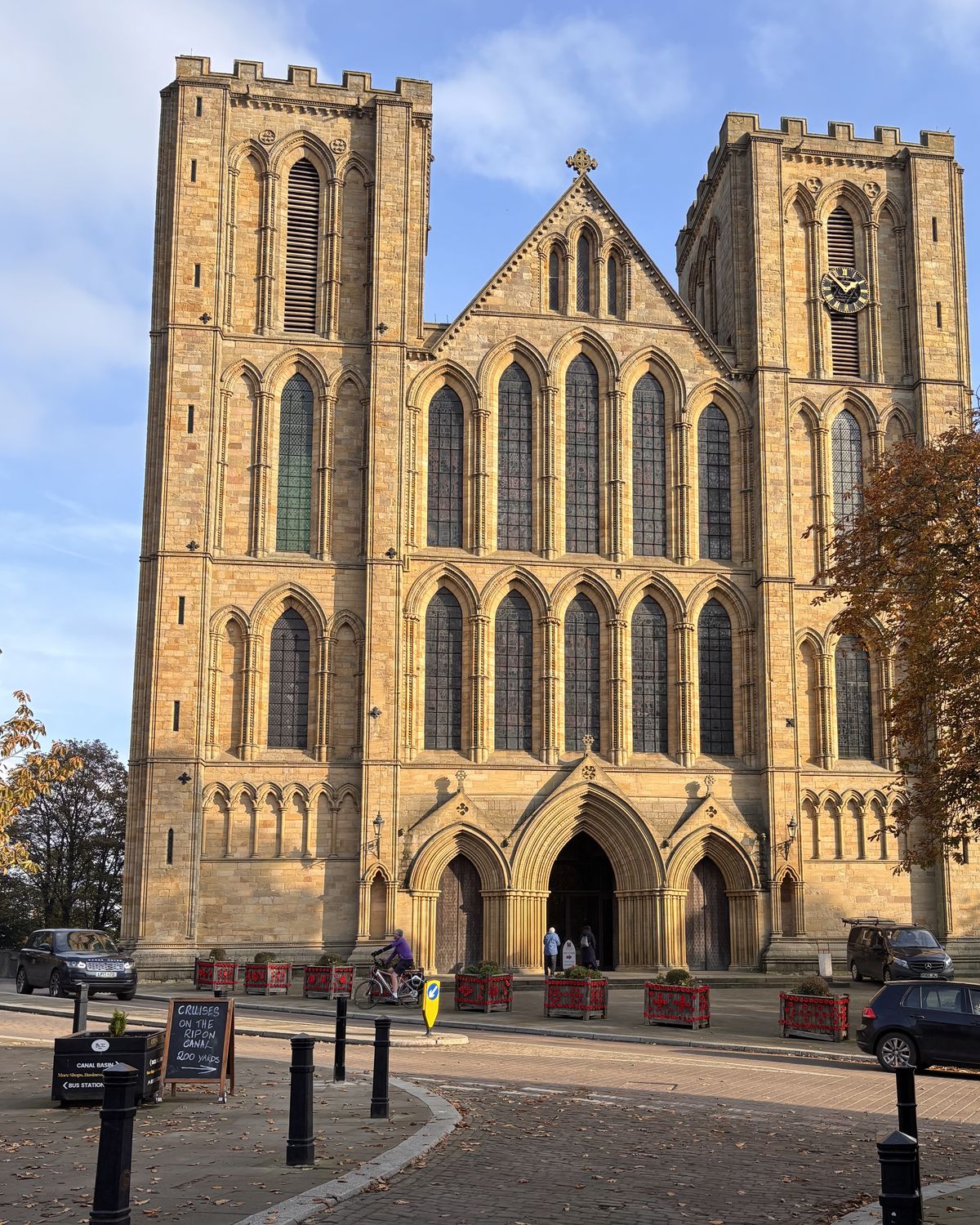 Yorkshire · RiponRipon CathedralA small city's cathedral with a crypt from the year 672 under the floor, medieval carvings that may have given Lewis Carroll his White Rabbit, and a 17th-century dean's house across the road that you can sleep in.
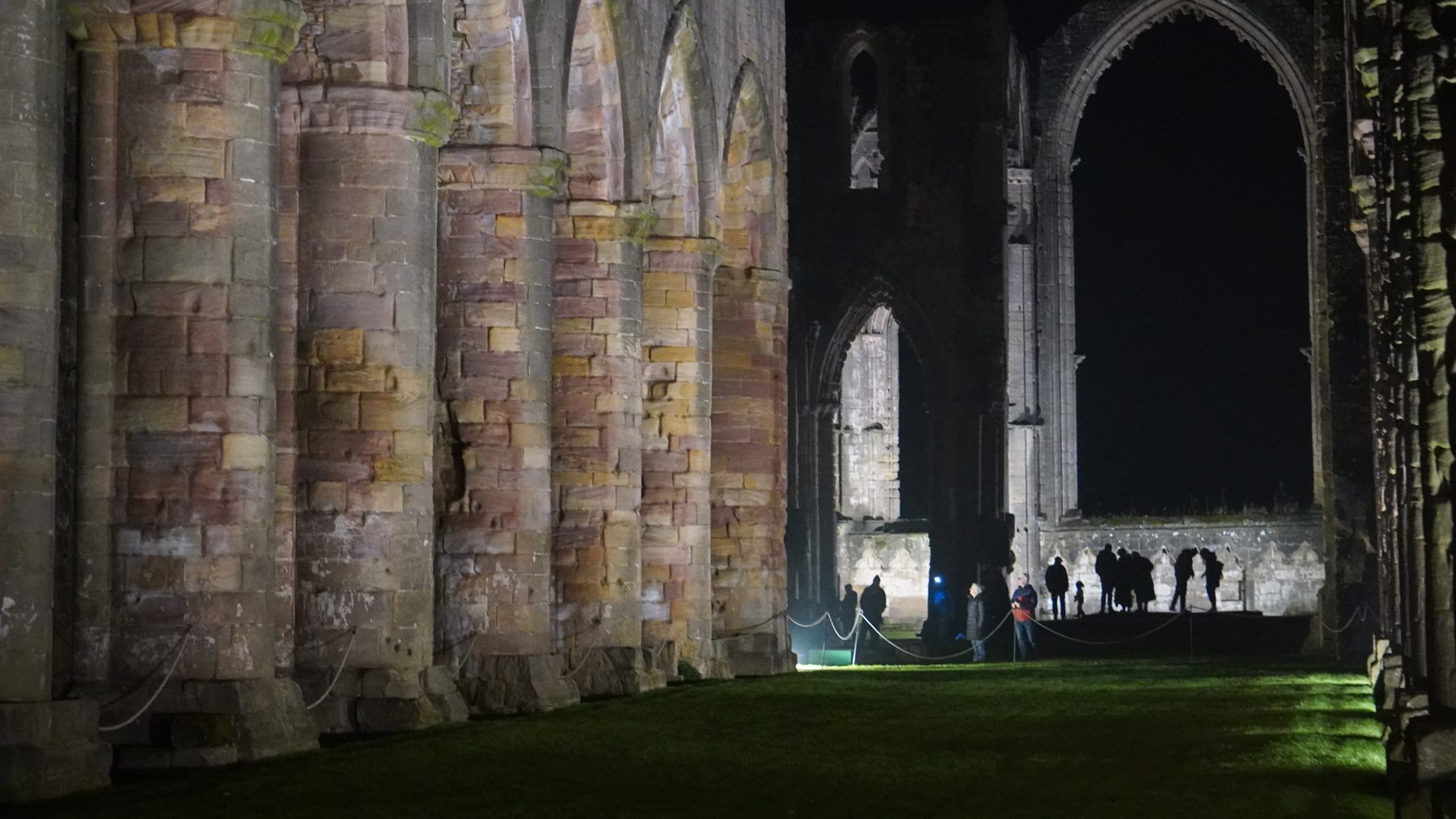 Yorkshire · Fountains AbbeyFountains Abbey, YorkshireEngland's great Cistercian ruin, near Ripon and Harrogate: how thirteen monks built the richest abbey in England, why Henry VIII shut it, and how to see it by day and by floodlight.
- Yorkshire · The moors and the coastNorth York Moors National ParkThe North York Moors are a high plateau of heather between the Vale of York and the North Sea. You can see the best of them in a day. Here's where to stop, and what you can skip.
- Yorkshire · The moors and the coastWhitby Abbey and DraculaA ruined abbey on a cliff, 199 steps up from the harbour, and one summer in 1890 when Bram Stoker walked into the town library and came out with the name Dracula. Here's what's real, what's in the book, and how to see both.
- Yorkshire · The DalesBolton Abbey to SkiptonA ruined priory on the River Wharfe and one of England's most complete medieval castles, a few miles apart at the bottom edge of the Yorkshire Dales. Easy to pair, and easy to pair with Haworth too.
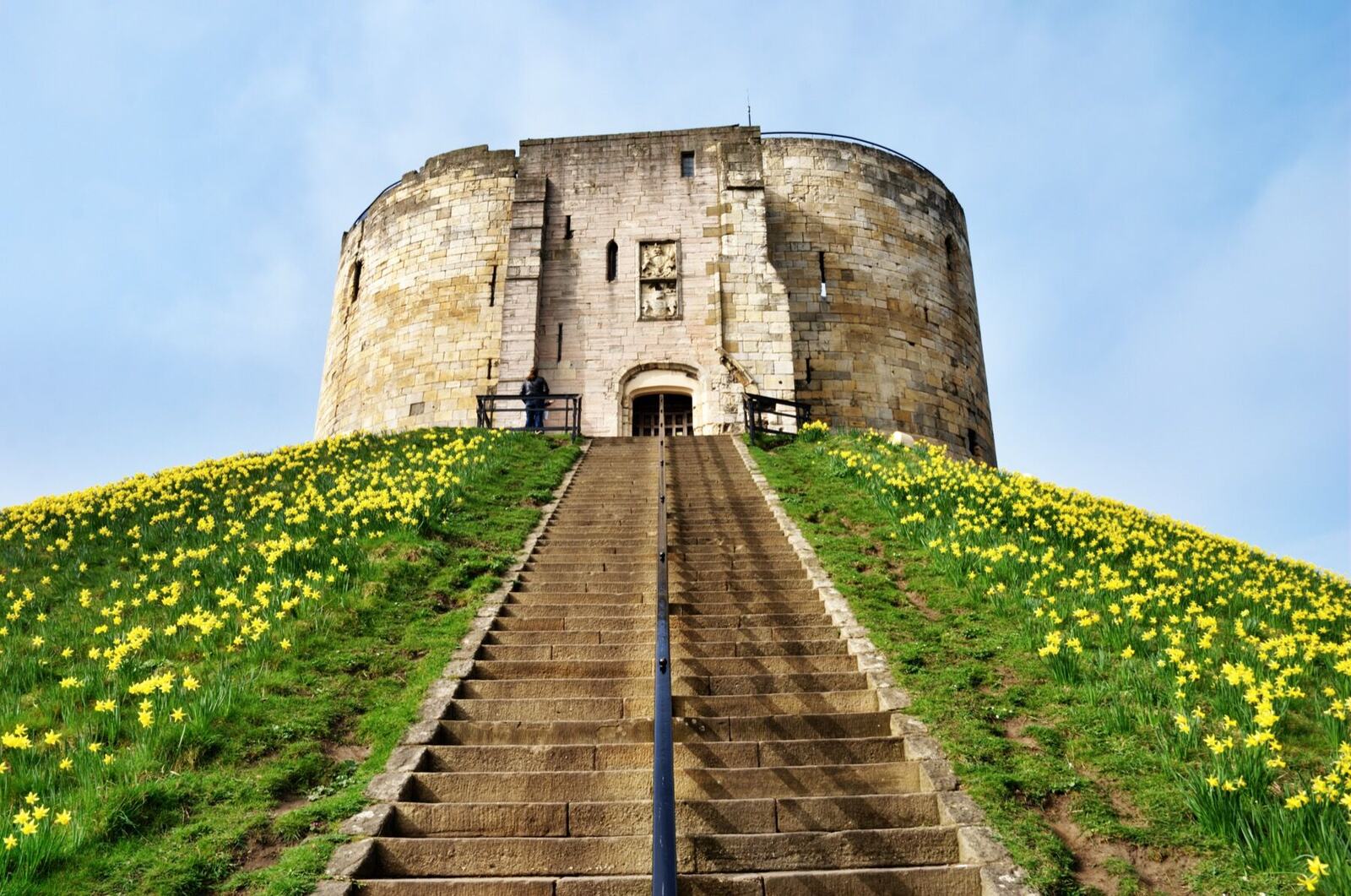 Yorkshire · YorkThings to do in York, UKWhat's worth your time in York, England, how long each place takes, and the people and books tied to the city. All of it on foot.
Sources
- National Trust: Fountains Abbey and Studley Royal Water Garden
- English Heritage: Rievaulx Abbey (opening days, museum, café)
- English Heritage: History of Rievaulx Abbey (March 1132, Walter Espec, Aelred, 650-strong community, 3 December 1538, ironworks, terrace)
- English Heritage: Byland Abbey (free, daylight hours, museum days, tiles covered in winter, York Minster rose window)
- English Heritage: Whitby Abbey
- English Heritage: Easby Abbey (free, hours, walk to Richmond Castle, wall paintings)
- English Heritage: Roche Abbey (free, closed until spring 2027, Capability Brown, ground plan)
- English Heritage: Kirkham Priory (free, gatehouse, D-Day training, Churchill and George VI)
- English Heritage: Mount Grace Priory (founded 1398, weekend opening, manor house and gardens)
- Leeds Museums and Galleries: Visit Kirkstall Abbey (hours, Give What You Can, buses, stations)
- Jervaulx Abbey (honesty box, dawn till dusk, closure dates)
- Selby Abbey: Visit (10am to 4pm daily, free entry)
- York Museum Gardens: St Mary's Abbey (1088, abbey walls, what survives)
- Bolton Abbey estate: Priory church and ruins
- Wikipedia: Rievaulx Abbey (twelve monks from Clairvaux, Earl of Rutland, Duncombe)
- Wikipedia: Aelred of Rievaulx (abbot 1147 to 1167, Spiritual Friendship)
- Wikipedia: Kirkstall Abbey (c. 1152, daughter of Fountains, 22 November 1539, Colonel North 1889, opened 1895, Turner, Girtin, Cotman)
- Wikipedia: Jervaulx Abbey (Fors 1145, move 1156, Adam Sedbergh, Burdon family, Wensleydale cheese, 14 miles from Ripon)
- Wikipedia: Ivanhoe (Prior Aymer of Jorvaulx; published December 1819)
- Wikipedia: Easby Abbey (1152, Roald, Premonstratensian, St Agatha's)
- Wikipedia: Roche Abbey (1147, 23 June 1538, Michael Sherbrook's account)
- Wikipedia: Selby Abbey (1069, 6 December 1539, parish church 1618, tower 1690, fire 1906, Washington window)
- Wikipedia: St Mary's Abbey, York (1132 dispute, 26 November 1539, King's Manor)
- Wikipedia: Kirkham Priory (1120s, Walter l'Espec, Augustinian)
- Wikipedia: Mount Grace Priory (Carthusian, 17 and 6 cells, National Trust and English Heritage)
- Wikipedia: Gisborough Priory (1119, Robert de Brus, east gable, open March to November)
- Wikipedia: Monk Bretton Priory (1154, Cluniac, 30 November 1538)
- Wikipedia: Ampleforth Abbey (1802, Giles Gilbert Scott church, 41 monks in 2024)
- Wikipedia: Meaux Abbey (1151, earthworks, stone used for Hull's defences, chronicle)
- Wikipedia: Coverham Abbey (private, seen from the churchyard)
- Wikipedia: Beauchief Abbey (Sheffield, west tower, still a church)
- Wikipedia: Sawley Abbey (1147, historically West Riding, now Lancashire)
- Wikipedia: Egglestone Abbey (historically North Riding, now County Durham, free)
- Wikipedia: List of monastic houses in North Yorkshire (Stanbrook Abbey, Wass)
- Wikipedia: Dissolution of the Monasteries (smaller houses 1536, Pilgrimage of Grace)
- Project Gutenberg: Journals of Dorothy Wordsworth, vol. 1 (Rievaulx, 15 July 1802)
- Photo: Rievaulx Abbey by Antony McCallum (WyrdLight), CC BY-SA 3.0
- Photo: Kirkstall Abbey in the late afternoon by Minda, CC BY-SA 3.0
- Photo: Selby Abbey by Benjamin Smith, CC BY-SA 4.0
- Photo: Remains of St Mary's Abbey church, York, by Benjamin Smith, CC BY-SA 4.0
Get the next Behind the Story guide.
New guides to the real places behind the books and films, by email. Free. Unsubscribe in one click.