Ireland · Irish Folklore
Fairies in Irish folklore: the Sídhe, fairy forts and changelings
Who the "good people" are, why farmers plough around fairy forts, and what happened when a road met a fairy bush in Clare.
- Irish names
- Aos sí or daoine sídhe, "people of the mounds"; also "the good people," "the gentry," "the Others"
- Who they are
- In folklore, the Tuatha Dé Danann living under the hills; or fallen angels, not good enough for heaven nor bad enough for hell
- Fairy forts
- Ringforts: over 40,000 identified in Ireland, most built about AD 540–990
- Fairy names for forts
- Ráth and lios (earth), caiseal and cathair (stone); "forth" in Lady Gregory
- Riskiest nights
- May Eve, Midsummer Eve and November Eve (Samhain)
- Best free reading
- Yeats, Fairy and Folk Tales of the Irish Peasantry (1888); Lady Gregory, Visions and Beliefs in the West of Ireland (1920)
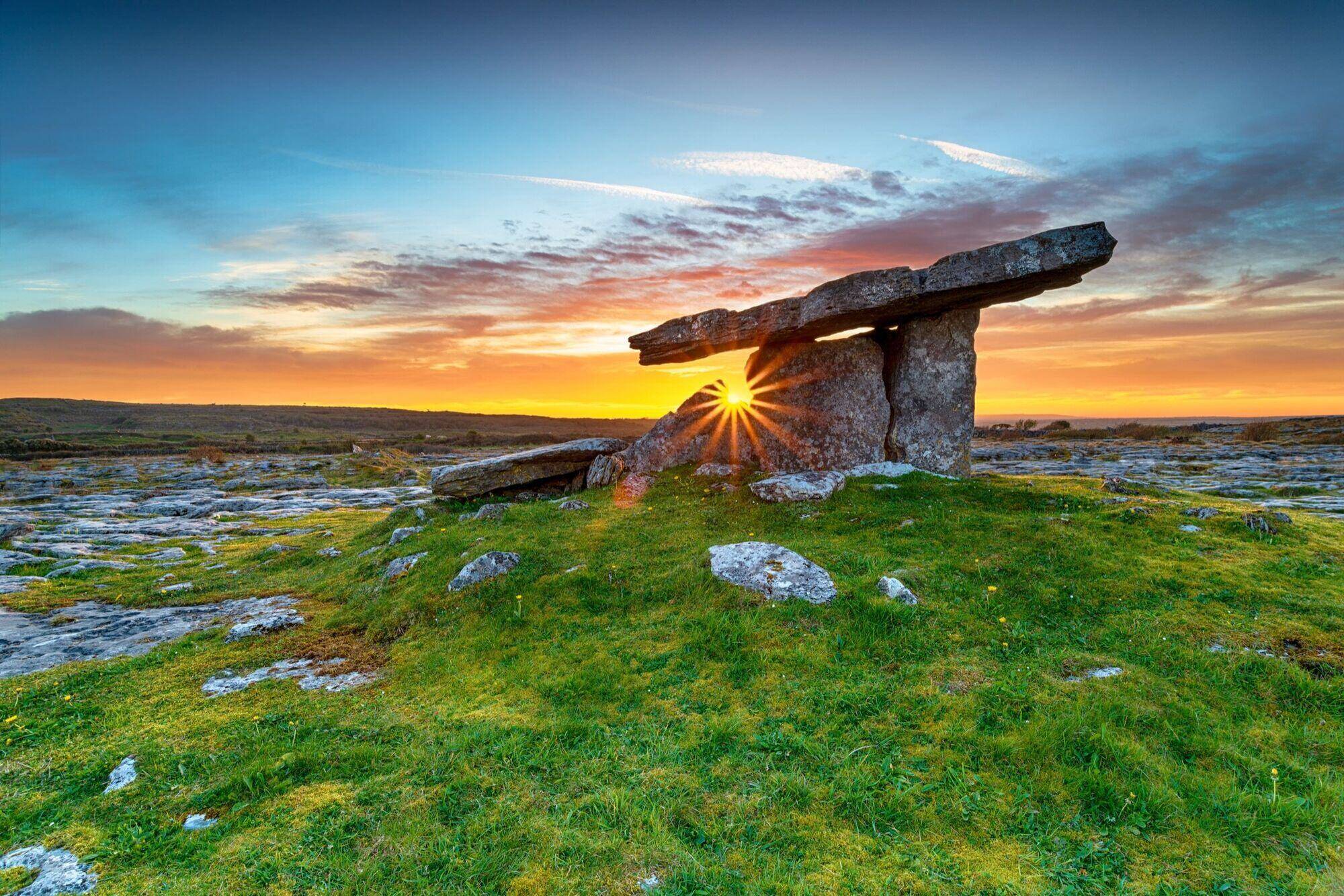
The short answer
In Irish folklore the fairies are the Sídhe (aos sí, daoine sídhe), a hidden people who live inside hills, mounds and old ringforts, and are often said to be the Tuatha Dé Danann, the old gods. People called them "the good people" or "the gentry" so as not to offend them. A fairy fort is an early medieval ringfort, a round earth or stone enclosure built around AD 540 to 990, that tradition says belongs to the fairies, which is why many farmers still won't dig or build on one.
Fairies in Irish folklore are not small winged creatures. Forget Tinker Bell. They’re a hidden people who live in the hills and old forts, ride out at night, steal brides and babies, and punish anyone who gets in their way. Country people didn’t like to name them, so they called them “the good people,” “the gentry,” or “the Others.” (Flattery, basically. You don’t insult the neighbors who can take your baby.) Belief in them was strong enough that in 1999 a new road scheme in County Clare kept a single fairy bush rather than clear it. Below: who the Irish fairies are, what a fairy fort is, changelings and banshees, Clare’s fairy stories, and where to read the collected folklore yourself. It’s part of our guide to Irish mythology.
Who are the fairies in Irish folklore?
The Irish name is aos sí or daoine sídhe, “the people of the mounds.” A sídh is a fairy hill or mound. Yeats, in Fairy and Folk Tales of the Irish Peasantry (1888), gives the two explanations country people and scholars offered:
- Fallen angels. “Fallen angels who were not good enough to be saved, nor bad enough to be lost,” he reports the country people saying.
- The old gods. “The gods of pagan Ireland,” say the antiquarians, “the Tuatha De Danan, who, when no longer worshipped and fed with offerings, dwindled away in the popular imagination.”
The second explanation goes back to the medieval myths. After the Milesians defeated the Tuatha Dé Danann, the gods went to live under the hills. In Lady Gregory’s retelling, Manannán mac Lir “put hidden walls about them, that no man could see through, but they themselves could see through them and pass through them.”
Either way, the rule was the same: be polite. Very polite. Yeats says the fairies are “so quickly offended that you must not speak much about them at all,” yet “so easily pleased, they will do their best to keep misfortune away from you, if you leave a little milk for them on the window-sill over night.”
Fairies in Irish mythology: trooping and solitary
Yeats sorted Irish fairies into two kinds, and most books since have followed him:
| Kind | Who | What they do |
|---|---|---|
| Trooping fairies | The Sídhe, the fairy host (slua sí), the fairy cavalcade | Live together in forts and hills; ride out in crowds; dance; take mortals away |
| Solitary fairies | Leprechaun, cluricaun, far darrig, púca, dullahan, banshee, leannán sí (fairy lover) | Live alone; play tricks, warn of death, or seek a mortal’s love |
The calendar mattered. Yeats notes that on Midsummer Eve the fairies are “at their gayest, and sometime steal away beautiful mortals to be their brides,” and that on November Eve (Samhain) they “dance with the ghosts, and the pooka is abroad.”
What is a fairy fort?
A fairy fort is a ringfort: a round enclosure made by an earth bank and ditch or by a dry-stone wall. Ireland has over 40,000 identified ringforts, and archaeologists think at least 50,000 were built. Most date to roughly AD 540–990, and the standard view is that “the vast bulk of them are the farm enclosures of the well-to-do of early medieval Ireland.” In other words, they were farmsteads. The fairies moved in after the people moved out.
Their Irish names survive in thousands of place names:
| Irish word | Meaning | In place names |
|---|---|---|
| Ráth | Earthen ringfort (strictly, the bank) | Rath-, -rath (Rathmines, Rathcroghan) |
| Lios | Earthen ringfort (strictly, the space inside) | Lis-, -lis (Lisdoonvarna) |
| Caiseal | Stone ringfort | Cashel |
| Cathair | Stone ringfort | Caher- (Caherconnell) |
| Dún | Any important stronghold | Dun-, Doon- |
Why are they called fairy forts?
As the farmsteads were abandoned and their banks grew over, people stopped seeing them as human places. They became the homes of the fairies, and the bushes growing on them, especially lone hawthorns, became fairy trees. In Lady Gregory’s books the word is “forth,” and the warnings are everywhere. An old soldier from Athenry told her:
There’s some places of their own we should never touch such as the forths; and if ever we cross their pathways we’re like to know it soon enough, for some ill turn they’ll do us, and then we must draw back out of their way.
Another of her speakers knew “another house in Clare built in a forth, a new one, shut up and the windows closed, for no one can live in it.” She also records the idea of a house being “in the way”: built across a fairy path, so nothing done in it ever prospers.
The Latoon fairy bush, County Clare
The best-known modern case is in Clare. In 1999, a whitethorn at Latoon, near where the Ennis and Newmarket-on-Fergus bypasses meet, stood on the line of the new road. The Clare storyteller and folklorist Eddie Lenihan campaigned to save it, describing it as “a meeting point for Munster fairies to battle with Connaught fairies.” In May 1999 the council agreed to keep the bush within the scheme. Lenihan said the road was bent around it; a former county engineer later said it was fenced in rather than rerouted. Someone tried to cut it down with a chainsaw in 2002, and it survived.
Can you visit a fairy fort in Ireland?
Yes, though many are on private farms, so ask before you climb a fence. (And don’t take a stone home as a souvenir. Archaeologists and fairies agree on that one.) Two that are open to visitors in the west:
- Caherconnell stone fort, the Burren, County Clare. A cathair about 42 meters across, built in the 10th or 11th century and used for centuries after, with ongoing excavations. It is on our trip.
- Dún Aonghasa, Inis Mór. Much older (its first phase is Late Bronze Age), on a cliff edge. Legend says the Fir Bolg built it.
See our guide to the Burren for more Burren sites.
Changelings in Irish folklore
A changeling is what the fairies leave behind when they take someone. Yeats puts it plainly: “Sometimes the fairies fancy mortals, and carry them away into their own country, leaving instead some sickly fairy child, or a log of wood so bewitched that it seems to be a mortal pining away, and dying, and being buried. Most commonly they steal children.”
This is where the folklore stops being charming. The tests for a changeling were often violent. Yeats repeats one from Lady Wilde: lay the child on the fire, and if it is a changeling “it will rush up the chimney with a cry.” The belief had real victims. In March 1895, at Ballyvadlea in County Tipperary, Bridget Cleary fell ill. Her husband, Michael Cleary, became convinced she was a fairy changeling and that his real wife would come back if the changeling was driven out. He burned her to death in their cottage. He was convicted of manslaughter that July, along with several relatives and neighbors who were present. Angela Bourke’s book The Burning of Bridget Cleary is the standard account.
Yeats’s poem “The Stolen Child,” which he included in the 1888 collection, is told from the fairies’ side, coaxing a child away. Its refrain:
Come away, O, human child! To the woods and waters wild, With a fairy hand in hand, For the world’s more full of weeping than you can understand.
The banshee and other fairy women
- The banshee (bean sí, “woman of the fairy mound”) cries or keens before a death in certain families. Folklorist Patricia Lysaght’s The Banshee: The Irish Supernatural Death-Messenger (1986) is the main study.
- The leannán sí (“fairy lover”) seeks the love of mortals. Yeats says that if they refuse, she must be their slave; if they consent, they are hers. Lady Gregory gives the title to Áine, whose lake is Lough Gur.
- Aoibheall, fairy queen of north Munster, lived at Craig Liath near Killaloe in east Clare, and presides over Brian Merriman’s 1780 poem The Midnight Court.
Fairy stories from County Clare
Clare has an unusually rich fairy record:
- Biddy Early of Feakle (1798–1874). A healer, or bean feasa (“wise woman”), whose cures were said to come from the fairies through a bottle. Lady Gregory gathered stories about her from people who had visited her, some of whom called her a healer and some a witch. The Women’s Museum of Ireland notes that later accounts may have distorted her into a swindler.
- Eddie Lenihan. A traditional storyteller (seanchaí) living in Crusheen, County Clare. His Meeting the Other Crowd: The Fairy Stories of Hidden Ireland (2003) is a collection of the fairy stories he has gathered and told.
- The Burren and the Cliffs. Clare’s coast has its own sea legends, from the mermaid of Moher to the Tuatha Dé foals who ran off the cliffs. See the selkie myth.
Where to read Irish fairy folklore
The National Folklore Collection and dúchas.ie. In 1937–39 the Irish Folklore Commission asked schoolchildren across the country to collect stories from their parents, grandparents and neighbors. About 50,000 pupils in some 5,000 schools filled more than 740,000 pages. This is the Schools’ Collection, held by the National Folklore Collection at University College Dublin and free to read and search at dúchas.ie. Search a townland and you’ll often find fairy forts, fairy paths and local cures written down by local children. If your family came from Ireland, look up their townland. It’s free, and it’s the best rabbit hole on this page. (Dúchas makes the material available under a non-commercial licence, CC BY-NC 4.0, so we link to it rather than quote it here.)
Free books (public domain):
| Book | Year | What’s in it |
|---|---|---|
| W. B. Yeats (ed.), Fairy and Folk Tales of the Irish Peasantry | 1888 | The trooping/solitary division; changelings; “The Stolen Child” |
| Lady Gregory, Visions and Beliefs in the West of Ireland (two series) | 1920 | Fairy belief in Galway and Clare in the speakers’ own words; Biddy Early; “forths and sheoguey places” |
| Lady Gregory, Gods and Fighting Men | 1904 | How the Tuatha Dé went into the hills |
In copyright, worth buying: Eddie Lenihan, Meeting the Other Crowd (2003); Angela Bourke, The Burning of Bridget Cleary; Patricia Lysaght, The Banshee (1986).
From Irish fairies to Dracula and fae romance
Irish fairy lore fed later fiction. (So did English fairy lore: the Cottingley fairy photos that fooled Arthur Conan Doyle were taken in 1917 in West Yorkshire, not far from Brontë country.) Bram Stoker was born in Clontarf, Dublin, in 1847; his mother, Charlotte, from Sligo, told him stories as a child, including her memories of the 1832 cholera epidemic there. Our guide to Whitby and Dracula picks up his story in Yorkshire. Today’s fae romance takes the fairy courts, bargains and stolen humans straight from this tradition; see our list of fae romance books.
On our Midsummer in the Burren trip (up to 15 women, 17 to 25 June 2028, Gregans Castle Hotel), the first full day is a guided folklore and fairy-fort walk on the Burren, then Poulnabrone and Caherconnell stone fort. Before the trip, the group reads Lady Gregory’s Visions and Beliefs, which she collected from farmers around Gort and north Clare, and one evening a Clare storyteller tells fairy stories in the hotel drawing room.
Planning your first trip abroad and a bit nervous about it? Our guide to your first international trip covers passports, money and phones, and what we handle for you.
Irish fairy belief, written down
Most of what we know about Irish fairies was written down between the 1820s and the 1930s, the same century that gave England Tinker Bell and Yorkshire the Cottingley fairy photos. The belief itself was still strong enough in 1895 to kill a woman, and in 1999 to bend a road.
- Victorian 1837–1901
- Independent Ireland 1922–2022
The story Ireland and Britain The wider world Other writers
- 1798 The story Biddy Early, the Feakle healer said to get her cures from the fairies, is born in County Clare.
- 1825 Other writers Thomas Crofton Croker publishes Fairy Legends and Traditions of the South of Ireland.
- 1845 Ireland and Britain The Great Famine begins.
- 1850 Other writers William Allingham, from Ballyshannon in Donegal, publishes "The Fairies" ("Up the airy mountain").
- 1862 Other writers Christina Rossetti publishes Goblin Market in London: don't eat the fairy fruit.
- 1874 The story Biddy Early dies.
- 1886 The story Yeats's poem "The Stolen Child" is first published.
- 1887 Other writers Lady Wilde, Oscar Wilde's mother, publishes Ancient Legends, Mystic Charms, and Superstitions of Ireland.
- 1888 The story Yeats edits Fairy and Folk Tales of the Irish Peasantry, splitting the fairies into trooping and solitary.
- 1893 Other writers Yeats publishes The Celtic Twilight, fairy stories he heard in Sligo and Galway.
- 1895 The story Bridget Cleary is killed by her husband in County Tipperary, who claimed she was a fairy changeling.
- 1904 Ireland and Britain J. M. Barrie's Peter Pan opens in London, with Tinker Bell.
- 1917 Ireland and Britain Two girls in Cottingley, West Yorkshire, take the first of their fairy photographs.
- 1920 The story Lady Gregory publishes Visions and Beliefs in the West of Ireland.
- 1922 Other writers Arthur Conan Doyle publishes The Coming of the Fairies, defending the Cottingley photos.
- 1935 Ireland and Britain The Irish Folklore Commission is set up in Dublin.
- 1937 The story The Schools' Collection begins; by 1939 children have filled more than 740,000 pages.
- 1959 The wider world Disney releases Darby O'Gill and the Little People.
- 1986 Other writers Patricia Lysaght publishes The Banshee: The Irish Supernatural Death-Messenger.
- 1999 The story Clare County Council agrees to keep the Latoon fairy bush in the new road scheme.
- 1999 Other writers Angela Bourke publishes The Burning of Bridget Cleary.
- 2002 The story Someone takes a chainsaw to the Latoon bush. It survives.
- 2003 Other writers Eddie Lenihan publishes Meeting the Other Crowd.
- 2022 The wider world Martin McDonagh's The Banshees of Inisherin comes out.
Questions people ask
What is a fairy fort?
A fairy fort is a ringfort, a circular bank of earth (ráth, lios) or wall of stone (caiseal, cathair) that enclosed an early medieval farmstead. Most were built between about AD 540 and 990. Folklore says the fairies live in them, so damaging one brings bad luck.
Why won't Irish people touch fairy forts?
Because tradition says they belong to the fairies, and anyone who cuts a fairy tree, ploughs a fort or builds across a fairy path will suffer for it, through illness, failed crops or a death in the family. A man told Lady Gregory: "There's some places of their own we should never touch such as the forths."
Who are the Sídhe in Irish mythology?
The Sídhe are the fairy people. The word sídh means a fairy mound. In the myths, the Tuatha Dé Danann went to live inside these mounds after the Milesians defeated them, and in later folklore they became the fairies.
What is a changeling in Irish folklore?
A changeling is a fairy, or a bewitched log, left in place of a baby or young woman the fairies have taken. Belief in changelings was still alive in the 1890s: in 1895 Bridget Cleary of County Tipperary was killed by her husband, who said she was a fairy substitute.
Are Irish fairies good or bad?
Neither, exactly. Yeats wrote that they are "good to the good and evil to the evil" and easily offended, but so easily pleased that a little milk left on the windowsill overnight could keep misfortune away.
Is the banshee a fairy?
Yes. Banshee is the English spelling of bean sí, "woman of the fairy mound." She is a fairy woman whose keening warns that someone in a particular family is about to die.
Can you visit a fairy fort in Ireland?
Yes. Many are on private farmland, so ask permission. Others are public monuments, such as Caherconnell stone fort in the Burren, County Clare, and Dún Aonghasa on Inis Mór. Treat them as protected archaeology as well as folklore.
Read next
- Ireland · Irish MythThe Tuatha Dé DanannThe old gods of Ireland, from their arrival in a cloud to their retreat into the hills, with Lugh, Balor and the Children of Lir.
- Ireland · Irish MythThe selkie mythSeal people who take off their skins on land, and the families on both sides of the sea who claimed them as ancestors.
- Ireland · RomantasyFae romance books, and the Irish and Scottish myths behind themTen fae romance books, with the author, year and series, and the old story each one draws on.
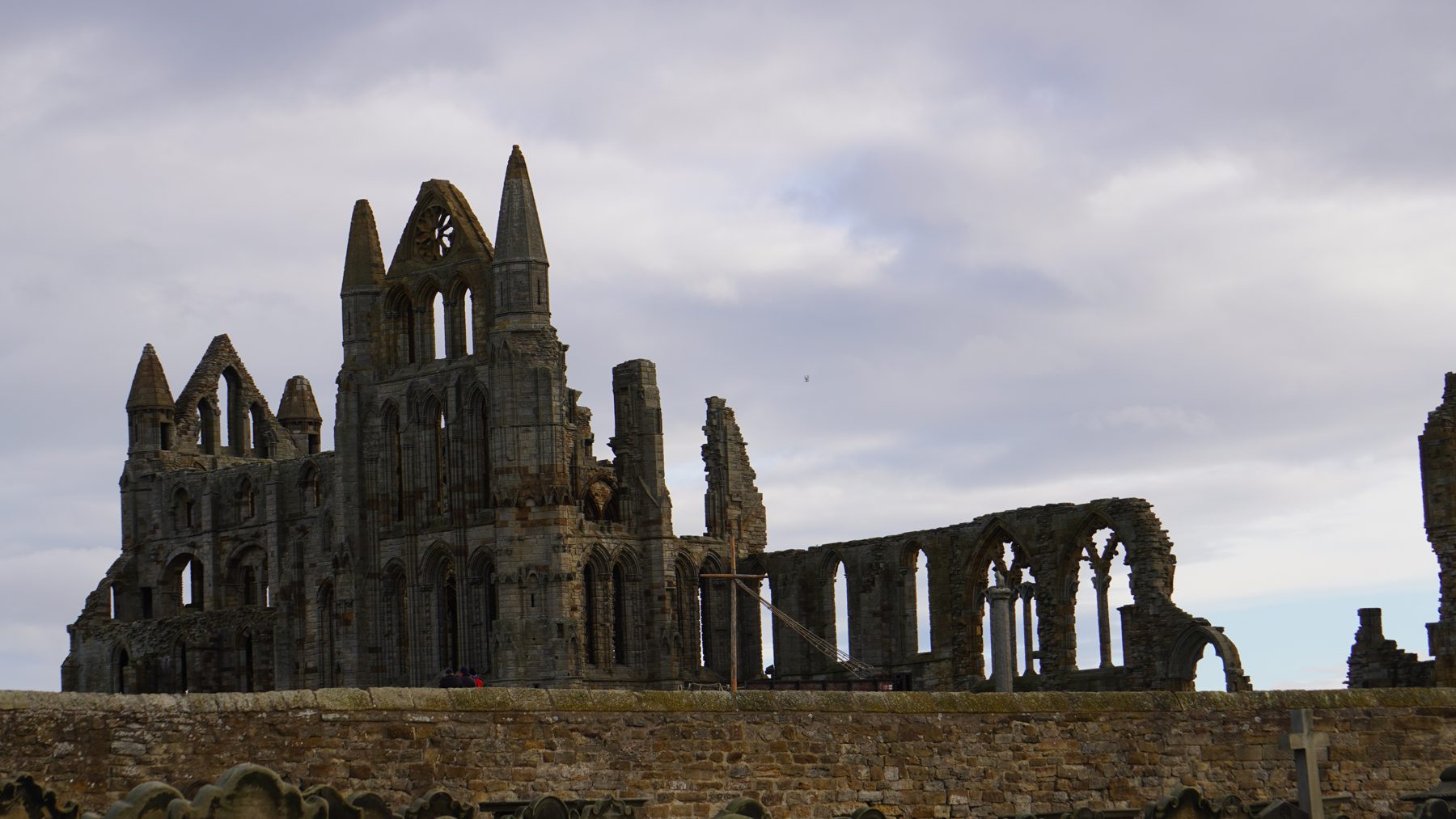 Yorkshire · The moors and the coastWhitby Abbey and DraculaA ruined abbey on a cliff, 199 steps up from the harbour, and one summer in 1890 when Bram Stoker walked into the town library and came out with the name Dracula. Here's what's real, what's in the book, and how to see both.
- Ireland · Irish MythThe MorríganThe shape-shifting war goddess of Irish myth, from the medieval texts to Sarah J. Maas, and which of her symbols actually come from the sources.
Sources
- W. B. Yeats (ed.), Fairy and Folk Tales of the Irish Peasantry (1888), Project Gutenberg #33887
- Lady Gregory, Visions and Beliefs in the West of Ireland, First Series (1920), Project Gutenberg #43973
- Lady Gregory, Visions and Beliefs in the West of Ireland, Second Series (1920), Project Gutenberg #43974
- Lady Gregory, Gods and Fighting Men (1904), Project Gutenberg #14465
- Ringfort (dating, numbers, Irish names, fairy-fort tradition)
- Latoon fairy bush
- Reuters via Arcane.org: Fairy tree of Latoon defies vandal's chainsaw (2003)
- Eddie Lenihan
- Murder of Bridget Cleary
- Biddy Early
- Women's Museum of Ireland: Biddy Early
- Banshee
- UCD National Folklore Collection: The Schools' Collection
- Dúchas.ie: copyright and reuse terms (CC BY-NC 4.0)
- Caherconnell Cashel excavations (Burren Geopark)
- Bram Stoker (birth, mother Charlotte from Sligo)
- Thomas Crofton Croker, Fairy Legends and Traditions of the South of Ireland (1825)
- William Allingham, The Fairies (1850)
- Lady Wilde, Ancient Legends, Mystic Charms, and Superstitions of Ireland (1887)
- W. B. Yeats, The Celtic Twilight (1893)
- The Stolen Child (Yeats, 1886)
- Cottingley Fairies (1917 photographs; Conan Doyle, 1922)
- Darby O'Gill and the Little People (1959)
Get the reading list first.
Trip announcements, curated reading lists, and the occasional dispatch — before anyone else.