Trip planning · Your first trip abroad
International travel tips for your first trip abroad: passports, entry rules, money, phones and a checklist
What you need, when to do it, and what to expect at the airport, in plain steps. If you're nervous, you're in good company, and none of this is as hard as it looks.
- Passport
- Book, not card, for any flight abroad. Routine processing 4–6 weeks plus mailing; expedited 2–3 weeks for $60 extra (State Department, November 2026)
- UK
- ETA required for US citizens: £20, apply on the UK ETA app or gov.uk/eta
- Ireland
- No visa and no ETA for US tourists; stays up to 90 days
- Caribbean cruise from Barbados
- Passport book needed: the closed-loop exception covers only cruises that start and end at the same US port
- EU ETIAS
- Not running yet; the EU says it starts in the last quarter of 2026, exact date to be announced
- Plugs
- UK and Ireland: Type G, 230V. Barbados: US-style A/B, 115V. Royal Clipper: 220V
- Free sign-up
- STEP, the State Department's alert service

The short answer
The most important international travel tips for a first trip abroad are about timing: get or renew your US passport book at least three months before you go, check the entry rules for each country (the UK requires an ETA; Ireland does not), buy travel insurance when you book, and call your bank and phone carrier a week before you leave. Everything else, from plugs to packing, takes an afternoon.
If you’ve never left the country, or it’s been thirty years since you last did, a first trip abroad can feel like a test you haven’t studied for. I promise it isn’t. Almost everything comes down to a short list of jobs done in the right order: a passport, an entry permit if the country needs one, insurance, a quick check with your bank and phone company, and sensible packing. These international travel tips put that list in order, with the official source for every rule, so you don’t have to wonder whether some forum post is out of date.
A little about me, so you know who’s talking: I lived in Yorkshire, in Killinghall near Harrogate, for three years in the mid-90s, and I was back there in October 2026 scouting our 2027 trip. So the England parts of this page aren’t theory. Where I’ve learned something the hard way, I’ll say so.
The rules below are for US citizens, checked in November 2026. Each section links to the government page that has the final word.
Step one: get or renew your US passport
Your passport is the one thing that takes weeks rather than minutes, so start here. Do this one thing this week and the rest of the list gets a lot less scary.
Book or card? Get the passport book. The passport card is cheaper, but the State Department says it is valid only for land and sea crossings to Canada, Mexico, Bermuda and the Caribbean. It can’t be used to fly to another country. If you fly to Barbados to join a ship, you need the book. (Compare a passport card and book.)
First passport, or yours has lapsed for a long time? You apply in person with form DS-11 at an acceptance facility, usually a post office or county clerk’s office. As of November 2026, the passport book fee is $130, paid to the US Department of State, plus a $35 acceptance fee paid to the facility. Bring proof of citizenship (such as a birth certificate), a photo ID and a passport photo. (Apply for your adult passport.)
Renewing? You can renew by mail with form DS-82 if your most recent passport was issued within the last 15 years, when you were 16 or older, is in your current name and isn’t damaged or reported lost. If it was issued more than 15 years ago, you apply in person as if it were your first. (Renew by mail.) The State Department also runs online renewal at opr.travel.state.gov for some adults. It has its own conditions: you must be 25 or older and not traveling for at least six weeks, and online renewals can’t be expedited. Only use the official site; other sites that claim to renew passports online may be scams. (Renew online.)
How long does it take to get a passport?
As of November 2026, the State Department lists:
- Routine: 4 to 6 weeks
- Expedited: 2 to 3 weeks, for an extra $60
- Urgent: if you’re traveling within 14 calendar days, you need an appointment at a passport agency
Those times start when your application arrives, not when you mail it. The State Department says mailing can add up to two weeks on each end. Demand is highest from late winter into summer, and quietest from October through December. (Processing times.) Our advice: apply at least three months before you fly, and sooner for a summer trip.
The six-month validity rule
Some countries want your passport to stay valid for a set time after you arrive. Here is what the State Department lists for the places our trips go:
| Country | Passport must be valid | Visa for US tourists | Other permit |
|---|---|---|---|
| United Kingdom | For your whole stay | No | ETA required |
| Ireland | For your whole stay is recommended | No (up to 90 days) | None |
| Barbados | On the day you enter | No (up to 6 months) | None |
| Saint Kitts and Nevis | 6 months beyond arrival | No (up to 90 days) | Check before you sail |
| Martinique | 6 months beyond arrival | Check the State Department page | None stated |
The simple rule: if your passport expires within a year of your trip, renew it now. That covers every country above with room to spare.
Where should you go on your first trip abroad?
Honestly? Somewhere that makes the first trip easy, so you want a second one. Four things help most:
- English is spoken. Signs, menus and train announcements you can read take half the stress away.
- A short, direct flight. From the East Coast, England and Ireland are an overnight flight away.
- No visa. Ireland needs nothing extra; the UK needs a £20 ETA you apply for on your phone (below).
- Good public transport, so you don’t have to drive on the left on day one.
That’s why England and Ireland top most first-timer lists, and why our trips go there. If you’d like someone else to handle the in-between bits, the trains and transfers and bookings, a hosted small-group trip is a gentle way in. There’s more on that below.
Entry rules for England, Ireland and the Caribbean
UK ETA: what it costs and how to apply
US citizens need an Electronic Travel Authorisation (ETA) to visit the UK. It is not a visa. According to GOV.UK:
- It costs £20, and it isn’t refunded once you apply.
- You apply on the UK ETA app (iPhone or Android), which scans your passport and your face, or online with photos of both.
- You usually get a decision by email within a day, but it can take up to 3 working days.
- It lasts two years, or until your passport expires if that is sooner.
Airlines check for it, so apply at least a week before you leave. A new passport needs a new ETA. Use only the official app or gov.uk; other sites charge extra for the same form.
Ireland: no ETA for US citizens
Ireland is a separate country from the UK and is not part of the UK’s ETA scheme. The State Department says US citizens can visit Ireland for tourism for up to 90 days without a visa, and there is no Irish travel authorisation to apply for. An immigration officer stamps your passport when you land. (Ireland entry requirements.)
Do you need a passport for a Caribbean cruise?
You may have heard you can cruise with just a birth certificate. That’s true only for a closed-loop cruise, which US Customs and Border Protection defines as a cruise that starts and ends at the same US port. US citizens on those cruises can use a government photo ID and a birth certificate.
A cruise that starts in Barbados is not closed-loop. Our Royal Clipper sailing is a round trip from Bridgetown, Barbados, so you fly to Barbados and fly home from there, and that needs a passport book. Star Clippers’ contract also makes each passenger responsible for having a valid passport for the whole cruise. The State Department strongly recommends a passport for any cruise anyway, in case you have to leave the ship and fly home early. (Cruise ships.)
Because Saint Kitts and Martinique list six months’ validity beyond arrival, our advice for a January 2028 sailing is a passport valid until at least the end of July 2028. Read more about arriving in Bridgetown.
EU ETIAS: not running yet
You may have read that Americans will soon need a permit called ETIAS to visit much of Europe. It isn’t in operation yet. In April 2026 the European Commission said ETIAS is scheduled to start in the last quarter of 2026, with the exact date to be announced. The EU’s ETIAS site says no applications are being taken yet, and that there will be a transition period after it starts. (European Commission.) Check the official site, travel-europe.europa.eu, before any trip to a Schengen country, and never pay a third-party site.
ETIAS covers the Schengen countries. It does not cover the UK or Ireland, which have their own rules (above). Martinique and Guadeloupe (which includes Les Saintes, a Royal Clipper stop) are French but outside the Schengen area, according to France-Visas.
Sign up for STEP (free)
The Smart Traveler Enrollment Program is a free State Department service. You enter your trip dates and where you’ll be, and the nearest US embassy can email you safety alerts and reach you, or your emergency contact, in a natural disaster or other emergency. It takes about ten minutes.
Travel insurance: what it covers, and why our trips require it
A comprehensive travel insurance policy usually covers four things: trip cancellation or interruption (if you have to cancel or come home early for a covered reason), medical care abroad, emergency medical evacuation, and lost or delayed bags. Read the policy, because what counts as a “covered reason” varies.
Two things to know. First, your US health insurance may pay little or nothing outside the country, so check before you assume you’re covered. Second, cancellation cover often depends on buying the policy soon after your first payment, so buy it when you book, not the week before you leave.
All Twice Told Stories trips require travel insurance. Payments to us are non-refundable, and insurance is how you protect what you’ve paid if you have to withdraw.
International travel tips for money: cards, cash and ATMs
Money abroad worries people more than it should. Here’s the short version: one good card, one backup, a little cash, and say no when a machine offers you dollars.
Which credit card should you use abroad?
You don’t need a fancy card. You need one that doesn’t charge a foreign transaction fee, because otherwise you pay a percentage on every coffee and train ticket. Visa and Mastercard are the most widely accepted in England and Ireland; American Express works in many places but not all. If your current card charges the fee, apply for a no-fee card two or three months before you go, so it arrives in time and you can test it at home.
- Use a credit card with no foreign transaction fee. The CFPB describes this fee as a charge, usually a percentage of each purchase, when you pay in a foreign currency. Many travel cards charge none. Check your card’s terms.
- Bring two cards on different networks (for example a Visa and a Mastercard), and keep them in different places.
- Pay in the local currency. If a card machine or ATM asks whether you want to pay in dollars or pounds (or euros), choose the local currency. The “dollars” option usually adds a worse exchange rate.
- Contactless and tap-to-pay are used everywhere in the UK and Ireland, including on buses and trains. Add your card to your phone’s wallet before you go.
- Cash: you need less than you might think in England and Ireland. A small amount for tips, a market or a rural café is enough. Use an ATM at a bank rather than a standalone machine, and check what your bank charges for foreign withdrawals.
How do you exchange currency without high fees?
Mostly, you don’t exchange it at all. Skip the exchange desk at the airport (at home or abroad); its rates are usually the worst you’ll see all trip. Instead, pay by card or phone, and when you want cash, take it from a bank’s ATM once you land. The one trap to watch for is the “would you like to pay in dollars?” question on card machines and ATMs. It sounds helpful. It isn’t. Choose pounds or euros every time.
- Tell your bank. Many banks let you add a travel notice in the app, and some don’t need one. Either way, check, so a charge in York or Antigua doesn’t get your card frozen.
Using your phone abroad: international plans, eSIMs and Wi-Fi
You have three choices:
- Your carrier’s international plan. The simplest option. Call or check the app a week before you leave and ask what it costs per day or per month in each country. Turn it on before you fly.
- An eSIM. If your phone is unlocked and supports eSIM (most recent iPhones and many Android phones do), you can buy a data-only plan online for the country you’re visiting and install it before you leave. It is usually cheaper than a carrier plan. Your US number still works for texts over Wi-Fi.
- Wi-Fi only. Most hotels and many cafés offer it. Fine for short trips if you don’t need maps on the go.
Either way, download offline maps and boarding passes before you leave. If you’re not sure your phone is unlocked or supports eSIM, ask your carrier now, not at the gate.
Do you need an international driving permit?
For a holiday in the UK or Ireland, usually not. GOV.UK says a visitor can drive small vehicles in Great Britain on a full, valid licence from another country for up to 12 months from arriving, and Ireland also lets visitors drive on a valid US licence. The catch is the rental company, which can set its own rules on age, licence and paperwork, so ask when you book. If you do want a permit, the State Department says only two US organizations issue them: AAA and AATA. Anyone else selling one online isn’t official.
My honest advice for a first trip: don’t drive. Driving on the left, on narrow lanes with stone walls, after an overnight flight, is a lot to take on. Trains, buses and a driver are easier. (On all our trips, someone else drives.)
Plugs and voltage: UK, Ireland and the Caribbean
Most phone and laptop chargers are dual-voltage (look for “100–240V”), so you need only a plug adapter. Hair dryers and hot tools are often US-only and can burn out on 230V.
| Place | Plug type | Voltage |
|---|---|---|
| England (UK) | Type G (three flat pins) | 230V |
| Ireland | Type G | 230V |
| Barbados | Types A and B (same as the US) | 115V |
| Royal Clipper | Check your cabin | 220V on board |
| Other Caribbean islands | Varies by island | Varies |
Source: IEC World Plugs for the UK, Ireland and Barbados; Star Clippers for the ship. A small universal adapter with USB ports covers every stop.
Medications: keep them in your carry-on
- Pack all medications in your carry-on, never in a checked bag that could be delayed.
- Keep them in their original labeled packaging. The TSA doesn’t require prescription bottles, but it recommends clear labels, some state laws require them, and labels help with customs abroad.
- Liquid medications over 3.4 ounces are allowed in your carry-on. Tell the TSA officer at the start of screening and take them out to be screened separately. (Liquid medications.)
- Bring a few extra days’ supply, and a list of your prescriptions with generic names in case you need a pharmacy.
Jet lag: what helps
Flights from the US to England or Ireland are overnight and go east, which is the harder direction. The CDC Yellow Book says people adjust by about one hour a day after flying east, and about an hour and a half a day going west. There is no cure, but a few things help: get outside in daylight on your first day, eat meals on local time, keep your first afternoon light, and go to bed at a normal local hour. The CDC notes that a low dose of melatonin at bedtime can help some travelers fall asleep after flying east. Ask your doctor first.
Give yourself a soft landing. When I flew over for our October 2026 scouting trip, my first day was nothing more than adjusting to the time zone, seeing my cousin, and some excellent pub food. I’d recommend the same for you.
The Caribbean is easier: in January, Barbados is just one hour ahead of US Eastern time.
International travel tips for the airport
Going out:
- Check in online 24 hours before your flight. Your airline will ask for your passport details.
- Arrive three hours early for an international flight. There is more to do than on a domestic trip, and you’ll feel calmer with time in hand.
- Security works as it does at home. If you have TSA PreCheck, it also works for international flights leaving US airports on participating airlines.
- At the gate, the airline checks your passport again, and for the UK, that you have an ETA.
- When you land, follow signs for arrivals or passport control. An officer looks at your passport and may ask the purpose of your visit and where you’re staying. “Vacation, with a tour group” and the name of your first hotel is all you need.
Coming home:
When you land in the US, you go through passport control and customs. Two free or low-cost tools make it faster:
- Mobile Passport Control is a free CBP app for US citizens. No application needed. You enter your details after landing and use a shorter line at participating airports.
- Global Entry costs $120 for five years, needs a background check and an interview, and includes TSA PreCheck. Worth it if you plan to keep traveling.
Flying home from Shannon, Ireland, you clear US immigration and customs at Shannon before you board, under CBP’s preclearance program, so you walk straight out when you land in the US.
Getting from the airport: transfers, trains and the Tube
This is the part people worry about most, and it’s more doable than it looks. Here’s a real example. On my scouting trip in October 2026, I got up at 5:30 (!) on a Sunday to catch the 6:20 train from Gatwick to Victoria Station in London, took the Tube to King’s Cross, and caught the 8:30 train north to Harrogate. Train, Tube, train. A winter storm, Boelo, was still blowing through, with winds strong enough to push a person around, and it still worked. If it works in a storm, it works on a calm day.
A few tips so yours goes smoothly:
- Plan the route before you fly. Know which station you’re going to and roughly what time. London’s airports all have trains into the city.
- Pack so you can lift your own bag up steps and onto a train. (More on that below.)
- Leave slack. Don’t book a tight connection on the day you land.
- Somewhere rural? Book a car ahead with your hotel or a licensed local firm, and get the price in writing. Don’t count on finding a taxi at a small station.
- On a hosted trip, the transfers are usually planned for you. On ours, see below.
Packing light for a first trip abroad
Pack less than you think. You will carry your bag up stairs, onto trains and across cobbles.
- One medium suitcase with wheels, plus a small day bag. On our Yorkshire trip we take a train together from London, so you lift your own bag on and off.
- Layers, not outfits. England and Ireland can be cool and wet in any month. A waterproof jacket with a hood beats an umbrella on a windy moor or cliff path. (Ask me about Storm Boelo.)
- Two pairs of broken-in walking shoes, so one can dry.
- Carry-on essentials: passport, medications, chargers and adapter, a change of clothes, and copies of your travel documents.
- Photograph your passport and keep a copy on your phone and in your email, separate from the passport itself.
Safety basics, without the scare stories
England, Ireland and the Caribbean islands on our route are common, well-traveled destinations. The State Department publishes an advisory level for every country on travel.state.gov; check it when you book. Everyday precautions are the ones you use in any US city: keep your bag zipped and in front of you in crowds, don’t leave your phone on a café table, use the hotel safe, and know the local emergency number (999 or 112 in the UK and Ireland). Share your itinerary with someone at home.
What a hosted small-group trip handles for you
Much first-trip worry is about the in-between parts: the airport, the train, where dinner is. On a hosted trip, that’s planned for you. And bookings are part of it. On my scouting trip I hadn’t booked one day’s plans ahead, and it sold out because it was English school holidays. I changed plans and took the bus and train instead, but it’s exactly why we book everything ahead for you. (Lesson learned!) Here’s what we handle:
- Yorkshire, October 2027. We meet at King’s Cross station in London at noon on Saturday 2 October and take the 12:40 train to Yorkshire together. All transport during the week, entry fees, private tours and most meals are included, and on Sunday 10 October we take you to Heathrow. You book your own flights, get yourself from the airport to King’s Cross, and apply for your UK ETA. Two hosts, Stacy and Taryn, are with you all week. See the Yorkshire trip, and our guide to York.
- West of Ireland, June 2028. You fly into Shannon and we pick you up there. A private minibus with a driver takes the group everywhere all week, including the Shannon drop-off at the end. You stay at one hotel in the Burren for all eight nights, so you unpack once. Day trips include the Cliffs of Moher on foot from Doolin. See the Ireland trip.
- Caribbean, January 2028. Seven nights on the Royal Clipper, round trip from Bridgetown, Barbados, with all meals on board and Stacy on the ship with you all week. The ship moves, you don’t: one cabin, a different island each day. See the Caribbean sailing.
On every trip, the group reads and watches together online for several months beforehand, with two video calls a month. By the time you meet at the station or the airport, you already know the people you’re traveling with. Many women come on their own, and the trips are planned with that in mind. You can read more about us, or ask us a question.
Your first international trip checklist
Print this, or save it to your phone.
| What | When before departure | Done |
|---|---|---|
| Check passport expiry date (renew if it ends within a year of travel) | 6 months+ | ☐ |
| Apply for or renew your passport book | 3–6 months | ☐ |
| Book trip; buy travel insurance soon after the first payment | When you book | ☐ |
| Check entry rules for each country on travel.state.gov | When you book | ☐ |
| Book flights | 3–6 months | ☐ |
| Get a no-foreign-fee credit card if you don’t have one | 2–3 months | ☐ |
| Consider Global Entry (allow time for the interview) | 3+ months | ☐ |
| Apply for UK ETA (England trips) | 2–4 weeks | ☐ |
| Enroll in STEP | 2–4 weeks | ☐ |
| Refill prescriptions, with a few days extra | 2–3 weeks | ☐ |
| Buy plug adapter; check your chargers say 100–240V | 2 weeks | ☐ |
| Set up phone plan or eSIM; download offline maps | 1 week | ☐ |
| Add travel notice with bank and card companies | 1 week | ☐ |
| Photograph passport and insurance policy; email copies to yourself | 1 week | ☐ |
| Download Mobile Passport Control app | 1 week | ☐ |
| Check in online; pack medications in carry-on | 24 hours | ☐ |
| Arrive at the airport | 3 hours before | ☐ |
That’s the whole list. None of it is hard; it just has to be done in order. Tick off one line at a time, and by the time you’re at the gate, the hard part’s already done.
Still nervous? That’s normal, and you can ask us anything, however small the question.
Questions people ask
What do I need to travel internationally?
A valid US passport book, any entry permit the country requires (for example the UK's ETA), your flight and hotel details, travel insurance, a credit card with no foreign transaction fee, and any medications in their original packaging in your carry-on. Some countries also want your passport valid for six months past your arrival date.
How long does it take to get a passport?
As of November 2026 the State Department lists routine processing at 4 to 6 weeks and expedited at 2 to 3 weeks for an extra $60. Those times don't include mailing, which can add up to two weeks each way, so allow about three months to be safe.
Can I use a passport card to fly abroad?
No. The passport card works only for land and sea crossings to Canada, Mexico, Bermuda and the Caribbean. To fly to another country, including to Barbados to join a cruise, you need a passport book.
Do US citizens need an ETA to visit England?
Yes. US citizens need an Electronic Travel Authorisation to visit the UK for tourism. It costs £20, you apply on the UK ETA app or online, a decision usually comes within a day (up to 3 working days), and it lasts two years or until your passport expires.
Do I need a passport for a Caribbean cruise?
For a closed-loop cruise that starts and ends at the same US port, US citizens can use a birth certificate and photo ID instead. A cruise that starts in Barbados is not closed-loop, and you fly there, so you need a passport book.
Do I need to tell my bank I'm traveling abroad?
Check your bank's app or website. Many banks now let you add a travel notice online, and some no longer need one at all. It takes two minutes and helps prevent your card being blocked for an unfamiliar foreign charge.
Where should I go on my first trip abroad?
Pick somewhere English is spoken, with a short flight, good trains and no visa. For most Americans that means England or Ireland. If you'd rather not handle the airport transfers, trains and bookings yourself, a hosted small-group trip takes those off your plate.
What is the best first international trip?
Somewhere English is spoken, with good public transport, short flights from the US and no visa, is the easiest start. For many first-time travelers that means England or Ireland, or a hosted small-group trip where someone else handles the transfers and bookings.
Which credit card should I use abroad?
Use a card with no foreign transaction fee, which many travel cards offer; otherwise you may pay a percentage on every purchase. Visa and Mastercard are the most widely accepted in the UK and Ireland. Bring a second card on a different network as a backup.
How do I exchange currency without high fees?
Mostly, don't. Pay by card or phone, and when you need cash, use a bank's ATM after you land rather than an airport exchange desk. If a card machine offers to charge you in dollars, say no and pay in the local currency; the dollar option usually comes with a worse rate.
Do I need an international driving permit in the UK or Ireland?
For a visit, usually not. GOV.UK says visitors can drive small vehicles in Great Britain on a valid licence from another country for up to 12 months, and Ireland also lets visitors drive on a valid US licence. Car rental companies set their own rules, so ask yours. In the US, only AAA and AATA issue official international driving permits.
Which phone plan or SIM should I use abroad?
The easiest is your carrier's international plan, switched on before you fly. An eSIM data plan bought online is usually cheaper if your phone is unlocked and supports it. Either way, download offline maps and your boarding passes before you leave home.
How do I book an airport transfer abroad?
Decide before you fly. For London, the trains from Heathrow and Gatwick into the city are simple and run often; for rural places, book a car with your hotel or a licensed local firm ahead of time. On a hosted trip, the transfers are usually planned for you.
Is travel insurance required for international travel?
Most countries don't require it, but many tour operators do, including all Twice Told Stories trips. Your US health plan or Medicare may pay little or nothing abroad, so a policy that covers medical care, evacuation and trip cancellation is worth having.
Read next
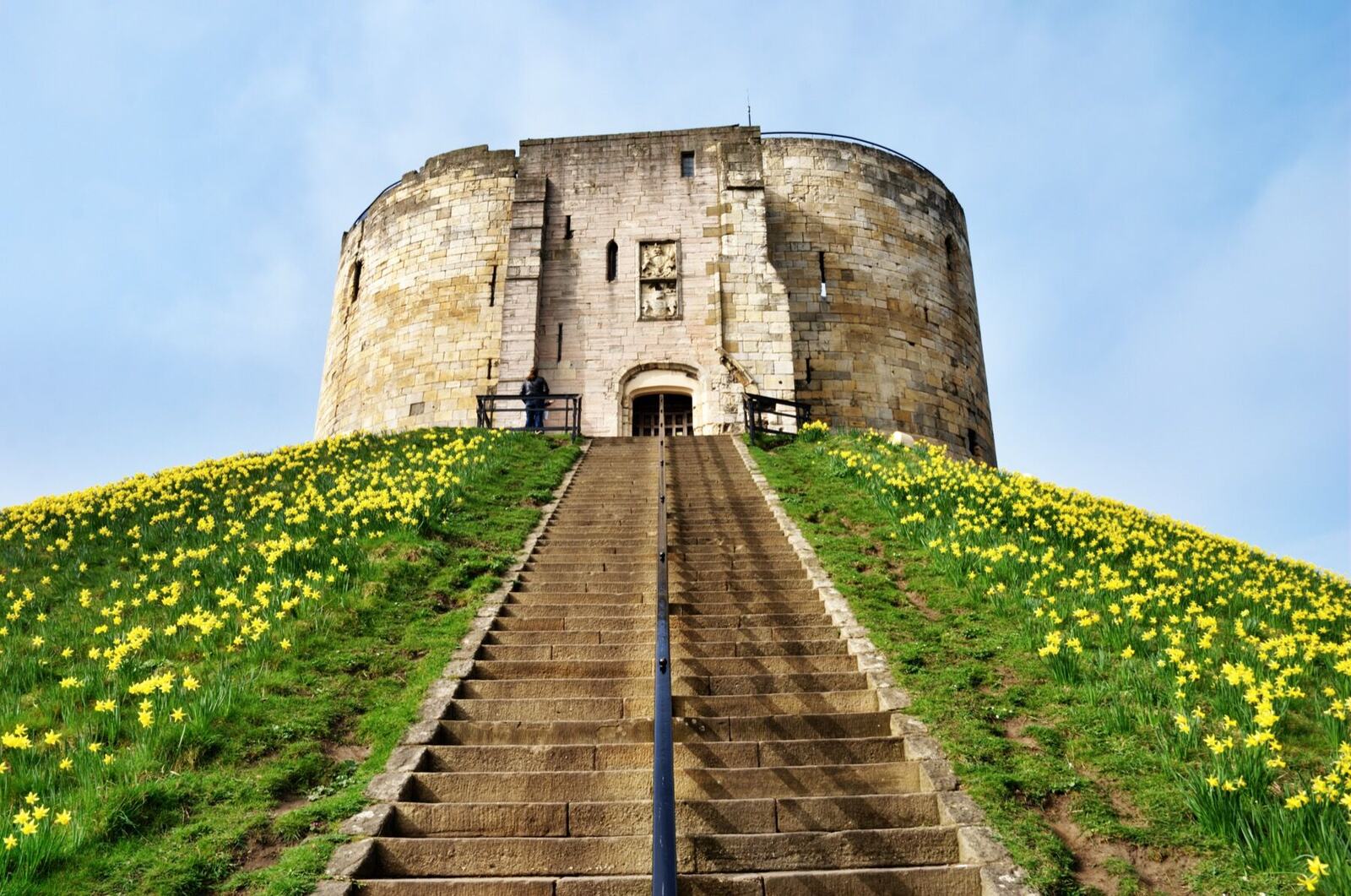 Yorkshire · YorkThings to do in York, UKWhat's worth your time in York, England, how long each place takes, and the people and books tied to the city. All of it on foot.
 Caribbean · The Royal ClipperRoyal ClipperWhat the ship is, where her design came from, how a week on board works, and where she sails from Barbados. Straight answers, no brochure gloss.
- Ireland · County ClareCliffs of MoherIreland's best-known sea cliffs, 214 meters at their highest, on the Atlantic coast of County Clare. Here's how to see them without wasting the trip.
- Caribbean · BarbadosBridgetown, BarbadosWhere the port is, what to see in a day, and what to know before you board a ship here.
 Ireland · County ClareThe Burren, IrelandA limestone upland in north-west County Clare, with rare flowers, thousands of years of stone monuments, and a small national park. It looks bare from the road. It isn't.
Sources
- US State Department: Processing times for US passports
- US State Department: Get your passport fast (urgent travel within 14 days)
- US State Department: Apply for your adult passport (DS-11)
- US State Department: Renew your passport by mail (DS-82)
- US State Department: Renew your passport online
- US State Department: Passport fees
- US State Department: Compare a passport card and book
- GOV.UK: Apply for an electronic travel authorisation (ETA)
- US State Department: United Kingdom travel advisory and entry requirements
- US State Department: Ireland travel advisory and entry requirements
- US State Department: Barbados entry requirements
- US State Department: Saint Kitts and Nevis entry requirements
- US State Department: Martinique travel advisory
- US State Department: Cruise ships
- CBP: Western Hemisphere Travel Initiative FAQs (closed-loop cruises)
- Star Clippers: Contract of carriage (travel documents)
- European Commission: Main differences between the EES and ETIAS (April 2026)
- EU Travel to Europe: ETIAS news corner
- France-Visas: France in the Schengen area (overseas territories outside Schengen)
- US State Department: Smart Traveler Enrollment Program (STEP)
- TSA: Traveling with medication
- TSA: Liquid medications
- CDC Yellow Book: Jet lag disorder
- CFPB: Prepaid cards key terms (foreign transaction fee)
- CBP: Mobile Passport Control
- CBP: Global Entry
- CBP: Preclearance (Shannon Airport)
- US State Department: Travel advisories
- IEC: World plugs
- Star Clippers: Royal Clipper ship facts (Group & Charter Planner brochure, 2026)
- GOV.UK: Driving in Great Britain on a non-GB licence (visitors, 12 months)
- US State Department: Driving and road safety abroad (international driving permits from AAA and AATA)
- NDLS Ireland: driving in Ireland on a foreign licence
Get the reading list first.
Trip announcements, curated reading lists, and the occasional dispatch — before anyone else.