
Yorkshire · York
Four women of York: Anne Brontë, Margaret Clitherow, Anne Lister and Ruby Lennox
York is full of famous men: Romans, Vikings, kings, Guy Fawkes. The stories I can't stop thinking about belong to four women. Here is each one in full, where to stand, and a walk that links all four.
- Anne Brontë
- York Minster, 25 May 1849
- Margaret Clitherow
- Her shrine at 35 the Shambles
- Anne Lister
- Holy Trinity Church, Goodramgate, Easter Sunday 1834
- Ruby Lennox
- Behind the Scenes at the Museum (1995); York Castle Museum
- Walking
- All four places are within about 15 minutes of each other on foot
- Where Anne Brontë is buried
- St Mary's churchyard, Scarborough
- Cost
- The Shambles shrine, Holy Trinity and the streets are free; the Minster and the Castle Museum charge
The short answer
Four of York's best stories belong to women. Anne Brontë asked to see York Minster in May 1849, days before she died. Margaret Clitherow, a butcher's wife on the Shambles, was pressed to death in 1586 and made a saint in 1970. Anne Lister took communion with Ann Walker at Holy Trinity, Goodramgate, on Easter Sunday 1834. And Ruby Lennox, who never lived at all, narrates Kate Atkinson's York novel Behind the Scenes at the Museum. All four places are a short walk apart.
York is full of famous men: Romans, Vikings, kings, Guy Fawkes. But the York stories I can’t stop thinking about belong to four women. A dying writer, a saint, a diarist, and a girl who never existed. For every one of them, you can stand exactly where it happened, and all four places are a short walk from each other.
The video below is the short version, about four minutes. This page is the long one: more of each woman’s story, what you’ll find at each place today, and a walk that links all four.
1. Anne Brontë at York Minster
Who she was
Anne was the youngest of the Brontë sisters, born in 1820 in Thornton, near Bradford, and raised in the parsonage at Haworth. She worked for years as a governess, and she turned that into her first novel, Agnes Grey (1847).
Her second, The Tenant of Wildfell Hall (1848), is the bolder book. Its heroine, Helen Graham, leaves her husband and takes their child with her, at a time when a wife had almost no legal right to do either. Most critics now count it as one of the first feminist novels. It sold well. Then, after Anne died, Charlotte stopped it being reprinted in England for several years, calling its subject “unfortunately chosen.” Some scholars think she was protecting her sister’s memory. Others aren’t so sure.
Anne is still the least read of the three, which is a shame. If you’ve only read Jane Eyre and Wuthering Heights, start Tenant next.
Her last journey
By the spring of 1849 Anne was dying of tuberculosis. Emily had died of it the December before. Anne asked to go to Scarborough, on the coast, where she had spent summers as a governess, hoping the sea air might help. Charlotte went with her, with their friend Ellen Nussey.
On 24 May they broke the journey in York and stayed overnight at the George Hotel on Coney Street. The next morning, at Anne’s request, they took her to the Minster. Ellen described it afterwards, in an account Elizabeth Gaskell printed in her Life of Charlotte Brontë (1857):
“By her request we went to the Minster, and to her it was an overpowering pleasure; not for its own imposing and impressive grandeur only, but because it brought to her susceptible nature a vital and overwhelming sense of omnipotence. She said, while gazing at the structure, ‘If finite power can do this, what is the … ?’ and here emotion stayed her speech, and she was hastened to a less exciting scene.”
They went on to Scarborough. Anne died there three days later, on 28 May 1849. She was 29.
Where she’s buried
Anne is the only Brontë not buried at Haworth. Charlotte had her buried in St Mary’s churchyard in Scarborough, on the cliff above the sea. The headstone Charlotte paid for gave Anne’s age as 28. Charlotte had other mistakes on it corrected when she visited in 1852, but not that one. The stone has since weathered almost smooth, and in 2011 the Brontë Society laid a new plaque in front of it with the right age.
What to see in York today
- York Minster. Stand in the nave and look up. It’s the same building, and the scale still stops people. The Minster charges for entry; see my York guide for tickets and times.
- Coney Street. The George Hotel where they stayed is gone. Coney Street is now one of York’s main shopping streets, and the Poetry Pharmacy is on it.
2. Margaret Clitherow on the Shambles
Who she was
Margaret Middleton was born in York in about 1556, the daughter of a wax-chandler who was once Sheriff of York. On 1 July 1571, at about fifteen, she married John Clitherow, a well-off butcher and a widower with two sons. They lived on the Shambles, York’s butchers’ street, and had three children of their own.
In 1574 she became a Catholic. Under Elizabeth I that was dangerous, and it got more dangerous. She was jailed more than once for not going to church. Then a law of 1584 made it a capital crime to shelter a Catholic priest, and she went on doing it, hiding priests in her house. She sent her eldest son, Henry, abroad to train for the priesthood.
What happened
On 10 March 1586 the house was searched. A frightened boy showed the searchers the hiding place. Margaret was arrested and brought before the York assizes.
She refused to plead. If she pleaded not guilty there would be a trial, and her children could be made to give evidence against her. The law’s answer to anyone who wouldn’t plead was peine forte et dure: being pressed under weights until you either pleaded or died. On 25 March 1586, which was Good Friday that year, she was laid on a sharp stone in the Toll Booth on Ouse Bridge, a door was put over her, and it was loaded with about seven or eight hundredweight of rocks. Several accounts say she was pregnant.
She was beatified in 1929 and made a saint by Pope Paul VI on 25 October 1970, one of the Forty Martyrs of England and Wales. People call her the Pearl of York. A relic said to be her hand is kept at the Bar Convent, just outside the city walls.
What to see in York today
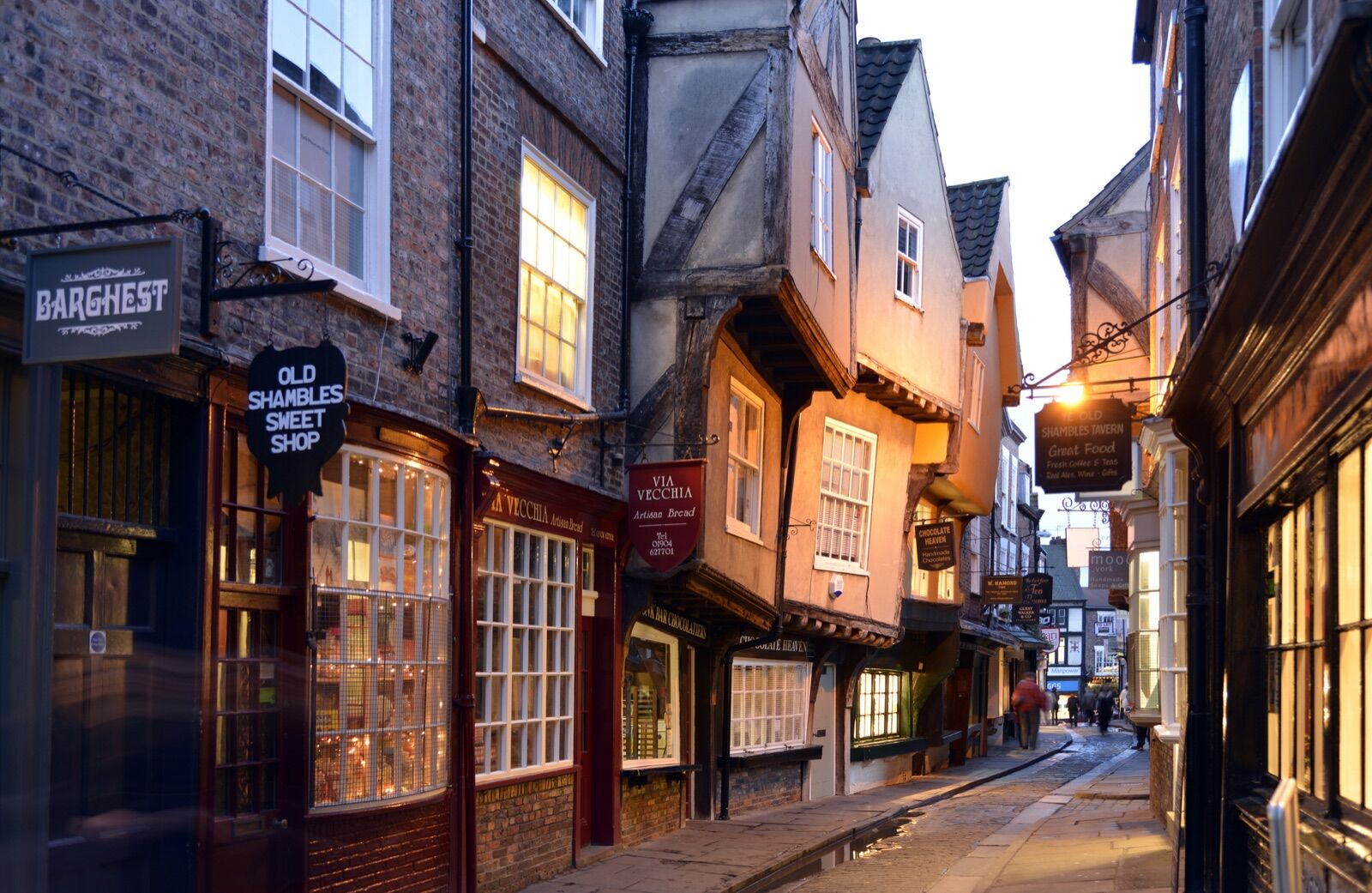
- The shrine at 35 the Shambles. A small room with a fireplace, one of the few quiet spots on the busiest street in York. It’s free. The street was renumbered in the 18th century, so her house was probably across the way, around number 10. Check the York Oratory’s page for opening times.
- The Shambles itself. Today it’s sweet shops and wizard shops, and most people walk straight past the shrine. Look up at the overhanging upper floors: many of these buildings were already standing when she lived here.
- Ouse Bridge. The Toll Booth is long gone, but you can stand on the bridge.
3. Anne Lister at Holy Trinity, Goodramgate
Who she was
Anne Lister was born in Halifax on 3 April 1791. In 1826 she inherited the Shibden Hall estate on the edge of the town. She ran the estate herself, travelled all over Europe, and in 1838 made the first tourist ascent of the Vignemale in the Pyrenees. Some people called her “Gentleman Jack,” and they didn’t mean it kindly.
She also kept a diary from 1806 until she died: about five million words in 26 volumes. Roughly a sixth of it is in a code she invented, made of Greek letters, zodiac signs and maths symbols. The coded parts are where she wrote about the women she loved. Late in the 19th century a descendant cracked the code, was told to burn the diaries, and hid them behind a panel at Shibden instead. In 2011 they were added to UNESCO’s Memory of the World Register.
You may know her from Gentleman Jack, the BBC and HBO series, where Suranne Jones played her.
The wedding nobody else saw
Ann Walker was an heiress from Lightcliffe, near Shibden. Lister began courting her in 1832. They exchanged vows on 10 February 1834 and rings later that month. Then on Easter Sunday, 30 March 1834, the two of them walked into Holy Trinity, a small medieval church on Goodramgate in York, and took communion side by side.
To anyone else it was an ordinary Easter service. To them it was their wedding. It had no legal standing. Ann moved into Shibden that September. They travelled together, and Ann was with Anne when she died of a fever in Georgia, in the Caucasus, in 1840. Ann brought her body home to Halifax.
What to see in York today
- Holy Trinity, Goodramgate. A tiny church set back from the street, a few minutes’ walk from the Minster. Parts of it are 12th century, and inside it still has its old wooden box pews. The Churches Conservation Trust looks after it, and it’s free to go in.
- The plaque by the gate. The first plaque, put up in 2018, didn’t call her a lesbian, and after complaints it was replaced in 2019. It now reads: “Anne Lister 1791–1840 of Shibden Hall, Halifax. Lesbian and Diarist; took sacrament here to seal her union with Ann Walker. Easter 1834.”
- The filming. When they made Gentleman Jack, they filmed the communion scene inside this church. Goodramgate, Precentor’s Court and Minster Yard were used for York street scenes too.
4. Ruby Lennox, who never lived at all
Who she is
Ruby narrates Behind the Scenes at the Museum, Kate Atkinson’s first novel, published in 1995. It won the Whitbread Book of the Year, beating Salman Rushdie. Ruby grows up in the flat above her parents’ pet shop, in the shadow of the Minster, and she starts telling her story before she’s even born:
“I exist! I am conceived to the chimes of midnight on the clock on the mantelpiece in the room across the hall.”
The book follows four generations of one York family, from Ruby’s great-grandmother in the 1890s to Ruby herself in 1992. It jumps back and forth in time, which is why I made a family tree for it on the book’s own page.
Why it’s a York book
Atkinson grew up in York. Her family’s shop was on Stonegate, near the Minster, and she used to walk with her father to York Castle Museum. In a piece for the Guardian in 2008 she said the title came to her in a dream of being alone in that museum at night. She also wrote:
“Looking at Behind the Scenes now, I can see that York, not Ruby, is the all-pervading main character of this book.”
What to see in York today
- Stonegate. The kind of old street near the Minster where Ruby’s shop would be.
- York Castle Museum. The museum of the title, in York’s two old prisons. Its best-known room is Kirkgate, a full-size Victorian street you can walk down. It charges for entry.
- Ruby’s walk. On the day Ruby’s story opens, her mother walks Ruby’s sister down Blake Street to the Museum Gardens, then on to her grandmother’s house on Lowther Street. The book guide has a map of every York place in the novel.
A walk that links all four
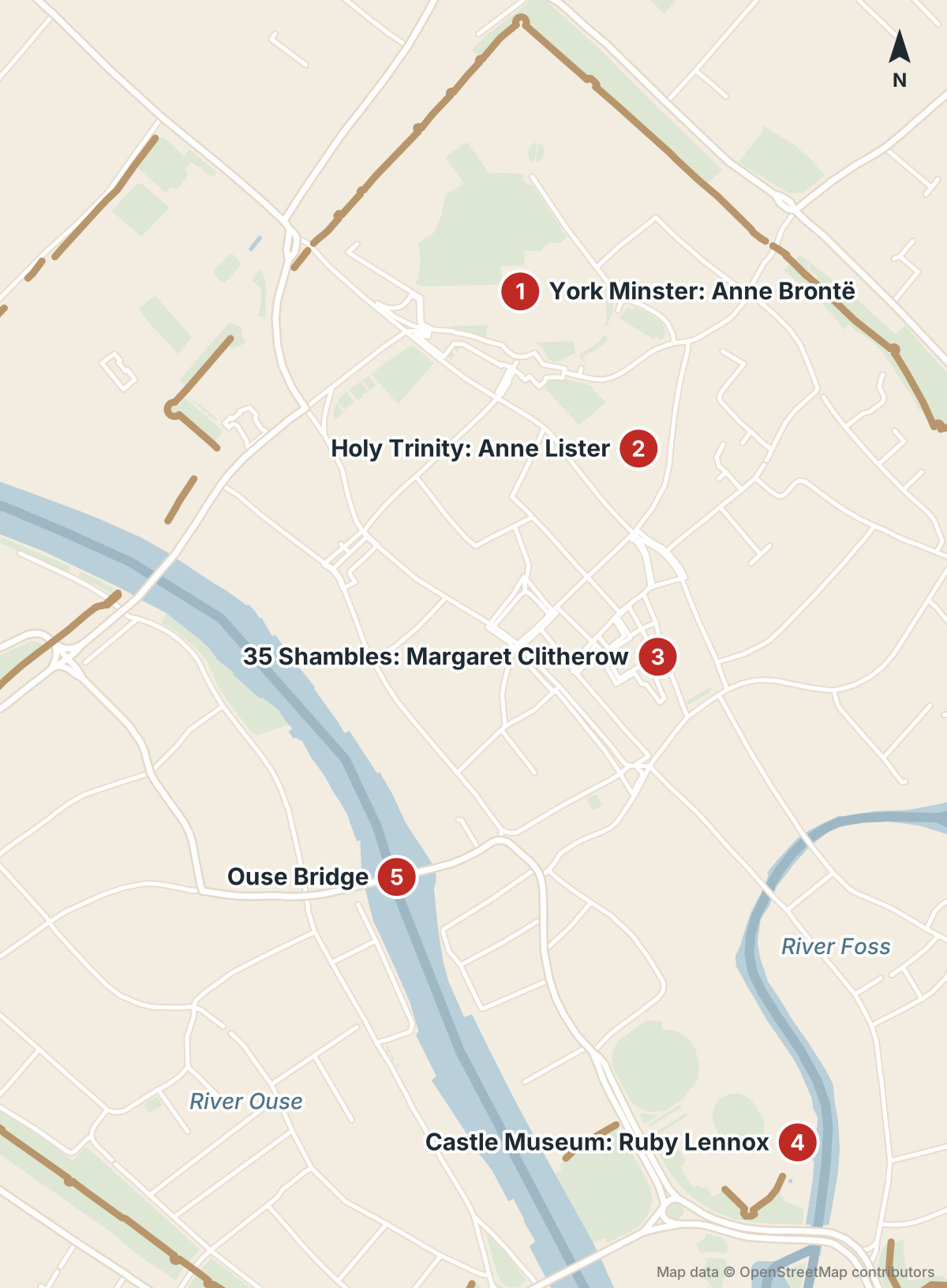
- York Minster: Anne Brontë
- Holy Trinity: Anne Lister
- 35 Shambles: Margaret Clitherow
- Castle Museum: Ruby Lennox
- Ouse Bridge
All four places are in the old center of York. This order takes you from the Minster to the Castle Museum with no backtracking:
| Stop | Who | Walk to the next |
|---|---|---|
| York Minster | Anne Brontë | About 3 minutes |
| Holy Trinity, Goodramgate | Anne Lister | About 5 minutes |
| 35 the Shambles | Margaret Clitherow | About 8 minutes |
| York Castle Museum | Ruby Lennox | End |
Walking times are my estimates at a gentle pace. Allow half a day if you go inside the Minster and the Castle Museum, and a couple of hours if you only stop at Holy Trinity and the shrine. Add Ouse Bridge on the way to the Castle Museum if you want to stand where Margaret Clitherow died.
On our trip
I was in York in October 2026 planning our trip, and these four are the stories I kept coming back to. On our October 2027 Yorkshire trip, we walk the Shambles together on the way to York Castle Museum, and the Minster and Holy Trinity are right there in your free afternoon.
It’s called Twice Told Stories because you learn the stories before you go, and you come home with your own.
Four women, three centuries
Margaret Clitherow died in Elizabeth I's reign, Anne Lister married in William IV's, Anne Brontë died early in Victoria's, and Ruby Lennox's story runs to 1992. The places they knew are still all within a few streets of each other.
- Elizabeth I 1558–1603
- William IV 1830–1837
- Victoria 1837–1901
- Elizabeth II 1952–2022
The story Britain The wider world Other writers
- 1571 The story Margaret marries John Clitherow, a butcher on the Shambles. She's about fifteen.
- 1586 The story Margaret Clitherow is pressed to death in York on 25 March for hiding priests.
- 1586 Britain 25 March 1586 is Good Friday, and Lady Day.
- 1586 The wider world Drake carries the first Roanoke colonists home to England.
- 1588 Britain The Spanish Armada sails against England.
- 1834 The story Easter Sunday, 30 March: Anne Lister and Ann Walker take communion together at Holy Trinity, Goodramgate.
- 1840 The story Anne Lister dies of a fever in Georgia, with Ann Walker beside her.
- 1847 Other writers Anne Brontë publishes Agnes Grey, the same year as Jane Eyre and Wuthering Heights.
- 1848 Other writers Anne Brontë publishes The Tenant of Wildfell Hall.
- 1849 The story 25 May: Anne Brontë sees York Minster. She dies in Scarborough three days later, aged 29.
- 1849 The wider world The California Gold Rush.
- 1929 The story Margaret Clitherow is beatified.
- 1951 The story Ruby Lennox's story begins, in the flat above a pet shop near the Minster.
- 1970 The story Margaret Clitherow is made a saint.
- 1970 Britain The Beatles break up.
- 1995 Other writers Kate Atkinson publishes Behind the Scenes at the Museum. It wins the Whitbread Book of the Year.
- 2011 The story The Brontë Society lays a new plaque at Anne's grave in Scarborough with her right age, 29. The same year, Anne Lister's diaries join UNESCO's Memory of the World Register.
- 2019 The story Gentleman Jack premieres, with scenes filmed inside Holy Trinity, Goodramgate.
Questions people ask
Did Anne Brontë visit York Minster?
Yes. In May 1849 Anne Brontë was dying of tuberculosis and travelling to Scarborough with Charlotte and their friend Ellen Nussey, hoping the sea air would help. They broke the journey in York, and at Anne's request they took her to the Minster. Ellen Nussey later wrote that 'to her it was an overpowering pleasure.' Anne died in Scarborough three days later, on 28 May 1849, aged 29.
Where is Margaret Clitherow's shrine in York?
At 35 the Shambles, a small chapel open to visitors. Margaret Clitherow, a butcher's wife on the street, hid Catholic priests when that was a capital crime. She was pressed to death in York on 25 March 1586 and made a saint in 1970. She's sometimes called the Pearl of York.
Where did Anne Lister marry Ann Walker?
At Holy Trinity Church, Goodramgate, York. On Easter Sunday, 30 March 1834, the two women took communion there together, which they regarded as their marriage. A plaque by the church gate records it. The church was also used for filming the scene in Gentleman Jack, the BBC and HBO series.
Is Ruby Lennox a real person?
No. Ruby Lennox narrates Kate Atkinson's first novel, Behind the Scenes at the Museum (1995), which won the Whitbread Book of the Year. She grows up in the flat above her parents' pet shop near York Minster. Atkinson has said the title came from a dream of being alone in York Castle Museum at night.
Can you visit all four places in one day?
Easily. The Minster, Holy Trinity on Goodramgate, the Shambles and York Castle Museum are all in the old center of York, within about 15 minutes' walk of each other. Allow half a day if you go inside the Minster and the Castle Museum.
Read next
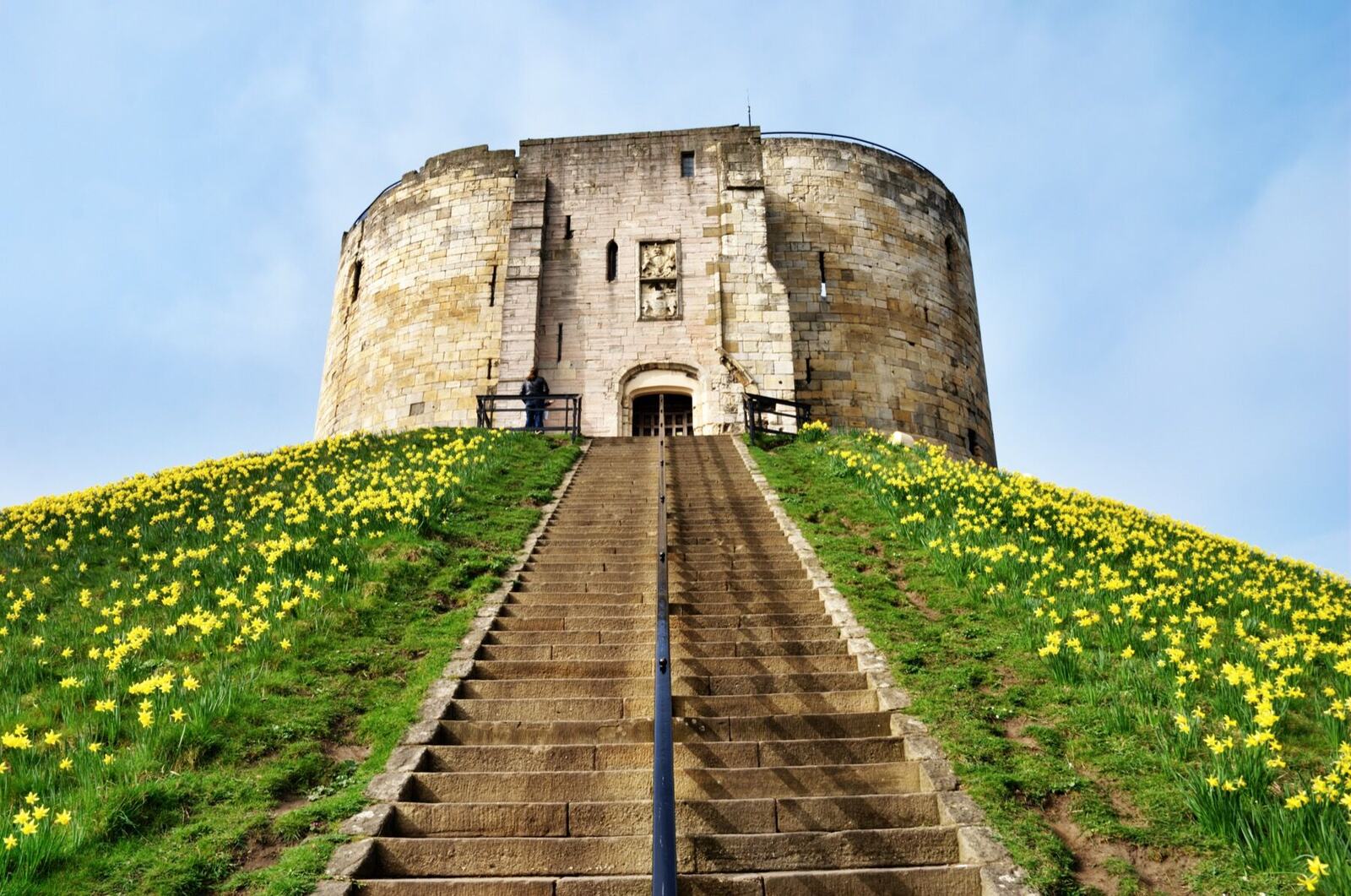 Yorkshire · YorkAn afternoon in YorkExactly how our Thursday afternoon in York goes on the October 2027 trip: three stops together, the story behind each one, then a free-time menu built around the books and shows you already love.
- Yorkshire · YorkThe Shambles, YorkA 400-foot medieval street in the middle of York: what's actually old about it, who lived here, and when to go if you don't like crowds.
- Yorkshire · Anne ListerAnne ListerThe Halifax landowner who wrote five million words, a sixth of them in code, and married a woman in a York church in 1834. Here's her story, and where you can still follow it.
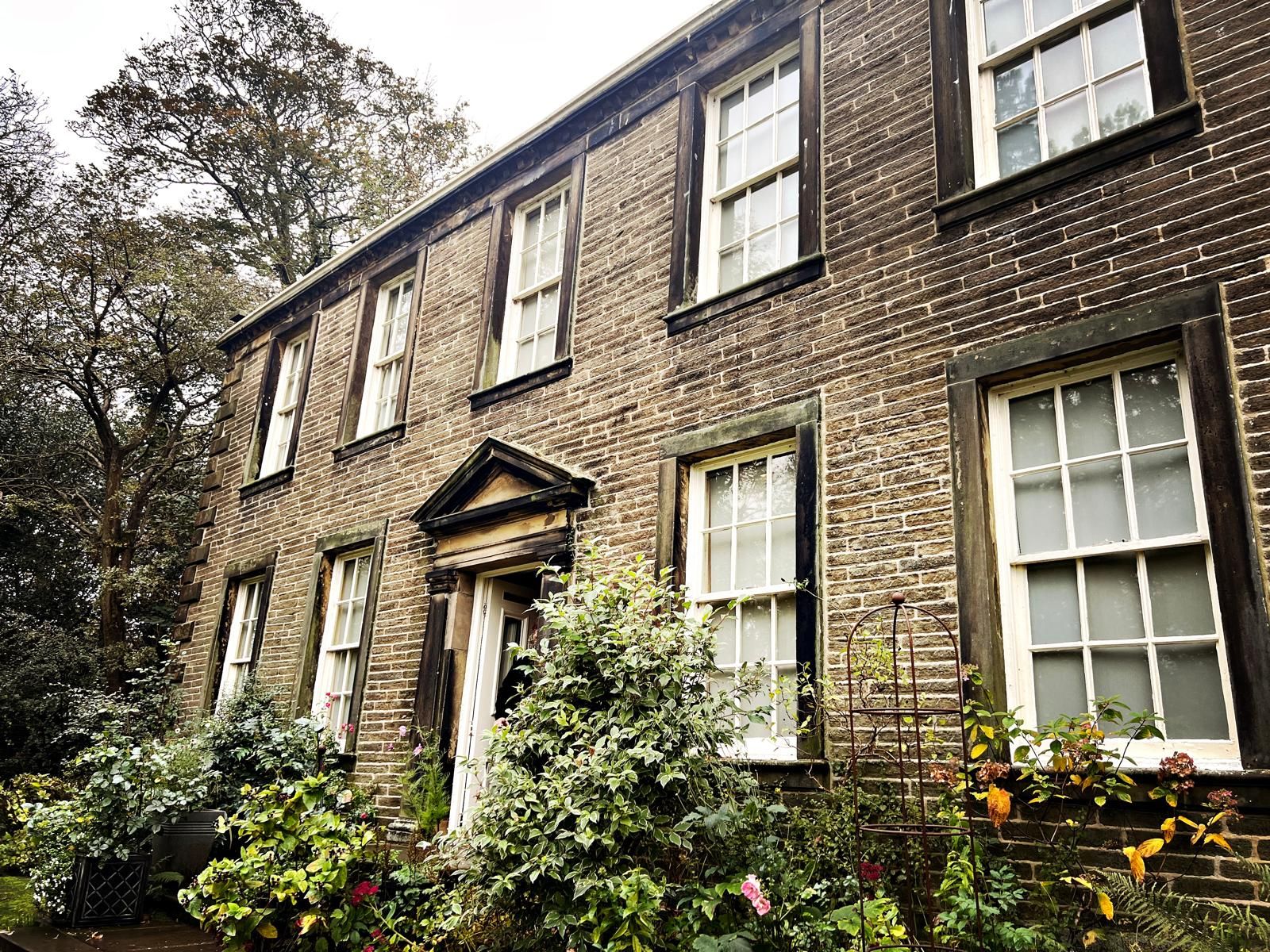 Yorkshire · The BrontësBooks by the Brontë sistersCharlotte, Emily and Anne Brontë wrote seven novels between them, all at one house in Haworth, West Yorkshire. Here's every book in order, who wrote which, and the story behind them, including what Charlotte really thought of Jane Austen.
- Yorkshire · York · BooksBehind the Scenes at the MuseumWho's who in Ruby Lennox's family, generation by generation, how the chapters and footnotes fit together, and the York streets you can still walk. Spoilers are tucked away until you click.
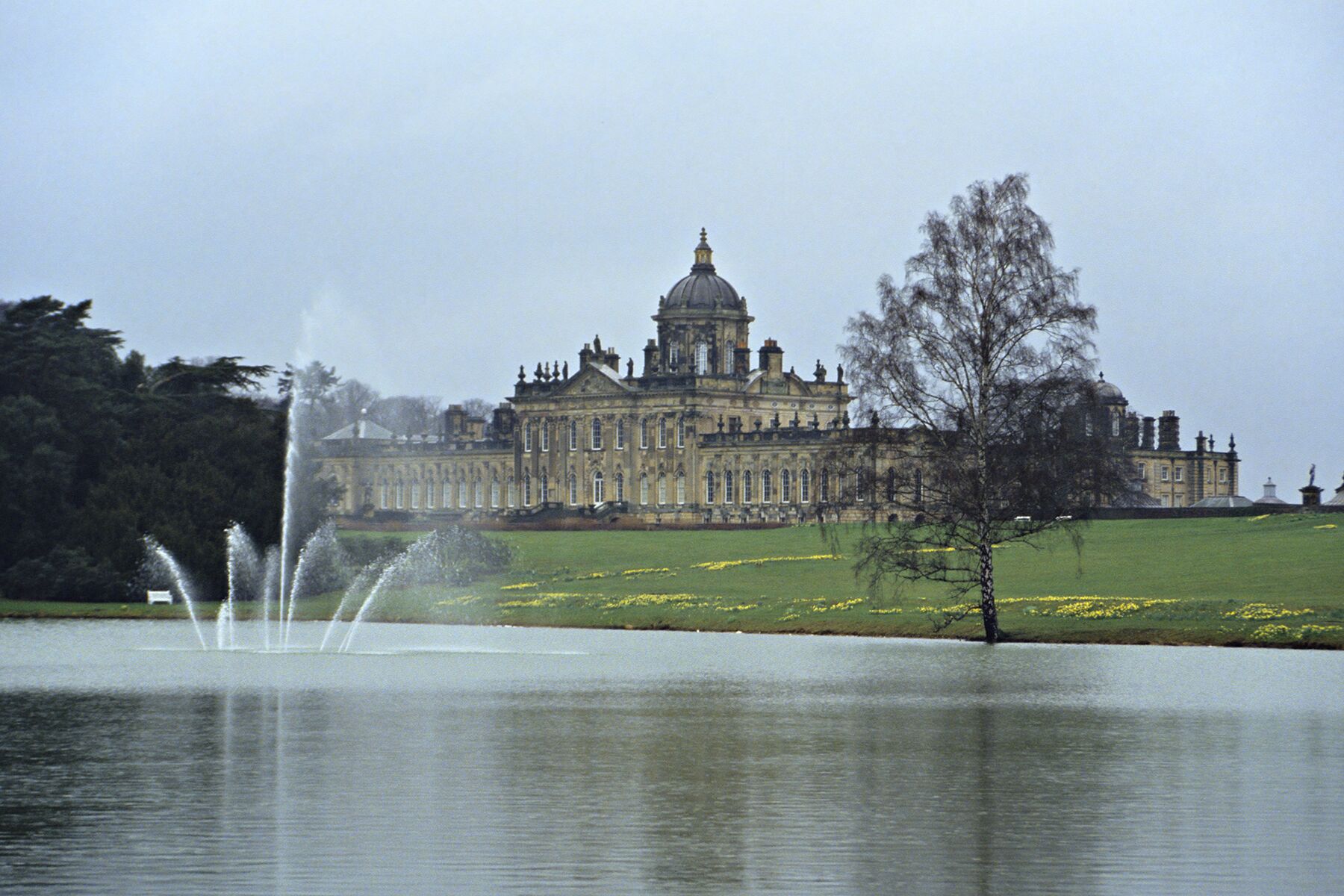 Yorkshire · Castle HowardCastle HowardWhere Castle Howard is, how to get there from York without a car, and the books, films and people behind the house you've probably already seen on screen.
Sources
- Elizabeth Gaskell, The Life of Charlotte Brontë, Vol. 2 (1857), Ellen Nussey's account of York and Scarborough, May 1849 (Project Gutenberg)
- AnneBrontë.org: Anne Brontë's last journey to York (George Hotel, Coney Street, 24 May 1849)
- Wikipedia: Margaret Clitherow (married 1571, executed 25 March 1586, canonised 1970)
- The York Oratory: St Margaret Clitherow Shrine, 35 the Shambles
- Wikipedia: Anne Lister (diaries, code, Holy Trinity Goodramgate 1834)
- Wikipedia: Gentleman Jack (TV series), filming locations
- Wikipedia: Behind the Scenes at the Museum (1995 Whitbread Book of the Year)
- Kate Atkinson, 'Night in the museum', The Guardian, 1 November 2008 (the dream; York as the main character)
- Kate Atkinson: Behind the Scenes at the Museum, opening chapter (author's excerpt)
- Wikipedia: St Mary's Church, Scarborough (Anne Brontë's grave)
- History Repeating: Anne Brontë and her grave error (age 28 on the headstone; Brontë Society plaque, 2011, dedicated 2013)
- Churches Conservation Trust: Anne Lister at Holy Trinity, Goodramgate (70 Goodramgate, York)
Get the next Behind the Story guide.
New guides to the real places behind the books and films, by email. Free. Unsubscribe in one click.