Yorkshire · York
The Shambles, York: the history, the shops and the Harry Potter question
A 400-foot medieval street in the middle of York: what's actually old about it, who lived here, and when to go if you don't like crowds.
- Where
- Central York, between King's Square and Pavement
- Length
- About 400 feet (120 m)
- Oldest buildings
- Mostly 14th and 15th century
- Cost
- Free; it's a public street
- Time needed
- 20–30 minutes, longer with Shambles Market
- Best time
- Before 10am or after 5pm
The short answer
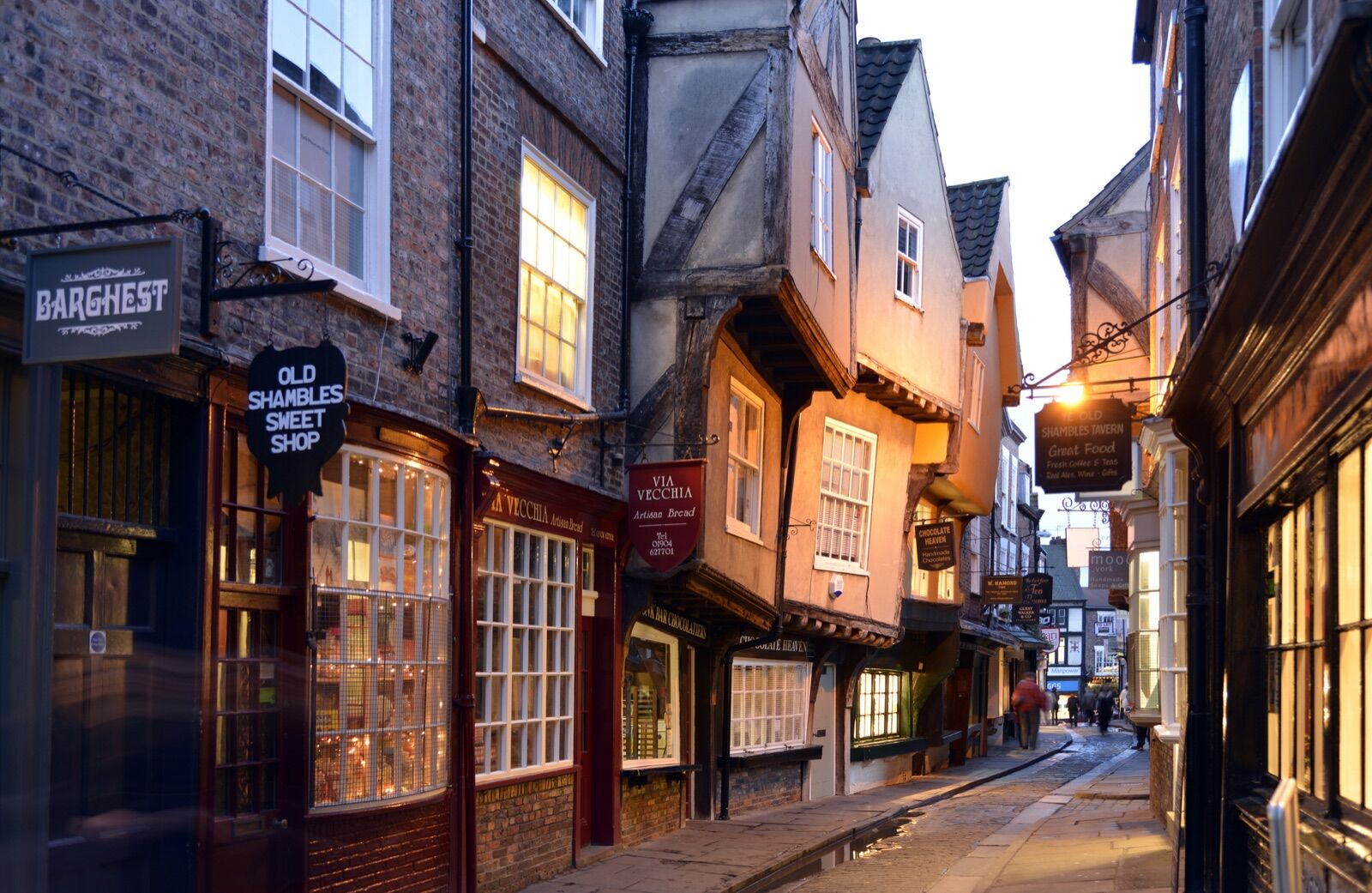
The Shambles in York is a narrow medieval street of timber-framed, overhanging houses, many built between about 1350 and 1475. It was York's butchers' street for centuries, and some shops still have meat hooks outside. It is often called the inspiration for Diagon Alley in Harry Potter, but J.K. Rowling has said she has never been there.
The Shambles is the street most people picture when they think of York: a short, narrow lane of timber-framed houses whose upper floors lean out over the cobbles. It’s free, it takes about 20 minutes to walk, and it’s busier than any other street in the city. This guide to the Shambles in York covers what’s genuinely old about it, the woman who lived and died for her faith here, the Harry Potter story, and when to go so you can actually see it.
What is the Shambles in York?
The Shambles is a street about 400 feet (120 m) long in the center of York, running between King’s Square and Pavement. It’s lined with listed buildings, many of them timber-framed and “jettied”: each upper floor sticks out further than the one below. Most of the surviving houses date from about 1350 to 1475.
In the Middle Ages lots of York streets looked like this. The Shambles is the one that survived most intact, which is why people have been coming to look at it since the 19th century.
Why it was York’s butchers’ street
The name tells you its job. Shambles comes from the Old English sceamol, a bench or stall: the tables butchers laid their meat out on. By 1240 the street was called Haymongergate, in 1394 Nedlergate, and by 1426 it was the Great Flesh Shambles, later shortened to the name it has now.
The Domesday Book of 1086 doesn’t name the street, but historians identify it from an entry listing two butchers’ stalls near the church of St Crux, which stood at the Pavement end.
The street suited butchers. The overhanging upper floors kept direct sun off the meat on display. The backs of the shops were slaughterhouses, and the waste went into the gutters, which slope so the rain carried it away. (Worth remembering when the street looks pretty.) In 1885 there were 31 butchers’ shops here. The last ones closed in the 20th century. Look up as you walk: several shopfronts still have iron meat hooks and the wide wooden sills where the meat was laid out.
What to look for
| Feature | Where | What to notice |
|---|---|---|
| Meat hooks and display sills | On several shopfronts | Original butchers’ fittings, still in place |
| Jettied upper floors | Along most of the street | Upper floors reaching toward each other |
| Shrine of St Margaret Clitherow | Number 35 | A small chapel open to visitors |
| Snickelways | Off the west side | Narrow alleys leading to Shambles Market |
| Shambles Market | Behind the west side | Market stalls, including street food |
| 1 Shambles | King’s Square end | Timber-framed, probably 14th century |
Almost every building on the street is listed. Some were heavily rebuilt in the 1950s, when York’s council bought properties in poor repair and also knocked down the old slaughterhouses at the back and the whole of the neighboring Little Shambles. The open space behind the street, where Shambles Market now runs, is the result. The market was called Newgate Market until 2015.
Margaret Clitherow, the Pearl of York
The most important person connected with the Shambles is a woman, and she’s the bit most visitors miss. Margaret Clitherow married John Clitherow, a well-off butcher on the street, in 1571, when she was about fifteen. She became a Catholic in 1574, and she hid priests in her home after a 1584 law made that a capital crime. Her house was searched in March 1586. She refused to plead, which meant there would be no trial at which her children could be made to testify, and on 25 March 1586 she was pressed to death in York. She was made a saint in 1970 and is known as the Pearl of York.
Her house is thought to have been number 10. The shrine to her is across the street at number 35: a small room with a priest-hole fireplace, and one of the few quiet spots on the street. Check the York Oratory’s page for current opening times.
Is the Shambles the real Diagon Alley?
This is the question everyone asks, so here’s the plain answer.
- The claim: the Shambles inspired Diagon Alley, the wizarding shopping street in the Harry Potter books.
- What J.K. Rowling said: in May 2020, after York shopkeepers repeated the claim, Rowling said on social media that she had never seen or been to the Shambles.
- The films: no Harry Potter scenes were filmed on the Shambles. Film fans will recognize Leadenhall Market in London, which was used for the Diagon Alley area in the first film.
- What you’ll find: since 2017 four wizard-themed shops have opened on the street. The first, The Shop That Must Not Be Named, opened in May 2017 and had lines into the market from day one.
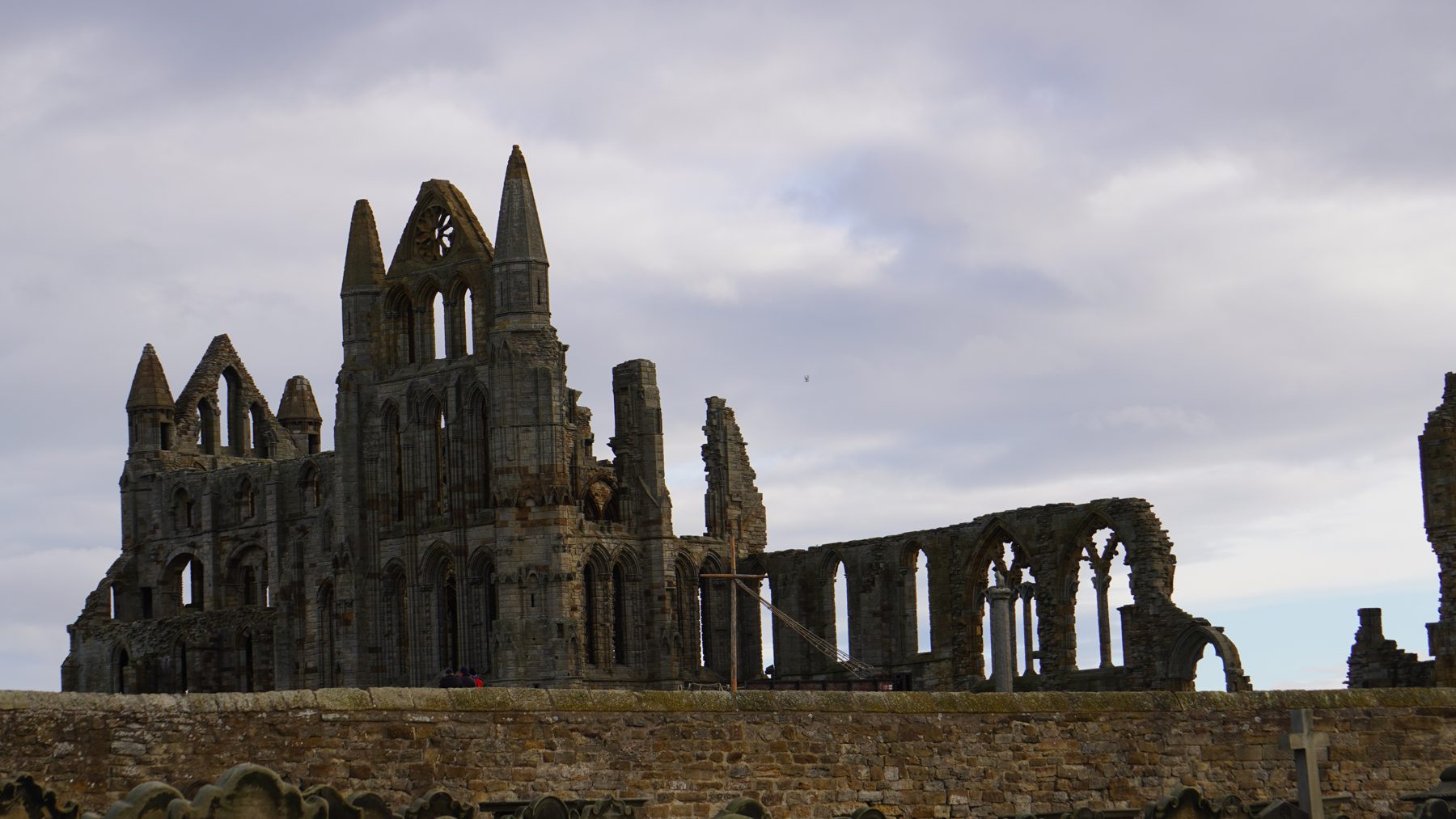
So: not Diagon Alley. But it does look the part, and the shops are fun if you’ve got Potter fans with you. If you’re drawn to Yorkshire’s darker stories, the real book connection is on the coast: Bram Stoker set Dracula’s arrival in England at Whitby (see our guide to Whitby Abbey and Dracula).
The Shambles shops today
There are no butchers left. It’s gift shops, sweet shops, cafés and the wizard shops now, plus a bookshop and a bakery. For a sit-down lunch you’ll find more choice in the streets around it. For a proper tea, Bettys in St Helen’s Square is about five minutes’ walk.
When to visit the Shambles
The street is narrow, and from late morning to late afternoon it fills up, especially at weekends and in school holidays. For photos of the empty street, go before about 10am, when most shops are still shut, or after about 5pm, when the day-trippers have gone and the shop lights come on. On a wet day the cobbles get slippery, so wear shoes with grip.
Hotels near the Shambles
The Shambles is in the middle of the walled city, so any hotel inside the walls puts you a short walk away, and the station is about 15 minutes on foot. Staying inside the walls also means you can see the street early, before the crowds. That’s the best reason to stay in.
How the Shambles fits into a day in York
The Shambles sits between York Minster and York Castle Museum, so it folds easily into a walk between them. From the Minster, walk down Low Petergate to King’s Square and you’re at the top of the street. From the bottom end, Pavement leads on to Castlegate, the Castle Museum and Clifford’s Tower, about 10 minutes away. Our guide to things to do in York has a one-day route that uses this order.
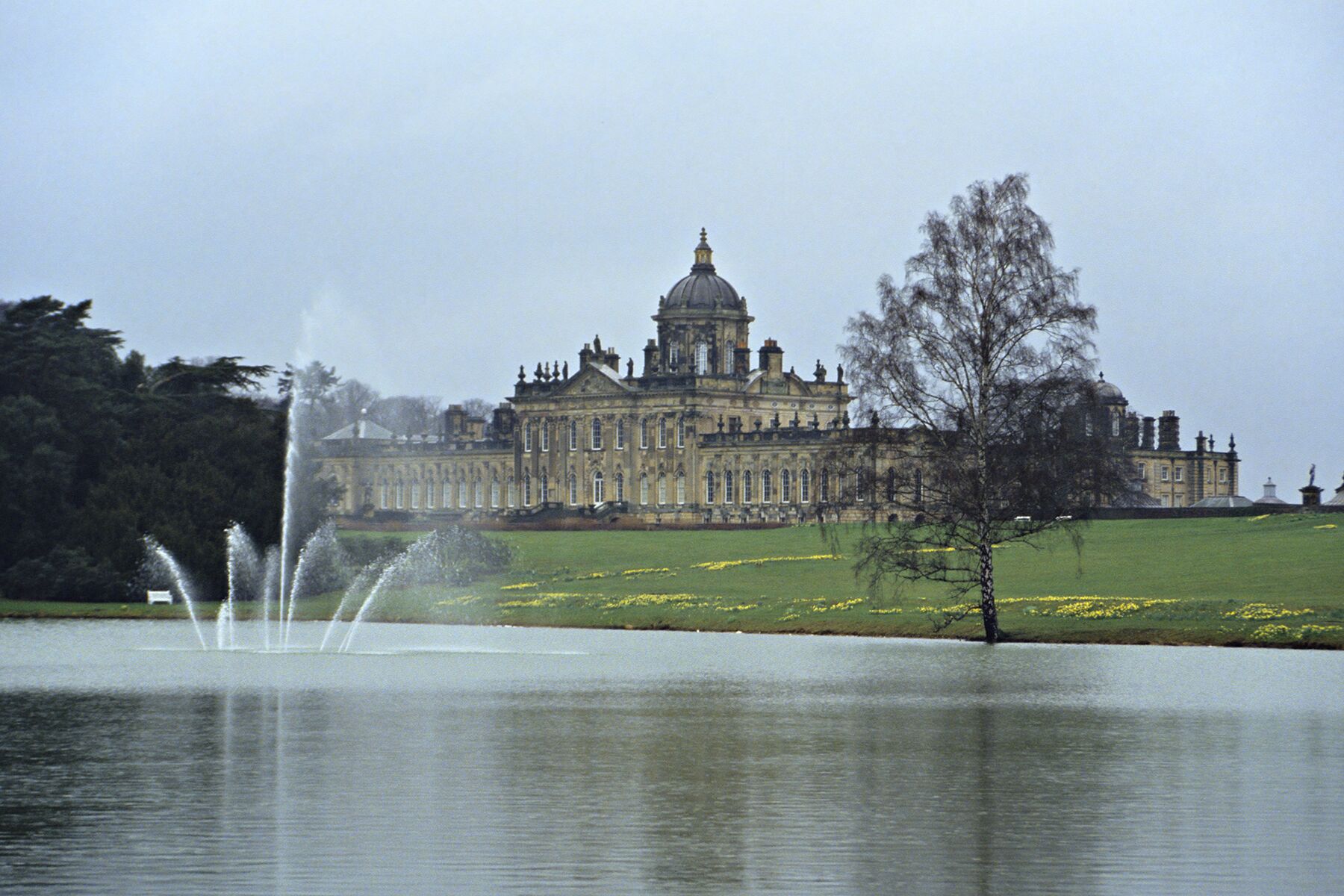
If you’re in York for its women’s history, Anne Lister’s church, Holy Trinity on Goodramgate, is about five minutes north of King’s Square. And if you’re heading out of the city, Castle Howard, where Brideshead Revisited was filmed, is 15 miles away.
The Shambles on our trip
On our October 2027 Yorkshire trip, we walk through the Shambles together on Thursday 7 October, after an early lunch at Bettys and on the way to York Castle Museum. It’ll be busy at that time of day. That’s fine: later in the afternoon you’ve got free time, and you can come back once the crowds thin.
The Shambles through the centuries
The street is medieval, but its most famous resident, Margaret Clitherow, was an Elizabethan: she died two years before the Armada, in the same decade Spenser was writing The Faerie Queene. Then it's a long jump to the 1990s, when a boy wizard brought the crowds.
- Middle Ages 1066–1485
- Elizabeth I 1558–1603
- Victorian 1837–1901
- Elizabeth II 1952–2022
The story Britain The wider world Other writers
- 1086 The story The Domesday Book lists two butchers' stalls near St Crux church, at what is now the Pavement end of the street.
- 1240 The story The street is recorded as Haymongergate.
- 1348 Britain The Black Death reaches England.
- 1394 The story Now it's called Nedlergate.
- 1426 The story By now it's the Great Flesh Shambles, later cut down to the Shambles.
- 1476 Other writers William Caxton sets up England's first printing press, at Westminster.
- 1492 The wider world Columbus reaches the Caribbean.
- 1558 Britain Elizabeth I becomes queen.
- 1571 The story Margaret marries John Clitherow, a butcher on the street. She's about fifteen.
- 1574 The story Margaret becomes a Catholic.
- 1586 The story Margaret Clitherow is pressed to death in York on 25 March for hiding priests.
- 1587 Britain Mary, Queen of Scots is executed.
- 1588 Britain The Spanish Armada is defeated.
- 1590 Other writers Edmund Spenser publishes the first three books of The Faerie Queene.
- 1607 The wider world English settlers found Jamestown, Virginia.
- 1885 The story There are 31 butchers' shops on the Shambles.
- 1970 The story Margaret Clitherow is made a saint.
- 1997 Other writers Harry Potter and the Philosopher's Stone is published.
- 2001 Other writers The first Harry Potter film uses Leadenhall Market in London for the Diagon Alley area.
- 2015 The story Newgate Market, behind the street, is renamed Shambles Market.
- 2017 The story The Shop That Must Not Be Named opens in May, the first of the wizard shops.
- 2020 The story J.K. Rowling says she has never seen or been to the Shambles.
Questions people ask
Is the Shambles in York the real Diagon Alley?
No. It's a popular idea, but J.K. Rowling said in 2020 that she had never seen or been to the Shambles, and no Harry Potter film scenes were shot there. Several wizard-themed shops have opened on the street since 2017.
Why is it called the Shambles?
The name comes from the Old English word for a bench or stall, the tables butchers used to display meat. By 1426 the street was known as the Great Flesh Shambles, later shortened to the Shambles.
How old is the Shambles in York?
Butchers' stalls in this area are recorded in the Domesday Book of 1086, and many of the surviving buildings date from about 1350 to 1475. Some were rebuilt or restored in the 1950s.
What shops are on the Shambles in York?
Today it's gift shops, sweet shops, cafés, a bakery, a bookshop and several Harry Potter-style wizard shops, including The Shop That Must Not Be Named, which opened in 2017. No butchers are left.
Who was Margaret Clitherow?
Margaret Clitherow was a butcher's wife who lived on the Shambles and hid Catholic priests in the reign of Elizabeth I. She was executed in York in 1586 and later made a saint. Her shrine is at number 35.
When is the best time to visit the Shambles?
Early morning or early evening. From late morning to late afternoon, especially at weekends and in school holidays, the street can be shoulder to shoulder.
Read next
- Yorkshire · Anne ListerAnne ListerThe Halifax landowner who wrote five million words, a sixth of them in code, and married a woman in a York church in 1834. Here's her story, and where you can still follow it.
 Yorkshire · Castle HowardCastle HowardWhere Castle Howard is, how to get there from York without a car, and the books, films and people behind the house you've probably already seen on screen.
 Yorkshire · The moors and the coastWhitby Abbey and DraculaA ruined abbey on a cliff, 199 steps up from the harbour, and one summer in 1890 when Bram Stoker walked into the town library and came out with the name Dracula. Here's what's real, what's in the book, and how to see both.
- Yorkshire · York · BooksBehind the Scenes at the MuseumWho's who in Ruby Lennox's family, generation by generation, how the chapters and footnotes fit together, and the York streets you can still walk. Spoilers are tucked away until you click.
Sources
- Wikipedia: The Shambles (name, Domesday, 1350–1475 buildings, 1950s rebuilding, Rowling denial, wizard shops)
- York Civic Trust: Shambles plaque
- YorkMix: Is the Shambles really the inspiration for Diagon Alley? J.K. Rowling speaks out
- YorkMix: Harry Potter shop opens on the Shambles (2017)
- The York Oratory: St Margaret Clitherow Shrine
- Wikipedia: Margaret Clitherow (married 1571, executed 25 March 1586, canonised 1970)
- BBC North Yorkshire: The Pearl of York
- XYU and Beyond: The Shambles, York (Diagon Alley filmed at Leadenhall Market)
- Wikipedia: Harry Potter and the Philosopher's Stone (published 26 June 1997)
- Wikipedia: The Faerie Queene (Books I–III, 1590)
Get the reading list first.
Trip announcements, curated reading lists, and the occasional dispatch — before anyone else.