Caribbean · Dominica · Books
Jean Rhys's Wide Sargasso Sea: plot, setting and the Dominica behind it
The first Mrs Rochester's side of the story, by a novelist who grew up on Dominica. What happens, where, and why it changes how you read Jane Eyre.
- Author
- Jean Rhys (1890–1979), born on Dominica
- Published
- 1966, by André Deutsch
- Length
- A short novel in three parts
- Settings
- Coulibri, Jamaica · Granbois, Dominica · Thornfield Hall, England
- Time
- The 1830s–1840s, after slavery ended on 1 August 1834
- Prize
- WH Smith Literary Award, 1967
- Films
- 1993 (John Duigan) · 2006 (BBC Four, Brendan Maher)
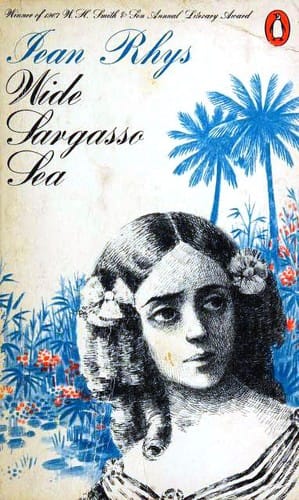
The short answer
Wide Sargasso Sea is a 1966 novel by Jean Rhys that tells the life of Bertha Mason, the 'madwoman in the attic' in Charlotte Brontë's Jane Eyre. Rhys gives her back her real name, Antoinette Cosway, a Creole heiress who grows up in Jamaica after the end of slavery, marries an Englishman who is never named but is clearly Rochester, and is taken to England and locked away. Part Two is set on Dominica, the island where Rhys was born in 1890.
Jean Rhys’s Wide Sargasso Sea takes one of the most famous minor characters in English fiction, the wife Mr Rochester keeps locked in the attic in Jane Eyre, and gives her a childhood, a name and a voice. Rhys was born on Dominica in 1890, left at 16, and spent decades in England before she wrote it. It came out in 1966, when she was in her seventies, and pulled her back out of years of obscurity. (Plenty of people had assumed she was dead.) Below: what happens, where it happens, how it answers Jane Eyre, and the island behind it.
What is Wide Sargasso Sea about?
Short answer: it’s Bertha Mason’s side of the story. In Charlotte Brontë’s Jane Eyre (1847), Rochester’s first wife is a Creole woman from Jamaica, kept hidden at Thornfield Hall, and described more like an animal than a person. Rhys renames her Antoinette Cosway and follows her from girlhood in Jamaica to the attic.
It’s a book about money, race and belonging in the Caribbean just after slavery ended. Antoinette’s family were slave owners, now ruined. The formerly enslaved people around her resent her family, and the English treat her as an outsider. She belongs fully to neither Europe nor Jamaica. Her marriage is arranged around her money. And Rhys writes about how a man can decide a woman is mad, and then make it true. That’s the part that stays with people.
Wide Sargasso Sea plot summary
Three parts. Here’s what happens, spoilers and all.
Part One: Coulibri, Jamaica. Antoinette tells this part as a child. Her family’s sugar estate, Coulibri, is falling apart after the end of slavery, and her widowed mother, Annette, who is from Martinique, is isolated and poor. Annette marries a wealthy Englishman, Mr Mason. His new money angers the formerly enslaved people around the estate, and a crowd burns the house down. Antoinette’s younger brother, Pierre, dies as a result. Grief pushes Annette into breakdown, and Mason sends her away to be kept by caretakers who abuse her. Antoinette is sent to a convent school in Spanish Town.
Part Two: Granbois, Dominica. Antoinette is now married to a young Englishman. He’s never named; he’s Rochester. They honeymoon at Granbois, her mother’s family estate in the mountains of Dominica, outside the village of Massacre. He narrates most of this part. A man called Daniel Cosway, who says he’s Antoinette’s illegitimate half-brother, writes to him with stories of madness in her family and asks for money. Antoinette goes to her old nurse, Christophine, for an obeah potion to win back her husband’s love. It makes him ill instead, and turns him against her for good. He has an affair under her nose, starts calling her Bertha, and decides to take her to England.
Part Three: Thornfield Hall, England. Antoinette, now “Bertha,” is shut in the attic of a great house, guarded by a servant, Grace Poole. She has lost track of time. Richard Mason visits and she attacks him with a knife. She dreams of fire spreading through the house, and the novel ends as she wakes, takes a candle and goes out into the dark passage. If you’ve read Jane Eyre, you know what comes next.
The setting: why Dominica matters
Most of the novel takes place in Jamaica and England, but its center, the honeymoon in Part Two, is on Dominica, Rhys’s own island. Granbois is made up. Massacre is real: a town on Dominica’s west coast, north of Roseau. The French named it for a 1674 killing. Philip Warner, Governor of Antigua, murdered his half-brother “Indian” Thomas Warner, the son of an English colonist and a Kalinago woman, and colonists then killed about 100 people in the village. The novel barely touches the name, and study guides often point out how it hangs over the honeymoon anyway. Our Dominica guide has more on the Kalinago history.
The Dominica chapters are full of rain, forest and flowers; the couple arrive in a downpour. Her husband is overwhelmed by the place, and his fear of the island and his fear of his wife get hard to tell apart.
Wide Sargasso Sea and Jane Eyre
Rhys built her book out of details Brontë had already put in Jane Eyre. In Chapter XXVII, Rochester tells Jane how his marriage was made: his father “told me Miss Mason was the boast of Spanish Town for her beauty: and this was no lie.” In Chapter XXVI, on the day his wedding to Jane is stopped, he says to the room: “Bertha Mason is mad; and she came of a mad family; idiots and maniacs through three generations! Her mother, the Creole, was both a madwoman and a drunkard!” Then he takes them upstairs, where Jane sees her for the first time:
In the deep shade, at the farther end of the room, a figure ran backwards and forwards. What it was, whether beast or human being, one could not, at first sight, tell: it grovelled, seemingly, on all fours; it snatched and growled like some strange wild animal: but it was covered with clothing, and a quantity of dark, grizzled hair, wild as a mane, hid its head and face.
(Charlotte Brontë, Jane Eyre, 1847, Chapter XXVI. Text from Project Gutenberg.)
Every piece of that gets answered in Wide Sargasso Sea: the Creole mother, the family “madness,” Spanish Town, the money, Grace Poole, the attic and the fire. Rhys doesn’t change what happens in Jane Eyre. She changes who’s telling it. Rochester’s account of a mad, violent wife becomes one side of a marriage, told by a frightened young man a long way from home.
For the Brontës themselves, and the house in Yorkshire where Jane Eyre was written, see our guide to the Brontë sisters and their books.
Should you read Jane Eyre first?
It helps, but you don’t have to. Wide Sargasso Sea stands on its own as a short novel about the Caribbean. If you know Jane Eyre you’ll catch more: the names, Grace Poole, the ending. If you read Jane Eyre afterward, you’ll probably never read Bertha’s scenes the same way again. Either order works. Just don’t skip one.
Who was Jean Rhys?
| Year | Jean Rhys’s life |
|---|---|
| 1890 | Born Ella Gwendoline Rees Williams on Dominica, 24 August. Welsh doctor father; white Creole mother whose family had owned a sugar estate. |
| c. 1907 | Leaves Dominica at 16 for school in Cambridge, England. |
| 1934 | Voyage in the Dark. |
| 1936 | Visits Dominica for the first time since leaving, with her second husband. |
| 1939 | Good Morning, Midnight. Then years of silence. |
| 1949 | Selma Vaz Dias advertises in the New Statesman to find her, hoping to adapt her work for radio. Rhys answers, and the contact helps lead to Wide Sargasso Sea. |
| 1966 | Wide Sargasso Sea is published. |
| 1967 | Wins the WH Smith Literary Award. |
| 1978 | Made a CBE. |
| 1979 | Dies in Exeter, England, on 14 May, aged 88. Her unfinished memoir, Smile Please, is published the same year. |
Rhys’s Roseau house, on the corner of Cork Street and Independence Street, was where her family lived when they were in town. It later became a guesthouse, had a plaque on its mango tree, and was demolished in May 2020, as Polly Pattullo reported. So there’s no Rhys site left to visit on Dominica, which is a real loss.
Wide Sargasso Sea adaptations: the 1993 and 2006 films
Wide Sargasso Sea (1993). Directed by John Duigan, written by Duigan, Carole Angier and Jan Sharp, with Karina Lombard as Antoinette and Nathaniel Parker as Rochester. Rachel Ward plays Annette, Michael York plays Mr Mason, and a young Naomi Watts has a small part. According to the AFI Catalog, production began in Jamaica in July 1991. It opened in the US on 16 April 1993 with an NC-17 rating for its sexual content. Reviews were mixed: 65 percent of the 20 critics’ reviews counted by Rotten Tomatoes are positive.
Wide Sargasso Sea (2006). A television film made by Kudos for BBC Wales, written by Stephen Greenhorn and directed by Brendan Maher. Rebecca Hall plays Antoinette, Rafe Spall plays Rochester and Nina Sosanya plays Christophine. It was first shown on BBC Four on 9 October 2006 and repeated on BBC One. We couldn’t confirm where it was filmed, so we’ve left that out rather than guess.
Other versions: Sargasso: A Caribbean Love Story (1991, directed by Michael Gilkes); a chamber opera with music by Brian Howard (1997); a ten-part BBC Radio 4 reading adapted by Margaret Busby and read by Adjoa Andoh (2004); and a one-hour Radio 4 drama by Rebecca Lenkiewicz (2016).
Reputation
Wide Sargasso Sea won the WH Smith Literary Award in 1967. It was number 94 on the Modern Library’s 100 best novels (1998), on Time’s list of the 100 best English-language novels since 1923 (2005), number 53 in the BBC’s 100 greatest British novels (2015), and number 10 on The Times’ 50 best novels of the past 70 years (2022).
More books set in the Caribbean
If you want to keep going after Wide Sargasso Sea, these are on our group’s list for the Windward Islands:
- Phyllis Shand Allfrey, The Orchid House (1953). A white Creole family on a thinly disguised Dominica, told by their Black nurse. Allfrey founded the Dominica Labour Party in 1955.
- Jean Rhys, Smile Please (1979). Her memoir; the early chapters are her Dominica childhood.
- Jamaica Kincaid, A Small Place (1988). A short, angry book about Antigua and tourism. See our Antigua guide.
- Maryse Condé, Windward Heights (1995). Wuthering Heights retold in Guadeloupe and Cuba, a natural partner to this one. (Brontë fans, see our guide to the Wuthering Heights locations.)
- Joseph Zobel, Black Shack Alley (1950). A boy growing up on a Martinique sugar estate. See our Martinique guide.
- Caryl Phillips, Cambridge (1991). An Englishwoman’s account of her father’s sugar estate, set against the account of an enslaved man on it. Phillips was born on St Kitts.
Reading it before you go
Wide Sargasso Sea is one of the books our group reads before Mermaids, Pirates and Poets (Caribbean Sail), our week on the Royal Clipper in January 2028. The ship calls at Cabrits, in Dominica’s north, on Monday 17 January. Roseau is about an hour’s drive south and Rhys’s house is gone, so the shore stop that day is a rowing boat up the Indian River and Fort Shirley, not a Rhys site. I’d rather be straight about that now. You’ll still see the rivers, forest and mountains that fill Part Two, and that’s the bit of the book that really belongs to the island.
Wide Sargasso Sea's world: what else was happening
Two eras matter here. The story is set in the 1830s and 1840s, just after slavery ended in the British Caribbean, the same years Charlotte Brontë wrote Jane Eyre. Rhys wrote it more than a century later, in the years Jamaica and Barbados became independent and Caribbean writers like Sam Selvon and V. S. Naipaul were being read in London.
- Apprenticeship, after the Abolition Act 1834–1838
- Victorian (the novel's setting) 1837–1901
- West Indies Federation 1958–1962
The story The Caribbean The wider world Other writers
- 1834 The Caribbean Britain's Abolition Act takes effect on 1 August; Antoinette's family, former slave owners, are ruined.
- 1838 The Caribbean Apprenticeship ends and the formerly enslaved are fully free across the British Caribbean.
- 1847 Other writers Charlotte Brontë publishes Jane Eyre, with Bertha Mason of Spanish Town in the attic.
- 1848 The Caribbean France abolishes slavery in Martinique, Annette Cosway's island.
- 1865 The Caribbean The Morant Bay Rebellion in Jamaica is crushed; Britain takes direct rule of the island.
- 1890 The story Jean Rhys is born Ella Gwendoline Rees Williams in Roseau, Dominica, on 24 August.
- 1907 The story Rhys leaves Dominica at 16 for school in Cambridge, England.
- 1924 Other writers In Paris, Ford Madox Ford takes Rhys up and publishes her early stories.
- 1929 Other writers Virginia Woolf publishes A Room of One's Own.
- 1934 The story Rhys publishes Voyage in the Dark, whose narrator also grew up in the Caribbean.
- 1936 The story Rhys visits Dominica for the first time since she left.
- 1939 The story Good Morning, Midnight; then nearly 30 years without a new novel.
- 1948 The wider world The Empire Windrush docks at Tilbury with hundreds of Caribbean migrants.
- 1949 The story Actress Selma Vaz Dias advertises in the New Statesman to find Rhys, who many assumed was dead.
- 1953 Other writers Phyllis Shand Allfrey publishes The Orchid House, another white Creole family on Dominica.
- 1956 Other writers Sam Selvon publishes The Lonely Londoners.
- 1961 Other writers V. S. Naipaul publishes A House for Mr Biswas.
- 1962 The Caribbean Jamaica becomes independent on 6 August.
- 1966 The story Wide Sargasso Sea is published by André Deutsch; Rhys is 76.
- 1966 The Caribbean Barbados becomes independent on 30 November.
- 1967 The story The novel wins the WH Smith Literary Award.
- 1978 The Caribbean Dominica becomes independent on 3 November; Rhys is made a CBE the same year.
- 1979 The story Rhys dies in Exeter on 14 May; Smile Please is published.
- 1979 Other writers Sandra Gilbert and Susan Gubar publish The Madwoman in the Attic, named for Bertha.
- 1993 The story John Duigan's film, shot in Jamaica, opens in the US.
- 2006 The story BBC Four shows the television film with Rebecca Hall and Rafe Spall.
- 2020 The story Rhys's family house in Roseau is demolished in May.
Questions people ask
What is Wide Sargasso Sea about?
It's the life story of the first Mrs Rochester from Jane Eyre. Antoinette Cosway grows up poor on a ruined Jamaican sugar estate after emancipation, is married off to an Englishman who renames her Bertha and decides she's mad, and ends up locked in the attic at Thornfield Hall.
How is Wide Sargasso Sea connected to Jane Eyre?
It's a prequel written from the other side. In Jane Eyre, Bertha Mason is Rochester's hidden first wife from Spanish Town, Jamaica, who sets fire to Thornfield. Jean Rhys imagines her childhood, her marriage and her confinement, and stops just before the fire.
Where is Wide Sargasso Sea set?
Part One is set at Coulibri, a run-down sugar estate in Jamaica, and in Spanish Town. Part Two, the honeymoon, is at Granbois, a mountain estate on Dominica near the village of Massacre. Part Three is set at Thornfield Hall in England.
Who narrates Wide Sargasso Sea?
Antoinette narrates Part One as a child. Her husband narrates most of Part Two, with one section from Antoinette. Antoinette narrates Part Three from the attic. The husband is never named, but he's Rochester.
Is Wide Sargasso Sea hard to read?
It's short but dense. The chapters jump between voices and leave a lot unsaid, so many readers find it pays off on a second read, or read alongside Jane Eyre.
Is there a film of Wide Sargasso Sea?
There are two. John Duigan's 1993 film stars Karina Lombard and Nathaniel Parker and was shot in Jamaica. A 2006 BBC Four television film, directed by Brendan Maher, stars Rebecca Hall and Rafe Spall.
Read next
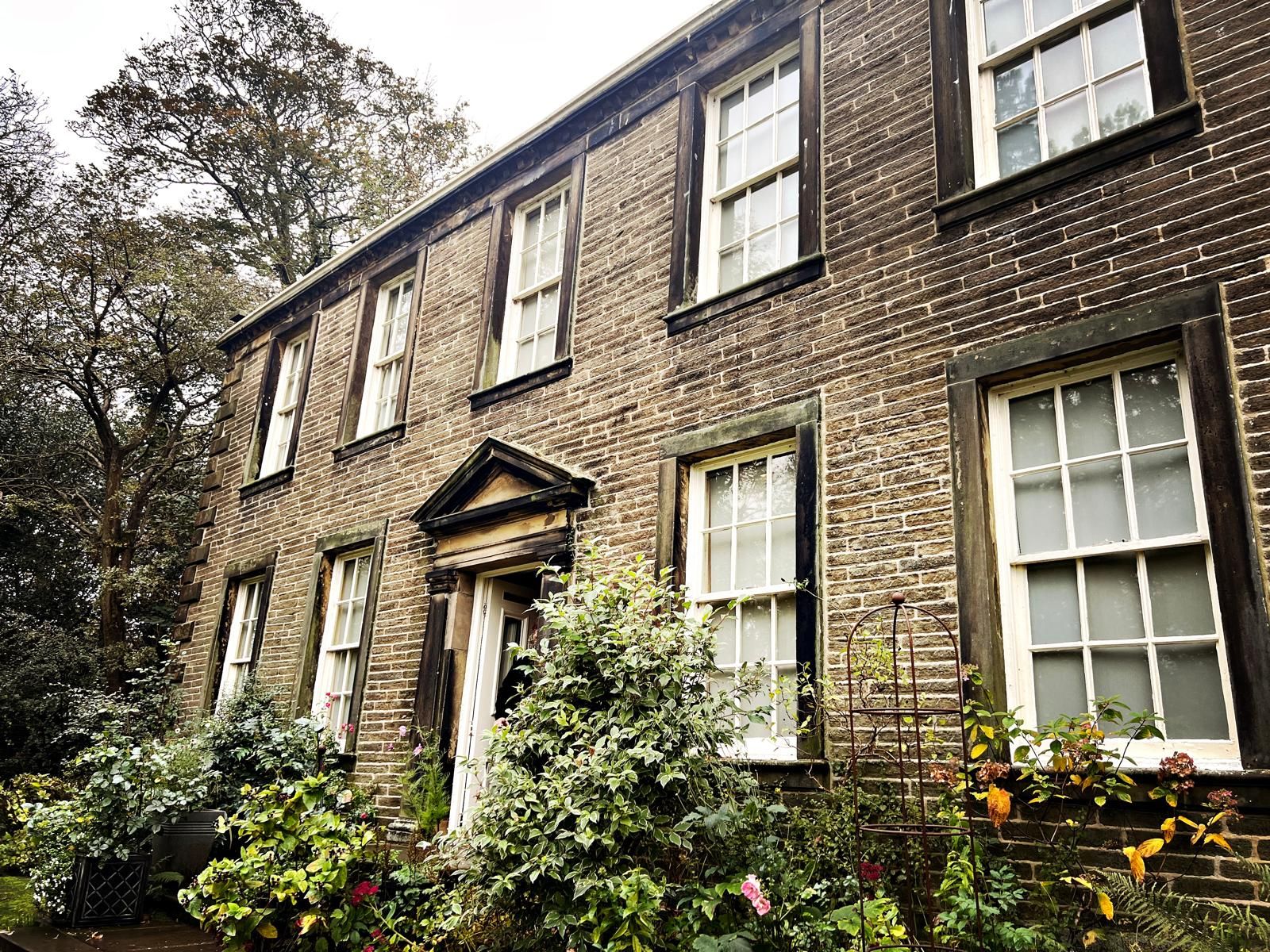 Yorkshire · The BrontësBooks by the Brontë sistersCharlotte, Emily and Anne Brontë wrote seven novels between them, all at one house in Haworth, West Yorkshire. Here's every book in order, who wrote which, and the story behind them, including what Charlotte really thought of Jane Austen.
- Caribbean · MartiniqueThings to do in MartiniqueFrance in the Caribbean: a volcano that wiped out a city, an empress's birthplace, the only rum with its own appellation, and the poet who named Négritude.
- Caribbean · AntiguaThings to do in AntiguaWhat to see on Antigua in the Caribbean, how to fit it into a port day without spending it in a taxi, and the island's history told straight.
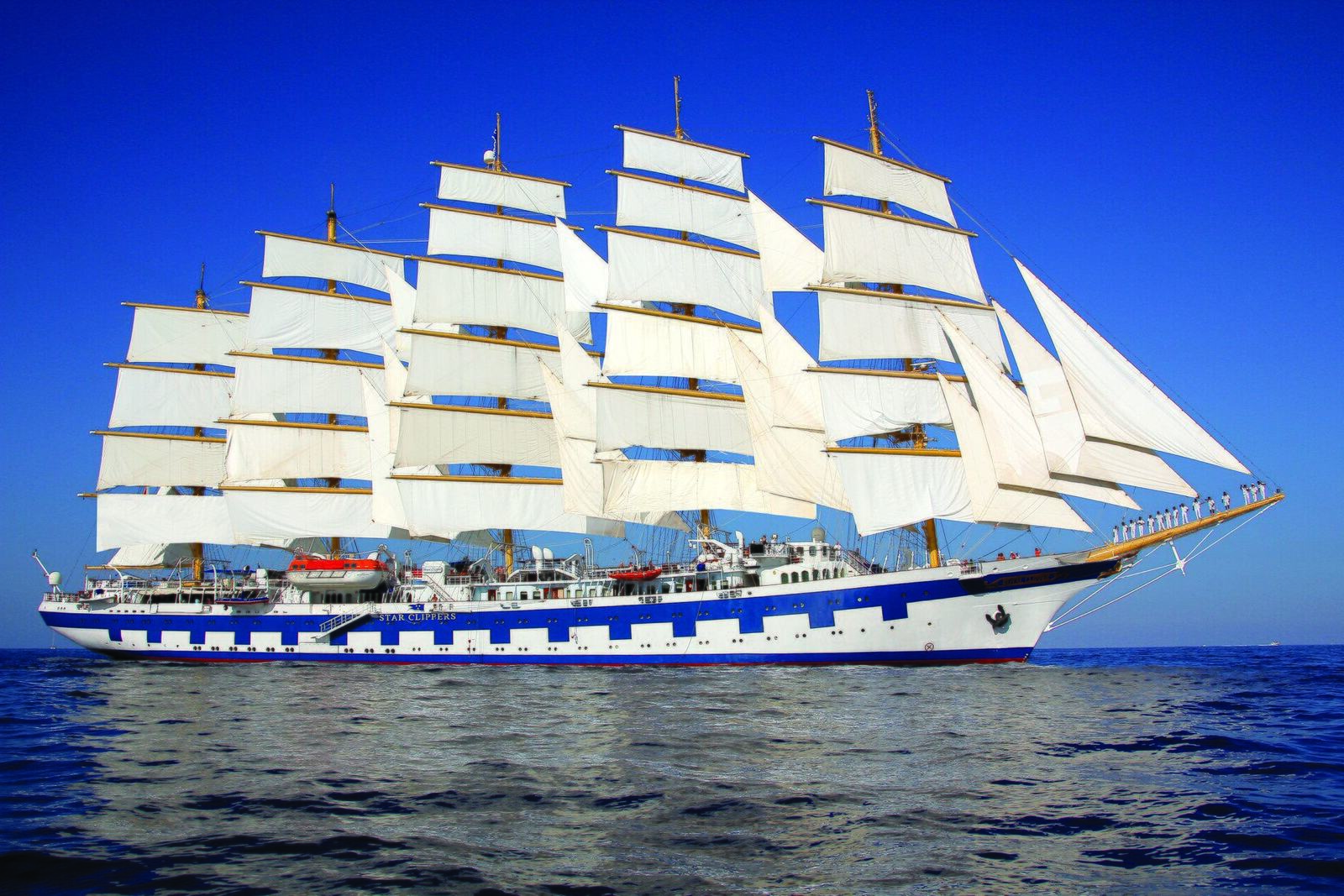 Caribbean · The Royal ClipperRoyal ClipperWhat the ship is, where her design came from, how a week on board works, and where she sails from Barbados. Straight answers, no brochure gloss.
- Caribbean · Film locationsPirates of the Caribbean filming locationsWhich scenes were shot where, film by film, which real places you can still visit, and the one our ship actually stops at.
Sources
- Wikipedia: Wide Sargasso Sea
- Wikipedia: Jean Rhys
- Project Gutenberg: Jane Eyre by Charlotte Brontë (text of Chapters XXVI and XXVII)
- Wikipedia: Wide Sargasso Sea (1993 film)
- AFI Catalog: Wide Sargasso Sea (1993)
- Wikipedia: Wide Sargasso Sea (2006 film)
- Repeating Islands (Polly Pattullo): Jean Rhys house in Roseau demolished, 2020
- Wikipedia: Massacre, Dominica
- GradeSaver: Wide Sargasso Sea, Part Two summary
- Wikipedia: Phyllis Shand Allfrey
- Wikipedia: Morant Bay rebellion
- Wikipedia: The Madwoman in the Attic
- Wikipedia: HMT Empire Windrush
Get the reading list first.
Trip announcements, curated reading lists, and the occasional dispatch — before anyone else.