Caribbean · St Kitts
Things to do in St Kitts: Brimstone Hill, the sugar train, Basseterre and beaches
What to see on St Kitts, how to split a port day between a fortress and a beach, and the island's history told straight.
- Where
- Leeward Islands, Eastern Caribbean; with Nevis, the Federation of St Kitts and Nevis
- Capital
- Basseterre
- Size
- About 168–174 km²; highest point Mount Liamuiga, 1,156 m
- Independence
- 19 September 1983
- Money
- East Caribbean dollar (about EC$2.70 to US$1)
- UNESCO site
- Brimstone Hill Fortress National Park, inscribed 1999
- Our ship calls at
- Basseterre (morning) and South Friar's Bay (afternoon), Wednesday 19 January 2028
The short answer
The best things to do in St Kitts are Brimstone Hill Fortress National Park (a UNESCO World Heritage Site since 1999), the St Kitts Scenic Railway on the old sugar-cane line, Romney Manor and its gardens, a walk around Basseterre's Circus and Independence Square, beaches such as South Friar's Bay, and the ferry across the Narrows to Nevis, Alexander Hamilton's birthplace. St Kitts was the first English colony in the Caribbean, founded in the 1620s.
St Kitts is a small, steep volcanic island in the Leeward Islands. There’s a dormant volcano, Mount Liamuiga, in the rainforest at its center, and the towns and old sugar estates are strung round a coastal ring road. The things to do in St Kitts lean heavily on history: it was the first English colony in the Caribbean, a sugar island for more than three centuries, and the site of one of the best-preserved fortresses in the Americas. Nevis, its sister island, is a short ferry ride away. Below: what to see, how to split a port day, and the history, including the parts the brochures skip.
St Kitts at a glance
St Kitts covers about 65 square miles, with a population of about 35,000 to 40,000. Basseterre is the capital of the Federation of St Kitts and Nevis and the island’s port. The interior is too steep to live in, so everyone lives near the coast. Mount Liamuiga, the highest point, reaches 1,156 meters. The country became independent on 19 September 1983 and uses the East Caribbean dollar. Robert L. Bradshaw International is the airport. For current events and opening times, the St Kitts Tourism Authority is the official source.
The best things to do in St Kitts
| What | Where | Time to allow | Why go |
|---|---|---|---|
| Brimstone Hill Fortress | About 25 minutes’ drive from Basseterre | 2 hours | UNESCO fortress, sea views, museum |
| St Kitts Scenic Railway | Around the island on the old cane line | Half day | Narrow-gauge sugar railway, built 1912–1926 |
| Romney Manor and Caribelle Batik | Wingfield Estate, on the way to Brimstone Hill | 1 hour | Old estate house, gardens, batik workshop |
| Basseterre: the Circus and Independence Square | Capital | 1 hour | Town center rebuilt after the 1867 fire; a former slave-trade square |
| South Friar’s Bay | A Royal Clipper beach stop | Half day | Calm beach with beach bars |
| Bloody Point | West of Challengers village | 30 minutes | Site of the 1626 Kalinago massacre |
| Ferry to Nevis | Across the Narrows | A full day | Hamilton’s birthplace; a quieter island |
Brimstone Hill Fortress
Brimstone Hill Fortress is the main sight on the island, and a UNESCO World Heritage Site since 1999. The British first mounted cannon on the hill in 1689; construction of the fortress began in 1690 and went on, off and on, for just over a century. The official site honors both the British military engineers who designed it and the enslaved Africans who built and maintained it. The engineers drew it. The enslaved Africans built it.
By 1780 it was thought impregnable, “the Gibraltar of the Caribbean.” It wasn’t. In January 1782 a French force under Admiral de Grasse and the Marquis de Bouillé besieged the fortress from 11 January. After about a month, the outnumbered British garrison, cut off from help, surrendered. The 1783 Treaty of Paris handed St Kitts and Brimstone Hill back to Britain anyway. And three months after the siege began, de Grasse’s fleet was beaten by Admiral Rodney at the Battle of the Saintes, which our route sails through the next day. (Good timing on the itinerary’s part.)
The British abandoned the fort in 1853. Restoration began in the early 1900s, and in 1973 the Prince of Wales Bastion, the first area fully restored, was reopened by the then Prince Charles. The Fort George Citadel holds the Fort George Museum.
The fortress is run by the Brimstone Hill Fortress National Park Society, a volunteer non-profit founded in 1965. As of November 2026 it opens daily from 9:30am to 5:30pm, with standard entry at US$15 and half price for children 12 and under. Check the official site before you go. Bring water; it’s a hill, and it’s hot.
The St Kitts Scenic Railway
Between 1912 and 1926 a narrow-gauge railway, 2 feet 6 inches between the rails, was laid round the coast to carry sugar cane from the plantations to a central sugar mill in Basseterre. It runs about 18 miles. Tourist trains started on 28 January 2003. The line markets itself as the “Last Railway in the West Indies,” which isn’t quite true: working railways still run in Martinique, Jamaica, the Dominican Republic and Cuba. Times and fares are on the St Kitts Scenic Railway’s own site.
Romney Manor and Caribelle Batik
Romney Manor stands on the Wingfield Estate. According to Wikipedia’s history, Samuel Jefferson, an ancestor of Thomas Jefferson, bought the estate in 1625 and set up a sugar plantation. The Earl of Romney bought it from the Jeffersons in 1713, and it was worked by enslaved people until 1834. Today it’s a garden, home to a batik workshop, Caribelle Batik, and a common stop on the way to Brimstone Hill.
Basseterre: the Circus and Independence Square
Basseterre’s center was rebuilt after a fire destroyed much of the town on 4 July 1867. The Circus, a small roundabout modeled on London’s Piccadilly Circus (a very small Piccadilly), has at its center the Berkeley Memorial, a cast-iron clock tower made in Glasgow and put up in 1883 in memory of Thomas Berkeley, president of the Legislative Council. Independence Square was Pall Mall Square until 19 September 1983, when it was renamed for independence. It had been a center of the slave trade on the island, which is worth knowing as you cross it.
South Friar’s Bay
South Friar’s Bay is the beach our ship uses. Star Clippers describes it as golden sand and calm, clear water, good for swimming and snorkeling, with green hills behind and several beach bars and restaurants.
Nevis
Nevis lies across the Narrows, a channel about 3 km wide, and ferries run between the two islands. Alexander Hamilton was born on Nevis, and Horatio Nelson, then based in Antigua, married Frances Nisbet at Montpelier on Nevis in March 1787. See our Nelson’s Dockyard guide for his years in these islands.
Things to do in St Kitts from a cruise ship
A short port day means choosing. The classic morning is Brimstone Hill Fortress, perhaps with Romney Manor on the way, about 25 minutes’ drive from Basseterre. The other choice is the Scenic Railway. Then a beach. If you have only an hour or two, walk from the pier to the Circus and Independence Square. If it were me with one morning, I’d pick the fortress: it’s the one thing here you can’t see anywhere else.
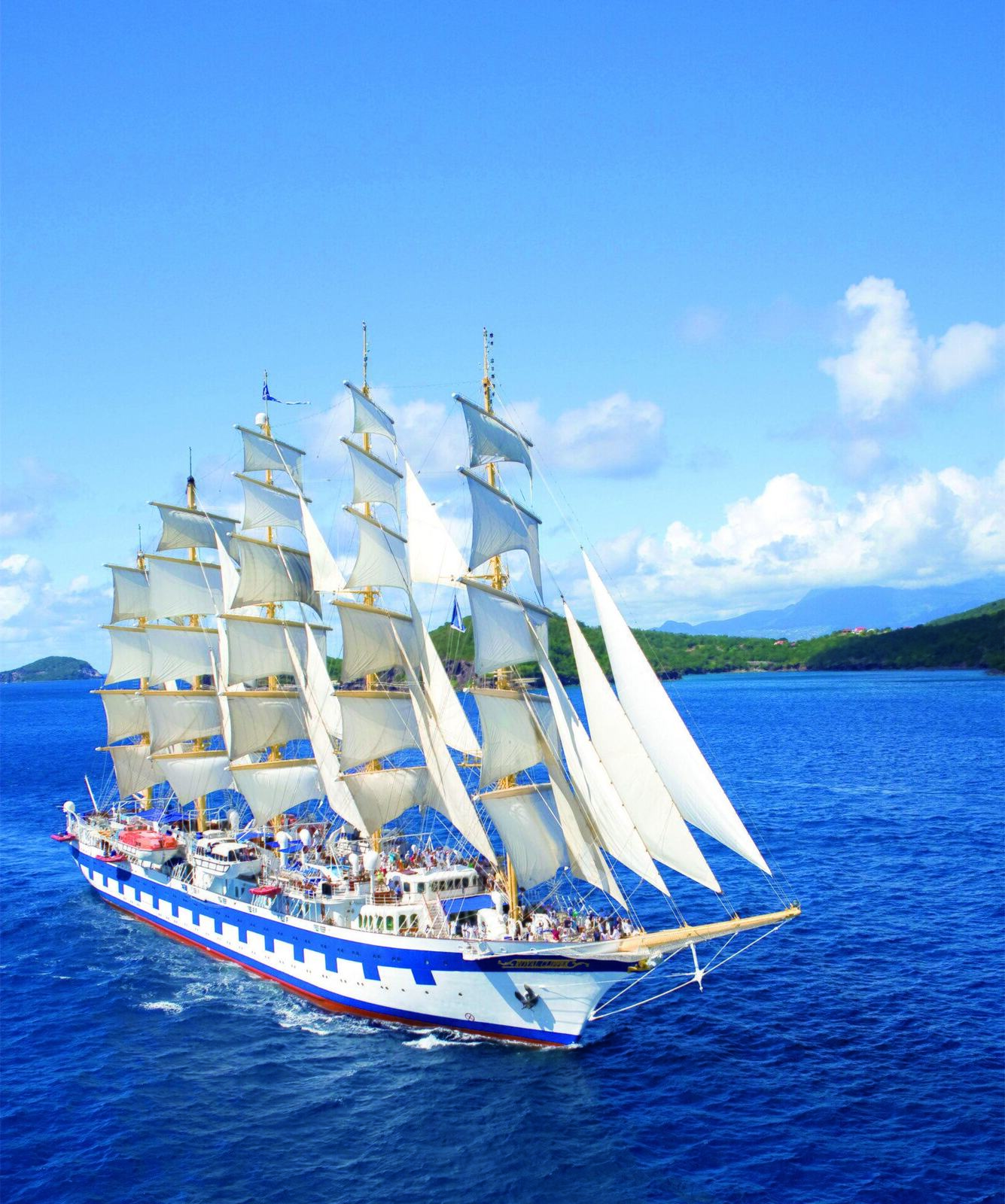
The Royal Clipper splits her St Kitts day in two. On the Windward route she’s at Basseterre in the morning and at South Friar’s Bay in the afternoon. On our trip, Mermaids, Pirates and Poets (Caribbean Sail), that’s Wednesday 19 January 2028. The morning shore stop is Brimstone Hill Fortress, and the afternoon is a beach afternoon at South Friar’s Bay. We don’t take the ferry to Nevis or ride the Scenic Railway. I haven’t sailed this route yet, so this guide is drawn from published sources, not my own visit.
St Kitts history, plainly
The Kalinago. The Kalinago arrived on the island around 1300 AD. Columbus claimed it for Spain in 1493.
The first English colony. Thomas Warner founded the first English settlement in the Caribbean here in 1623–24. The French arrived in 1625. Warner’s son by a Kalinago woman, “Indian” Thomas Warner, was later murdered on Dominica by his English half-brother; the Dominican town of Massacre is named for that killing.
The 1626 massacre at Bloody Point. In 1626 English and French settlers together attacked the Kalinago, claiming to forestall a Kalinago plot; the historian Melanie Newton calls the evidence for that plot slim. Estimates of the dead range from about 120 to around 2,000. The site, near Challengers village, is called Bloody Point, and the river there Bloody River. A 400th-anniversary ceremony was held in August 2026. After the massacre the English and French divided the island between them, and it changed hands many times over the next 150 years.
Sugar and slavery. Sugar cane replaced tobacco from 1640 and drove the large-scale import of enslaved Africans, who did the work on every estate on this page. Slavery was abolished in 1834, followed by four years of “apprenticeship,” which meant the formerly enslaved still had to work for their former owners. The sugar industry kept going for another 170 years and finally closed in 2005.
Independence. St Kitts and Nevis became independent on 19 September 1983.
Books: Caryl Phillips and the sugar islands
The novelist Caryl Phillips was born on St Kitts on 13 March 1958 and taken to England at four months old, growing up in Leeds, Yorkshire. (So he’s a link back to our Yorkshire guides too.) His novels include:
- A State of Independence (1986). A man comes home to an island much like St Kitts at the moment of independence.
- Cambridge (1991). An Englishwoman’s account of a visit to her father’s West Indian sugar estate, set against the account of an enslaved man on the same estate. The island isn’t named.
- Crossing the River (1993). Shortlisted for the Booker Prize; winner of the James Tait Black Memorial Prize.
Cambridge is on our group’s reading list for this trip. For the wider history of the sugar families of St Kitts and Antigua, Matthew Parker’s The Sugar Barons (2011) is a readable place to start.
Where St Kitts fits on our route
On the Royal Clipper’s Windward route, St Kitts comes the day after Antigua, with Nelson’s Dockyard, and the day before the Îles des Saintes, where the 1782 battle that followed the Brimstone Hill siege was fought. The last island stop is Martinique.
St Kitts's history: what else was happening
St Kitts is where England's Caribbean empire started, in 1624, the same years the Pilgrims were settling Plymouth. For two centuries the English and French shared, fought over and swapped the island, and both ran it on sugar and enslaved labor. Sugar outlasted slavery by 170 years, and the island became independent in 1983.
- Shared by England and France 1624–1713
- Sugar and slavery 1640–1834
- British colony (French again 1782–1783) 1713–1983
- Associated State 1967–1983
The story The Caribbean The wider world Other writers
- 1493 The story Columbus claims the island for Spain; the Kalinago, there since about 1300, call it Liamuiga.
- 1607 The wider world The English found Jamestown, Virginia.
- 1620 The wider world The Mayflower lands the Pilgrims at Plymouth, Massachusetts.
- 1624 The story Thomas Warner founds the first English settlement in the Caribbean.
- 1625 The story French settlers under Pierre Belain d'Esnambuc arrive.
- 1626 The story English and French settlers massacre the Kalinago at Bloody Point.
- 1632 The Caribbean Settlers from St Kitts colonize Antigua.
- 1635 The Caribbean D'Esnambuc leaves St Kitts to claim Martinique for France.
- 1640 The story Sugar starts to replace tobacco, and the large-scale import of enslaved Africans begins.
- 1690 The story Building starts on Brimstone Hill Fortress; it goes on, off and on, for a century.
- 1713 The story The Treaty of Utrecht gives France's part of the island to Britain.
- 1757 The Caribbean Alexander Hamilton is born across the Narrows on Nevis (or 1755; the records disagree).
- 1776 The wider world The American colonies declare independence.
- 1782 The story A French force besieges Brimstone Hill from 11 January; the British surrender a month later.
- 1783 The story The Treaty of Paris returns St Kitts to Britain.
- 1787 The Caribbean Horatio Nelson marries Frances Nisbet on Nevis.
- 1804 The wider world Hamilton is shot by Aaron Burr in a duel in New Jersey.
- 1834 The story Slavery is abolished on 1 August, followed by four years of "apprenticeship."
- 1838 The story Apprenticeship ends and full freedom follows.
- 1853 The story The British abandon Brimstone Hill.
- 1867 The story Fire destroys much of Basseterre on 4 July.
- 1912 The story Work starts on the narrow-gauge sugar railway round the island; it's finished in 1926.
- 1935 The story Cane cutters at Buckley's estate strike for better pay on 28 January and armed troops are sent in; it's remembered as Buckley's Uprising, one of the first of the 1930s labor revolts across the British Caribbean.
- 1958 Other writers Caryl Phillips is born on St Kitts on 13 March.
- 1967 The story St Kitts-Nevis-Anguilla becomes an Associated State; Anguilla breaks away the same year.
- 1983 The story Independence on 19 September; Pall Mall Square becomes Independence Square.
- 1991 Other writers Phillips publishes Cambridge.
- 1999 The story Brimstone Hill Fortress becomes a UNESCO World Heritage Site.
- 2005 The story The sugar industry closes after more than 350 years.
Questions people ask
What is St Kitts known for?
Brimstone Hill Fortress, a UNESCO-listed British fortress on a volcanic hill; its long history as a sugar island, which ended when the industry closed in 2005; the narrow-gauge sugar railway that now carries tourists; and its beaches. It was the first English colony in the Caribbean.
What can you do in St Kitts from a cruise ship?
On a half day, most visitors choose either Brimstone Hill Fortress, often with a stop at Romney Manor on the way, or the St Kitts Scenic Railway, then a beach. A walk round Basseterre's Circus and Independence Square fits into the time before or after.
How much does Brimstone Hill Fortress cost?
As of November 2026 the official site lists standard entry at US$15, with children 12 and under at half price. The fortress is open daily from 9:30am to 5:30pm.
Can you visit Nevis from St Kitts?
Yes. Ferries cross the Narrows, a channel about 3 km wide, between St Kitts and Nevis. Nevis is where Alexander Hamilton was born and where Horatio Nelson married Frances Nisbet in 1787.
Who built Brimstone Hill Fortress?
British military engineers designed it and enslaved Africans built and maintained it. Construction began in 1690 and went on, off and on, for just over 100 years.
Is St Kitts part of the same country as Nevis?
Yes. St Kitts and Nevis together form the Federation of St Kitts and Nevis (officially St Christopher and Nevis), independent since 19 September 1983. Basseterre on St Kitts is the capital.
Read next
- Caribbean · AntiguaThings to do in AntiguaWhat to see on Antigua in the Caribbean, how to fit it into a port day without spending it in a taxi, and the island's history told straight.
- Caribbean · Antigua · Age of sailNelson's Dockyard, AntiguaA Georgian Royal Navy yard at English Harbour, still working as a marina, and a UNESCO World Heritage Site since 2016. Who built it, what Nelson really did there, and how to see it in a morning.
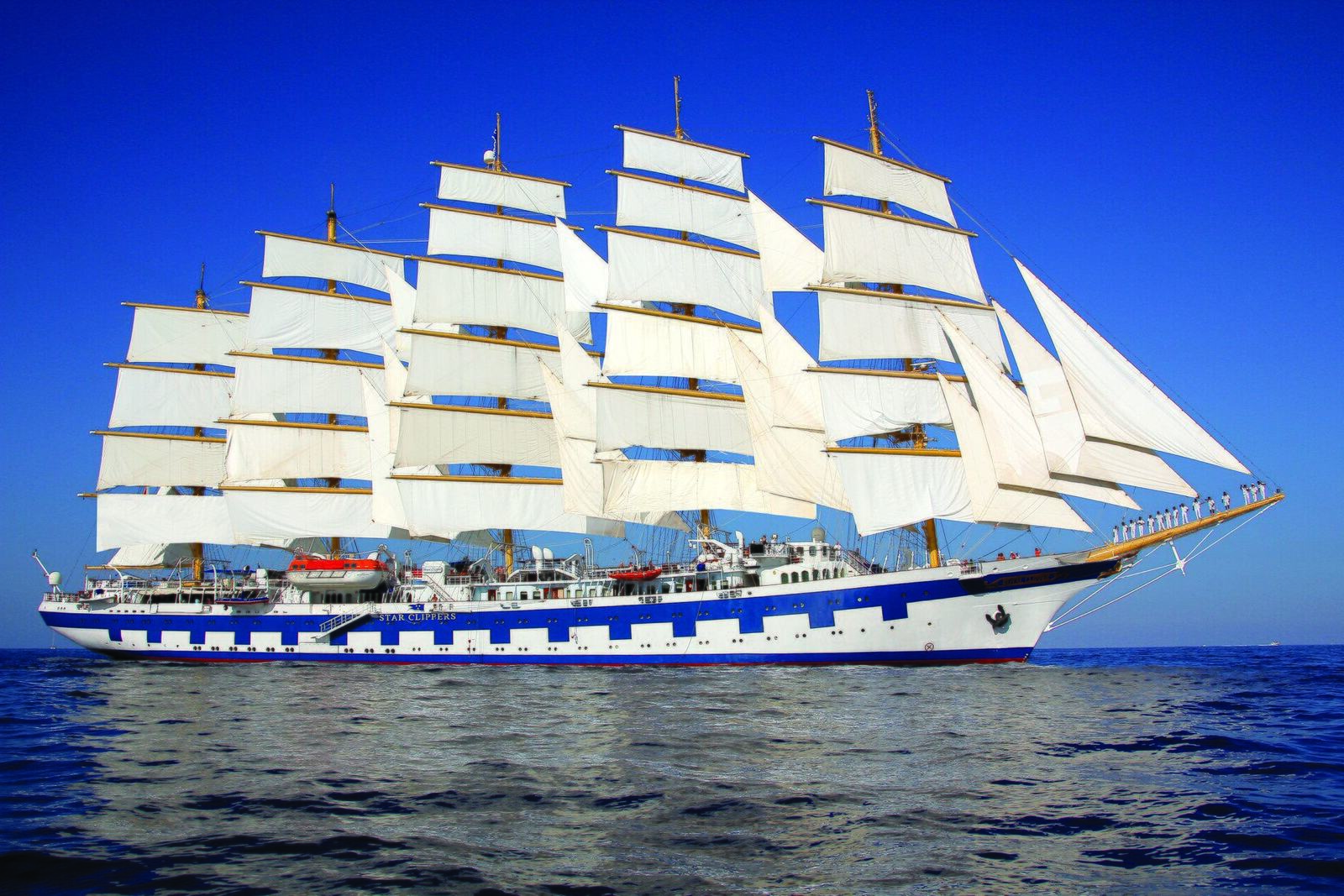 Caribbean · The Royal ClipperRoyal ClipperWhat the ship is, where her design came from, how a week on board works, and where she sails from Barbados. Straight answers, no brochure gloss.
- Caribbean · MartiniqueThings to do in MartiniqueFrance in the Caribbean: a volcano that wiped out a city, an empress's birthplace, the only rum with its own appellation, and the poet who named Négritude.
- Caribbean · DominicaThings to do in DominicaWhat's worth your time on Dominica, why it isn't the Dominican Republic, and what you can actually fit into one day when a ship calls at Cabrits.
Sources
- Wikipedia: Saint Kitts
- Brimstone Hill Fortress National Park (official site)
- Wikipedia: Brimstone Hill Fortress National Park
- Wikipedia: St. Kitts Scenic Railway
- Wikipedia: Romney Manor
- Wikipedia: Kalinago genocide of 1626
- Historic St Kitts: Bloody Point
- Historic St Kitts: The Berkeley Memorial
- Wikipedia: Berkeley Memorial
- Wikipedia: Caryl Phillips
- Wikipedia: Massacre, Dominica (the Warner family)
- Star Clippers itinerary file RC150128 (Basseterre and South Friar's Bay port descriptions)
- St Kitts Tourism Authority (official site)
- St Kitts Scenic Railway (official site)
- Wikipedia: Alexander Hamilton
- Wikipedia: Associated State (St Kitts-Nevis-Anguilla)
- Historic St Kitts: Buckley's strike timeline, 1935
Get the reading list first.
Trip announcements, curated reading lists, and the occasional dispatch — before anyone else.