Yorkshire · Nidderdale
Brimham Rocks, Yorkshire: the gritstone stacks of Nidderdale, and how to visit
Huge, oddly shaped sandstone stacks on a heather moor above Nidderdale. Free to walk among, run by the National Trust, and worth a stop even if you've only got half an hour.
- Where
- Brimham Moor Road, near Summerbridge, Harrogate HG3 4DW
- Distance
- About 8 miles north-west of Harrogate; 4 miles from Pateley Bridge
- Run by
- National Trust
- Entry
- Free. Parking from £7 for 4 hours (NT members free), as of November 2026
- Open
- Countryside 9am to dusk. Check current times
- Time needed
- 30 minutes for the main rocks; the Trust suggests about four hours for the whole site
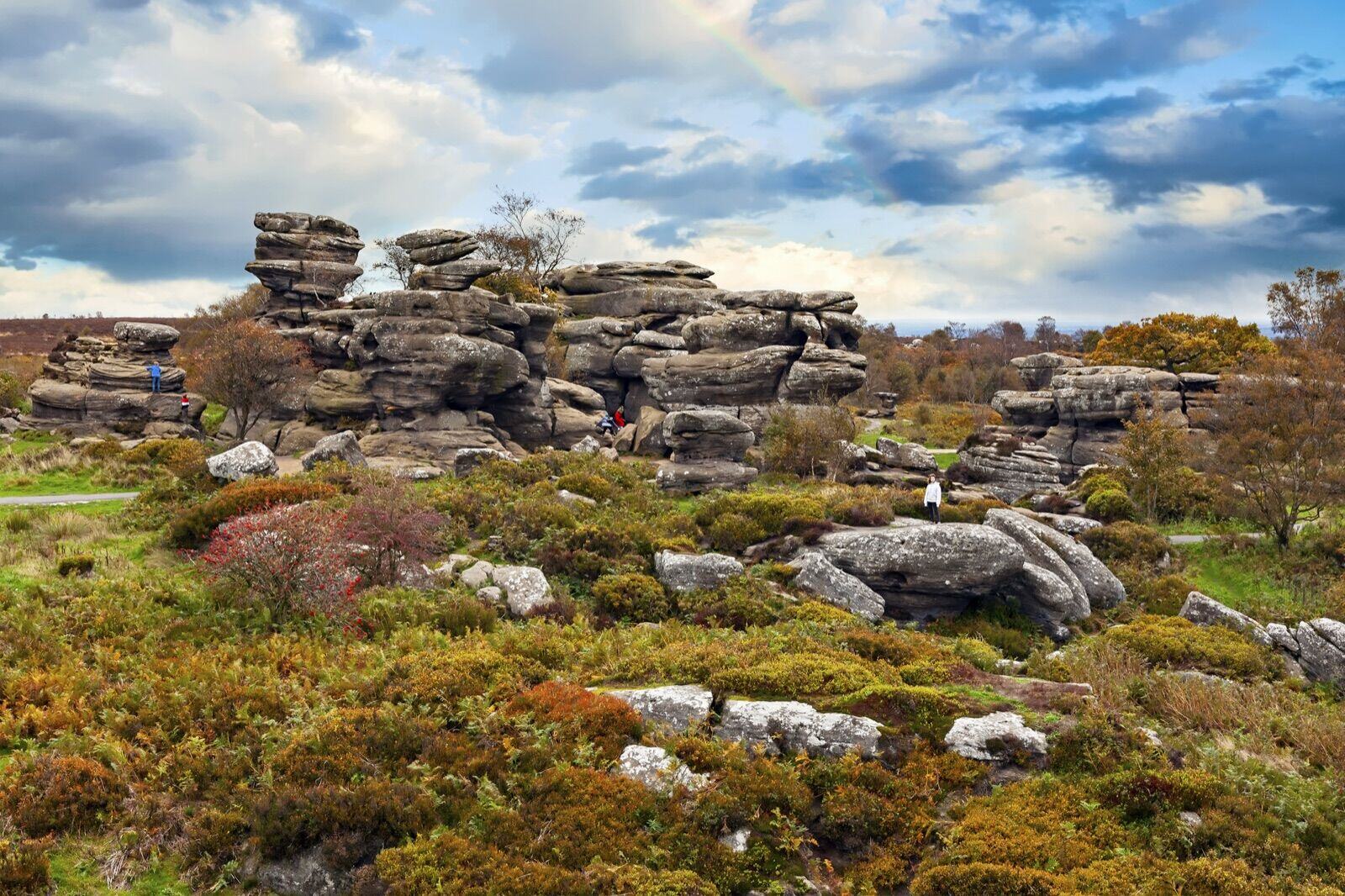
The short answer
Brimham Rocks is a moorland site in Nidderdale, North Yorkshire, about 8 miles north-west of Harrogate, where wind, rain and ice have worn Millstone Grit sandstone into huge stacks with names like Idol Rock and the Dancing Bear. The National Trust runs it. Entry is free, parking is paid for non-members, and the best-known rocks are about 10 minutes' walk from the car park.
Brimham Rocks is a stretch of heather moor in Nidderdale, North Yorkshire, covered in gritstone stacks the size of houses. Some balance on bases that look far too small for them, some look like animals, and most have names. The site is about 8 miles north-west of Harrogate and covers 454 acres. It’s been a Site of Special Scientific Interest since 1958, and the National Trust has looked after it since 1970. I lived in Killinghall, near Harrogate, for three years in the mid-90s, so this is home ground for me.
What Brimham Rocks are, and how they formed
The rocks are Millstone Grit, a coarse sandstone. The National Trust says it was laid down by “an immense river 100 million years before the first dinosaurs walked the earth.” Then, over the last 100,000 years or so, during and after the last ice age, frost, rain and wind wore the softer layers away and left the harder ones standing. You can still see the old river’s sloping layers, called cross-bedding, in most of the stacks. (Look for the fine diagonal lines. Once you’ve spotted them, you’ll see them everywhere.)
The named rocks to look for
Generations of visitors have named the shapes, and some of the names go back more than 200 years. Look for these:
| Rock | What to look for |
|---|---|
| Idol Rock (Druid’s Idol) | A huge boulder balanced on a small base |
| Dancing Bear | A stack shaped like a bear on its hind legs |
| Rocking Stones | Boulders that once rocked on their bases |
| Lovers’ Leap | A gap between two stacks |
| Smartie Tube (once Little Cannon) | A narrow tunnel children crawl through |
| The Eagle, the Turtle, the Gorilla | Shapes named on the National Trust’s trail |
The names have never stood still. In 1863 the local historian William Grainge complained that the guide kept renaming them, turning the Baboon’s Head into the Gorilla’s and calling it “keeping pace with the times.” Some of today’s names, like the Meerkat, are newer still.
The Druid theories
In the late 1700s people believed Druids had carved the rocks. The antiquary Hayman Rooke gave a lecture in 1786, Some account of the Brimham rocks in Yorkshire, suggesting Druids used them, including an “oracular stone.” It fit a fashion of the time for ancient Britons, fed by James Macpherson’s Ossian poems. As late as 1848, Samuel Lewis’s Topographical Dictionary was still calling the moor “the ancient resort of the Druids.” By the early 20th century it was understood that the rocks were entirely natural. The Druid names are what’s left of that idea.
A short history: monks, a lord, and Georgian tourists
Long before the tourists, the land belonged to Fountains Abbey. By 1252 the monks owned Brimham as pasture, and when Henry VIII closed the abbey in 1539, it passed to the Crown.
Lord Grantley bought the estate in 1780 and built Rocks House in 1792, as a hunting lodge and a place for visitors to stay. That tells you how popular the rocks already were with Georgian sightseers. Its caretakers ran it as a tea room and souvenir shop for about a century; in 1838 you could get tea, coffee, ginger beer, cigars and a look through a telescope. When the railway reached Dacre in 1862, visitors from the Harrogate spa could get here more easily, and numbers went up. The house fell into disrepair in the 20th century, and the National Trust restored it in the 1970s. Today it’s the visitor center, called Brimham House.
Brimham Rocks in books, film and music
- Maria Edgeworth’s novel Belinda (1801) uses the rocks as a setting.
- The 1970 film of Wuthering Heights used the area for filming. For where the novel is actually set, see our guide to Wuthering Heights locations.
- The Bee Gees filmed part of the video for “You Win Again” here.
- The children’s TV shows Knightmare and Roger and the Rottentrolls filmed scenes among the rocks.
- In June 2023 the Poet Laureate, Simon Armitage, had his poem “Balancing Act” carved into a stone artwork at the rocks, made with the artist Adrian Riley.
How to visit Brimham Rocks
The site is on Brimham Moor Road near Summerbridge (postcode HG3 4DW), off the B6165 between Harrogate and Pateley Bridge. Most people drive. By bus, the Harrogate Bus Company’s service 24 stops at Summerbridge, about a 40-minute walk away. (Uphill. You’ve been warned.)
- Parking: as of November 2026, cars pay £7 for four hours or £10 for the day. Minibuses and coaches must book. National Trust members park free.
- Opening: the moor is open from 9am to dusk. The visitor center, which has a second-hand bookshop, and the refreshment kiosk keep shorter hours. Check the National Trust’s Brimham Rocks page the week you go.
- Walking: the famous rocks are about 10 minutes from the car park. A circular walk of about 1.3 miles covers the highlights. There’s a longer 8.4-mile circuit to Pateley Bridge.
- Toilets: about 550 meters from the car park, with an accessible toilet near the kiosk.
- Dogs: welcome on a short lead everywhere on the site.
- What to wear: the moor is exposed and the paths are rough in places, so bring a waterproof and shoes with grip.
My advice if you’re short on time: walk straight to Idol Rock and the Dancing Bear, look out over Nidderdale, and go. Half an hour is enough to see why people have been coming here since the 1700s.
Combining Brimham Rocks with nearby places
Brimham sits between Harrogate, Ripon and Pateley Bridge, so it pairs easily with other stops. Fountains Abbey is a short drive north-east. Knaresborough and Harrogate are to the south. On a longer day you can come from Saltaire, the Victorian mill village near Bradford, which is exactly what our trip does.
Brimham Rocks on our trip
On the Friday of our October 2027 Yorkshire trip, after Saltaire, the minibus stops at Brimham Rocks for about half an hour on the way back to Ripon: time to walk among the main stacks and look out over Nidderdale. That evening we go back to Fountains Abbey for Fountains by Floodlight.
Brimham's world: what else was happening
The rocks themselves are about 320 million years old, which is a bit long for a timeline. So this one starts with the monks of Fountains Abbey, who grazed sheep here, and runs through the Georgian tourists who decided Druids must have carved the place, at the same time as Wordsworth was writing and America was declaring independence.
- Fountains Abbey (the monks' years) 1132–1539
- Georgian 1714–1837
- Victorian 1837–1901
The story Britain The wider world Other writers
- 1086 The story Brimham appears in the Domesday Book, under a name meaning "tree in a clearing."
- 1132 Britain Fountains Abbey is founded a few miles to the north-east, near Ripon.
- 1252 The story By now Fountains Abbey owns Brimham as pasture, with a fishpool.
- 1539 The story Henry VIII dissolves Fountains Abbey, and Brimham passes to the Crown.
- 1760 Other writers James Macpherson publishes Fragments of Ancient Poetry, the start of the craze for ancient Britons and Druids.
- 1776 The wider world The American colonies declare independence.
- 1780 The story Lord Grantley buys the Brimham estate.
- 1786 The story The antiquary Hayman Rooke gives a lecture suggesting Druids worked the rocks.
- 1789 The wider world The French Revolution begins.
- 1792 The story Lord Grantley builds Rocks House, now Brimham House, as a hunting lodge and a place for visitors.
- 1798 Other writers Wordsworth and Coleridge publish Lyrical Ballads. A Victorian guide here later recited Wordsworth on his tours.
- 1801 Other writers Maria Edgeworth's novel Belinda uses Brimham Rocks as a setting.
- 1819 The story John Spooner, the rocks' guide for more than thirty years, dies at 95.
- 1837 Britain Victoria becomes queen at 18.
- 1838 The story Rocks House offers visitors tea, coffee, lemonade, ginger beer, cigars and the use of a telescope.
- 1848 The story Samuel Lewis's Topographical Dictionary still calls the moor "the ancient resort of the Druids."
- 1862 Britain A railway station opens at Dacre, so Harrogate spa visitors can reach the rocks more easily.
- 1863 Other writers Local historian William Grainge's Guide to Brimham Rocks grumbles that the guides keep renaming the rocks.
- 1958 The story Brimham Rocks becomes a Site of Special Scientific Interest.
- 1970 The story The National Trust takes over the site.
- 2023 Other writers Poet Laureate Simon Armitage's poem "Balancing Act" is carved into a stone artwork at the rocks, in June.
Questions people ask
How long do you need at Brimham Rocks?
The best-known rocks are about 10 minutes' walk from the car park, so 30 to 60 minutes covers them. The National Trust suggests about four hours for the whole site, and a circular walk of about 1.3 miles takes in the highlights.
Is Brimham Rocks free?
Entry is free. Non-members pay to park: £7 for four hours or £10 for the day for a car, as of November 2026. National Trust members park free.
How were Brimham Rocks formed?
The rocks are Millstone Grit, a sandstone laid down by a huge river more than 300 million years ago. Most of their strange shapes were worn over roughly the last 100,000 years by ice, rain and wind.
Did Druids carve Brimham Rocks?
No. The shapes are entirely natural. In the late 1700s antiquaries such as Hayman Rooke suggested Druids had worked the rocks, and that idea hung on into the mid-1800s, which is why some stacks still have names like Druid's Idol.
Can you climb on Brimham Rocks?
Lots of visitors scramble on the lower rocks, and children crawl through the narrow gap called the Smartie Tube. Some stacks have steep drops, so take care, especially in the wet.
Is Brimham Rocks accessible?
The National Trust has accessible trails to the main rocks, suitable for mobility scooters and wheelchairs, and free mobility scooters you can pre-book. Parts of the site are steep with mixed terrain.
Was Wuthering Heights filmed at Brimham Rocks?
The 1970 film of Wuthering Heights used the area for filming. The novel itself is set on the moors above Haworth, about 25 miles to the south-west.
Read next
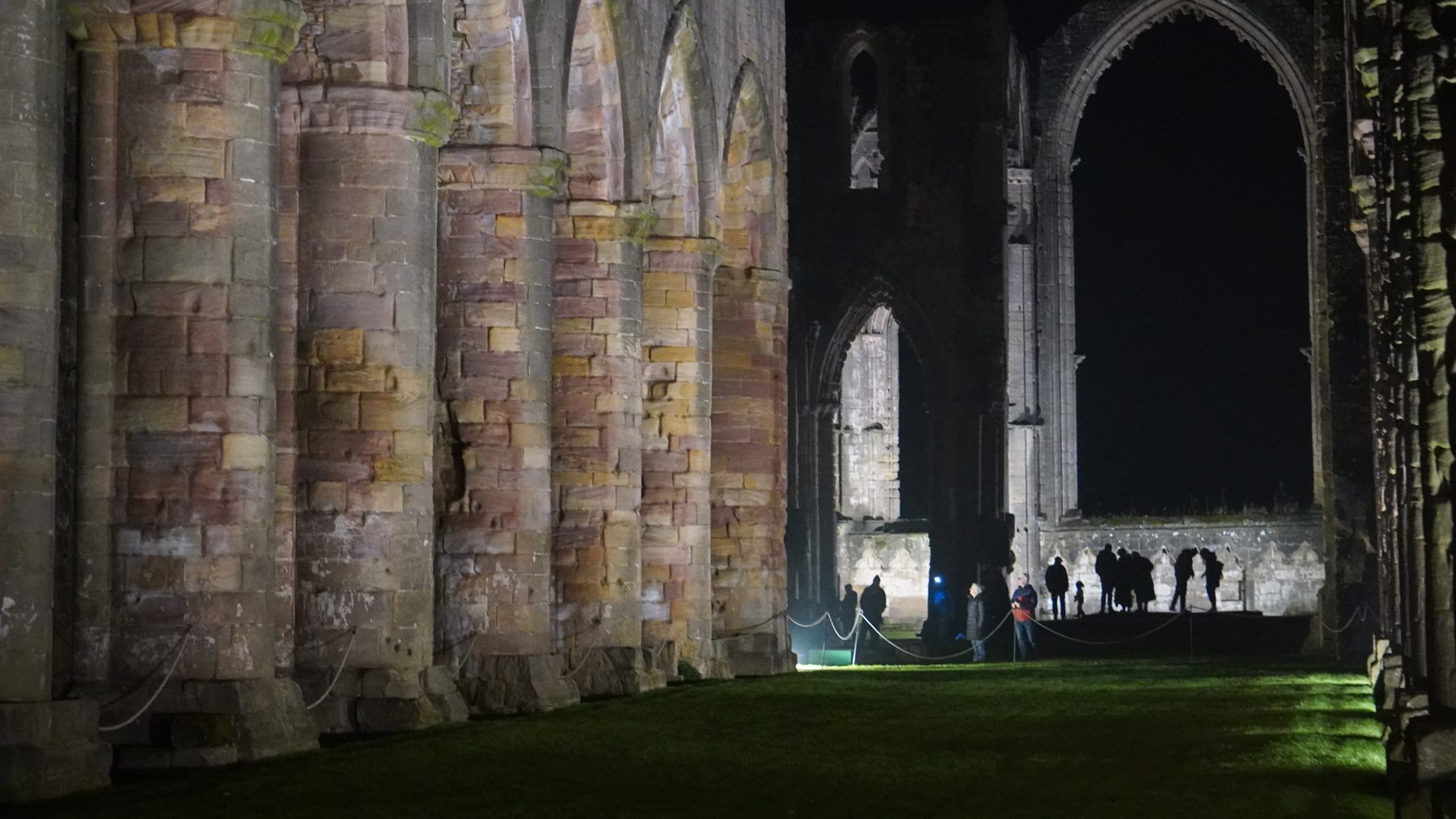 Yorkshire · Fountains AbbeyFountains Abbey, YorkshireEngland's great Cistercian ruin and its Georgian water garden, near Ripon and Harrogate. Go by day for the garden, and come back after dark in October for the floodlights.
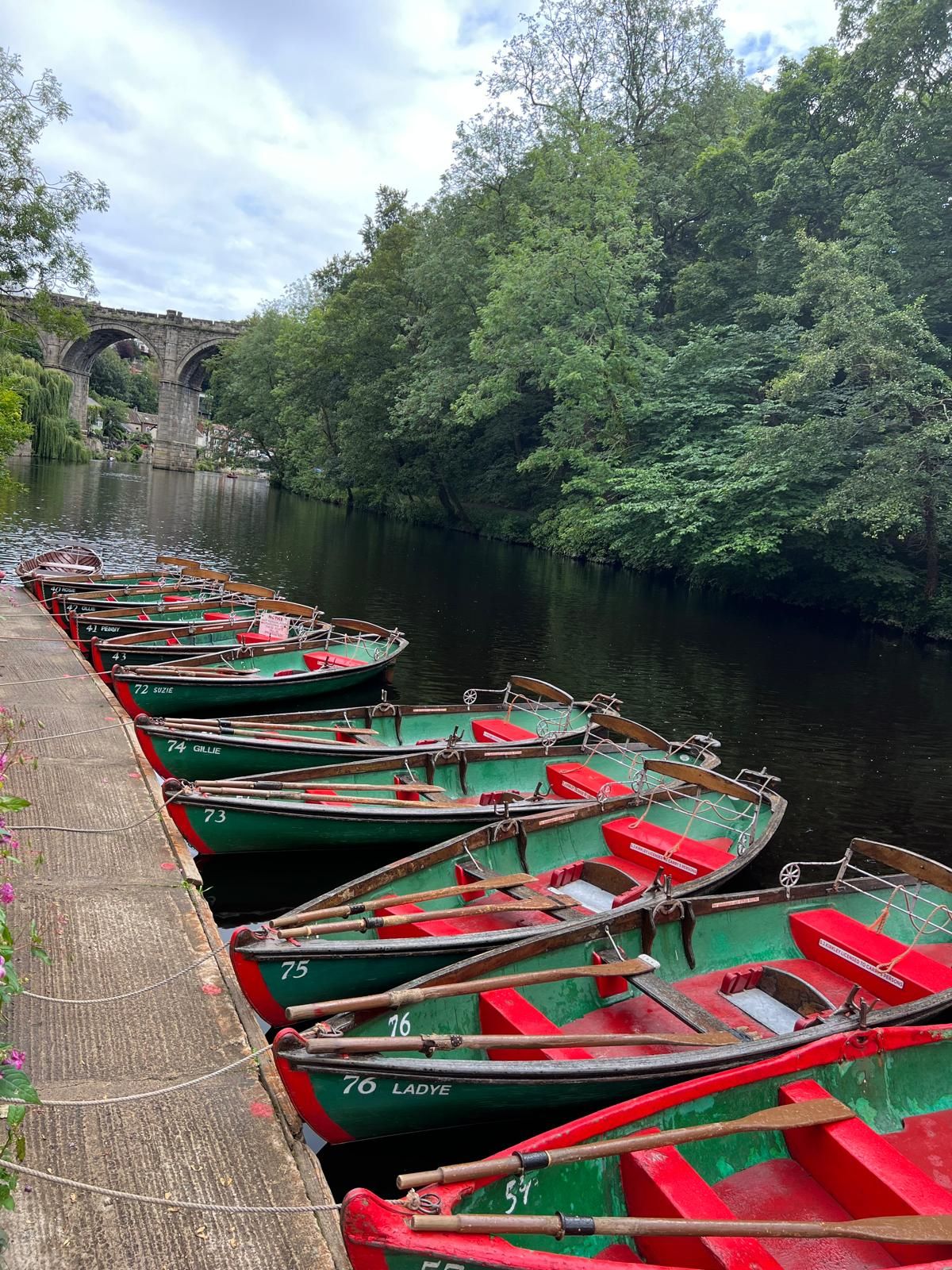 Yorkshire · KnaresboroughKnaresborough, EnglandA small market town on a cliff above the River Nidd, three miles from Harrogate, and how to spend a morning there on foot. Bring shoes with grip: it's steps all the way down.
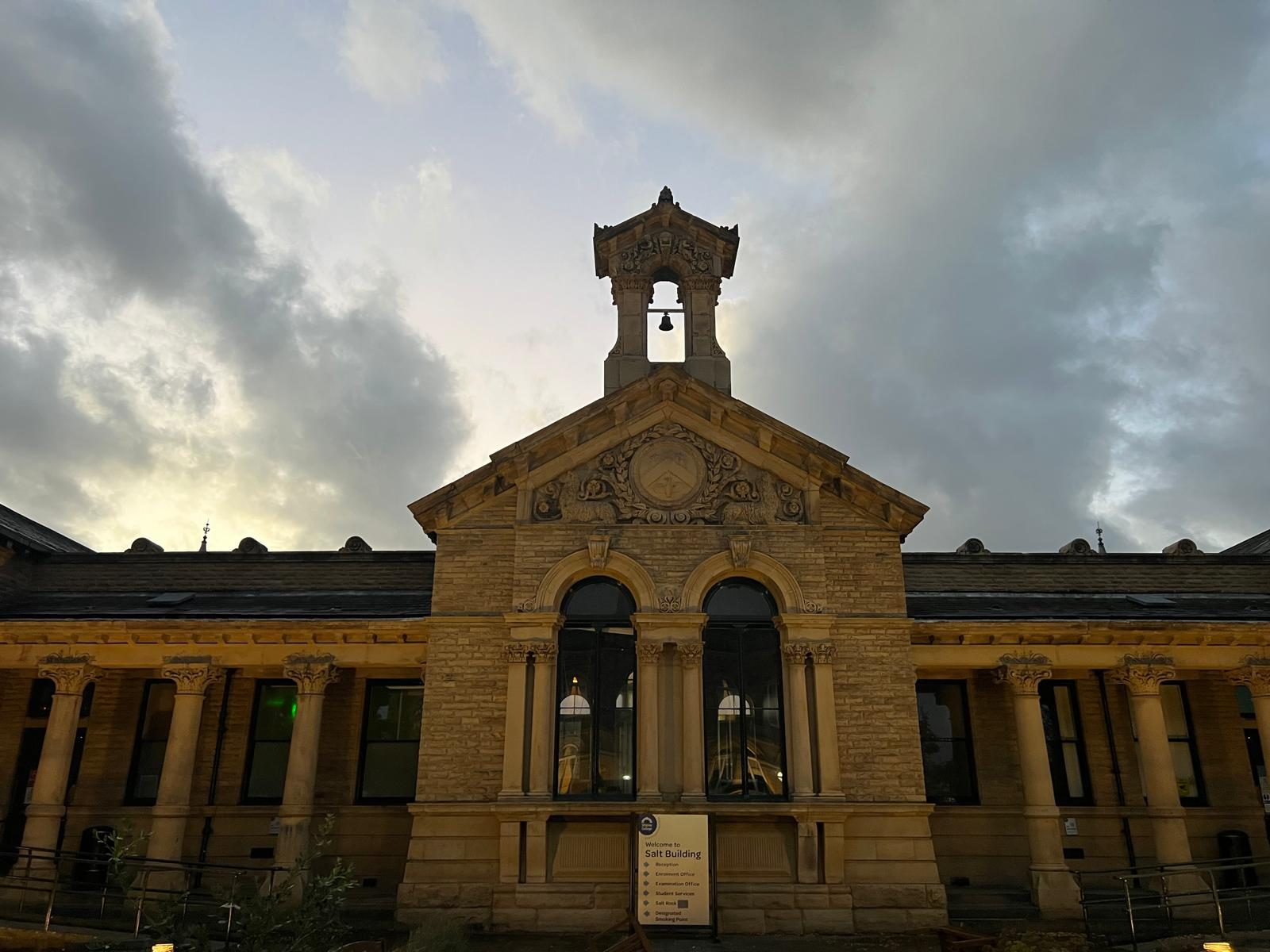 Yorkshire · Mills and moorsSaltaire, EnglandOne mill owner built a whole village for his workers. The mill is now full of David Hockney's art and one of the biggest bookshops you'll ever wander round. I nearly skipped it. Don't.
- Yorkshire · The BrontësWuthering Heights filming locations, and Top WithensEmily Brontë set Wuthering Heights on the moors above Haworth. Most of the films went somewhere else. Here's which is which, and how to walk to the ruin everyone calls the real thing.
Sources
Get the reading list first.
Trip announcements, curated reading lists, and the occasional dispatch — before anyone else.