Caribbean · Antigua · Age of sail
Nelson's Dockyard, Antigua: history, what to see and how to visit
A Georgian Royal Navy yard at English Harbour, still working as a marina, and a UNESCO World Heritage Site since 2016. Who built it, what Nelson really did there, and how to see it in a morning.
- Where
- English Harbour, south coast of Antigua; next to Falmouth Harbour
- Built
- From 1725; main buildings 1740s–1790s
- Nelson here
- 1784–1787, captain of HMS Boreas
- Navy left
- 1889
- Restored
- From 1951; reopened 1961
- Run by
- National Parks Antigua
- Our ship calls
- Falmouth Harbour, Tuesday 18 January 2028
The short answer
Nelson's Dockyard in Antigua is an 18th-century Royal Navy dockyard at English Harbour on the island's south coast, named for Horatio Nelson, who was based there from 1784 to 1787. Built with the labor of enslaved Africans and abandoned by the navy in 1889, it was restored from 1951, reopened in 1961, and is now a marina, museum and hotel complex. It is the only continuously working Georgian-era dockyard in the world and, since 2016, part of the UNESCO World Heritage Site Antigua Naval Dockyard and Related Archaeological Sites.
Nelson’s Dockyard, Antigua, is the best-preserved piece of the age of sail in the Caribbean. It’s a walled Royal Navy yard of stone storehouses, workshops and officers’ houses on English Harbour, a deep, narrow bay on Antigua’s south coast. Warships were repaired here through the 1700s and 1800s. Today the same buildings hold a museum, hotels, restaurants and a busy marina, and yachts tie up where frigates once did. Below: how it came to be, what Nelson actually did here (less than the name suggests), who built it, and how to see it in a day.
Why English Harbour?
Shelter. In UNESCO’s description, the deep, narrow bays on this side of Antigua, surrounded by hills, “offered shelter from hurricanes and was ideal for repairing ships.” The Royal Navy was using English Harbour as a station by 1707, and regularly by 1723. Sailing warships needed constant repair, and in hurricane season there was nowhere safer in the Leeward Islands to keep them.
The money behind it was sugar. UNESCO is direct about this: the dockyard’s aim was “to protect the interests of sugar cane planters at a time when European powers were competing for control of the Eastern Caribbean.” Antigua’s plantations, like Betty’s Hope (see our Antigua guide), made the island valuable, and the navy was there to keep it British.
Nelson’s Dockyard history: a timeline
| Year | What happened |
|---|---|
| 1632 | English colonists settle Antigua. |
| 1707 | Royal Navy ships use English Harbour as a station, with no repair facilities yet. |
| 1725 | The first dockyard, St Helena, is built on the eastern side of the harbor. |
| 1745 | Building begins on the western side: wooden storehouses and land reclaimed for the wharf. |
| 1755–1765 | Commander-in-Chief’s quarters, more stores and a stone wall. |
| 1773–1778 | Engineer’s Workshop, Guard House, Porter’s Lodge, Mast Houses and Capstan House. |
| 1784–1787 | Horatio Nelson is based at the dockyard as captain of HMS Boreas. |
| 1785–1794 | The main building program, including the Copper and Lumber Store (finished 1789) and the Blacksmith’s Shop. |
| 1797 | Sail Loft and Boat House. |
| 1855 | Naval Officer’s and Clerk’s House, now the Dockyard Museum. |
| 1889 | The Royal Navy abandons the dockyard and it falls into decay. |
| 1951 | The Society of the Friends of English Harbour begins restoration. |
| 1961 | The dockyard reopens to the public. |
| 1981 | Antigua and Barbuda become independent. |
| 2016 | UNESCO inscribes the Antigua Naval Dockyard and Related Archaeological Sites. |
Dates from Wikipedia’s Nelson’s Dockyard article and UNESCO. For what was going on in the wider world at the same time, see the timeline further down the page.
Who built the dockyard
British military engineers designed it. Enslaved Africans did the work. Wikipedia’s history of the yard notes that enslaved people from plantations in the area were sent to work on it, and UNESCO’s summary says the dockyard “would not have been possible without the labour of generations of enslaved Africans.”
Keep that in mind as you walk round. The handsome Georgian buildings were a working part of a sugar-and-slavery economy, built by enslaved people to defend it. That’s not a footnote. It’s the reason the place exists.
Horatio Nelson at English Harbour
Nelson came to the Leeward Islands in 1784, a young captain in command of the frigate HMS Boreas. His orders were to enforce the Navigation Acts, laws that limited colonial trade to British ships with British crews. After American independence, that meant shutting out the American merchant ships the islands’ merchants relied on.
Nelson enforced the law to the letter, and nobody thanked him for it. Off Nevis he seized four American ships loaded with Nevis goods, and their owners, backed by local merchants, sued him for illegal seizure. He was the senior captain on the station, and his commanding admiral, based in Barbados, gave him little support; he kept Boreas at English Harbour.
He did get one good thing out of it. In March 1787 he married Frances (Fanny) Nisbet, a young widow, at Montpelier on Nevis, next to St Kitts. Boreas sailed home and was paid off at Portsmouth on 30 November 1787.
Nelson didn’t design or build the dockyard. Most of what you see went up during or just after his years here, in the 1785–1794 building program. The name honors his time here; it doesn’t mean he built a thing.
What to see at Nelson’s Dockyard
- The Dockyard Museum. In the 1855 Naval Officer’s and Clerk’s House. It tells the history of the yard and English Harbour. Start here; everything else makes more sense after.
- The Copper and Lumber Store. A storehouse finished in 1789, now a hotel.
- The Admiral’s Inn. The former Pitch and Tar Store, now an inn and restaurant.
- The Sail Loft and Boat House pillars. The stone pillars of the 1797 Sail Loft and Boat House.
- The working marina. Yachts berth along the old quays. This is still, in the National Parks’ words, the only continuously working Georgian-era dockyard in the world.
- Shirley Heights. On the hill above, a restored lookout and gun battery about 490 feet up, with the view over English and Falmouth Harbours. A Sunday party runs there from 4pm to 10pm (as of November 2026); details on the official tourism page. See our Antigua guide for more.
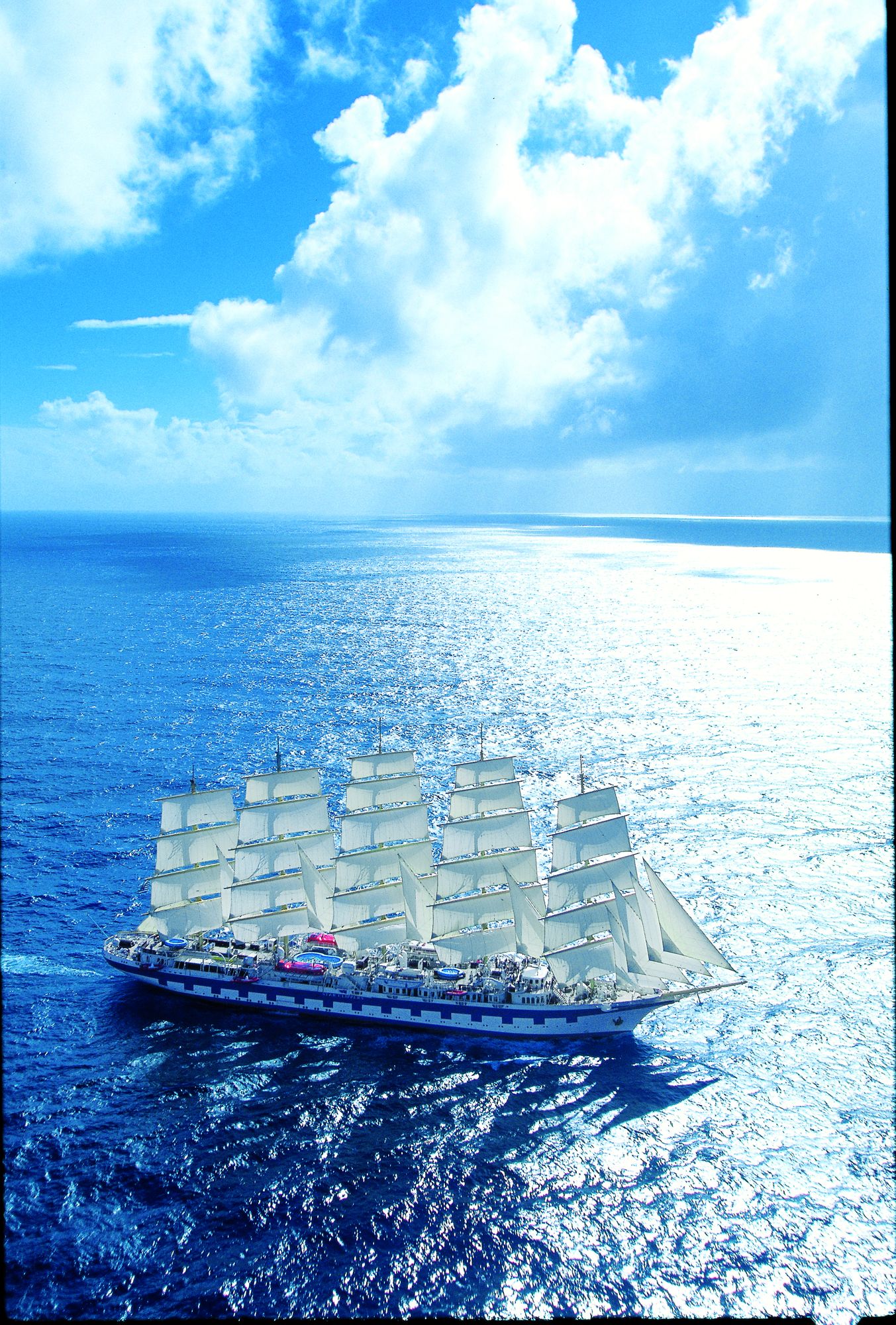 The Royal Clipper, a modern five-masted full-rigged ship. Photo: Star Clippers
Visiting Nelson’s Dockyard: practical details
- Opening times. National Parks Antigua lists general site hours of 8am to 5pm, Monday to Saturday (as of November 2026). Check National Parks Antigua before you go, especially on a Sunday.
- Tickets. There’s a national park entry fee; one combined ticket has covered the dockyard and Shirley Heights. Online listings give different prices, so check the official site rather than trusting a blog (this one included).
- Time. Two to three hours for the dockyard and museum; add an hour for Shirley Heights.
- From St John’s. The dockyard is on the far side of the island from the main cruise pier, so take a taxi or a tour.
- From Falmouth Harbour. Falmouth Harbour is next door. Star Clippers’ port notes call it “the epicentre of the Caribbean yachting world,” and from there the dockyard is a walk.
- Events. The dockyard hosts Antigua Sailing Week, the Antigua Classic Yacht Regatta and the Antigua Charter Yacht Meeting. Expect crowds and full berths on those dates.
Nelson’s Dockyard on our trip
Our trip, Mermaids, Pirates and Poets (Caribbean Sail), is a week on the Royal Clipper, the largest full-rigged sailing ship in the world, round trip from Barbados. She calls at Falmouth Harbour on Tuesday 18 January 2028, and the shore stop that day is Nelson’s Dockyard. It’s a good fit for a ship like her: you arrive under sail at a harbor built for sailing warships. I haven’t sailed this route yet, so this guide is drawn from published sources, not my own visit.
Antigua is also Jamaica Kincaid’s island, and her book A Small Place (1988) is on our reading list. It asks the visitor to think about who an island like this is for. That’s a useful question to carry round a dockyard built to defend sugar estates.
The age of sail, island to island
Nelson’s Dockyard is one stop in a chain of 18th-century forts on our route. The day before, Fort Shirley on Dominica overlooks Prince Rupert Bay. The day after, Brimstone Hill Fortress on St Kitts, another UNESCO site, sits high above the sea. For sailing these waters today, see our guide to tall ship cruises in the Caribbean, and for the fictional pirates who sailed them, our Pirates of the Caribbean filming locations.
The dockyard's world: what else was happening
The dockyard's busy years are Georgian: George II and George III were on the throne, the American colonies broke away, and Britain and France fought over these islands. It was built to guard sugar estates worked by enslaved Africans, and it outlived slavery by half a century before the navy left.
- Georgian (George I to William IV) 1714–1837
- Royal Navy dockyard 1725–1889
- Restoration 1951–1961
The story The Caribbean The wider world Other writers
- 1707 The story Royal Navy ships are using English Harbour as a station, with no repair yard yet.
- 1725 The story The first dockyard, St Helena, is built on the eastern side of the harbor.
- 1736 The Caribbean Antigua's planters crush a planned uprising of the enslaved led by Court ("Prince Klaas").
- 1745 The story Building starts on the western side, today's dockyard.
- 1763 The Caribbean The Treaty of Paris shares out Caribbean islands; Dominica goes to Britain.
- 1776 The wider world The American colonies declare independence.
- 1782 The Caribbean The French take Brimstone Hill on St Kitts, then lose the Battle of the Saintes to Rodney.
- 1784 The story Horatio Nelson arrives as captain of HMS Boreas to enforce the Navigation Acts.
- 1785 The story The main building program begins; it runs to 1794.
- 1787 The story Nelson marries Frances Nisbet on Nevis in March; Boreas is paid off in England that November.
- 1789 The story The Copper and Lumber Store is finished.
- 1789 The wider world The French Revolution begins.
- 1789 Other writers Olaudah Equiano, once enslaved on Montserrat, publishes his Interesting Narrative in London.
- 1797 The story The Sail Loft and Boat House go up.
- 1805 The wider world Nelson is killed at the Battle of Trafalgar on 21 October.
- 1807 The wider world Britain bans the slave trade.
- 1814 Other writers Jane Austen publishes Mansfield Park, whose Bertram money comes from Antigua.
- 1834 The Caribbean Slavery ends in Antigua on 1 August, with no apprenticeship period.
- 1855 The story The Naval Officer's and Clerk's House is built; it's now the Dockyard Museum.
- 1889 The story The Royal Navy abandons the dockyard.
- 1951 The story The Society of the Friends of English Harbour begins restoration.
- 1961 The story The dockyard reopens to the public.
- 1981 The Caribbean Antigua and Barbuda become independent on 1 November.
- 2016 The story UNESCO inscribes the Antigua Naval Dockyard and Related Archaeological Sites.
Questions people ask
Why is it called Nelson's Dockyard?
It's named after Horatio Nelson, who was based at the Royal Navy dockyard at English Harbour from 1784 to 1787 as a young captain, enforcing trade laws in the Leeward Islands. Nelson didn't design or build it.
Is Nelson's Dockyard worth visiting?
Yes, if you like history or boats. It's the only continuously working Georgian-era dockyard in the world, the restored stone buildings are still in use, and it pairs naturally with the view from Shirley Heights above it.
How long do you need at Nelson's Dockyard?
Allow two to three hours for the dockyard and the Dockyard Museum, and another hour if you go up to Shirley Heights.
Who built Nelson's Dockyard?
British naval engineers designed it, but UNESCO notes it could not have been built without the labor of generations of enslaved Africans, sent from nearby plantations to work on the dockyard.
How do you get to Nelson's Dockyard from the St John's cruise port?
It's on the opposite side of the island from St John's, so take a taxi or a booked tour across Antigua. Ships that call at Falmouth Harbour, such as the Star Clippers ships, are a walk away.
Is there an entry fee for Nelson's Dockyard?
Yes, there's a national park entry fee, and one ticket has usually covered both the dockyard and Shirley Heights. Online listings disagree on the price, so check National Parks Antigua for current fees and hours.
Read next
- Caribbean · St KittsThings to do in St KittsWhat to see on St Kitts, how to split a port day between a fortress and a beach, and the island's history told straight.
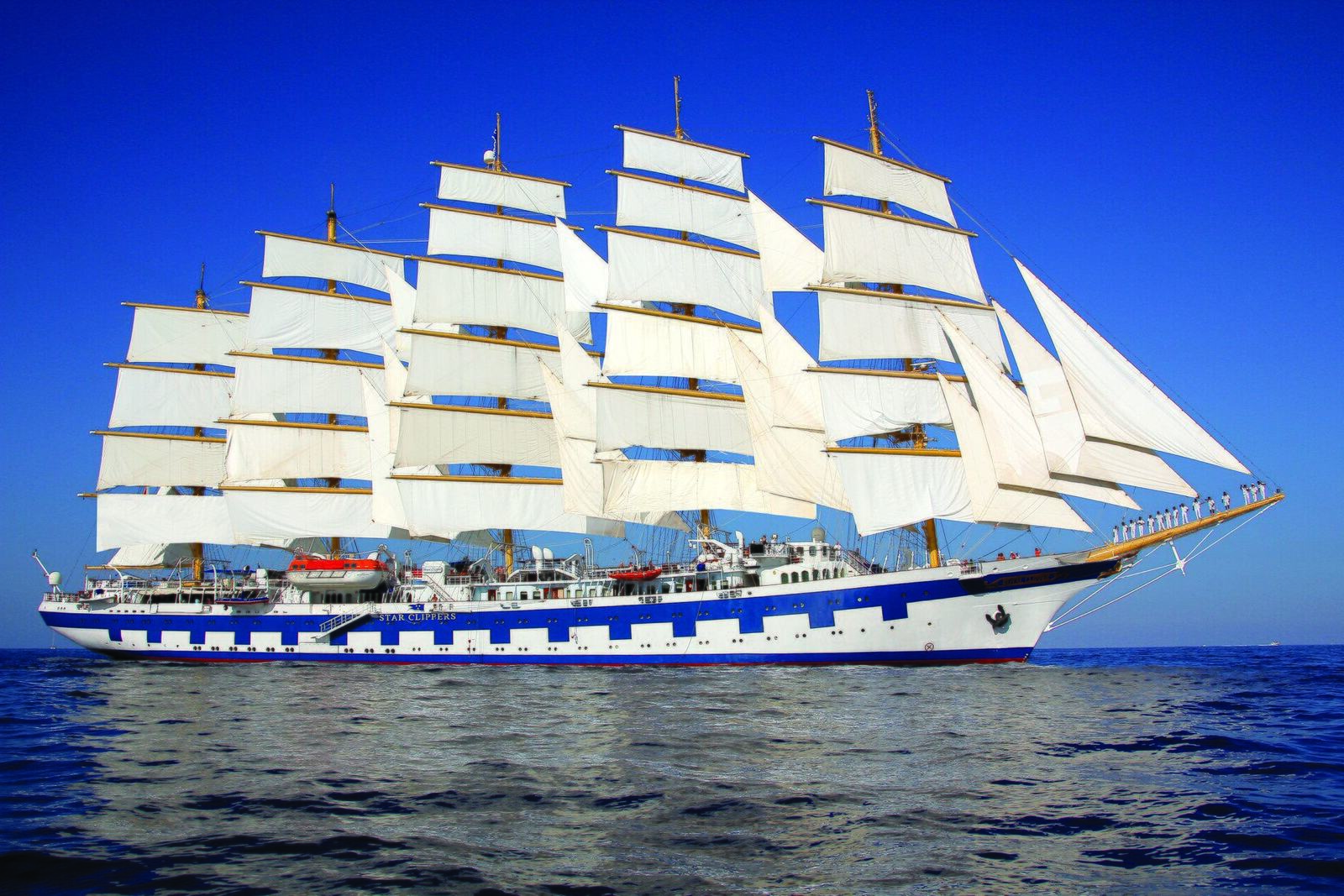 Caribbean · The Royal ClipperRoyal ClipperWhat the ship is, where her design came from, how a week on board works, and where she sails from Barbados. Straight answers, no brochure gloss.
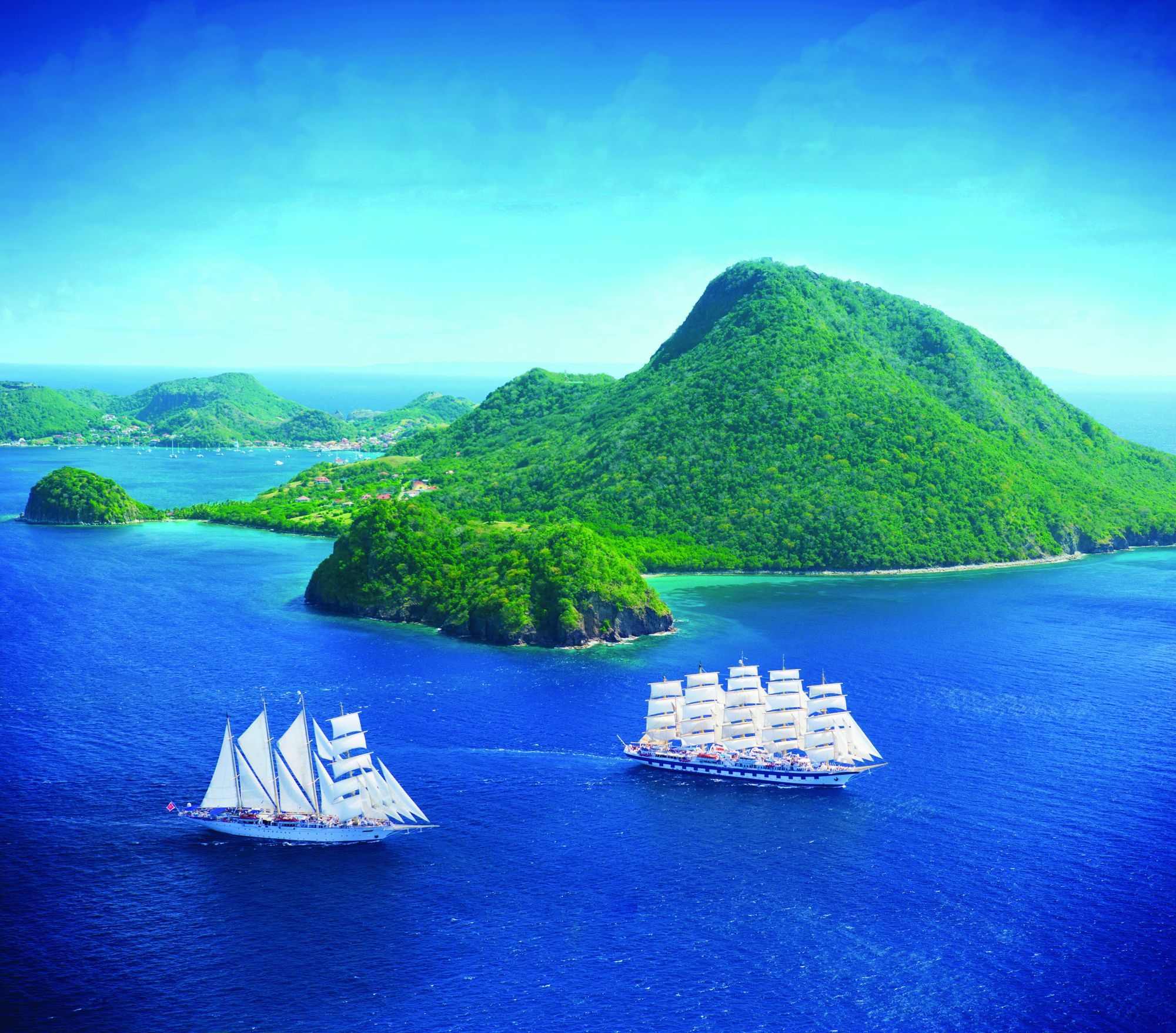 Caribbean · Under sailTall ship cruise linesWhich cruise ships really sail, how they differ, what a week costs, and the history, books and films behind them.
- Caribbean · Film locationsPirates of the Caribbean filming locationsWhich scenes were shot where, film by film, which real places you can still visit, and the one our ship actually stops at.
Sources
- Wikipedia: Nelson's Dockyard
- UNESCO: Antigua Naval Dockyard and Related Archaeological Sites
- National Parks Antigua
- Visit Antigua and Barbuda: Shirley Heights Lookout
- Naval History (USNI): Young Nelson in the Boreas
- Wikipedia: Frances Nelson, Viscountess Nelson
- Wikipedia: Antigua
- Star Clippers itinerary file RC150128 (Falmouth Harbour port description)
- Excursion research, Caribbean 2028 (park fee listings US$15–23, conflicting)
- National Parks Antigua: Nelson's Dockyard National Park
- Wikipedia: Battle of Trafalgar
- Wikipedia: Olaudah Equiano
- Wikipedia: Mansfield Park
Get the reading list first.
Trip announcements, curated reading lists, and the occasional dispatch — before anyone else.