
Yorkshire · York
York in books: 650 years of writers, and the places you can still walk into
People have been writing about York for more than six hundred years, and the remarkable thing is how much of what they wrote about is still standing. Here they are in order, with the street or building that goes with each one.
- Oldest
- The York Mystery Plays, 48 short plays performed by the city's guilds
- Most famous fictional Yorkshireman
- Robinson Crusoe, 'of York, Mariner'
- Most surprising
- Tristram Shandy, first sold from 35 Stonegate in 1759
- Newest
- Kate Atkinson's Behind the Scenes at the Museum (1995)
- Walking
- Every place on this page is in or just outside the old walls
- Cost
- The streets are free; the Minster and York Castle Museum charge
The short answer
York has a long literary history. The York Mystery Plays were performed on wagons in its streets from the 14th century. Robinson Crusoe was 'born in the year 1632, in the city of York.' The first volumes of Tristram Shandy were sold from a Stonegate bookshop in 1759. Shelley lodged on Coney Street in 1811, Dickens wrote the Minster's Five Sisters window into Nicholas Nickleby, Anne Brontë saw the Minster days before she died in 1849, W. H. Auden was born on Bootham in 1907, and Kate Atkinson set Behind the Scenes at the Museum in the streets around the Minster.
Long before anyone filmed York, people were writing about it. And the remarkable thing is how much of what they wrote about is still standing. You can stand where a medieval play was performed, walk into the street where Tristram Shandy first went on sale, and look up at the window Dickens made a story out of.
Here they are in order: who wrote what, what they said about York, and where to stand today.
The York Mystery Plays (from the 1300s)
York’s oldest literature wasn’t written for reading. It was written for the street.
The York Mystery Plays are a cycle of 48 short plays telling the whole story of the Bible, from the Creation to the Last Judgment. Each play belonged to one of the city’s craft guilds, and the matches are often a little bit funny: the shipwrights built Noah’s ark, and the bakers did the Last Supper. On the feast of Corpus Christi each summer, the guilds performed them in order, on wagons that rolled through the streets, stopping at a dozen playing stations along the way. If you stood in one spot, the whole history of the world came past you in a day.
The plays are first mentioned in the city’s records in 1376. The only full copy, written down in the 1460s or 1470s, is now in the British Library. They were suppressed in 1569, after the Reformation, and revived in 1951 for the Festival of Britain. Since 1998 the guilds have brought them back onto wagons in the streets, about every four years. The most recent wagon performances were in June and July 2026.
Where to stand: in the old streets of the city center, where the wagons still roll when the plays come round. Check the York Mystery Plays site for the next year.
Alcuin and the Minster Library (700s, and today)
In the 700s, York had one of the most famous libraries in Europe. Its scholar Alcuin was invited to Charlemagne’s court to teach. According to York Civic Trust, the collection itself was destroyed by Viking invaders.
The Minster still has a library. York Minster Library, in Dean’s Park behind the Minster, is the largest cathedral library in the country, with just over 90,000 volumes. Its building was once part of the Archbishop’s 13th-century chapel. One book worth asking about is the “Wicked Bible” of 1631, which left the word “not” out of one of the Ten Commandments. (You can guess which.)
Where to stand: Dean’s Park, on the north side of the Minster. It’s a lovely quiet garden whether or not the library is open.
Booksellers on Minster Gates (from 1580)
The short lane from the Minster’s south door to Petergate has been a street of books since about 1580. It was once called Bookland Lane, and later Bookbinder’s Alley. On the corner, high up, is a painted statue of Minerva, goddess of wisdom, reclining on a pile of books. She went up in 1801 as a bookseller’s sign.
There’s still a secondhand bookshop on the lane, Minster Gate Bookshop. More about it, and the rest of York’s bookshops, in my guide to York’s bookshops.
Where to stand: the corner of Minster Gates and High Petergate. Look up.
Celia Fiennes rides into York (1697)
Celia Fiennes traveled all over England on horseback in the 1690s, often with just a couple of servants, and wrote down what she saw. She was not a tourist in our sense. She was just curious, and she rode side-saddle. In 1697 she came to York and noticed what every visitor arriving by road still notices:
There are a Great Many pretty Churches 16 in Number, but the minster is a noble building and holds in view at Least 30 miles before you Come to it.
— Celia Fiennes, Through England on a Side Saddle (Project Gutenberg)
Where to stand: you need to be coming in by road. On our trip, look out of the bus window as we drive in from Castle Howard.
Robinson Crusoe, of York, Mariner (1719)
One of the most famous characters in English fiction was a York boy. Daniel Defoe’s novel opens:
I was born in the year 1632, in the city of York, of a good family, though not of that country, my father being a foreigner of Bremen, who settled first at Hull.
— Daniel Defoe, Robinson Crusoe (Project Gutenberg)
The original title page calls him “Robinson Crusoe, of York, Mariner.” Crusoe runs away to sea from Hull against his father’s wishes, and you know the rest.
Defoe, a Londoner, came to York himself a few years later. In his Tour thro’ the Whole Island of Great Britain (1724–27), he stood in front of the Minster and wrote that “the west end is a picture.” It still is. He also liked that the city’s Civil War defenses had been pulled down: “the beauty of peace is seen in the rubbish.”
Where to stand: in front of the Minster’s west front, at the top of Duncombe Place.
Tristram Shandy goes on sale in Stonegate (1759)
This is my favorite surprise on the list. One of the strangest, funniest novels in English was first sold in York.
Laurence Sterne was a York clergyman. He was a prebendary of York Minster and for twenty years the vicar of Sutton-on-the-Forest, a village north of the city, where he wrote much of The Life and Opinions of Tristram Shandy, Gentleman. He paid to have the first two volumes printed himself. They were advertised in the York Courant on 11 December 1759 and sold from John Hinxman’s bookshop in Stonegate. They were probably printed in York by Ann Ward, a widow who ran her late husband’s printing business on Coney Street, though book historians still argue about it.
London went mad for it. Sterne became famous almost overnight, and the later volumes came out there. Samuel Johnson grumbled that “nothing odd will do long.” He was wrong: it’s still in print.
Tristram Shandy opens with its narrator describing his own conception, and that matters for a later York book. When Kate Atkinson started Behind the Scenes at the Museum with her narrator’s conception, she was tipping her hat to Sterne, and she mentions him by name in the first chapter.
Where to stand: 35 Stonegate, where a York Civic Trust plaque marks the site of Hinxman’s shop.
Elizabeth Montagu, Queen of the Blues (born 1718)
Elizabeth Montagu spent part of her early childhood at the Treasurer’s House, just behind the Minster. She grew up to be one of the most famous hostesses in London and the leader of the Blue Stockings Society, a circle of women (and some men) who met to talk about books and ideas instead of playing cards. People called her the “Queen of the Blues.” Her sister, Sarah Scott, wrote nine books.
Where to stand: Minster Yard, outside the Treasurer’s House.
Shelley on Coney Street (1811)
In October 1811 the poet Percy Bysshe Shelley came to York. He was 19, he’d been thrown out of Oxford that spring, and he had just eloped with sixteen-year-old Harriet Westbrook. His letters give his address as “Miss Dancer’s, Coney Street.” The Oxford Literary Guide to the British Isles places that at number 20.
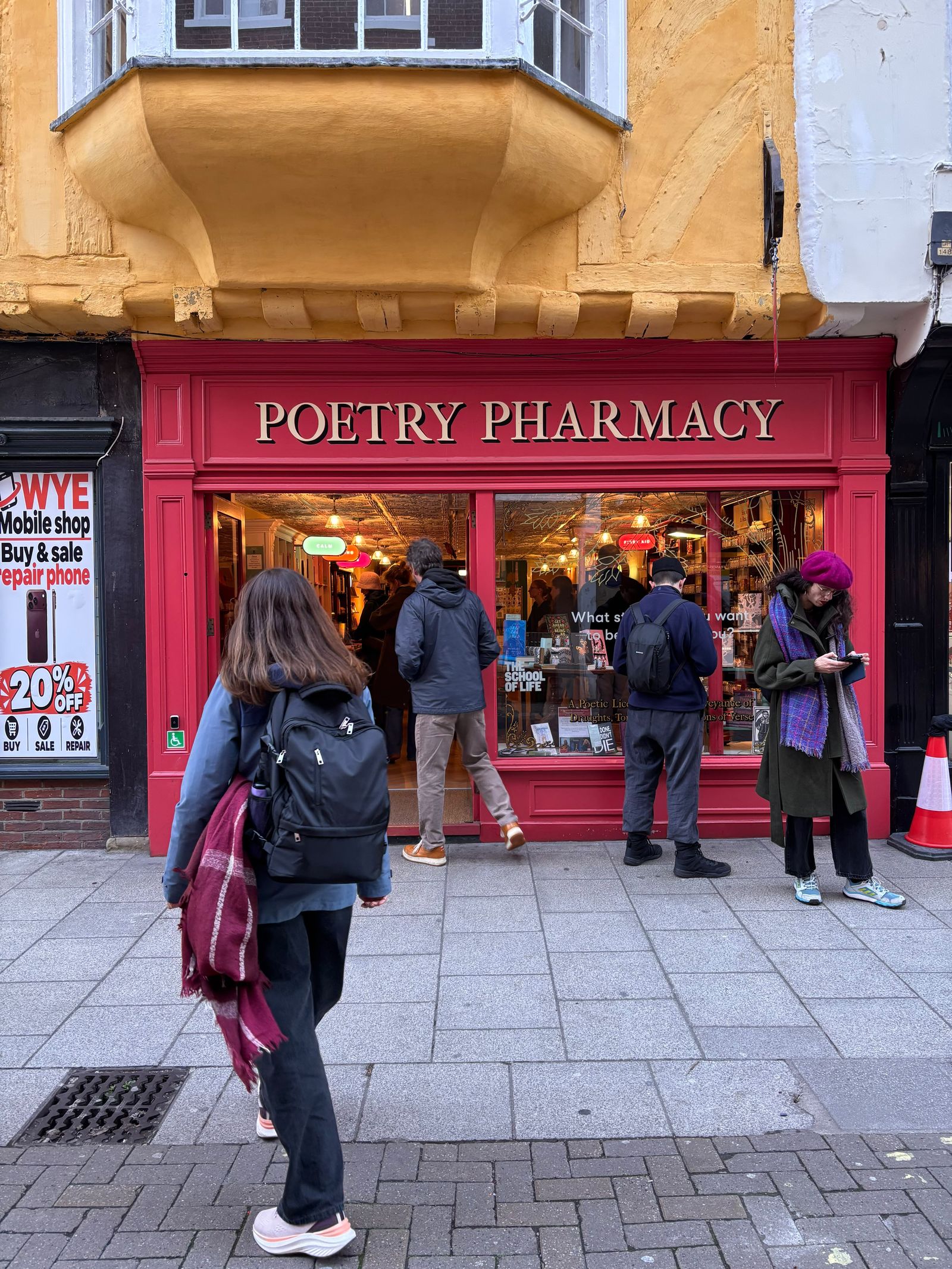
Today number 20 is a poetry shop. I’m not making that up. The Poetry Pharmacy opened there in March 2026, in a house built around 1500, and it’s where I found my favorite shop in York, by accident.
Where to stand: 20 Coney Street, opposite Waterstones.
Dickens and the Five Sisters window (1839)
In Nicholas Nickleby, a traveler at an inn tells the tale of five sisters of York who spent their lives embroidering, and whose work was copied into a window in the Minster after the youngest died. It ends:
Time has softened down the colours, but the same stream of light still falls upon the forgotten tomb, of which no trace remains; and, to this day, the stranger is shown in York Cathedral, an old window called the Five Sisters.
— Charles Dickens, Nicholas Nickleby, Chapter 6 (Project Gutenberg)
The tale is fiction. The window is real. It’s in the north transept: five tall lancets of grey-green glass, each over 53 feet high. Stand under it and it’s easy to see why Dickens wanted a story for it.
Where to stand: inside the Minster, north transept. The Minster charges for entry.
Anne Brontë sees the Minster (1849)
In May 1849 Anne Brontë was dying of tuberculosis and on her way to the sea at Scarborough with Charlotte and their friend Ellen Nussey. They stopped in York, and Anne asked to see the Minster. Ellen’s account ended up in the first biography of Charlotte, by Elizabeth Gaskell (1857):
By her request we went to the Minster, and to her it was an overpowering pleasure.
— Ellen Nussey, quoted in Elizabeth Gaskell, The Life of Charlotte Brontë (Project Gutenberg)
Anne died in Scarborough three days later, aged 29. Her whole story is in four women of York, and all three sisters’ books are in my guide to the Brontës.
Where to stand: the Minster nave.
W. H. Auden is born on Bootham (1907)
The poet W. H. Auden was born at 54 Bootham, just outside Bootham Bar, on 21 February 1907. His father was a doctor, and the family moved to Birmingham the following year, so York can only claim him as a baby. But there’s a plaque on the house, and he’s one of the great poets of the 20th century. If you know only one Auden poem, it’s probably “Funeral Blues” (“Stop all the clocks”).
Where to stand: 54 Bootham, about a two-minute walk out through Bootham Bar.
Kate Atkinson’s York (1995)
Kate Atkinson grew up in York. Her parents had a shop on Stonegate, near the Minster. Her first novel, Behind the Scenes at the Museum, won the Whitbread Book of the Year in 1995. It’s narrated by Ruby Lennox, who grows up above her parents’ pet shop “in one of the ancient streets that cower beneath the looming dominance of York Minster.”
Atkinson has said she isn’t Ruby, “but she is me.” She also wrote that the real main character of the book is York itself. The museum of the title is York Castle Museum, and the title came to her in a dream of being alone there at night.
Where to stand: Stonegate, then York Castle Museum. The book guide has a map of every York place in the novel.
A literary walk through York
Everything above (except the Castle Museum) is inside a small loop around the Minster. This order avoids backtracking. Walking times are my estimates at an easy pace.
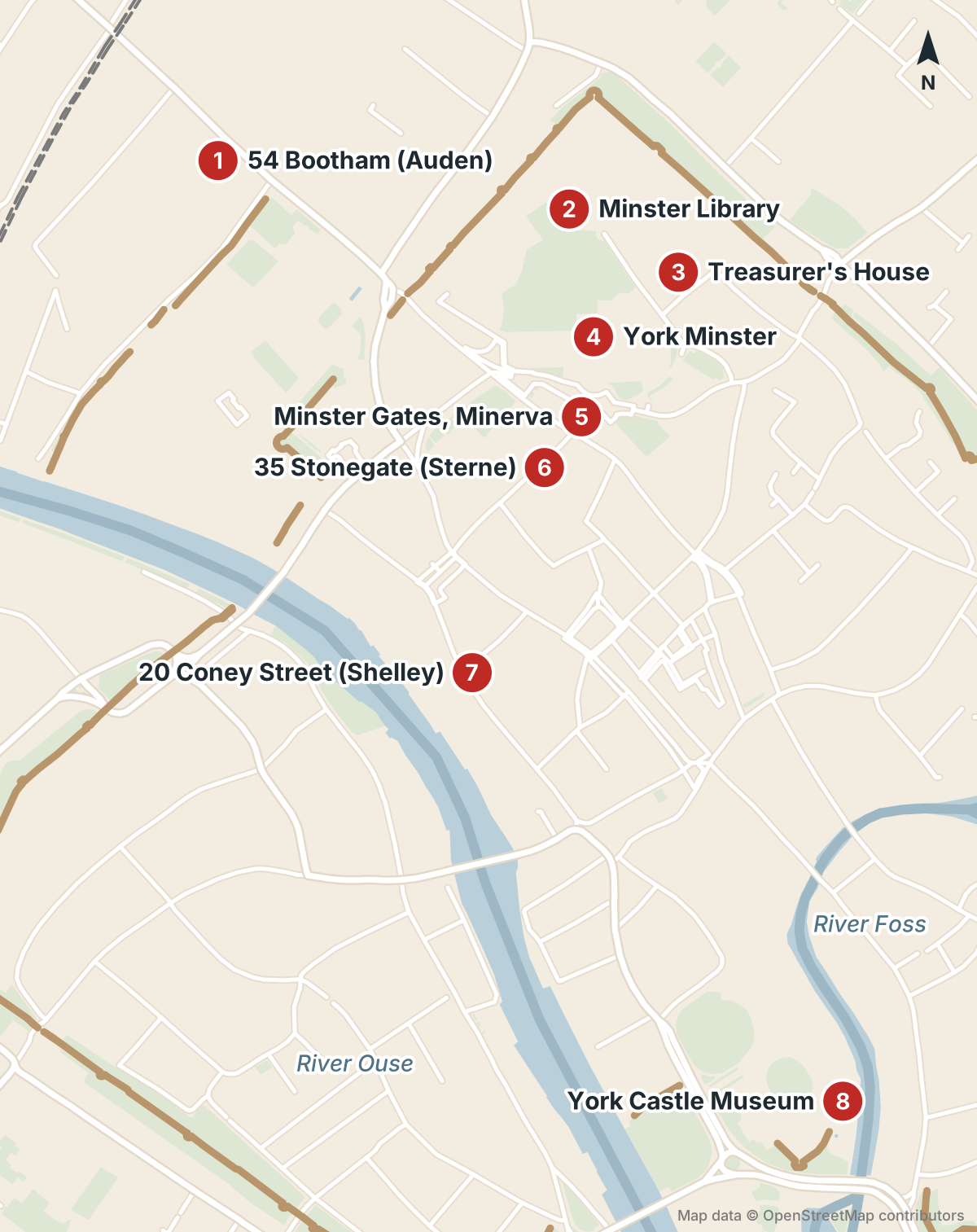
- 54 Bootham (Auden)
- Minster Library
- Treasurer's House
- York Minster
- Minster Gates, Minerva
- 35 Stonegate (Sterne)
- 20 Coney Street (Shelley)
- York Castle Museum
| Stop | Writer | Walk to the next |
|---|---|---|
| 54 Bootham | W. H. Auden | About 3 minutes |
| Dean’s Park and the Minster Library | Alcuin | About 3 minutes |
| Treasurer’s House, Minster Yard | Elizabeth Montagu | About 3 minutes |
| York Minster (Five Sisters, the nave) | Dickens, Anne Brontë | About 2 minutes |
| Minster Gates and Minerva | York’s booksellers | About 3 minutes |
| 35 Stonegate | Sterne, Kate Atkinson | About 5 minutes |
| 20 Coney Street | Shelley | About 12 minutes |
| York Castle Museum | Kate Atkinson | End |
Allow two hours without going inside anything, or half a day with the Minster and the Castle Museum.
What to read before you go
If you only read one, make it Behind the Scenes at the Museum. It’s the one that changes how the streets look. After that:
- Tristram Shandy if you want something odd and funny. Don’t try to read it in order. Nobody does.
- Robinson Crusoe if you’ve never actually read it. Most of us only know the story.
- Nicholas Nickleby, Chapter 6, for the Five Sisters tale. It’s short and you can read it free on Project Gutenberg.
- The Tenant of Wildfell Hall by Anne Brontë, because she’s the least read of the sisters and she deserves better.
When I was in York, I came home with two more: a book called 365 Days of Brontë, and Yorkshire Literary Landscapes, which is full of writers who came from Yorkshire or were inspired by it.
On our trip
On our October 2027 Yorkshire trip we spend Thursday afternoon in York, and after York Castle Museum the time is yours. Every place on this page is a short walk away. The afternoon guide has the plan, and the free-time menu.
It’s called Twice Told Stories because you learn the stories before you go, and you come home with your own.
York in books: what else was happening
York's writers span six centuries. The Mystery Plays were already old when Shakespeare was born, and Sterne was selling Tristram Shandy in Stonegate the same year the British Museum first opened its doors.
- Mystery Plays on the streets 1376–1569
- Georgian 1714–1837
- Victorian 1837–1901
- Elizabeth II 1952–2022
The story Britain The wider world Other writers
- 1376 The story The first written record of the York Mystery Plays.
- 1376 Britain The Good Parliament sits in London.
- 1564 Other writers Shakespeare is born in Stratford-upon-Avon.
- 1569 The story The Mystery Plays are suppressed.
- 1580 The story Bookselling starts on Minster Gates, later known as Bookland Lane.
- 1697 Other writers Celia Fiennes rides into York and sees the Minster 30 miles off.
- 1719 Other writers Robinson Crusoe: 'I was born in the year 1632, in the city of York.'
- 1724 Other writers Defoe's Tour thro' the Whole Island of Great Britain starts coming out.
- 1759 The story December: the first two volumes of Tristram Shandy go on sale in Stonegate.
- 1759 Britain The British Museum opens to the public.
- 1801 The story Minerva, leaning on a pile of books, goes up on the corner of Minster Gates.
- 1811 The story Shelley, 19 and newly married, lodges on Coney Street.
- 1811 The wider world The New Madrid earthquakes shake the Mississippi valley.
- 1839 Other writers Dickens's Nicholas Nickleby tells the tale of the Five Sisters of York.
- 1849 The story Anne Brontë sees the Minster, days before she dies.
- 1857 Other writers Gaskell's Life of Charlotte Brontë prints Ellen Nussey's account of that visit.
- 1907 The story W. H. Auden is born at 54 Bootham.
- 1907 The wider world Oklahoma becomes the 46th state.
- 1951 The story The Mystery Plays are revived for the Festival of Britain.
- 1995 Other writers Kate Atkinson's Behind the Scenes at the Museum wins the Whitbread Book of the Year.
- 2026 The story The Mystery Plays roll through the streets on wagons again, in June and July.
Questions people ask
What famous books are set in York?
Kate Atkinson's Behind the Scenes at the Museum (1995) is the best-known novel set in York. Robinson Crusoe (1719) opens with Crusoe being born in York, and Dickens's Nicholas Nickleby (1839) includes the tale of the Five Sisters of York, built around a real Minster window. The medieval York Mystery Plays were written for the city's streets.
Was Robinson Crusoe from York?
In the novel, yes. The book opens: 'I was born in the year 1632, in the city of York, of a good family, though not of that country, my father being a foreigner of Bremen, who settled first at Hull.' Its full title calls him Robinson Crusoe, of York, Mariner. Crusoe is fictional, and Daniel Defoe was a Londoner.
Was Tristram Shandy published in York?
The first two volumes were. Laurence Sterne, a clergyman of York Minster, paid for them himself, and they went on sale in December 1759 from John Hinxman's bookshop in Stonegate (a York Civic Trust plaque marks the site, at 35 Stonegate). They were probably printed in York by Ann Ward, though bibliographers still argue about it. The later volumes came out in London.
Which famous poets were born in York?
W. H. Auden was born at 54 Bootham, just outside Bootham Bar, on 21 February 1907. His family moved to Birmingham the next year. A plaque on the house records it.
Can you still see the York Mystery Plays?
Yes, but not every year. The guilds now put the plays on wagons around the streets about every four years; the most recent wagon performances were on 28 June and 5 July 2026. Check the York Mystery Plays website for the next cycle.
Read next
- Yorkshire · YorkYork's bookshopsIn York, even the bookshops come with a story: a poet's ambulance, a street that was once called Bookland Lane, and the biggest new independent bookshop in the country. Here's where they are, what each is good for, and a walk that links them.
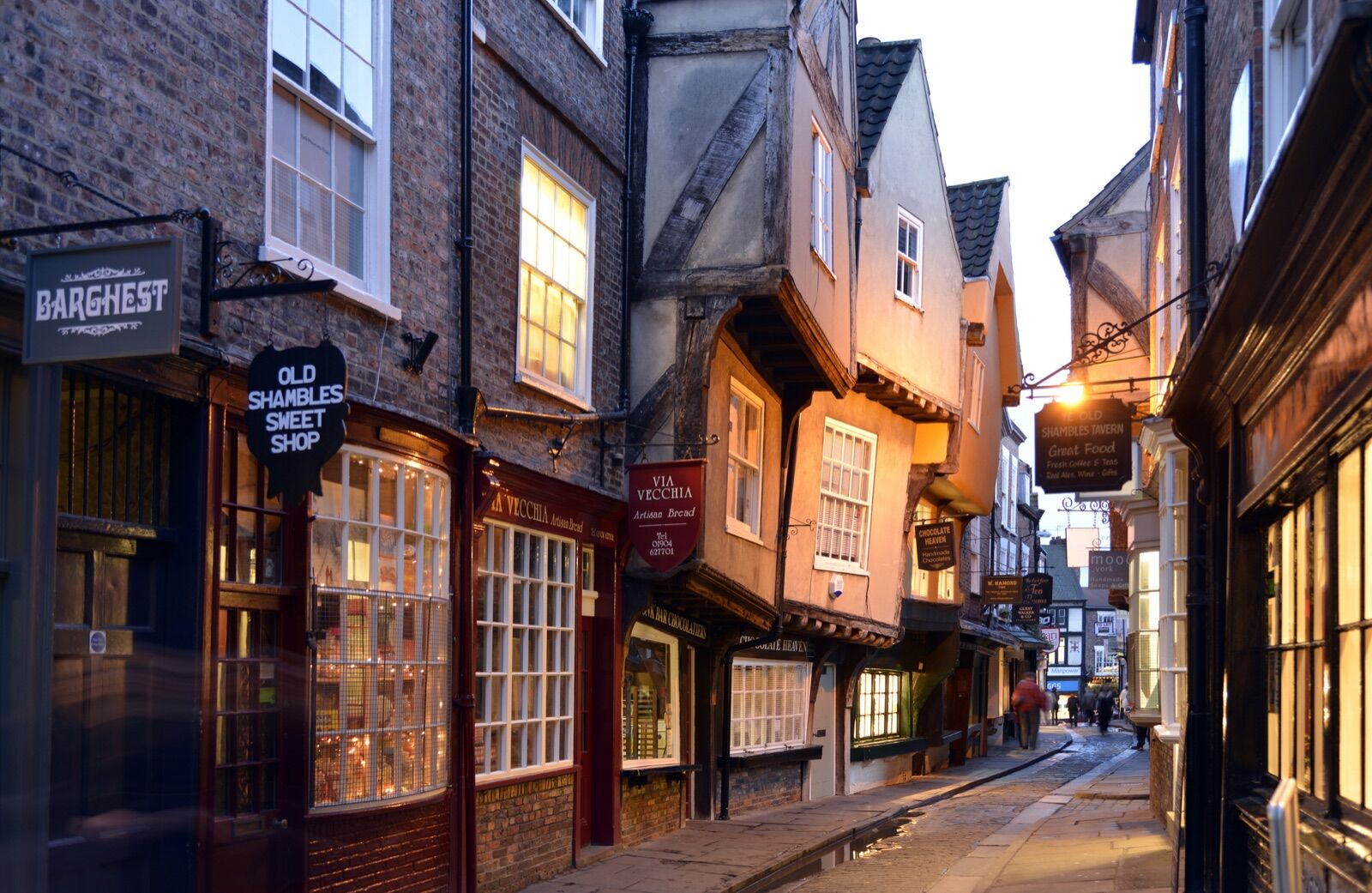 Yorkshire · YorkFour women of YorkYork is full of famous men: Romans, Vikings, kings, Guy Fawkes. The stories I can't stop thinking about belong to four women. Here is each one in full, where to stand, and a walk that links all four.
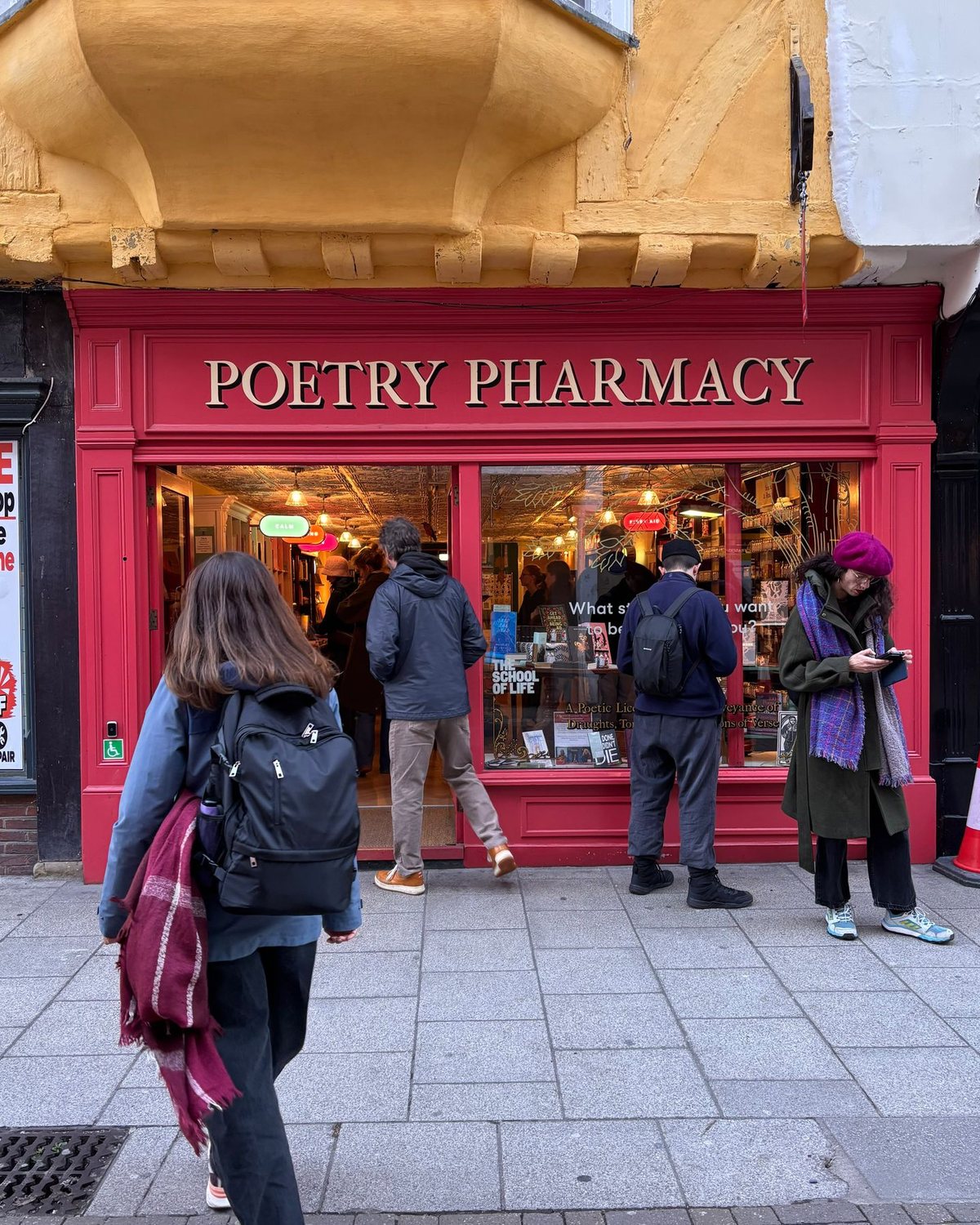 Yorkshire · YorkThe Poetry Pharmacy, YorkA bookshop on Coney Street where the shelves are sorted by how you feel and the poems come in pill bottles. Here's what it is, who started it and what to buy.
- Yorkshire · York · BooksBehind the Scenes at the MuseumWho's who in Ruby Lennox's family, generation by generation, how the chapters and footnotes fit together, and the York streets you can still walk. Spoilers are tucked away until you click.
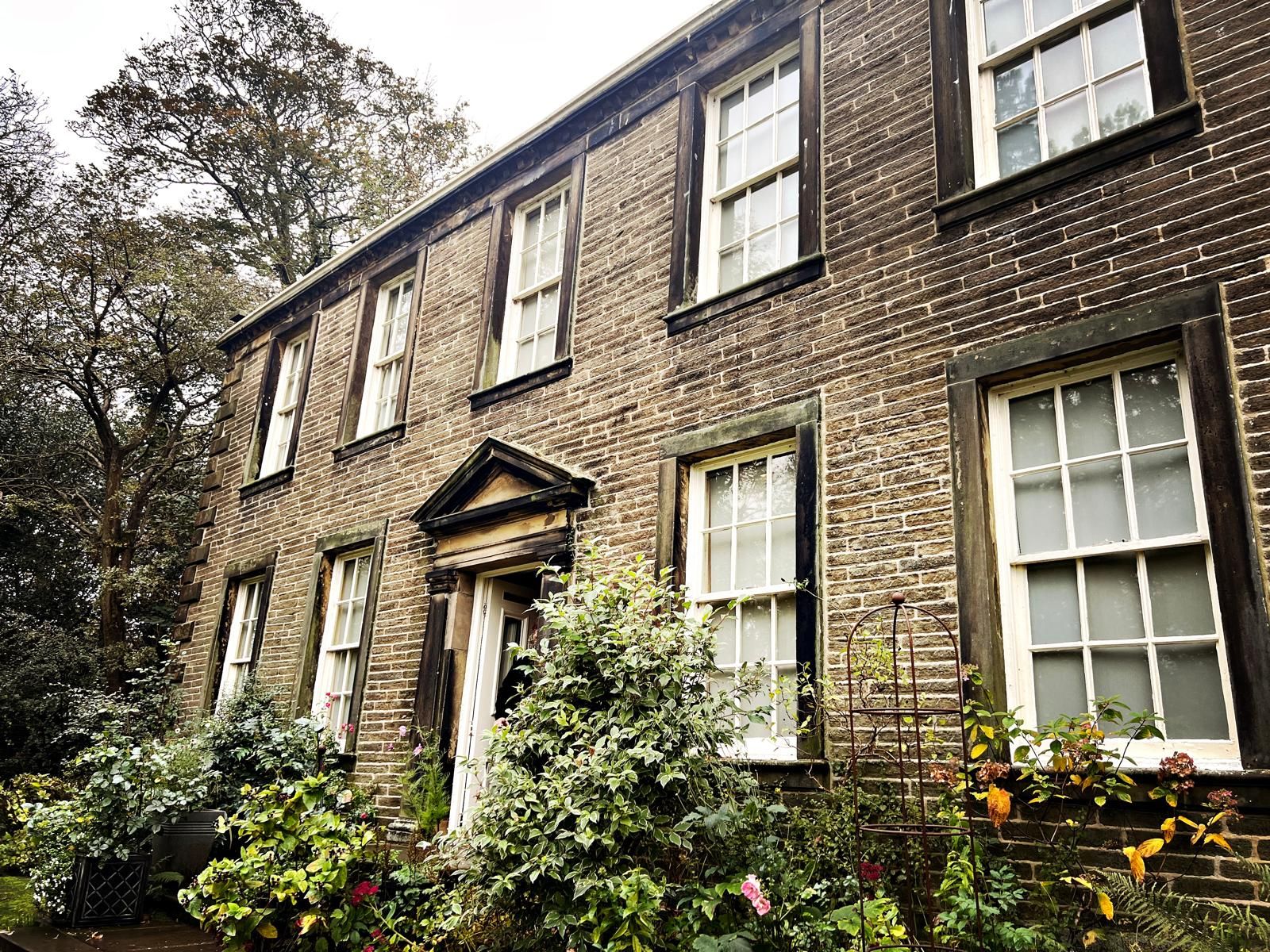 Yorkshire · The BrontësBooks by the Brontë sistersCharlotte, Emily and Anne Brontë wrote seven novels between them, all at one house in Haworth, West Yorkshire. Here's every book in order, who wrote which, and the story behind them, including what Charlotte really thought of Jane Austen.
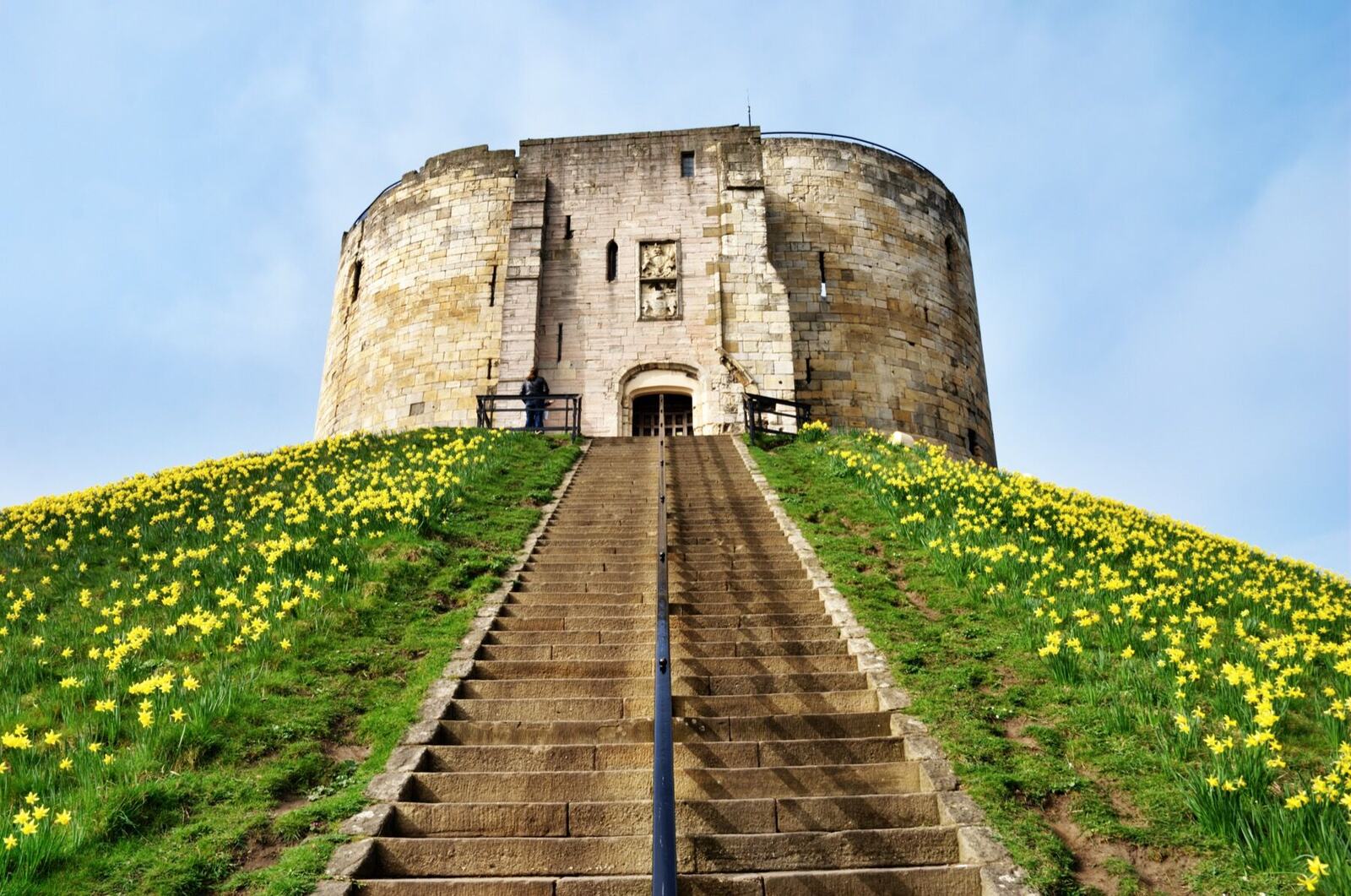 Yorkshire · YorkAn afternoon in YorkExactly how our Thursday afternoon in York goes on the October 2027 trip: three stops together, the story behind each one, then a free-time menu built around the books and shows you already love.
Sources
- Wikipedia: York Mystery Plays (48 pageants, guilds, wagons, British Library Add MS 35290, 1951 revival)
- York Mystery Plays: the 2026 wagon plays (28 June and 5 July 2026)
- York Civic Trust: Literary York trail (Alcuin, Sterne at 35 Stonegate, Minerva, Bookland Lane, Elizabeth Montagu, Minster Library, Auden)
- Project Gutenberg: Celia Fiennes, Through England on a Side Saddle
- Project Gutenberg: Defoe, Robinson Crusoe (opening chapter)
- Internet Archive: Defoe, A Tour thro' the Whole Island of Great Britain
- Laurence Sterne Trust: John Hinxman's bookshop, Stonegate
- Laurence Sterne Trust: publication of Tristram Shandy (York Courant advertisement, 11 December 1759)
- Wikipedia: Ann Ward (printer), Coney Street
- YorkMix: Coney Street building and 'Miss Dancer's, Coney Street' (Shelley, 1811)
- Wikipedia: Percy Bysshe Shelley (1811)
- Project Gutenberg: Dickens, Nicholas Nickleby (The Five Sisters of York)
- Project Gutenberg: Gaskell, The Life of Charlotte Brontë, Vol. 2
- Wikipedia: 54 Bootham (W. H. Auden's birthplace)
- Wikipedia: Behind the Scenes at the Museum (1995 Whitbread Book of the Year)
- Kate Atkinson, 'Night in the museum', The Guardian, 1 November 2008
Get the next Behind the Story guide.
New guides to the real places behind the books and films, by email. Free. Unsubscribe in one click.