Caribbean · St Lucia
St Lucia Pitons: hiking, tours and how to see the twin peaks
Two volcanic peaks on St Lucia's southwest coast: how tall they are, how to climb one, how to see them from the sea, and the easy option if you'd rather not climb.
- Where
- Southwest coast of St Lucia, next to Soufrière
- Gros Piton
- 798 m (2,619 ft)
- Petit Piton
- 743 m (2,438 ft)
- UNESCO
- Pitons Management Area, inscribed 2004, 2,909 ha
- Hike
- Gros Piton from Fond Gens Libre; guide required
- From Rodney Bay
- About 50 km by road; roughly 1 to 1.5 hours each way
- Our trip
- Stops at Rodney Bay, not the Pitons (see below)
The short answer
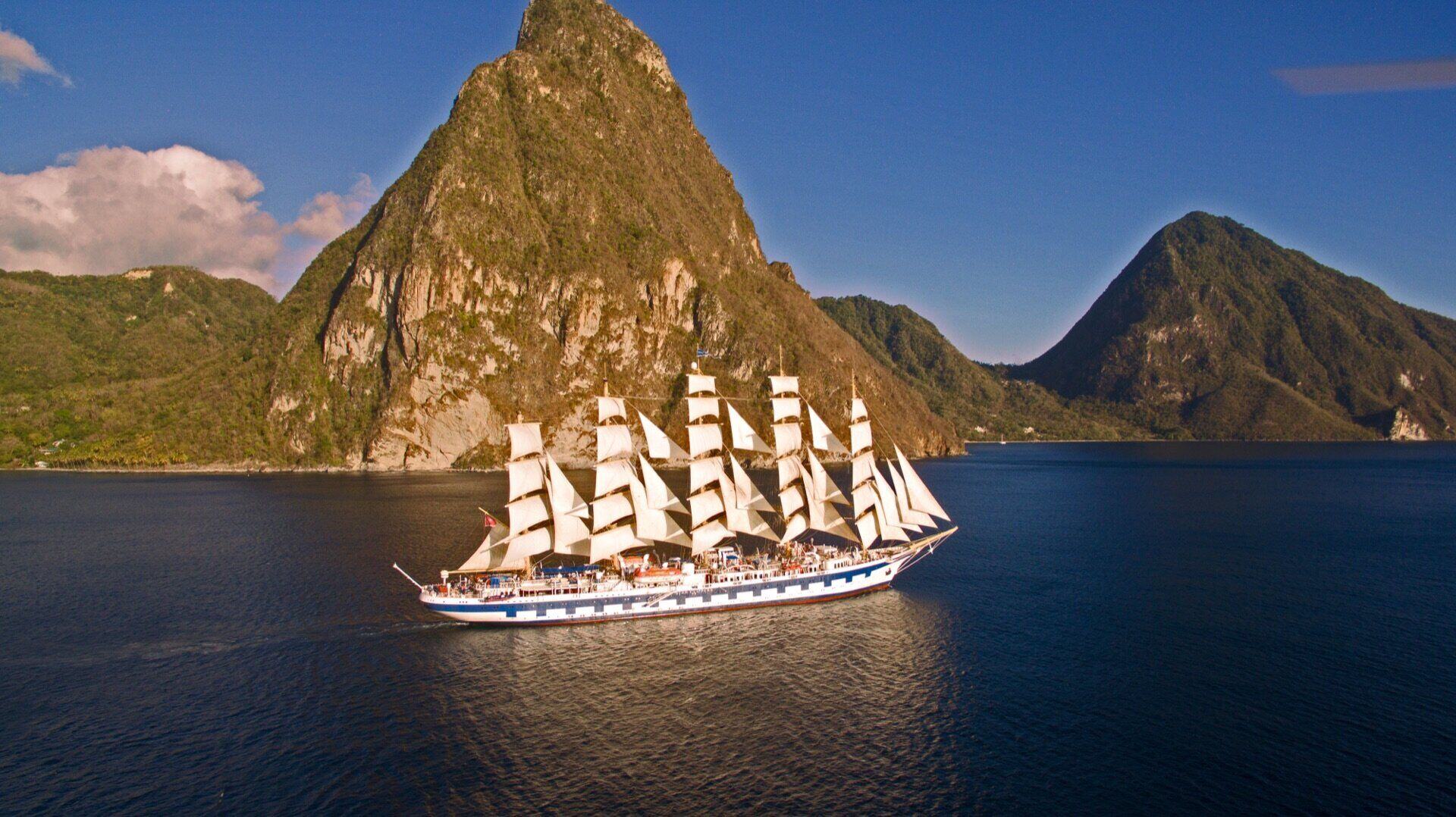
The St Lucia Pitons are two volcanic peaks beside the town of Soufrière on St Lucia's southwest coast: Gros Piton, 798 m (2,619 ft), and Petit Piton, 743 m (2,438 ft). Together with the land and sea around them they form the Pitons Management Area, a UNESCO World Heritage Site since 2004. You can hike Gros Piton with a local guide in about four hours round trip.
The St Lucia Pitons are the two steep, green volcanic peaks in most pictures of St Lucia, rising straight out of the sea beside the small town of Soufrière. Gros Piton is the bigger and broader of the two; Petit Piton is a little lower and a lot steeper. They’re volcanic plugs, the hardened cores of old volcanoes, and with the land and hot springs around them they make up a UNESCO World Heritage Site. Below: how tall the Pitons are, how to hike them, the main St Lucia Pitons tours, how to see them from a ship, and the island’s poet, Derek Walcott. I haven’t been yet. And I’ll be straight with you up front: our own January 2028 route stops in the north of the island, not at the Pitons. There’s more on what that means at the end.
Where are the Pitons?
The Pitons are on the southwest coast of St Lucia, just south of the town of Soufrière. Between them is a ridge called Piton Mitan. Most visitors come from the north of the island, where the hotels at Rodney Bay and the cruise port at Castries are.
| From | To the Pitons area (Soufrière) | Notes |
|---|---|---|
| Rodney Bay / Gros Islet | About 50 km by road | Roughly 1 to 1.5 hours each way on winding roads |
| Castries | A similar distance | Similar time |
| By sea from Rodney Bay | Boat transfers and day tours | The view of both peaks from the water |
St Lucia drives on the left and the road south winds a lot, so a tour or a taxi is the easy option. Don’t plan on renting a car and doing it in an afternoon.
Gros Piton and Petit Piton
| Gros Piton | Petit Piton | |
|---|---|---|
| Height | 798 m (2,619 ft) | 743 m (2,438 ft) |
| Rank on the island | Second-highest peak, after Mount Gimie | Lower, but steeper |
| Hiking | Popular guided hike, no ropes needed | Very steep; far fewer climbers |
| First recorded ascent | — | 1878, by Abdome Deligny |
From the top of Petit Piton, on a clear day, you can see Dominica, Martinique, Barbados and St Vincent. The local beer, Piton, is named after the peaks. (Of course it is.)
The Pitons Management Area (UNESCO)
UNESCO inscribed the Pitons Management Area in 2004. It covers 2,909 hectares (about 7,190 acres): both peaks, the Piton Mitan ridge, the land around them, and part of the volcanic complex near Soufrière, where steam vents and hot springs show the ground is still active.
Hiking the St Lucia Pitons
The Gros Piton hike
This is the hike most people mean when they say “hiking the Pitons.”
- Start: the interpretive center in Fond Gens Libre, a small village at the foot of Gros Piton, south of Soufrière. The turn-off is signed.
- Guide: required. Local guides are trained and work from the trail office; you pay a trail fee that includes the guide. Reported fees range from about US$35 to US$50 per person, so check the current fee before you go.
- Time: about four hours round trip for most people. Some guides say up to three hours each way.
- Difficulty: strenuous but not technical. The lower half is easier; the climb to the summit is steep, with rocks and roots. No ropes or climbing experience needed.
- What to bring: good shoes, at least two liters of water, sun protection, and an early start.
Be honest with yourself about the “strenuous” part. Four hours of steep climbing in tropical heat is a real workout, and there’s no shame in the boat tour.
Petit Piton
Petit Piton is steeper and is climbed far less often than Gros Piton. If you want to try, ask a licensed guide in Soufrière first.
Tet Paul Nature Trail: the easy view
If four hours of climbing is too much, the Tet Paul Nature Trail near Soufrière is a short guided walk, about 45 minutes, up steps to a viewing platform with a close view of Petit Piton, Sugar Beach and the south coast. The steps to the top are known as the “Stairway to Heaven.” This is the one I’d point most people to.
St Lucia Pitons tours
| Tour type | What you see | Good for |
|---|---|---|
| Pitons boat tour | Both peaks from the water | The classic photo, no climbing |
| Land tour to Soufrière | Viewpoints, Sulphur Springs, a waterfall | A full day of sights |
| Gros Piton hike | The summit of Gros Piton | Fit hikers |
| Tet Paul Nature Trail | A close view of Petit Piton | A short walk |
Sulphur Springs: the drive-in volcano
Sulphur Springs Park, a few minutes’ drive from Soufrière and inside the World Heritage Site, is billed as the Caribbean’s only drive-in volcano. You drive up to the edge of the volcanic area and see steam vents and bubbling mud pools, then soak in the park’s dark mud baths. Bring a swimsuit and a towel, and maybe not your favorite swimsuit. Toraille Waterfall is about five minutes away toward Soufrière.
Where to stay for Pitons views
If you’re adding days to a cruise, staying near Soufrière saves the long drive from the north and lets you start the Gros Piton hike early, before the heat. Staying at Rodney Bay puts you near the marina and beaches of the north, about an hour or more from the peaks.
When to go
Guides run the Gros Piton hike all year. The Atlantic hurricane season runs from June to November, and Caribbean cruise ships like the Royal Clipper are in the region from November to March. Whatever the month, start the hike early in the morning.
Seeing the Pitons from a ship
The Pitons look their best from the sea. The Royal Clipper visits on her Grenadine Islands route from Barbados: on the last day she anchors at Marigot Bay in the morning and Soufrière in the afternoon, right under the peaks. In January 2028 that route departs on 8 and 22 January. Star Clippers’ description mentions Diamond Falls and the mineral baths near Soufrière for that afternoon.
Her Windward Islands route, which our trip sails, stops at Rodney Bay in the north instead. Our Royal Clipper guide shows both routes side by side, and Bridgetown, Barbados covers the port where both start.
Derek Walcott and St Lucia
St Lucia is the island of Derek Walcott, the poet and playwright who won the Nobel Prize in Literature in 1992. (St Lucia had already had a Nobel: the economist W. Arthur Lewis won in 1979. Two Nobel laureates from an island of under 200,000 people is quite a record.)
- Born: 23 January 1930, in Castries, with a twin brother, the playwright Roderick Walcott.
- Work: poetry from In a Green Night (1962) through Another Life (1973) and The Star-Apple Kingdom (1979) to Omeros (1990), a long poem that retells Homer’s world with St Lucian fishermen. Its fishermen come from Gros Islet, the village beside Rodney Bay. He also founded what became the Trinidad Theatre Workshop, and he painted.
- Memorials: a square in central Castries was named Derek Walcott Square in 1993.
- Died: 17 March 2017 at his home at Cap Estate, St Lucia. He had a state funeral and is buried at Morne Fortune, above Castries.
Walcott’s poems are still in copyright, so we don’t quote them here. If you read one thing before you go, read the opening of Omeros, then stand on the beach at Gros Islet.
The Pitons and our trip
I want to be clear about this one: our January 2028 trip, Mermaids, Pirates and Poets (Caribbean Sail), does not visit the Pitons. The Royal Clipper’s Windward Islands route stops at Rodney Bay, at the north end of St Lucia, on Sunday 16 January. Our story stop that day is Pigeon Island, where Admiral Rodney’s lookouts watched the French fleet in 1782 before the Battle of the Saintes, right next to Walcott’s Gros Islet. Book One of Omeros is on the trip’s reading list, and the books are on our Royal Clipper reading list. The rest of the week goes on to Dominica, Antigua, St Kitts, Les Saintes and Martinique.
If the Pitons are a must for you, add a few days in St Lucia before or after a sailing, or pick the Royal Clipper’s Grenadine Islands week instead.
St Lucia's story: what else was happening
Britain and France fought over St Lucia for 150 years, and it changed hands so often that it ended up British, mostly Catholic, and full of French place names, starting with Soufrière. It became independent in 1979, the same year a St Lucian won the Nobel Prize in Economics. Derek Walcott made it two Nobels in 1992.
- Britain and France fight over the island 1650–1814
- British colony 1814–1979
- Independent 1979–2026
The story The Caribbean The wider world Other writers
- 1605 The story 67 English colonists blown off course try to settle; by September only 19 are alive, and they flee.
- 1620 The wider world The Mayflower lands at Plymouth, Massachusetts.
- 1650 The story France claims St Lucia.
- 1667 The story The Treaty of Breda gives France full control, after a few years of English occupation.
- 1674 The story St Lucia becomes a French crown colony, run from Martinique.
- 1776 The wider world The American colonies declare independence.
- 1778 The story The British capture St Lucia.
- 1780 The story October: the Great Hurricane wrecks Rodney's fleet at Castries and kills about 6,000 people on the island.
- 1782 The story Rodney's fleet waits at Gros Islet Bay, now Rodney Bay, then sails to beat the French at the Battle of the Saintes on 12 April.
- 1783 The wider world The Treaty of Paris ends the American Revolutionary War; in the same peace, Britain hands St Lucia back to France.
- 1814 The story After Napoleon's defeat, the Treaty of Paris gives St Lucia to Britain for good.
- 1834 The Caribbean Slavery ends in Britain's colonies, followed by four years of "apprenticeship."
- 1838 The Caribbean Full freedom in the British islands.
- 1848 The Caribbean France abolishes slavery on Martinique, St Lucia's neighbor to the north.
- 1878 The story Abdome Deligny makes the first recorded climb of Petit Piton.
- 1930 Other writers 23 January: Derek Walcott and his twin, Roderick, are born in Castries.
- 1962 Other writers Walcott publishes In a Green Night.
- 1966 Other writers Jean Rhys, born on Dominica, publishes Wide Sargasso Sea.
- 1966 The Caribbean Barbados becomes independent.
- 1967 The story 1 March: St Lucia becomes an associated state, running its own internal affairs.
- 1979 The story 22 February: St Lucia becomes independent.
- 1979 Other writers St Lucian economist W. Arthur Lewis wins the Nobel Prize in Economics.
- 1990 Other writers Walcott publishes Omeros, with fishermen from Gros Islet.
- 1992 Other writers Walcott wins the Nobel Prize in Literature.
- 1993 The story A square in central Castries is renamed Derek Walcott Square.
- 2001 Other writers V. S. Naipaul, from Trinidad, wins the Nobel Prize in Literature.
- 2004 The story UNESCO inscribes the Pitons Management Area as a World Heritage Site.
- 2017 Other writers 17 March: Walcott dies at home at Cap Estate, St Lucia.
Questions people ask
How tall are the Pitons in St Lucia?
Gros Piton is 798 m (2,619 ft) and Petit Piton is 743 m (2,438 ft). Gros Piton is the second-highest peak on St Lucia, after Mount Gimie.
Can you hike the Pitons?
Yes. Gros Piton is the usual hike: a steep trail from the village of Fond Gens Libre, done with a local guide, with no ropes or climbing skills needed. Petit Piton is steeper and less often climbed.
How long does it take to hike Gros Piton?
Allow about four hours round trip, more if you're slow on steep ground. Start early, before the heat, and bring plenty of water.
Do you need a guide to hike the Pitons?
Yes, for Gros Piton. You pay the trail fee and meet a trained local guide at the interpretive center at the start of the trail in Fond Gens Libre. Check the current fee before you go.
Can you see the Pitons from a cruise ship?
Yes, from ships that sail down St Lucia's west coast or anchor off Soufrière. The Royal Clipper's Grenadine Islands route anchors at Soufrière on its last afternoon.
Are the Pitons a UNESCO World Heritage Site?
Yes. The Pitons Management Area, which includes both peaks, the ridge between them and the land around them, was inscribed in 2004.
What is the best St Lucia Pitons tour?
It depends on your energy. A boat tour down the west coast shows both peaks from the water; a land tour to Soufrière adds Sulphur Springs and a waterfall; the Gros Piton hike gets you to the top of one.
Read next
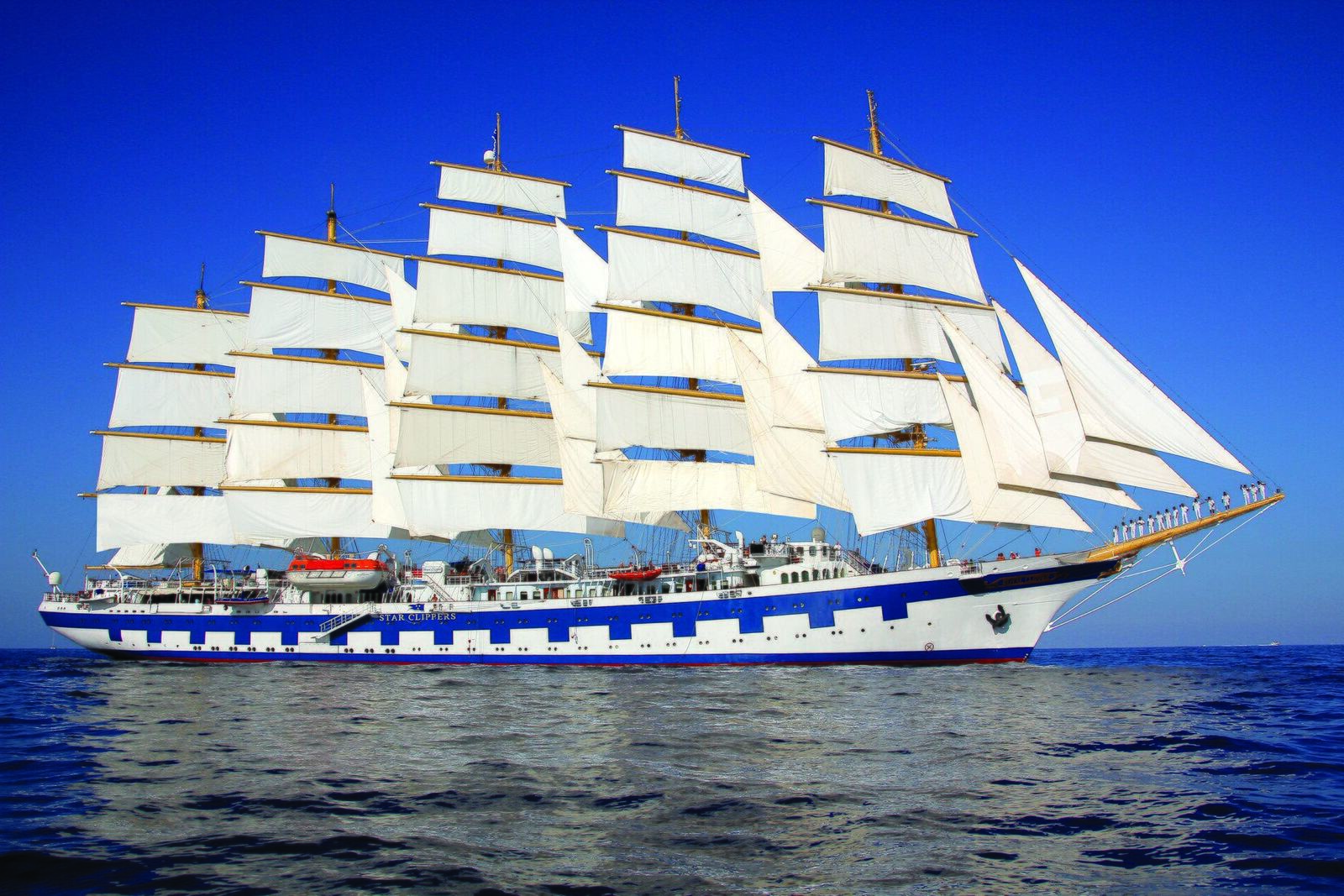 Caribbean · The Royal ClipperRoyal ClipperWhat the ship is, where her design came from, how a week on board works, and where she sails from Barbados. Straight answers, no brochure gloss.
- Caribbean · BarbadosBridgetown, BarbadosWhere the port is, what to see in a day, and what to know before you board a ship here.
- Caribbean · MartiniqueThings to do in MartiniqueFrance in the Caribbean: a volcano that wiped out a city, an empress's birthplace, the only rum with its own appellation, and the poet who named Négritude.
- Caribbean · DominicaThings to do in DominicaWhat's worth your time on Dominica, why it isn't the Dominican Republic, and what you can actually fit into one day when a ship calls at Cabrits.
Sources
- UNESCO: Pitons Management Area
- Wikipedia: Pitons (Saint Lucia)
- Hike Bike Travel: Gros Piton hike
- Tips for Family Trips: Gros Piton, St Lucia
- Islands.com: Tet Paul Nature Trail
- Wikipedia: Sulphur Springs, Saint Lucia
- Caribbean Journal: Saint Lucia's drive-in volcano (Mar 2026)
- Saint Lucia Tourism: Sulphur Springs
- Wikipedia: Derek Walcott
- Nobel Prize: Derek Walcott, 1992
- Wikipedia: Battle of the Saintes
- Rome2rio: Soufrière to Gros Islet
- Star Clippers itinerary files RC080128 and RC150128 (downloaded 2 Nov 2026)
- Wikipedia: Saint Lucia (history, independence, Nobel laureates)
- Wikipedia: Great Hurricane of 1780
- Nobel Prize: V. S. Naipaul, 2001
Get the reading list first.
Trip announcements, curated reading lists, and the occasional dispatch — before anyone else.