
Behind the Story · August 15, 2026
Women's Equality Month: Books, Films, Poems and Music
Six books about women pushing back, from Gilead to Shaker Heights, from occupied Lille to Jackson, Mississippi and Hampton, Virginia, plus the films, a poet and an anthem.
August 26 is Women’s Equality Day in the US. It’s the date in 1920 when the 19th Amendment, which gave women the vote, was officially certified, so a lot of people mark the whole month. These six books are about women who wouldn’t accept the world the way it was handed to them, in uniforms, in the jobs their mothers had, or in the silence everyone expected. They’re also set in real places you can go: Cambridge, Shaker Heights, Jackson, Hampton and Lille.
Behind the Story is where I gather the books, films and places behind a story, for people who’d rather see the place than just read about it. Streaming services change what they carry all the time, so each film links to JustWatch, which shows where it’s streaming now.
6 Books 2 TV series 1 Poetry Music 2 Films
-
Book
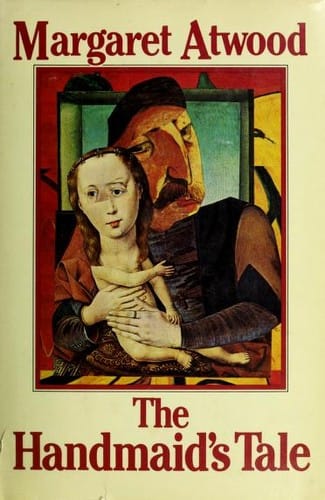
The United States has become Gilead, and women who can still have children are handed to powerful men as Handmaids, with no names, money or say. Atwood published it in 1985 and has said again and again that she put nothing in it that people hadn't already done somewhere in history. Offred's voice is calm, dry and terrifying. If you only read one book on this list, make it this one.
Where it takes you: Cambridge, Massachusetts, and Harvard, where Atwood was a graduate student in the early 1960s. Gilead's headquarters is Harvard, and the Wall is Harvard's wall. Walk around Harvard Yard after you've read it. It's not a comfortable walk.
-
TV series · 2017–2025
The Handmaid's Tale
Hulu
Elisabeth Moss is June, and the first season follows the book closely before going far past it. Here's a nice irony: it was mostly filmed around Toronto, and many of the outdoor scenes were shot in Cambridge, Ontario, standing in for Cambridge, Massachusetts. It's hard to watch. That's the point.
-
TV series · 2020
Reese Witherspoon is Elena Richardson and Kerry Washington is Mia Warren. Making Mia a Black woman, which she isn't in the book, changes a lot of the arguments, and I think it sharpens them. Eight episodes. Read the book first so you can see what they changed.
-
Book
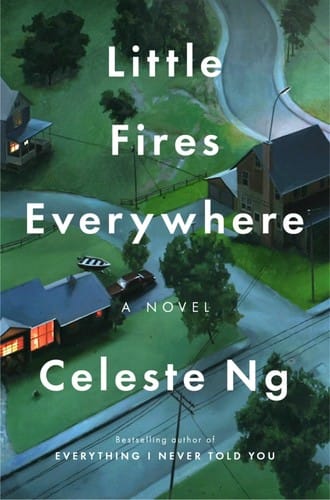
The Richardsons follow every rule in Shaker Heights. Mia Warren, an artist who moves from town to town with her teenage daughter, follows none. When a custody fight over a baby splits the town, everyone has to decide what they really think about motherhood, money and who counts as a good mother. Ng is very sharp about well-meaning liberals who congratulate themselves before doing the work.
Where it takes you: Shaker Heights, a real suburb of Cleveland, planned in the early 1900s with strict rules on how every house could look. Ng grew up there, and the streets in the book are exact.
-
Poetry
Maya Angelou
Poet and memoirist
Most people know I Know Why the Caged Bird Sings. Read the poems too. "Still I Rise" and "Phenomenal Woman" are short, you can read them in two minutes, and they've been read at more graduations, weddings and rallies than almost anything else. She also read a poem at Bill Clinton's first inauguration.
Where it takes you: Winston-Salem, North Carolina, where she taught at Wake Forest University for three decades.
-
Music · 1972
I Am Woman
Helen Reddy
It was a slow climb, and then it went to number one at the end of 1972 and became the unofficial anthem of the women's movement. Reddy won a Grammy for it and thanked God "because She makes everything possible." Turn it up.
Where it takes you: Play it on the way to Seneca Falls, New York, where the first women's rights convention met in 1848. Women's Rights National Historical Park is there now.
-
Book
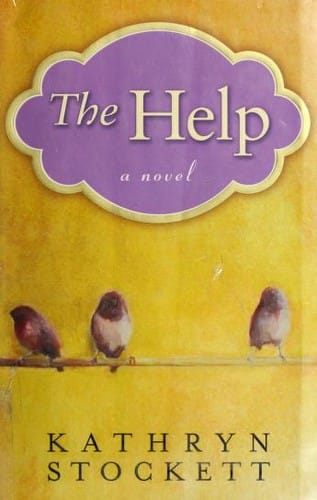
Two Black maids, Aibileen and Minny, and a young white woman, Skeeter, secretly put together a book about what it's like to raise white families' children in homes that treat you as less than human. It was a huge bestseller, and it started a real argument about who gets to tell whose story. Black historians and readers criticized it. I'd read it, and read that criticism too.
Where it takes you: Jackson, Mississippi. The Mississippi Civil Rights Museum, opened in 2017, is one of the best in the country. The Medgar and Myrlie Evers Home, where Medgar Evers was shot in 1963, is now a national monument. Both tell the history the novel only touches.
-
Film · 2011
The Help
Tate Taylor
Viola Davis is Aibileen and Octavia Spencer is Minny, and Spencer won the Oscar for it. It was filmed in Mississippi, mostly in Greenwood, with some scenes in Jackson. Davis has said since that she regrets making it, because the film didn't really give the maids their own voice. Worth knowing before you watch.
-
Film · 2016
Hidden Figures
Theodore Melfi
Taraji P. Henson, Octavia Spencer and Janelle Monáe play Katherine Johnson, Dorothy Vaughan and Mary Jackson. It squeezes years into months and invents some scenes, but it's a great film, and it sent a lot of people to the book. Watch it with anyone who's ever been told math isn't for girls.
-
Book
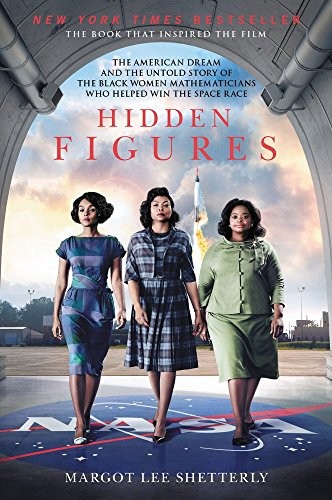
This is the true story of the Black women mathematicians who worked as "human computers" at Langley and helped get American astronauts into space, while working under segregation and being treated as support staff rather than scientists. Shetterly grew up in Hampton, and her father was a research scientist at Langley, so she's writing about her own community. It's much more detailed than the film.
Where it takes you: Hampton, Virginia. NASA Langley is a working research center, not a museum, so start at the Virginia Air & Space Science Center downtown, Langley's official visitor center. Hampton University, where Mary Jackson studied, is nearby.
-
Book
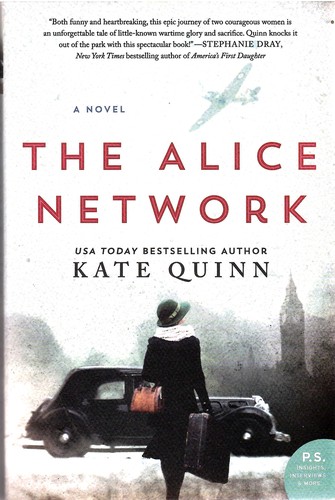
In 1947, a young American woman looking for her missing cousin teams up with Eve, a bitter, hard-drinking former spy. Eve is invented, but the network she worked for was real. It was run by Louise de Bettignies, a Frenchwoman who used the name Alice Dubois and ran spies behind German lines around Lille. She died in a German prison in 1918. Good, fast historical fiction.
Where it takes you: Lille, in northern France, occupied by Germany for almost all of World War I. There's a statue of Louise de Bettignies on Boulevard Carnot, put up in 1927. It's an hour from Paris by fast train, and most visitors never think to go.
-
Book
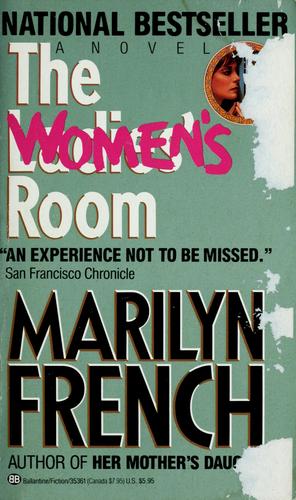
Mira's suburban marriage falls apart, and in her thirties she goes to Harvard as a graduate student. There she finds feminism and a group of women who are finally saying out loud what's been done to them. French published it in 1977, and it was one of the big books of second-wave feminism. It's long and it's angry, and it was meant to be.
Where it takes you: The Boston suburbs and Cambridge in the 1950s to 1970s: first the houses where women were expected to stay home, then the freedom of graduate school. Pair it with The Handmaid's Tale, and you'll see Harvard very differently.
Every place on this list is somewhere a woman pushed back. Go and stand in one of them.
Buy each book from Bookshop.org, which supports independent bookshops and pays us a small commission, or from Amazon. As an Amazon Associate I earn from qualifying purchases. About our affiliate links.
More From Behind the Story
-
 Behind the Story Veterans & Military Families Month: Books, Films, Poems and Music Six novels about war and what comes after, from Vietnam to the trenches of France, from Iraq to occupied France in WWII, and the real places where these stories are written in the ground.
-
 Behind the Story Native American Heritage Month: Books, Films, Poems and Music Six books by and about Native Americans, from Oakland to the Osage Nation of Oklahoma, from the Laguna Pueblo to the Chippewa lands of North Dakota, and the real places where these stories live.
-
 Behind the Story German-American Heritage Month: Books, Films, Poems and Music Six novels about Germany, from wartime Munich to postwar Berlin and the trenches of the Western Front, and the real places where that history is still on the streets.
Get the Prologue list first.
New trips, prices and Prologue lists of books, films and music, by email first. Unsubscribe in one click.