
Behind the Story · September 15, 2026
Hispanic Heritage Month: Books, Films, Poems and Music
Six novels from Latin America and Latino America, from Macondo to the Mexican border, Chicago to the Dominican Republic and New Mexico, plus the films, a poet and a vallenato.
Hispanic Heritage Month runs from September 15 to October 15. It starts on September 15 because that’s independence day for five Latin American countries: Costa Rica, El Salvador, Guatemala, Honduras and Nicaragua. Latin American writing is one of the great traditions in world fiction, and these six novels are set in places you can actually go: Colombia, the Mexican border, Chicago, the Dominican Republic, New Mexico, and one stretch of Spain and North Africa.
Behind the Story is where I gather the books, films and places behind a story, for people who’d rather see the place than just read about it. Streaming services change what they carry all the time, so each film links to JustWatch, which shows where it’s streaming now.
6 Books 1 TV series 3 Films 1 Poetry Music
-
Book
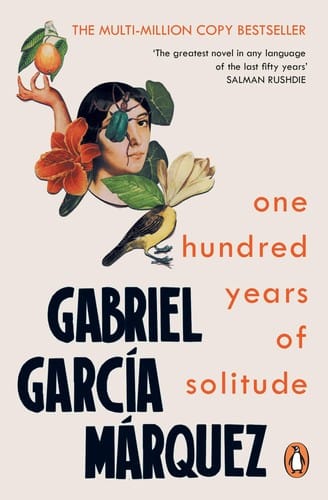
Seven generations of the Buendía family in Macondo, a town García Márquez invented out of his childhood in Aracataca. Ghosts, plagues of insomnia and rains that last for years turn up as calmly as the weather. Half the family shares the same few names, so keep the family tree at the front of your edition open. If you only read one book on this list, make it this one. He won the Nobel Prize in 1982.
Where it takes you: Aracataca, near Colombia's Caribbean coast, where he was born in 1927; his grandparents' house is now a museum. Then Cartagena, where he kept a home in his later years. Part of his ashes are in the cloister of La Merced there, a short walk from the old city walls.
-
TV series · 2024
One Hundred Years of Solitude
Netflix
García Márquez always refused to sell the film rights. His sons finally agreed to this one, in Spanish, filmed in Colombia. The crew built the whole of Macondo from scratch near Alvarado, in the Tolima region. It's slow and gorgeous, and it'll help you keep all the Aurelianos straight.
-
Film · 1992
Like Water for Chocolate
Alfonso Arau
Esquivel wrote the screenplay herself, and Arau, her husband at the time, directed it. It was one of the biggest Spanish-language hits ever in American cinemas. Don't watch it hungry. HBO made a series of the book in 2024 if you want the longer version.
-
Book
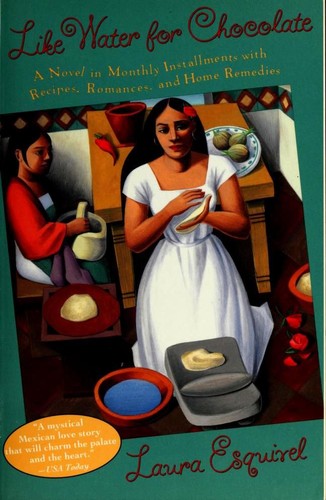
Tita is the youngest daughter, so family tradition says she can't marry: she has to look after her mother until the old woman dies. So everything she feels goes into her cooking, and whoever eats it feels it too. There are twelve chapters, one for each month, each with a recipe. It's short, it's funny, and it's about desire, control and food as a way of talking.
Where it takes you: Northern Coahuila, around Piedras Negras, across the Rio Grande from Eagle Pass, Texas, where the family ranch is set. For the food itself, Mexico City's markets and cooking classes are where most people go.
-
Poetry
Pablo Neruda
Poet, Nobel Prize 1971
Chile's great poet, and one of the most read poets in the world. Start with Twenty Love Poems and a Song of Despair or his odes to everyday things, like onions and socks. Fair warning: in his own memoir he describes assaulting a maid in Ceylon, and many readers now find him hard to love. Know that going in.
Where it takes you: His three houses are museums: La Chascona in Santiago, La Sebastiana in Valparaíso, and Isla Negra on the coast, where he's buried. If you see one, make it Isla Negra.
-
Music · 1993
La Gota Fría
Carlos Vives
García Márquez is often quoted calling his novel a 400-page vallenato, the accordion music of Colombia's Caribbean coast. This is a vallenato from 1938 by Emiliano Zuleta, about a musical duel he won, and Carlos Vives's 1993 version made the whole world hear it. You'll be dancing in your kitchen.
Where it takes you: Valledupar, in Colombia's Cesar region, which holds the big vallenato festival every year.
-
Book
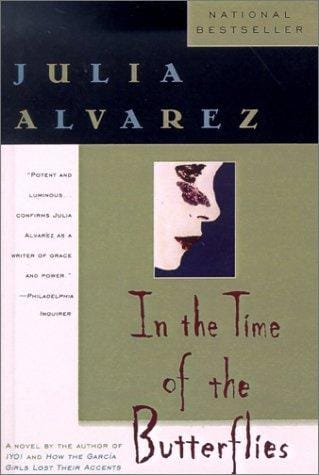
The Mirabal sisters were four real women who became the best-known opponents of the dictator Rafael Trujillo. Three of them were murdered on November 25, 1960. Alvarez tells it in all four voices, including Dedé, the sister who lived and spent the rest of her life telling their story. Alvarez's own family fled the Dominican Republic in 1960, so this is personal.
Where it takes you: The Hermanas Mirabal Museum in Ojo de Agua, near Salcedo, in the house where the sisters spent their last months. They're buried in the garden. November 25 is now the UN's International Day for the Elimination of Violence against Women, because of them.
-
Film · 2001
In the Time of the Butterflies
Mariano Barroso
A Showtime film with Salma Hayek as Minerva, the most political of the sisters, and Edward James Olmos as Trujillo. It's a made-for-TV film and it shows, but Hayek is very good, and it's a quick way to get the history in your head before you read.
-
Film · 2013
Bless Me, Ultima
Carl Franklin
Filmed on location in New Mexico, with a cast and crew made up mostly of New Mexicans. It's quiet and faithful to the book, and the llano looks exactly the way Anaya describes it. Watch it after you've read the book.
-
Book
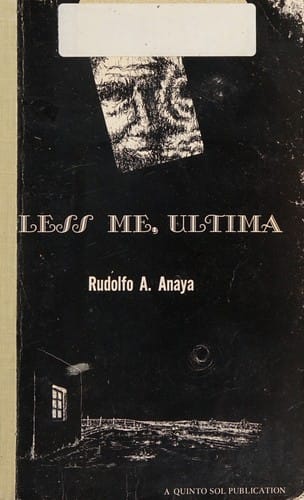
Antonio is six when Ultima, an elderly curandera, or healer, comes to live with his family on the New Mexico plains. Over the next few years she teaches him about plants and the land, and about holding two faiths, the Catholic church and the older ways, without letting either one destroy him. It came out in 1972, and it's the book Chicano literature grew from.
Where it takes you: Santa Rosa and Guadalupe County, where Anaya grew up, on old Route 66 east of Albuquerque, along the Pecos River. Most people drive straight through. Stop, and give the little towns between Santa Fe and the Texas line a day or two.
-
Book
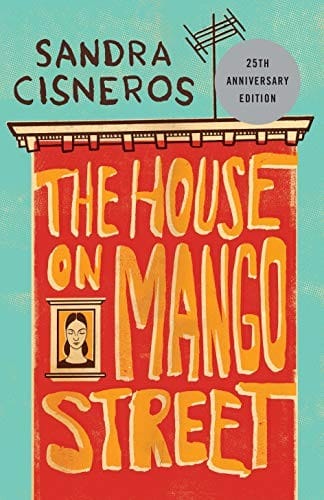
Esperanza Cordero grows up on Mango Street, in a Latino neighborhood of Chicago, and tells it in short pieces, some only a page long. Together they add up to a whole street: the neighbors, the girls, the men, and a girl who knows she'll have to leave even though she loves it. Cisneros grew up in a Mexican-American family in Chicago. You can read it in an afternoon, and you'll think about it for years.
Where it takes you: Humboldt Park, on Chicago's northwest side, where the Cisneros family lived on North Campbell Avenue. Mango Street itself is made up. Then Pilsen, one of the biggest Mexican-American neighborhoods in the Midwest, for its murals and the free National Museum of Mexican Art.
-
Book
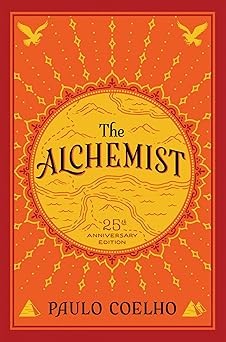
Santiago, a young shepherd in Andalusia, dreams about treasure at the Pyramids and goes after it. I'll be honest: this is the loosest fit on the list. Coelho is Brazilian, he wrote it in Portuguese, and it's set in Spain and North Africa, not Latin America. It's here because so many of you ask for it. It's one of the most translated books by a living author, and it's a quick, simple fable about following your dream.
Where it takes you: Andalusia, then Tarifa at the southern tip of Spain, where Santiago looks across the strait to Africa. Then Tangier, the Sahara and Egypt. If you're in southern Spain, the ferry from Tarifa to Tangier takes about an hour.
Colombia, Mexico, Chicago, the Dominican Republic, Spain and New Mexico: you can visit every one of these places. Start with the book, then book the ticket.
Buy each book from Bookshop.org, which supports independent bookshops and pays us a small commission, or from Amazon. As an Amazon Associate I earn from qualifying purchases. About our affiliate links.
More From Behind the Story
-
 Behind the Story Veterans & Military Families Month: Books, Films, Poems and Music Six novels about war and what comes after, from Vietnam to the trenches of France, from Iraq to occupied France in WWII, and the real places where these stories are written in the ground.
-
 Behind the Story Native American Heritage Month: Books, Films, Poems and Music Six books by and about Native Americans, from Oakland to the Osage Nation of Oklahoma, from the Laguna Pueblo to the Chippewa lands of North Dakota, and the real places where these stories live.
-
 Behind the Story German-American Heritage Month: Books, Films, Poems and Music Six novels about Germany, from wartime Munich to postwar Berlin and the trenches of the Western Front, and the real places where that history is still on the streets.
Get the Prologue list first.
New trips, prices and Prologue lists of books, films and music, by email first. Unsubscribe in one click.