
Behind the Story · October 15, 2026
German-American Heritage Month: Books, Films, Poems and Music
Six novels about Germany, from wartime Munich to postwar Berlin and the trenches of the Western Front, and the real places where that history is still on the streets.
October 6 is German-American Day, and a lot of German-American communities celebrate their heritage all October. I’ll be honest: this isn’t a light list. These six novels are about war, survival, going along with things, and the slow, unfinished work of facing up to it afterward. Four are by German writers. Two are by English-language writers who set their stories in Germany. All of them are tied to real places you can still walk: Munich, Berlin, the Western Front, and Gdańsk, once Danzig.
Behind the Story is where I gather the books, films and places behind a story, for people who’d rather see the place than just read about it. Streaming services change what they carry all the time, so each film links to JustWatch, which shows where it’s streaming now.
6 Books 3 Films 1 Poetry Music 1 TV series
-
Book
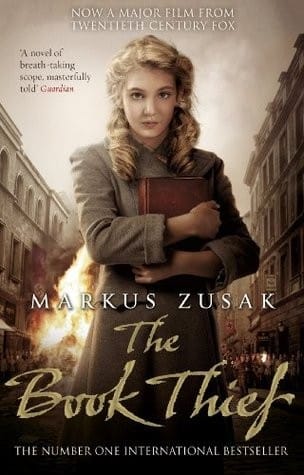
Liesel Meminger steals books in Molching, a made-up town outside Munich, during the Second World War. Death tells her story. (Stay with it. It works.) Zusak wrote it for teenagers, but adults took it over. It's about the power of words under a regime that burned books, and about ordinary Germans: the ones who resisted, the ones who went along, and the many somewhere in between.
Where it takes you: Munich and the towns around it. The Dachau concentration camp memorial is about ten miles from the city center. In the city itself, the Munich Documentation Centre for the History of National Socialism is one of the most careful accounts of the Nazi period anywhere in Germany. Give both of them more time than you think you'll need.
-
Film · 2013
The Book Thief
Brian Percival
Geoffrey Rush and Emily Watson as Liesel's foster parents. It's gentler than the book, which makes it a good one to watch with teenagers.
-
Film · 2008
The Reader
Stephen Daldry
Kate Winslet won the Oscar for Best Actress as Hanna. It's as uncomfortable as the book, and it'll give your book club even more to argue about.
-
Book
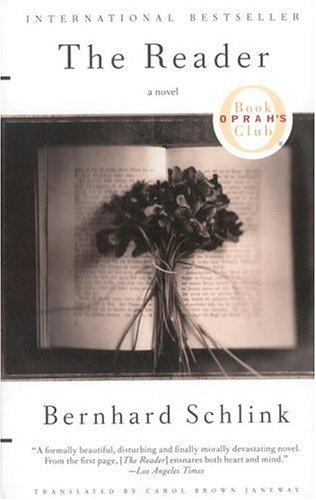
A fifteen-year-old boy has an affair with Hanna, a woman of thirty-six, and then she vanishes. Years later he sees her again, as a defendant in a war crimes trial. It's short, it's disturbing, and it doesn't give you a neat answer. It's about the generation born after the war, who had done nothing and still inherited everything. Book clubs argue about this one for hours.
Where it takes you: The city is never named, but it has the feel of Heidelberg, where Schlink studied. The trial is drawn from real postwar war crimes trials. Germany's legal reckoning with the Nazi years was late, imperfect and is still going on, and it's one of the most remarkable things any country has tried.
-
Poetry · 1824
Die Lorelei
Heinrich Heine
Heine was born in Düsseldorf and is one of the best-loved poets in the German language. His short poem about a woman on a rock above the Rhine, combing her golden hair while boatmen crash below, became a folk song that German children still learn. (The story goes that the Nazis couldn't get it out of the songbooks, so they printed it as "author unknown," because Heine was Jewish.)
Where it takes you: The Loreley rock above the Rhine near St. Goarshausen. The Middle Rhine there is a UNESCO World Heritage site, and the river cruises slow down to point it out.
-
Music · 1928
The Threepenny Opera
Kurt Weill and Bertolt Brecht
This is where "Mack the Knife" comes from. Weill and Brecht wrote it for Berlin in 1928, and it's the sound of the city Bernie Gunther and Babylon Berlin are set in: jazzy, cynical and sharp. Weill was Jewish and fled the Nazis, and he ended up writing for Broadway.
Where it takes you: The Theater am Schiffbauerdamm in Berlin, where it opened in 1928. It's now the home of the Berliner Ensemble, the company Brecht founded, and you can still see a show there.
-
Book
Paul Bäumer and his classmates sign up for the German army, full of the patriotism their teachers sold them. By 1917 they know they were lied to, and they can't say what any of it was for. Remarque published this in 1929, and four years later the Nazis banned and burned it. It isn't political and it doesn't preach. It's just brutally honest about what war does to young men's bodies and minds. If you read it in high school, read it again now.
Where it takes you: Flanders and the Somme, the real ground of the Western Front, where trenches, craters and cemeteries are still part of the landscape and farmers still turn up old shells every spring. Ypres, in Belgium, is where most people start. The Menin Gate there carries the names of about 54,000 soldiers who have no known grave.
-
Film · 2022
All Quiet on the Western Front
Edward Berger
The German-made version, in German with subtitles. It won four Oscars, including Best International Feature. It changes a lot from the book, including the ending, so read the book first. (The 1930 American film won Best Picture and is still worth seeing too.)
-
TV series · 2017 onward
Babylon Berlin
German TV
It isn't from any book on this list, but it's the best way I know to see Berlin just before the Nazis took over: the late 1920s and early 1930s, the clubs, the politics, the money and the crime. In German with subtitles. If you liked Bernie Gunther, you'll like this.
-
Book
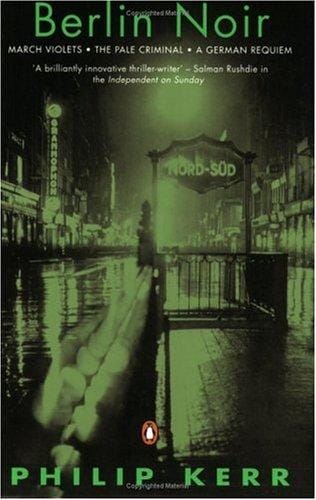
Three novels in one book, starring Bernie Gunther, a private detective in Berlin. First it's the Olympic year of 1936, then the SS terror of 1938, then the ruins of Berlin and occupied Vienna in 1947. Kerr uses the crime-novel format to walk you through three stages of the Nazi years and what came after. Bernie's sarcastic voice makes the horror readable without making it comfortable. If you like a good detective story, start here.
Where it takes you: Berlin at three moments in its worst century. The books follow the real streets of 1930s Berlin (Alexanderplatz, Potsdamer Platz, the government quarter) and the bombed-out city of 1947. Much of it is marked today in the museums and memorials of the reunified city.
-
Book
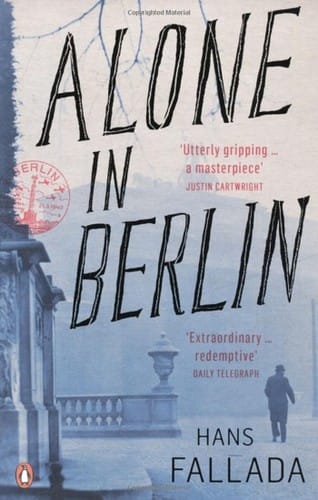
This one is based on a true story. A working-class couple in wartime Berlin lose their son in France, and they start leaving anonymous postcards around the city that attack the Nazi regime. Fallada wrote it in about four weeks in 1946, working from the Gestapo files on the real couple. It's one of the best novels ever written about one person standing up: what it costs, and whether it matters if it fails. I think it does.
Where it takes you: Berlin. The characters live in Prenzlauer Berg, which is now one of the city's trendiest neighborhoods. Its wartime past shows in a few old buildings and in the small brass memorial stones set into the pavement outside people's former homes. Look down as you walk. The Topography of Terror museum, built on the site of the old SS and Gestapo headquarters, is the background you need.
-
Book
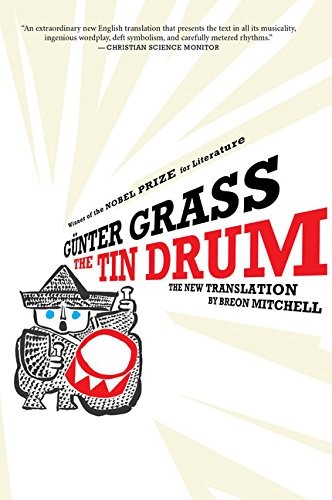
At three, Oskar Matzerath decides to stop growing. He tells the story of the rise of the Nazis, the war and the years after it as a man who stays child-sized on purpose, with a tin drum and a scream that can shatter glass. It's strange. It's meant to be. Grass won the Nobel Prize in 1999, and this is the book he's best known for. It's part fantasy and part the most unflinching account there is of ordinary Germans going along with the war.
Where it takes you: Gdańsk, Poland, the old Danzig, a city that has spent decades coming to terms with its German past. Its old center was rebuilt after the war and is one of the prettiest on the Baltic. The European Solidarity Centre, at the old shipyard where the Solidarność movement began, tells the story of how Poland brought down communism.
None of these six lets you look away, and neither do the places they're set. That's exactly why they're worth the trip.
Buy each book from Bookshop.org, which supports independent bookshops and pays us a small commission, or from Amazon. As an Amazon Associate I earn from qualifying purchases. About our affiliate links.
More From Behind the Story
-
 Behind the Story Veterans & Military Families Month: Books, Films, Poems and Music Six novels about war and what comes after, from Vietnam to the trenches of France, from Iraq to occupied France in WWII, and the real places where these stories are written in the ground.
-
 Behind the Story Native American Heritage Month: Books, Films, Poems and Music Six books by and about Native Americans, from Oakland to the Osage Nation of Oklahoma, from the Laguna Pueblo to the Chippewa lands of North Dakota, and the real places where these stories live.
-
 Behind the Story Italian American Heritage Month: Books, Films, Poems and Music Six books and four films, from Naples to Sicily, from the Godfather's New York to Elena Ferrante's fierce friendship, and the real places behind them.
Get the Prologue list first.
New trips, prices and Prologue lists of books, films and music, by email first. Unsubscribe in one click.