
Behind the Story · May 2, 2026
Asian Pacific American Heritage Month: Books, Films, Poems and Music
Six books from across the Asian Pacific diaspora — from San Francisco to Osaka, Seoul to Saigon — and the real places that shaped them.
May is Asian Pacific American Heritage Month. It was picked to mark the first Japanese immigrants arriving in the US in May 1843, and the transcontinental railroad being finished in May 1869, which Chinese workers did much of the work to build. These six books cover a lot of ground: San Francisco, Osaka, Saigon, the Utah desert, small-town Ohio and Seoul. They’re about war, food, family and living between two cultures.
Behind the Story is where I gather the books, films and places behind a story, for people who’d rather see the place than just read about it. Streaming services change what they carry all the time, so each film links to JustWatch, which shows where it’s streaming now.
6 Books 1 Film 2 TV series 1 Poetry Music
-
Book
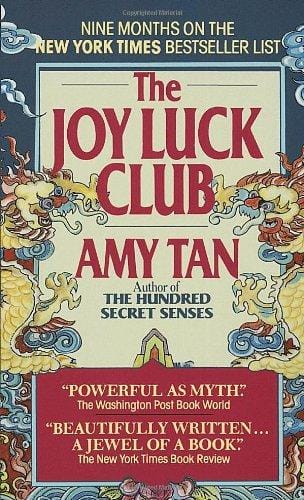
Four Chinese immigrant mothers play mahjong every week in San Francisco, and their American-born daughters don't really understand them. Then the stories come out: war, lost children, the lives they had before. Tan's first novel came out in 1989 and it's still the book about mothers and daughters who love each other and can't quite translate. If you only read one on this list, make it this.
Where it takes you: San Francisco's Chinatown, the oldest in North America, settled from 1848. The Chinese Historical Society of America has its museum there. In China, Guilin is where Suyuan starts the first Joy Luck Club during the war, among those famous limestone peaks.
-
Film · 1993
The Joy Luck Club
Wayne Wang
Tan co-wrote the screenplay, and it was one of the first big Hollywood films with an almost entirely Asian American cast. It's a proper weepie, so plan accordingly. Watch it after the book, so you know whose story is whose.
-
TV series · 2022–2024
Pachinko
Soo Hugh
Two seasons, in Korean, Japanese and English, with Youn Yuh-jung as the older Sunja. It jumps between the 1910s and 1989 instead of telling the story in order, which works better than you'd expect. The opening credits alone are worth it.
-
Book
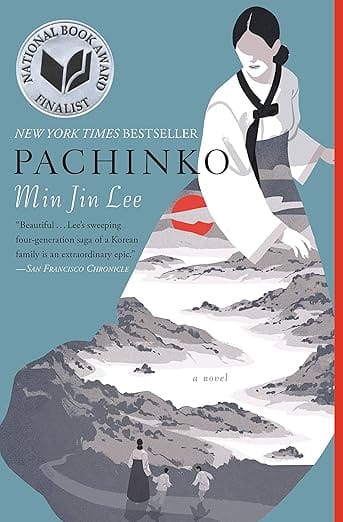
"History has failed us, but no matter." That's the first line, and it sets up four generations of a Korean family in Japan, where they're treated as outsiders for decades no matter what they do. It starts with Sunja, pregnant and unmarried in a fishing village, who marries a kind pastor and leaves for Osaka. Lee worked on it for nearly thirty years. It was a National Book Award finalist in 2017.
Where it takes you: Yeongdo, the island in Busan's harbor where Sunja grows up, and Osaka's Ikuno ward, around Tsuruhashi, the old Korean neighborhood where she settles. There's still an overnight ferry between Busan and Osaka if you want to make the crossing she makes.
-
Poetry
Ocean Vuong
Poet and novelist, born 1988
Vuong was born in Saigon and came to the US at two, and grew up in Hartford, Connecticut. His first collection, Night Sky with Exit Wounds (2016), won the T. S. Eliot Prize. It's about war, family and the people who came after. Read it next to The Sympathizer and you'll get both halves of the story.
Where it takes you: Hartford, Connecticut, the city of his childhood and of his novel On Earth We're Briefly Gorgeous.
-
Music · 2016
Psychopomp
Japanese Breakfast
Japanese Breakfast is Michelle Zauner, the same Michelle Zauner who wrote Crying in H Mart. She made this first album after her mother died, and it's the soundtrack to the book. It's short, loud and sad, and it's somehow danceable.
-
Book
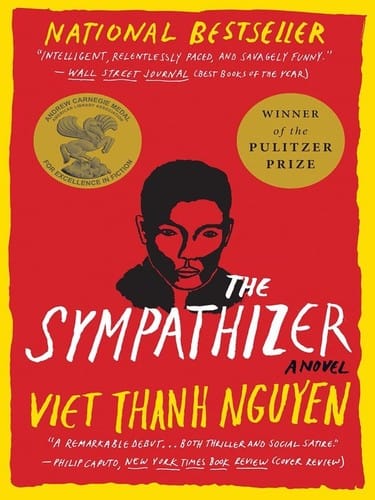
The narrator is a communist spy inside the South Vietnamese army, and when Saigon falls in 1975 he's evacuated to Los Angeles with the general he's spying on. He keeps up the double life in America. It's written as a confession, and it's angry, clever and much funnier than a book about war has any right to be. It won the Pulitzer Prize in 2016.
Where it takes you: Ho Chi Minh City, which was Saigon: the War Remnants Museum, and the Cu Chi tunnels about an hour and a half outside the city. Then Little Saigon in Westminster, California, the biggest Vietnamese community outside Vietnam, which holds the other half of this story.
-
TV series · 2024
The Sympathizer
Park Chan-wook and Don McKellar
A seven-part series co-created by Park Chan-wook, who made Oldboy. Hoa Xuande plays the Captain, and Robert Downey Jr. plays several different Americans, which is a very good joke about how the Captain sees them. Read the book first.
-
Book
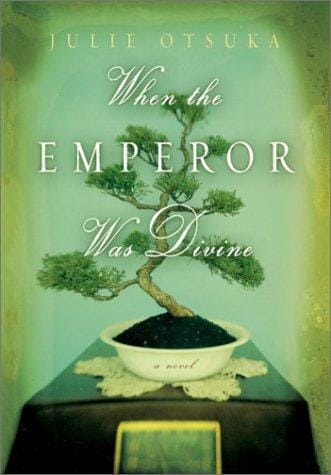
When the Emperor Was Divine
Julie Otsuka
Berkeley, California, and the Topaz camp in Utah, 1942–1945
After Pearl Harbor, a Japanese American family in Berkeley is sent to a prison camp in the Utah desert. Otsuka tells it in five short sections, each from a different member of the family, and the last one belongs to the father. Her own mother, uncle and grandmother were held at Topaz. It's short (you'll read it in an afternoon) and it doesn't waste a word. It was her first novel.
Where it takes you: The Topaz Museum in Delta, Utah, and the camp site itself out in the desert. In California, Manzanar National Historic Site in the Owens Valley, on the road between Los Angeles and Yosemite, has a visitor center and rebuilt barracks.
-
Book
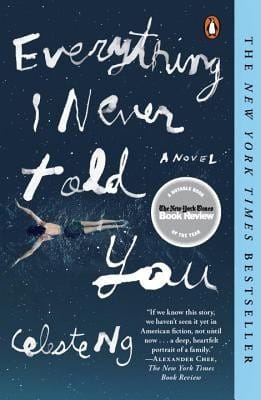
"Lydia is dead. But they don't know this yet." Lydia is the favorite child of a Chinese American father and a white mother, and her body is found in the town lake. Ng's first novel is a mystery on the surface and, underneath, a book about what parents push onto their kids. It's quiet and very sad, and I'd say it's the best on this list for a book club.
Where it takes you: Small-town Ohio. Ng was born in Pittsburgh and grew up in Shaker Heights, outside Cleveland, which she wrote about in her next novel, Little Fires Everywhere. That's a good second read once you've finished this one.
-
Book
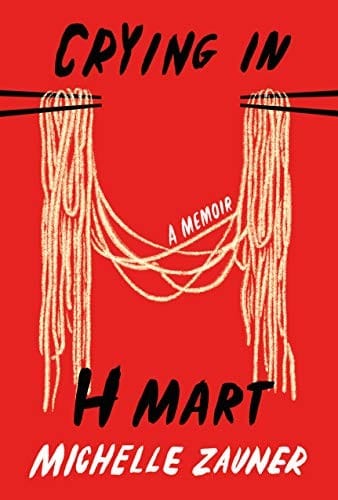
This one's a memoir. Zauner grew up in Eugene, Oregon, with a Korean mother and a white American father, and food was the language she and her mother shared best. When her mother got cancer, Zauner came home to look after her, and after her death she taught herself to cook Korean food from YouTube videos to keep hold of her. It's about grief, about being half of two things, and about crying in the aisles of a Korean grocery store. You'll want to eat something very specific when you finish.
Where it takes you: Seoul, where her mother's family lived and where Zauner spent summers as a kid, and any H Mart near you. The chain started in Queens in 1982 and has stores across the US. Go hungry.
Six books, six families, and not one of them fits in a single country. Tell me which one you'd start with.
Buy each book from Bookshop.org, which supports independent bookshops and pays us a small commission, or from Amazon. As an Amazon Associate I earn from qualifying purchases. About our affiliate links.
More From Behind the Story
-
 Behind the Story Veterans & Military Families Month: Books, Films, Poems and Music Six novels about war and what comes after, from Vietnam to the trenches of France, from Iraq to occupied France in WWII, and the real places where these stories are written in the ground.
-
 Behind the Story Native American Heritage Month: Books, Films, Poems and Music Six books by and about Native Americans, from Oakland to the Osage Nation of Oklahoma, from the Laguna Pueblo to the Chippewa lands of North Dakota, and the real places where these stories live.
-
 Behind the Story German-American Heritage Month: Books, Films, Poems and Music Six novels about Germany, from wartime Munich to postwar Berlin and the trenches of the Western Front, and the real places where that history is still on the streets.
Get the Prologue list first.
New trips, prices and Prologue lists of books, films and music, by email first. Unsubscribe in one click.