
Behind the Story · April 2, 2026
Arab American Heritage Month: Books, Films, Poems and Music
Four novels from and about the Arab world, from Palestine and Syria to North Africa and an imagined American South, plus a film, a documentary, a poet and a song.
April is Arab American Heritage Month. The Arab world has one of the oldest literary traditions there is, and Americans mostly meet it through the news. These four novels are a better way in. They’re about families, memory, war, love, and watching home become a place you can’t go back to. They also take you to real places: Nablus, Aleppo, Beirut, the Greek islands and Palermo.
Behind the Story is where I gather the books, films and places behind a story, for people who’d rather see the place than just read about it. Streaming services change what they carry all the time, so each film links to JustWatch, which shows where it’s streaming now.
4 Books 1 Film 1 Documentary 1 Poetry Music
-
Book
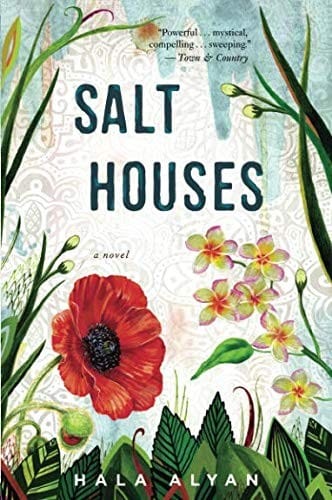
It opens in Nablus in 1963, the night before a wedding, with a grandmother reading her daughter's future in a coffee cup. Then wars keep moving the family on: 1967, then the Iraqi invasion of Kuwait in 1990, then scattering to Beirut, Paris and Boston. Every chapter is a different family member in a different decade. It was Alyan's first novel (she's a poet too, and you can tell), and it's the one I'd start with.
Where it takes you: Nablus, in the West Bank, where the family's story begins. Its old city is known for olive-oil soap made the traditional way, and for knafeh, the cheese pastry Nablus claims as its own. Check current travel advice before you plan anything there.
-
Film · 2009
Amreeka
Cherien Dabis
Muna, a single mother from Bethlehem, moves with her teenage son to small-town Illinois, right as the Iraq War makes being Arab in America a lot harder. Dabis drew on her own family's story, and it premiered at Sundance. It's funny, warm and a bit heartbreaking, and it's the other half of Salt Houses: what arriving actually looks like.
-
Documentary · 2019
For Sama
Waad al-Kateab and Edward Watts
Al-Kateab filmed five years of her life in Aleppo, from student protests through the siege, and made it into a letter to her baby daughter. It won the BAFTA for best documentary and was nominated for an Oscar. It's very hard to watch, so be ready for that, and it's the real version of what Nuri and Afra are running from.
-
Book
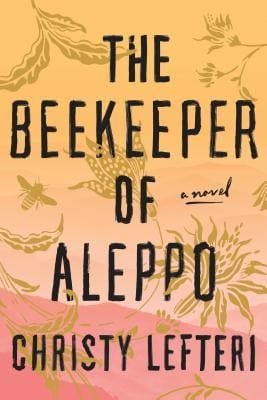
Nuri keeps bees outside Aleppo. His wife Afra is a painter. The war takes their son, Afra's sight and everything else, and they set off for Britain through Turkey and Greece. Lefteri is the daughter of Cypriot refugees, and she spent two summers volunteering at a refugee center in Athens before she wrote it. You can feel that in the details. It's gentle and devastating at once.
Where it takes you: Leros, the Greek island where Nuri and Afra land, and Athens, where they wait. Aleppo's old city, a UNESCO World Heritage Site, was badly damaged in the war, so for now this is a book that has to take you there.
-
Poetry
Naomi Shihab Nye
Young People's Poet Laureate, 2019–2021
Nye was born in St. Louis to a Palestinian father and an American mother, and spent her teenage years in Jerusalem and San Antonio. Her poems are plain, kind and very human. Start with "Kindness" and "Gate A-4," the one about an airport, a stranded Palestinian grandmother and a plate of cookies. It might restore your faith in airports.
Where it takes you: San Antonio, Texas, where she has lived and written for decades.
-
Music
Li Beirut
Fairuz
Fairuz is the voice of Lebanon, and for millions of people across the Arab world, hers is the sound of morning coffee. "Li Beirut" ("To Beirut") is her love song to a city wrecked by war, with words by Joseph Harb, arranged by her son Ziad Rahbani, set to the tune of Rodrigo's Concierto de Aranjuez. Play it while you read the Beirut chapters of Salt Houses.
-
Book
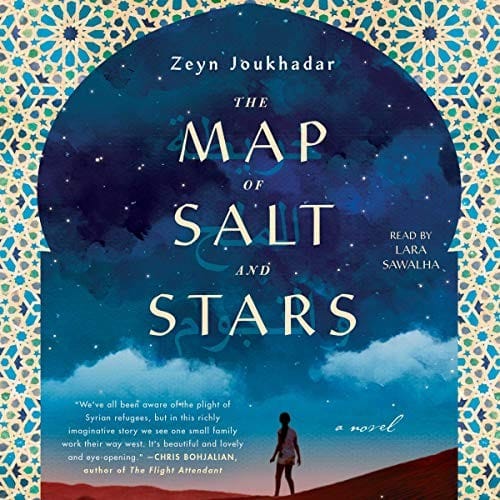
The Map of Salt and Stars
Zeyn Joukhadar
Homs, Syria, and across the Middle East and North Africa, 2011 and the 1100s
Twelve-year-old Nour moves from New York back to her family's home city of Homs after her father dies, just as the war begins. When their house is bombed, the family runs. Her escape follows the same ground as the story her father used to tell her: Rawiya, a girl in the 1100s who dresses as a boy to become apprentice to the great mapmaker al-Idrisi. Two girls, nine centuries apart, one map.
Where it takes you: Palermo, Sicily, where al-Idrisi made his famous world map for King Roger II in 1154. The Norman palace and chapels he'd have known are still there, part of a UNESCO site. A copy of his map survives at the Bodleian Library in Oxford.
-
Book
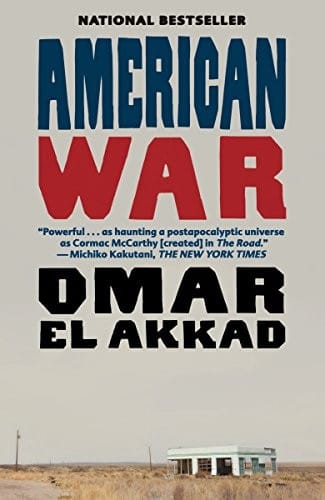
It's 2074, and a second American Civil War has broken out over a ban on fossil fuels. Sarat Chestnut is six when her family is pushed out of their Louisiana home and into a refugee camp, and the war turns her into something terrible. El Akkad was born in Cairo, grew up in Qatar, and reported on Afghanistan, Guantánamo and the Arab Spring before he wrote this. It's uncomfortable on purpose. It flips the map and makes Americans the refugees.
Read one of these before the next headline about the region, and see if the headline reads any differently.
Buy each book from Bookshop.org, which supports independent bookshops and pays us a small commission, or from Amazon. As an Amazon Associate I earn from qualifying purchases. About our affiliate links.
More From Behind the Story
-
 Behind the Story Veterans & Military Families Month: Books, Films, Poems and Music Six novels about war and what comes after, from Vietnam to the trenches of France, from Iraq to occupied France in WWII, and the real places where these stories are written in the ground.
-
 Behind the Story Native American Heritage Month: Books, Films, Poems and Music Six books by and about Native Americans, from Oakland to the Osage Nation of Oklahoma, from the Laguna Pueblo to the Chippewa lands of North Dakota, and the real places where these stories live.
-
 Behind the Story German-American Heritage Month: Books, Films, Poems and Music Six novels about Germany, from wartime Munich to postwar Berlin and the trenches of the Western Front, and the real places where that history is still on the streets.
Get the Prologue list first.
New trips, prices and Prologue lists of books, films and music, by email first. Unsubscribe in one click.