
Behind the Story · June 10, 2026
Caribbean-American Heritage Month: Books, Films, Poems and Music
Six books and two films, from Haiti to Antigua, Dominica to the Dominican Republic, and from Brooklyn to the Florida Everglades, and the real places behind them.
June is Caribbean-American Heritage Month, and here’s the thing I want you to take away: the Caribbean isn’t one place. Every island has its own history, its own language and its own writers. So this list goes island by island: the Dominican Republic, Haiti, Jamaica, Dominica, Antigua and Saint Lucia. Then it goes north, to Brooklyn, New Jersey and Florida, where a lot of these stories ended up.
Behind the Story is where I gather the books, films and places behind a story, for people who’d rather see the place than just read about it. Streaming services change what they carry all the time, so each film links to JustWatch, which shows where it’s streaming now.
6 Books 2 Films 1 Poetry Music
-
Book
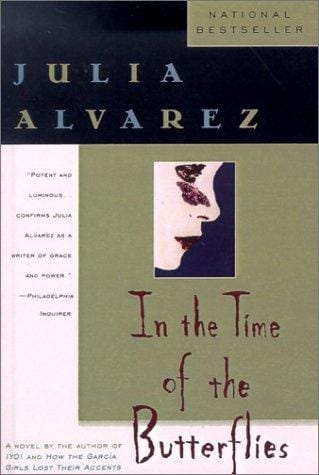
The Mirabal sisters were real: four sisters who became some of the bravest opponents of the Trujillo dictatorship. On November 25, 1960, three of them were murdered on Trujillo's orders. Alvarez tells it in all four sisters' voices, including Dedé, the one who survived. Alvarez's own family fled the Dominican Republic in 1960, when she was ten, so this one's personal. If you only read one book here, make it this one.
Where it takes you: The Cibao Valley in the north, where the sisters grew up. Near the town of Salcedo, the Casa Museo Hermanas Mirabal tells their story, and the province itself has been renamed Hermanas Mirabal. November 25 is now the UN's International Day for the Elimination of Violence against Women.
-
Film · 2001
In the Time of the Butterflies
Mariano Barroso
A TV film with Salma Hayek as Minerva, the most political of the sisters, and Edward James Olmos as Trujillo. It simplifies the book (it had to, to fit in two hours), but it's a good way in if you want to know the story before you read it.
-
Film · 2005
Their Eyes Were Watching God
Darnell Martin
A TV film produced by Oprah Winfrey, with Halle Berry as Janie. It's prettier and more romantic than the book, and it loses some of Hurston's language, which is the best thing about the novel. Watch it, then read the book and hear how Janie actually talks.
-
Book
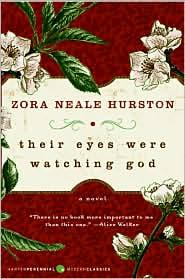
Hurston was from Florida, not the Caribbean, but here's why she's here: she wrote this novel in about seven weeks in Haiti in 1936, while she was there studying Caribbean folk religion. Janie tells the story of her three marriages and finding her own voice, and the Everglades section is full of Bahamian farm workers. The book was nearly forgotten until Alice Walker went looking for Hurston in the 1970s.
Where it takes you: Eatonville, north of Orlando, one of the first all-Black towns incorporated in America. The Zora Neale Hurston National Museum of Fine Arts is there, and the ZORA! Festival runs every year. The last part of the book happens on the 'muck' around Lake Okeechobee, near Belle Glade, during the 1928 hurricane.
-
Poetry · 1990
Omeros
Derek Walcott
Walcott was from Saint Lucia and won the Nobel Prize in 1992. Omeros takes Homer's Iliad and gives it to Saint Lucian fishermen, with a fight over a woman named Helen. It's a whole book-length poem, so don't try to read it in one go. Dip in a few pages at a time and let the rhythm carry you.
Where it takes you: Saint Lucia. The main square in Castries, the capital, was renamed Derek Walcott Square in his honor.
-
Music · 1956
Day-O (The Banana Boat Song)
Harry Belafonte
Belafonte was born in Harlem to Caribbean parents and spent part of his childhood in Jamaica. 'Day-O' is a Jamaican work song sung by dockworkers loading bananas all night, and his album Calypso was the first by a single artist to sell a million copies. That's Caribbean-American in one song, and you already know the words.
-
Book
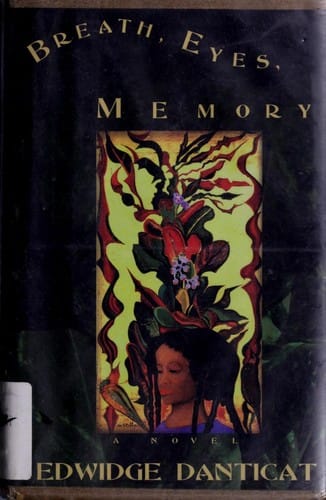
Sophie is twelve when she leaves her aunt Atie in rural Haiti to join a mother she barely knows in New York. What follows is about what passes between mothers and daughters: love, silence and some real damage. Danticat came to New York from Haiti at twelve herself, and she published this first novel at twenty-five. It's short, and it hits hard.
Where it takes you: Haiti, honestly, isn't somewhere most of us can go right now: the US State Department tells Americans not to travel there. So go to Flatbush in Brooklyn, home to one of the biggest Haitian communities in the US, with a stretch officially named Little Haiti. Miami has a Little Haiti too.
-
Book
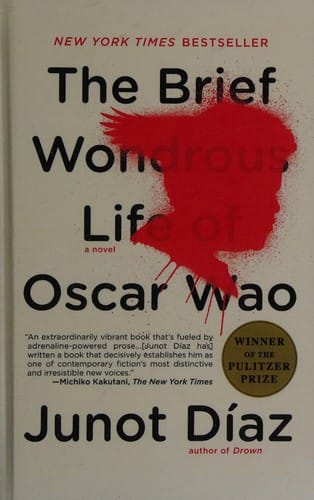
Oscar is an overweight Dominican-American nerd in New Jersey who wants to fall in love and write science fiction. Behind him is his family's history under Trujillo, and the fukú, the curse that follows them from the island to New Jersey. It's written in Spanglish, with footnotes and Lord of the Rings jokes, and it won the Pulitzer Prize in 2008. Nothing else reads like it.
Where it takes you: Santo Domingo's Ciudad Colonial, the oldest European-founded city in the Americas and a UNESCO World Heritage site. The Museo Memorial de la Resistencia Dominicana there tells the Trujillo story the novel keeps circling. Then Paterson, New Jersey, where Oscar grows up.
-
Book
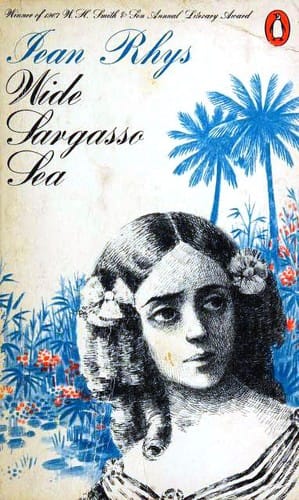
Remember the 'madwoman in the attic' in Jane Eyre? Rhys gives her back her real name, Antoinette Cosway, and her own story, starting with her childhood in Jamaica. Rhys was born in Dominica to a Welsh father and a white Creole mother, and she knew exactly what Charlotte Brontë had left out. It's short, strange and very hot, and you'll never read Jane Eyre the same way again.
Where it takes you: Dominica, where Antoinette's honeymoon goes wrong and where Rhys grew up, in Roseau. It's mountainous and green and wet, with rainforest and rivers everywhere. Morne Trois Pitons National Park is a UNESCO site, and the hike to the Boiling Lake is the famous one. It's long and muddy, so take a guide.
-
Book
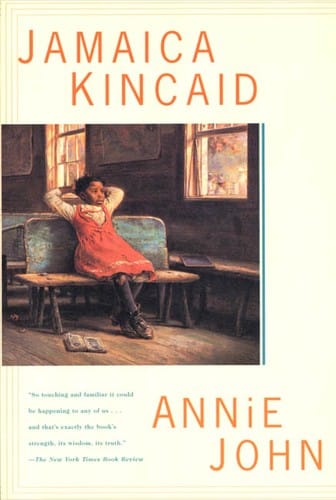
Annie grows up in Antigua adoring her mother, and then, around twelve, she doesn't. It's about mothers and daughters, school under a British colonial system, and wanting to get out of a small place. Kincaid grew up in St. John's and left for New York at sixteen, and you can feel it. It's one of the sharpest coming-of-age books I can name.
Where it takes you: Antigua beyond the beach resorts: St. John's, where Kincaid grew up, and Nelson's Dockyard at English Harbour, a UNESCO site. Then read her essay A Small Place, about tourism in Antigua. It's angry and funny, and it'll change how you travel there.
The Caribbean isn't one place. It's dozens of islands, each with its own history and language. Read one of these before you go, and you won't see that island like a tourist.
Buy each book from Bookshop.org, which supports independent bookshops and pays us a small commission, or from Amazon. As an Amazon Associate I earn from qualifying purchases. About our affiliate links.
More From Behind the Story
-
 Behind the Story Veterans & Military Families Month: Books, Films, Poems and Music Six novels about war and what comes after, from Vietnam to the trenches of France, from Iraq to occupied France in WWII, and the real places where these stories are written in the ground.
-
 Behind the Story Native American Heritage Month: Books, Films, Poems and Music Six books by and about Native Americans, from Oakland to the Osage Nation of Oklahoma, from the Laguna Pueblo to the Chippewa lands of North Dakota, and the real places where these stories live.
-
 Behind the Story German-American Heritage Month: Books, Films, Poems and Music Six novels about Germany, from wartime Munich to postwar Berlin and the trenches of the Western Front, and the real places where that history is still on the streets.
Get the Prologue list first.
New trips, prices and Prologue lists of books, films and music, by email first. Unsubscribe in one click.