
Behind the Story · February 9, 2026
Black History Month: Books, Films, Poems and Music
12 brilliant Black historical fiction novels paired with the real places that inspired them. Read the history, then walk the ground.
February is Black History Month, and you probably already know I think the best way to understand history is to read a great novel and then go and stand where it happened. These twelve books do that, and not just in the United States. They go from 1500s Morocco to Nazi-era Berlin, from 1930s Ethiopia to the Swahili coast, from Windrush London to Montgomery in 1973. A lot of this history never made it into the schoolbooks most of us grew up with. Every one of these places is somewhere you can visit.
Behind the Story is where I gather the books, films and places behind a story, for people who’d rather see the place than just read about it. Streaming services change what they carry all the time, so each film links to JustWatch, which shows where it’s streaming now.
12 Books 1 TV series 1 Documentary 1 Poetry Music 10 Places 1 Film
-
Book
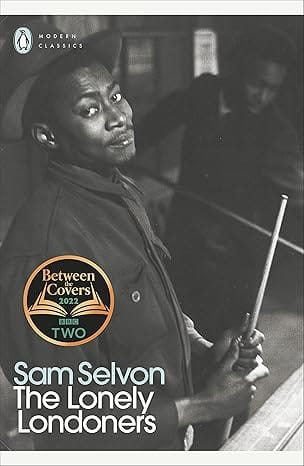
Moses Aloetta and his friends from the Caribbean try to find work, rooms and each other in a London that doesn't want them. Selvon came from Trinidad in 1950 and published it in 1956, written in Trinidadian English, the narration as well as the dialogue, which almost nobody had done in a novel. There's no real plot, just life. It's funny, then lonely, then funny again. It made the BBC's Big Jubilee Read list in 2022. Start here.
-
TV series · 2020
Small Axe
Steve McQueen
Five films about London's West Indian community between 1969 and 1982. Not an adaptation of Selvon, but the same world a decade or so later. Start with Mangrove, about the Notting Hill restaurant at the center of a real 1970s trial, then Lovers Rock, which is basically one long house party.
-
Documentary · 2019
True Justice: Bryan Stevenson's Fight for Equality
Peter, George and Teddy Kunhardt
Bryan Stevenson founded the Equal Justice Initiative in Montgomery, and this film follows his work and the opening of the Legacy Museum and the National Memorial for Peace and Justice. Watch it before you go to Montgomery. It explains why those two places look the way they do.
-
Book
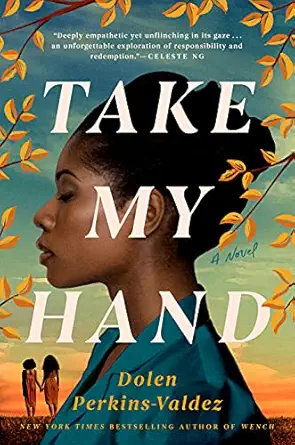
Civil Townsend is a young Black nurse at a federally funded family-planning clinic who finds out that two young sisters in her care are being sterilized without real consent. It's based on the Relf sisters, who were 12 and 14 when it happened to them in Montgomery in 1973. It won the NAACP Image Award for fiction and the American Bar Association's Silver Gavel Award. This is living memory, and that's what makes it land so hard.
-
Poetry · 1921
The Negro Speaks of Rivers
Langston Hughes
Hughes was 17 and on a train to see his father when it crossed the Mississippi, and he wrote this on the back of an envelope. W.E.B. Du Bois published it in The Crisis. It moves from the Euphrates to the Congo, the Nile and the Mississippi in a few lines, which is exactly what this list does too. Read it out loud to yourself. It's short.
Where it takes you: The Mississippi, at St. Louis, where Hughes said the train crossed the river.
-
Music · 1948
London Is the Place for Me
Lord Kitchener
Kitchener started writing this calypso on his way to Britain on the Empire Windrush, and he sang it for a Pathé newsreel camera as the ship docked at Tilbury in June 1948. It's cheerful and hopeful. Play it, then read The Lonely Londoners, and you'll hear the distance between the song and what the city was really like.
Where it takes you: Tilbury, on the Thames in Essex, where the Windrush docked.
-
Place
The Windrush Monument
Waterloo station, London · from <em>The Lonely Londoners</em>
Waterloo Station, where Moses meets the boat-train, and where Basil Watson's Windrush Monument has stood since 2022. Then Notting Hill and Bayswater, "the Gate" and "the Water" in the book. Notting Hill Carnival grew out of this community. The Black Cultural Archives in Brixton fills in the rest.
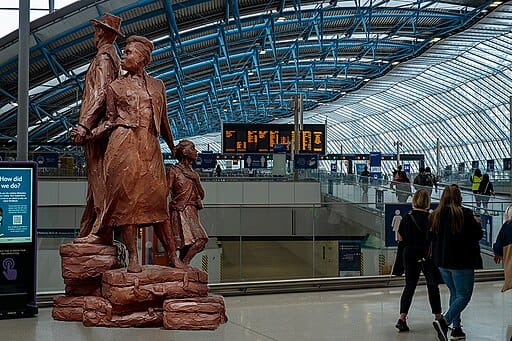
Windrush monument at Waterloo station. Photo by Department for Levelling Up, Housing and Communities , Windrush Commemoration Committee, and Kemi Badenoch MP, OGL 3, via Wikimedia Commons
-
Place
The National Memorial for Peace and Justice
Montgomery, Alabama · from <em>Take My Hand</em>
Montgomery. The Legacy Museum and the National Memorial for Peace and Justice, both from the Equal Justice Initiative, are the two places I'd send anyone first. Give them a full day, not an hour.
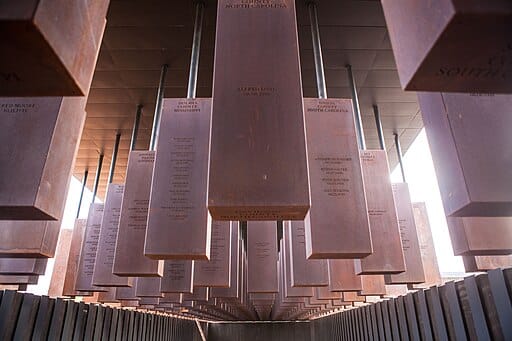
Memorial Corridor of the National Memorial for Peace and Justice. Photo by Soniakapadia, CC BY-SA 4.0, via Wikimedia Commons
-
Book
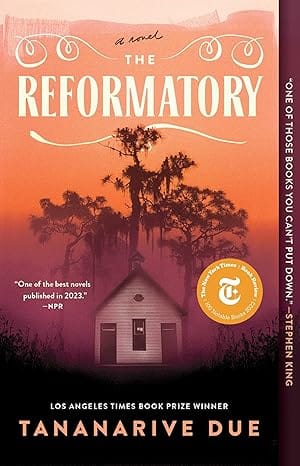
Due's great-uncle, Robert Stephens, died at the Dozier School for Boys in 1937, aged 15. She turned that into a horror novel: young Robbie Stephens is sent to the Gracetown School for Boys, where the dead boys haven't left. The ghosts are real in the book, and they're also the point. It won the Bram Stoker, World Fantasy and Shirley Jackson awards and the Los Angeles Times Book Prize. If you think you don't read horror, read this one.
-
Film · 2024
Nickel Boys
RaMell Ross
From Colson Whitehead's Pulitzer-winning novel about the same school, renamed Nickel. Ross filmed almost all of it from the boys' point of view, and it was nominated for Best Picture. It was shot in Louisiana, not Florida. Watch it with The Reformatory and you'll see two very different ways of telling the same truth.
-
Book
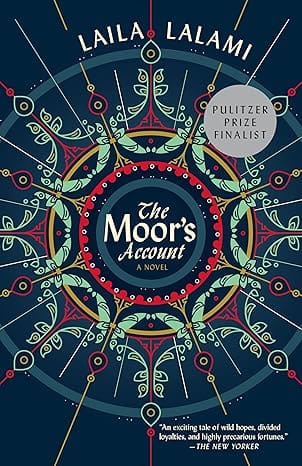
In 1527 about 600 men sailed with the Spanish Narváez expedition to Florida. Four survived. One was an enslaved Moroccan, Estebanico, who gets a single line in the official account. Lalami, who was born in Morocco, gives him his own name, Mustafa al-Zamori, and his own memoir. It's an adventure story and an argument about who gets to tell history, and it was a Pulitzer finalist. Nothing else on this list is quite like it.
-
Place
Azemmour
Morocco
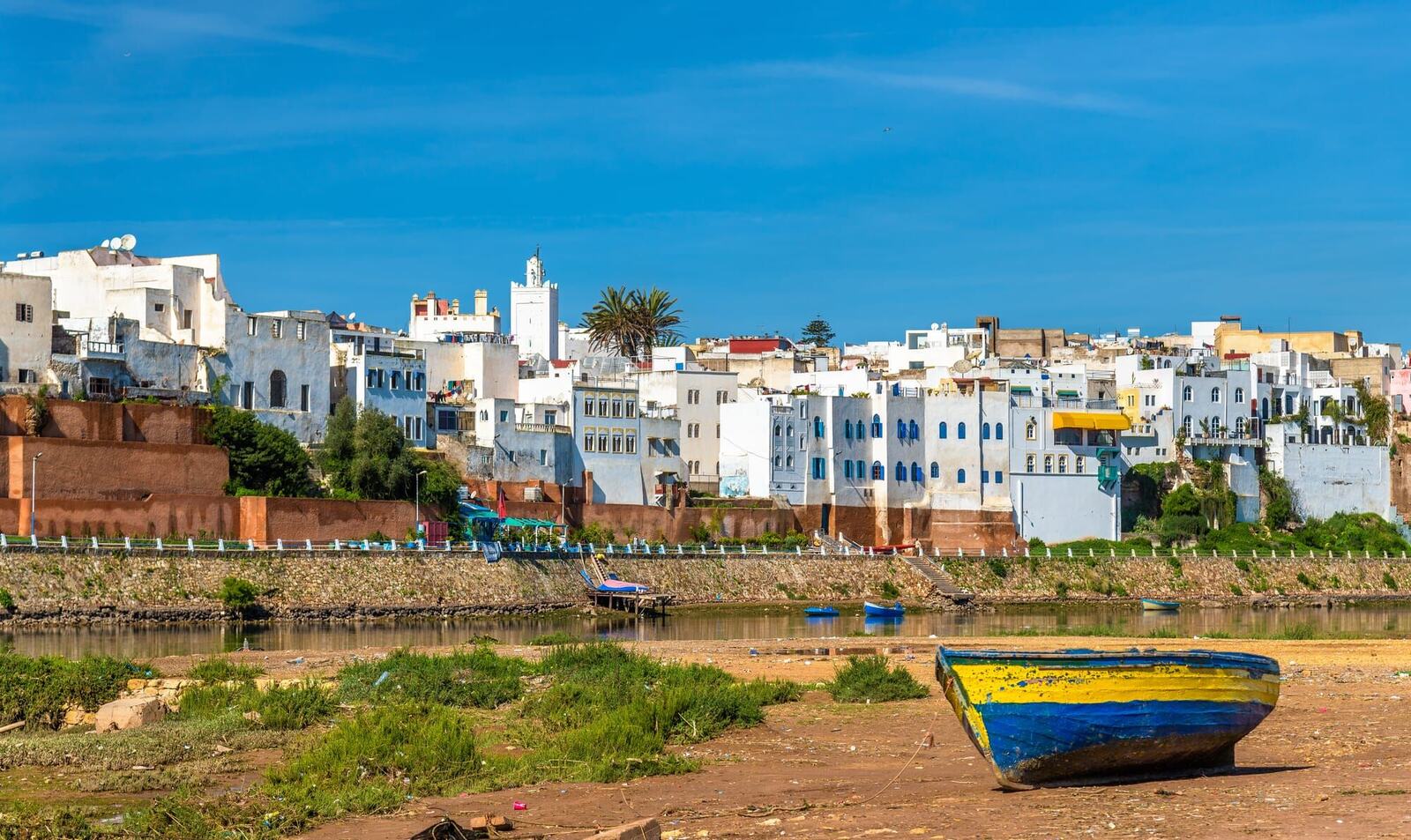
Azemmour, Mustafa's hometown, a small old city on the Oum Er-Rbia river on Morocco's Atlantic coast. Then the Gulf Coast of Florida near Tampa Bay, where the expedition landed, and Texas, which the survivors crossed on foot on their way to Mexico.
-
Place
Montmartre
Paris, France
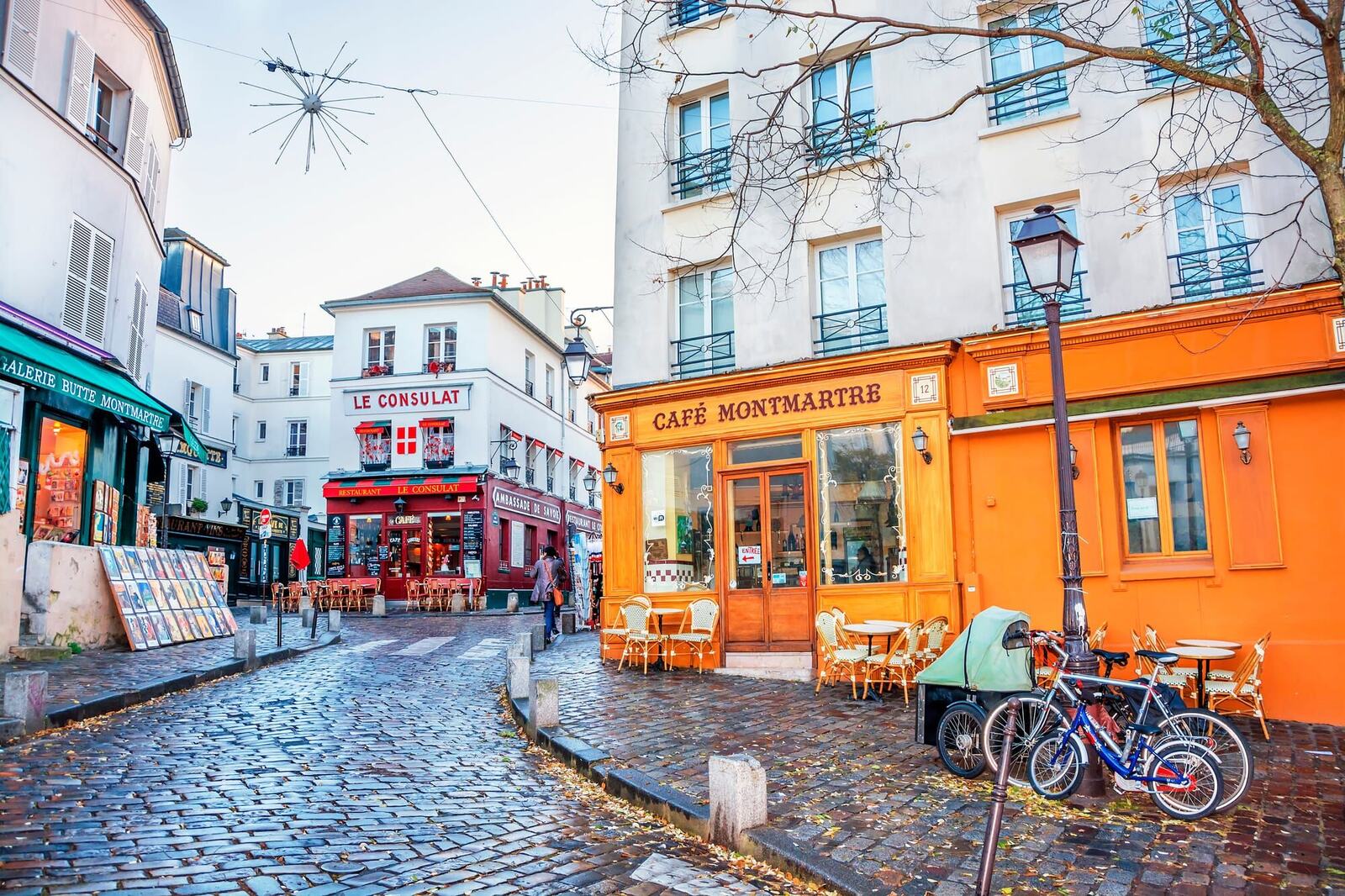
Berlin, where the Topography of Terror museum, on the site of the old Gestapo headquarters, explains the race laws that caught people like Hiero. Then Montmartre in Paris, where Black musicians played between the wars. The Sachsenhausen memorial is north of Berlin, an easy train ride away.
-
Book
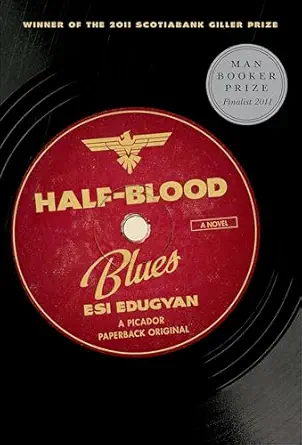
Hiero Falk is a twenty-year-old Black German trumpet player, so good that Louis Armstrong wants to record with him. In 1940 the Nazis arrest him in a Paris café. Fifty years later, his bandmate Sid, from Baltimore, goes back to Berlin, and what really happened comes out. Edugyan, a Canadian with Ghanaian parents, won the Giller Prize for it, and it was shortlisted for the Booker. Most people have never heard of Black jazz musicians in Nazi Berlin. This book fixes that.
-
Book
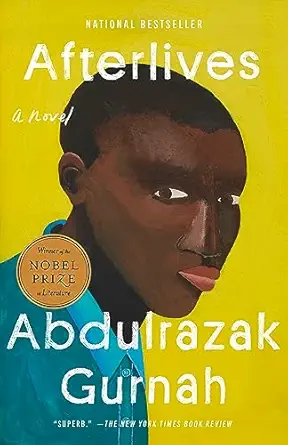
Afterlives
Abdulrazak Gurnah
the Swahili coast of German East Africa (now Tanzania), early 1900s–1960s
Ilyas runs away as a boy, is schooled by the Germans, and comes back to the coast loyal to them. Hamza joins the Schutztruppe, the German colonial army of African soldiers. Afiya, Ilyas's little sister, is left behind. Gurnah follows them through German rule, the First World War and then British rule. It came out in 2020, the year before he won the Nobel Prize, and it was shortlisted for the Orwell Prize. Quiet, calm and devastating.
-
Place
Stone Town
Zanzibar, Tanzania
The coastal town in the novel isn't named, but Tanga, a port on northern Tanzania's coast, still has German colonial buildings. Gurnah was born on Zanzibar, and Stone Town, a UNESCO World Heritage site, is the place to understand the Swahili coast.
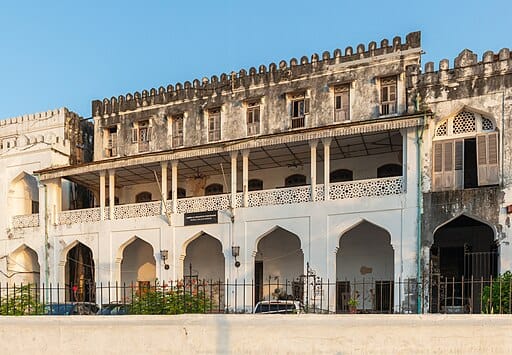
Palacio del Sultán, Stone Town, Zanzíbar, Tanzania. Photo by Diego Delso, CC BY-SA 4.0, via Wikimedia Commons
-
Place
Barbados
The Caribbean
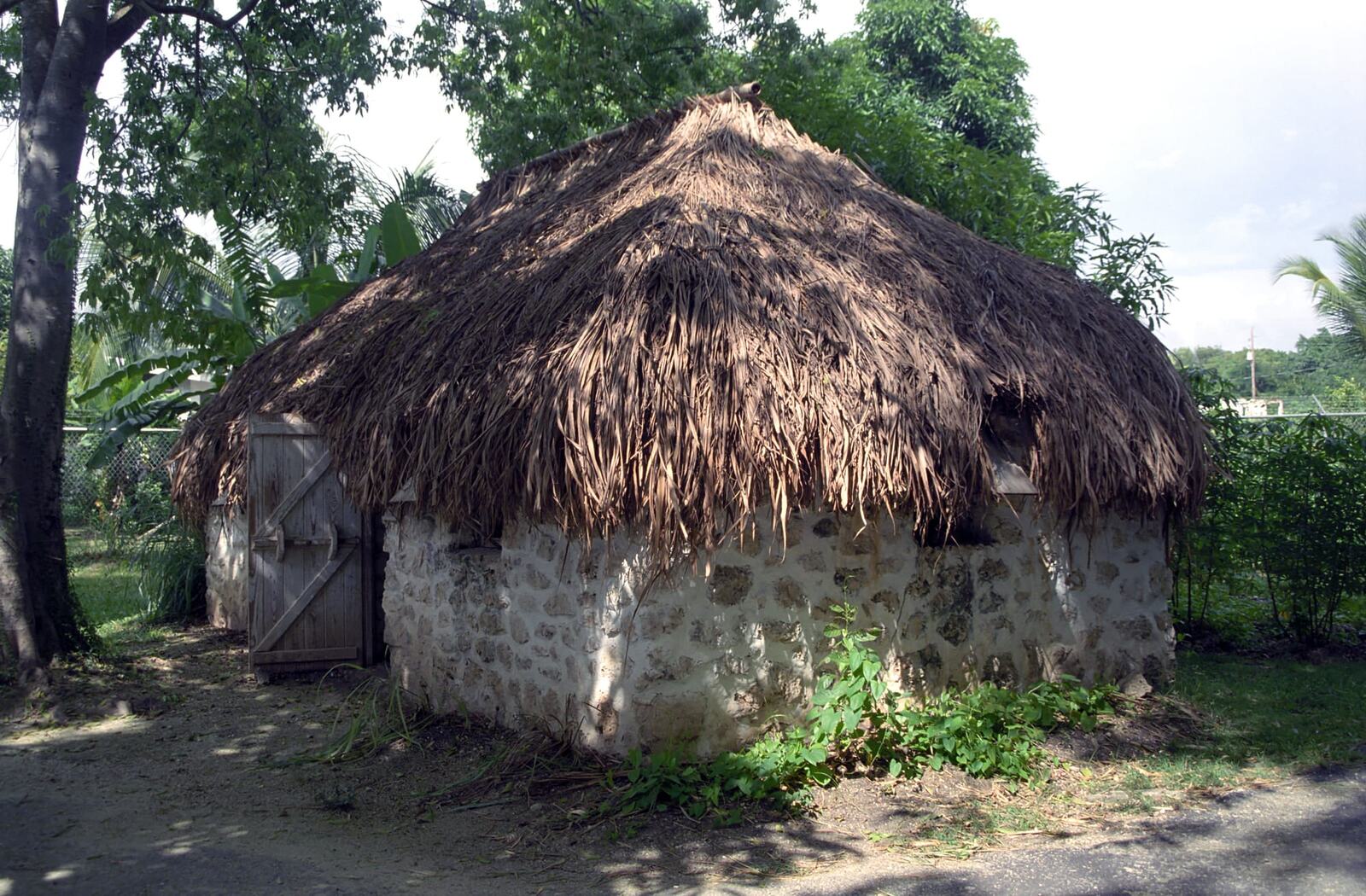
Barbados. St. Nicholas Abbey, a 1650s plantation house, and the Emancipation Statue in St. Michael (everyone calls it the Bussa statue, after the leader of the 1816 uprising) tell two sides of the same history. Barbados is a lot more than its beaches.
-
Book
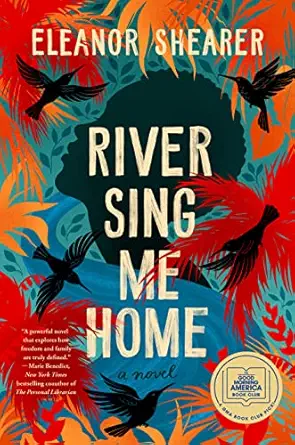
Emancipation comes to the British Caribbean in 1834, and Rachel leaves the Barbados plantation where she was enslaved to find the five children who were sold away from her. Shearer, the granddaughter of Windrush-generation immigrants, based it on real women who did exactly this. It's quieter than some books on this list, and it builds slowly. By the end, island by island, you see how many different things "free" could mean. It was a Good Morning America Book Club pick.
-
Book
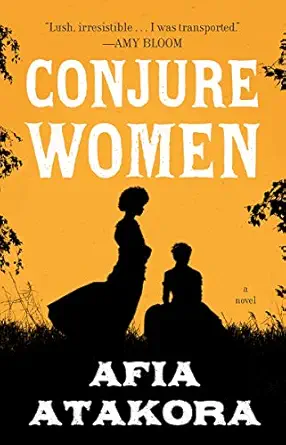
Rue is a midwife and healer, trained by her mother, Miss May Belle, on a plantation that's half in ruins after the war. When she delivers a baby with strange pale eyes, the community starts to turn on her, and old secrets from slavery times come up. Atakora, born in the UK to Ghanaian parents, wrote it as her MFA thesis at Columbia. It won the Society of American Historians Prize, and the New York Times and NPR named it a best book of the year.
-
Place
McLeod Plantation Historic Site
James Island, near Charleston, South Carolina
The plantation is made up. For the real history, go to McLeod Plantation Historic Site on James Island, near Charleston, which tells the story from the side of the people who were enslaved there. The Gullah Geechee Cultural Heritage Corridor runs down the coast from there.
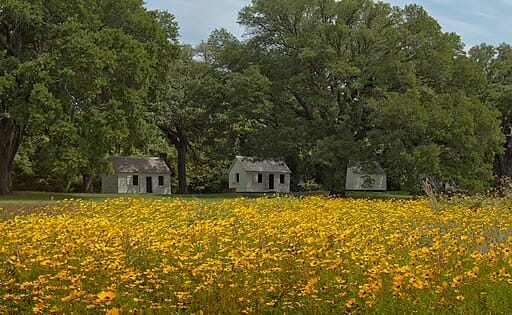
Enslaved cabins at McLeod Plantation Historical Site. Photo by CCPRC, CC BY-SA 4.0, via Wikimedia Commons
-
Place
The Morgan Library & Museum
New York
The Morgan Library & Museum on Madison Avenue in Manhattan. You can walk through Morgan's original library building, the rooms where Belle worked. Read the book first. You'll look at every shelf differently.
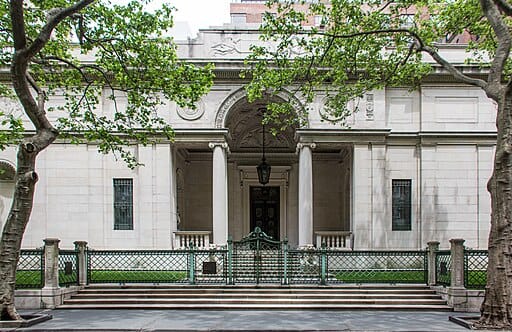
Morgan Library & Museum. Photo by Photograph by Mike Peel (www.mikepeel.net)., CC BY-SA 4.0, via Wikimedia Commons
-
Book
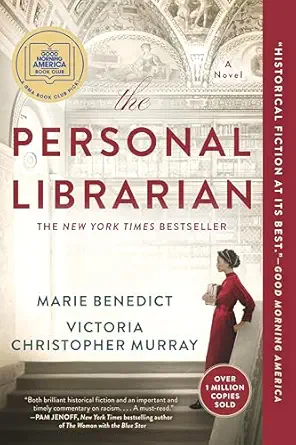
Belle da Costa Greene was J.P. Morgan's librarian. She built one of the great rare book collections in the world, and she was a Black woman passing as white the whole time. She burned most of her own papers before she died in 1950, but more than 600 of her letters to the art historian Bernard Berenson survived, and the gaps become part of the story. It came out in 2021 and was a Good Morning America Book Club pick.
-
Book
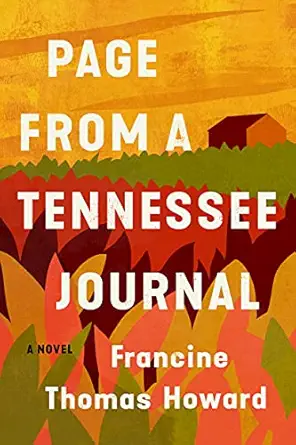
Annalaura's husband walks out on her and their four children, and leaves her alone with a crop to bring in on land owned by a white farmer. What happens next between them is the secret at the center of the book. Howard turned a family secret about her own grandparents into this novel. She doesn't make anyone a cartoon, including the landowner, and that makes it uncomfortable in the best way. It's a book about power, and about what Jim Crow did to everyone it touched.
-
Place
Nashville
Tennessee
Rural Tennessee. In Nashville, the National Museum of African American Music and the Tennessee State Museum give you the history around the story. If your family has roots in Tennessee farm country, this book is worth reading before you go looking.
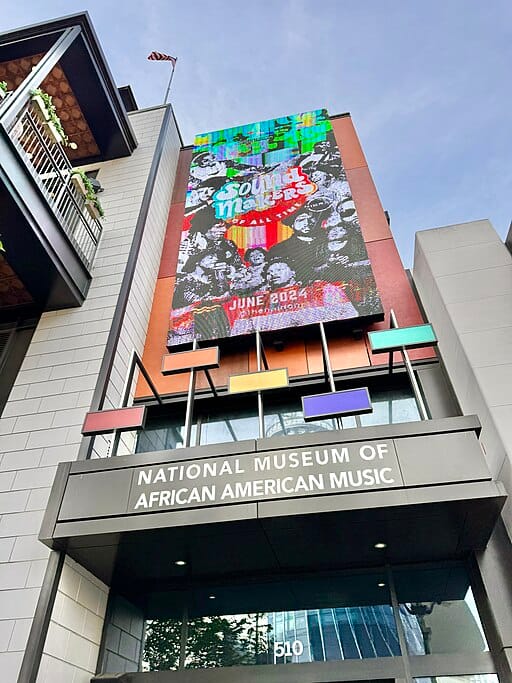
National Museum of African American Music. Photo by Warren LeMay from Chicago, IL, United States.jpg), CC BY-SA 2.0, via Wikimedia Commons
-
Book
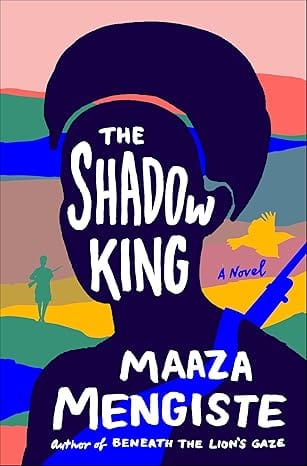
Mussolini invades Ethiopia. Hirut, an orphaned maid in an army officer's house, ends up guarding a peasant disguised as the emperor, and fighting alongside other women whose part in the war was left out of the history books. Mengiste, born in Addis Ababa, started from photographs of the war, and she now runs Project3541, an online archive of them. It was shortlisted for the Booker Prize in 2020. It reads like a war song.
Where it takes you: Addis Ababa, and the northern highlands around Gondar and the Simien Mountains, where Italy invaded from its colony in Eritrea. It's a very different Ethiopia from the one most visitors get sold.
-
Book
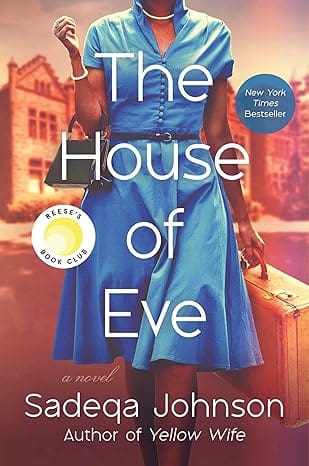
Two Black women in the 1950s: Ruby, fifteen, in Philadelphia, trying to be the first in her family to go to college, and Eleanor, at Howard University, trying to fit into Washington's Black upper class. Johnson started from her own family. Her grandmother got pregnant at fourteen. She also found how little was written down about Black girls in homes for unwed mothers. It was a Reese's Book Club pick in February 2023. Easy to read, hard to forget.
Where it takes you: Howard University in Washington, D.C., and the Black neighborhoods of North Philadelphia. Most guidebooks skip both. I think that's their loss.
-
Place
The Dozier School site
Marianna, Florida · from <em>The Reformatory</em>
Marianna, in the Florida Panhandle, where the Dozier School ran from 1900 to 2011. University of South Florida researchers found unmarked graves there, and a memorial on the old grounds was dedicated in 2023. Check access before you go.
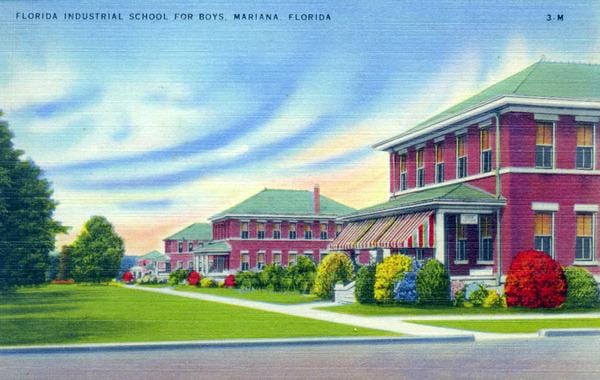
Dozier School for Boys. Photo by State of Florida, Public domain, via Wikimedia Commons
Three continents, five centuries, twelve books. Black history is world history, and every one of these places is waiting for you to go and see it.
Buy each book from Bookshop.org, which supports independent bookshops and pays us a small commission, or from Amazon. As an Amazon Associate I earn from qualifying purchases. About our affiliate links.
More From Behind the Story
-
 Behind the Story Historical Novels for Book Clubs: Books, Films, Poems and Music Five historical novels that start arguments at book club, the films that go with them, and the real places behind them, from Stratford-upon-Avon to Alaska.
-
 Behind the Story Veterans & Military Families Month: Books, Films, Poems and Music Six novels about war and what comes after, from Vietnam to the trenches of France, from Iraq to occupied France in WWII, and the real places where these stories are written in the ground.
-
 Behind the Story Native American Heritage Month: Books, Films, Poems and Music Six books by and about Native Americans, from Oakland to the Osage Nation of Oklahoma, from the Laguna Pueblo to the Chippewa lands of North Dakota, and the real places where these stories live.
Get the Prologue list first.
New trips, prices and Prologue lists of books, films and music, by email first. Unsubscribe in one click.